
TL;DR:
- A T&P relief valve is a safety device that releases water when internal pressure exceeds 150 PSI or temperature surpasses 210°F. It operates on mechanical principles, opening automatically to prevent water heater failure and must be properly installed, tested annually, and replaced when faulty. Regular maintenance and adherence to 2024 IRC standards are essential for safety and code compliance.
A temperature and pressure relief valve, commonly called a T&P relief valve, is a safety device that automatically releases water when your water heater’s internal pressure exceeds 150 PSI or temperature surpasses 210°F. Without it, a water heater can rupture or explode. The 2024 International Residential Code (IRC) requires this valve on every residential water heater, and understanding what it does, how to maintain it, and when to replace it is one of the most practical things you can do as a homeowner or facility manager.
What is a T&P relief valve and why does it matter?
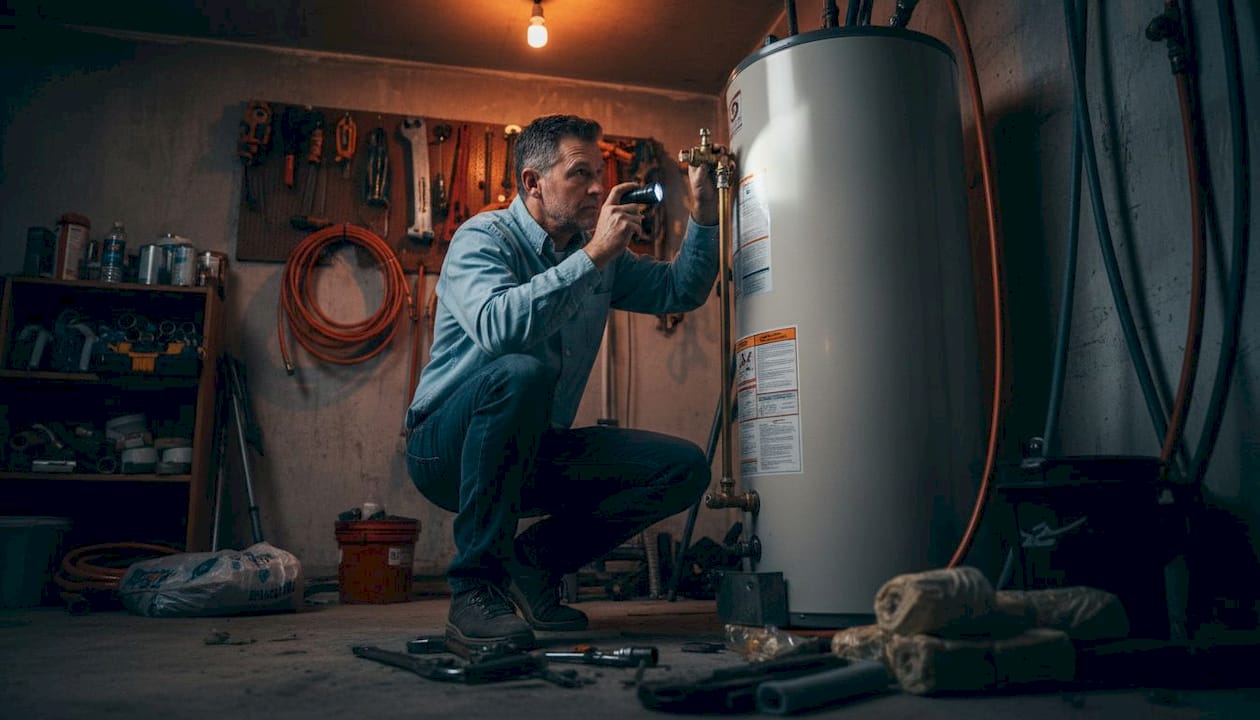
A T&P relief valve is the last line of defense between your water heater and a catastrophic failure. When a water heater malfunctions, internal pressure and temperature can climb fast. The valve opens automatically to release that pressure before the tank reaches a breaking point.
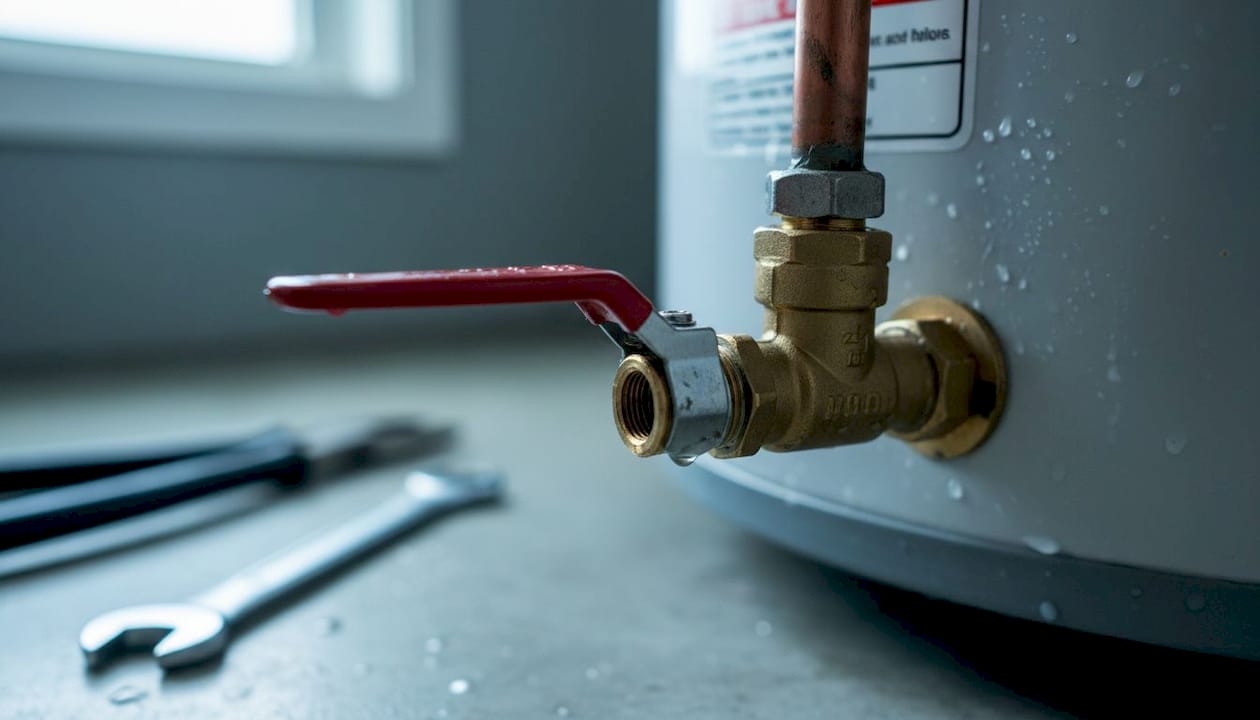
Standard pressure-only relief valves monitor one variable. A T&P valve monitors two: temperature and pressure simultaneously. That dual function makes it far more effective in real-world water heater failures, where both variables often spike together.
The valve sits near the top of the tank, where water is hottest. A temperature probe extends into the water and detects heat directly. If either threshold is crossed, the valve opens and hot water discharges safely through a pipe routed away from people and property.
Ag-plumbing has seen firsthand what happens when this valve is missing, corroded, or improperly installed. The consequences range from a flooded utility room to a full tank rupture. Neither outcome is acceptable when a $20 valve and annual testing can prevent both.
How does a T&P valve work to protect your water heater?
The T&P valve operates entirely on mechanical principles. It runs without electricity, relying on a spring-loaded mechanism and a temperature probe that respond directly to physical conditions inside the tank. No power outage can disable it.
Here is how the mechanism works step by step:
- Spring-loaded seat: A calibrated spring holds the valve closed under normal operating conditions. When pressure inside the tank reaches 150 PSI, the force overcomes the spring and the valve opens.
- Temperature probe: A metal probe extends into the tank’s water supply. When water temperature reaches 210°F, the probe expands and triggers the valve to open, regardless of pressure.
- Discharge pipe: Hot water and steam exit through a dedicated pipe that routes the discharge safely to a floor drain or approved exterior location.
- Self-closing function: Once pressure or temperature drops below the threshold, the spring reseats the valve and flow stops automatically.
- Continuous monitoring: The valve monitors conditions 24 hours a day without any input from you or your building systems.
This design is deliberately simple. Fewer moving parts mean fewer points of failure. A T&P valve does not need a control board, a sensor network, or a scheduled software update. It just works.
Pro Tip: If you have thermostatic mixing valves installed on your water heater, check how they interact with your T&P valve. Ag-plumbing covers this relationship in detail in their guide on thermostatic mixing valve safety.
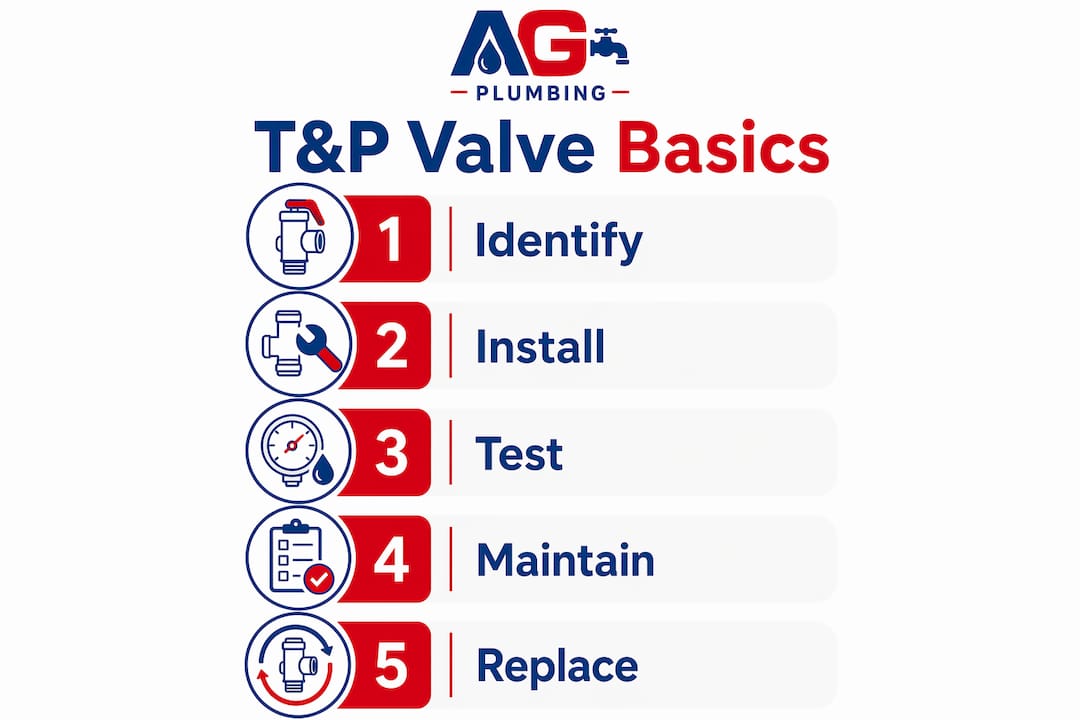
What are the installation requirements for T&P relief valves?
The 2024 IRC sets clear rules for T&P valve installation. Getting these details right is not optional. An incorrectly installed valve can fail to discharge safely, create a scalding hazard, or void your homeowner’s insurance.
The key installation requirements are:
- Valve rating: The valve must be rated for a maximum of 150 PSI and 210°F, or lower if the manufacturer specifies it for your specific water heater model.
- Mounting location: The valve must be installed within 6 inches of the water heater’s top, either in the designated port or a tee fitting at that height.
- Discharge pipe diameter: The pipe must match the valve outlet diameter, which is typically 3/4 inch. Reducing the pipe size restricts flow and defeats the valve’s purpose.
- Approved materials: Copper and CPVC are acceptable pipe materials. PVC is not allowed because it cannot withstand the 210°F discharge temperature.
- Pipe slope: The discharge pipe must slope continuously downward so water drains by gravity and does not pool inside the pipe.
- Termination point: The pipe must end between 6 and 24 inches above the floor, at a floor drain, or at an approved exterior location.
- No caps or plugs: The discharge pipe outlet must never be capped, plugged, or restricted in any way.
- Accessibility: The valve must remain accessible for manual testing and visual inspection at all times.
Improper discharge pipe installation is one of the most common errors Ag-plumbing encounters during inspections. Using PVC, capping the pipe, or routing it to an inaccessible location are all code violations that create real danger. If you are unsure about your current setup, check your water pressure and valve configuration before assuming everything is correct.
| Installation Requirement | Code Standard |
|---|---|
| Valve pressure rating | Maximum 150 PSI |
| Valve temperature rating | Maximum 210°F |
| Distance from tank top | Within 6 inches |
| Discharge pipe material | Copper or CPVC (no PVC) |
| Discharge pipe termination | 6–24 inches above floor or approved drain |
How should you test and maintain a T&P valve?
Manual testing at least annually is the single most important maintenance task for a T&P valve. The test takes about 60 seconds and tells you immediately whether the valve opens and closes freely.
Here is what proper maintenance looks like:
- Lift the test lever: Pull the lever up briefly to allow a small amount of water to discharge through the pipe. You should hear a rush of water or steam. Release the lever and confirm it reseats fully.
- Check for dripping after the test: A small amount of dripping immediately after testing is normal. Dripping that continues for more than a few minutes suggests the valve seat is worn or corroded and the valve needs replacement.
- Inspect for mineral buildup: Hard water deposits can accumulate on the valve seat and probe over time. Visible scale or corrosion is a sign the valve may not open reliably under real conditions.
- Document every test: Write down the date, result, and any observations. Documented testing supports insurance claims and demonstrates code compliance during inspections.
- Plan for replacement: Valves older than 5–10 years are more likely to fail during testing. Have a replacement valve on hand before testing an older unit so you are not left with a stuck-open valve and no fix ready.
Replacing a T&P valve is straightforward. Parts cost $15–$30 and the job typically takes about 15 minutes. In most cases, you do not need to drain the entire water heater. The valve threads directly into the tank or tee fitting.
Pro Tip: Relying on last year’s test result is not enough. Corrosion and mineral buildup can impair a valve between annual tests. If your water is particularly hard or your heater is older, test every six months and consider water heater maintenance as part of a broader seasonal routine.
What are the symptoms of a bad T&P valve?
Recognizing a failing valve early prevents a minor repair from becoming a major emergency. The most common signs of T&P valve failure include constant dripping, hissing sounds from the discharge pipe, and a valve that does not open at all during manual testing.
- Constant dripping: Water dripping from the discharge pipe between tests means the valve is not sealing properly. Corrosion or a worn seat is usually the cause.
- Hissing sounds: A hissing noise near the valve or discharge pipe suggests steam or water is escaping under pressure. This warrants immediate attention.
- Valve fails to open during testing: A valve that does not respond to the test lever is seized. A seized valve provides zero protection and must be replaced right away.
- Discharge during normal operation: If the valve releases water regularly during normal heater operation, the problem is likely not the valve itself.
A T&P valve that discharges repeatedly during normal operation is signaling a deeper system problem. Thermal expansion or a failed Pressure Reducing Valve is often the real cause. Replacing the T&P valve alone will not fix excessive pressure in the system. A licensed plumber needs to diagnose and address the root cause.
Homeowners and building occupants are the best early detection system for valve problems. Reporting dripping or hissing promptly prevents small issues from escalating. If you notice any of these symptoms, do not wait. Contact a licensed plumber to evaluate the full system, including the Pressure Reducing Valve and any thermal expansion tank. For a broader view of when professional help is needed, the Ag-plumbing guide on recognizing plumbing repair needs is a useful starting point. You can also find practical tips on avoiding water heater failures in this guide on preventing heater problems.
Key Takeaways
A T&P relief valve is a non-negotiable safety device that requires annual testing, correct installation per 2024 IRC standards, and prompt replacement when symptoms of failure appear.
| Point | Details |
|---|---|
| Core function | The valve opens automatically at 150 PSI or 210°F to prevent tank rupture. |
| Installation compliance | The 2024 IRC requires approved materials, correct pipe slope, and no caps on the discharge pipe. |
| Annual testing | Lift the test lever once a year and document the result for safety and insurance purposes. |
| Failure symptoms | Constant dripping, hissing, or a seized lever all indicate the valve needs replacement. |
| Underlying pressure issues | Repeated discharge during normal operation points to thermal expansion or a failed PRV, not just the valve. |
The T&P valve deserves more respect than it gets
After 30 years in the plumbing industry, I can tell you that the T&P valve is the most overlooked safety device in most homes. Homeowners spend money on smart thermostats and security systems, but they have never once tested the one device that stands between their water heater and a potential explosion.
The test takes 60 seconds. The replacement part costs less than a dinner out. Yet I regularly find valves that have not been touched in a decade, coated in mineral scale, and completely seized. That is not a maintenance gap. That is a safety gap.
What I have learned is that most homeowners skip testing not out of laziness but out of unfamiliarity. Once you understand what the valve does and how simple the test is, it becomes a natural part of your annual home checklist. The anxiety around it disappears when you realize you are just lifting a lever and listening for water flow.
My advice: add it to your calendar right now. Test it, document it, and if the valve is older than 10 years, replace it proactively. A $20 part and 15 minutes of your time is the best insurance policy your water heater has.
— Maayan
Ag-plumbing keeps your water heater safe and code-compliant
Ag-plumbing has served Pittsburgh, PA homeowners and facility managers for 30 years. T&P valve installation, testing, and replacement are among the most common service calls the team handles, and for good reason.
Whether you need a valve inspected for 2024 IRC compliance, a full water heater repair after a discharge event, or a routine maintenance visit, Ag-plumbing brings the experience to get it right the first time. The team also diagnoses underlying pressure issues, including thermal expansion and PRV failures, so you are not just replacing parts without solving the real problem. Contact Ag-plumbing today to schedule a water heater safety inspection.
FAQ
What does a T&P relief valve do?
A T&P relief valve automatically opens to release water when your water heater’s internal pressure reaches 150 PSI or temperature reaches 210°F. This prevents tank rupture or explosion.
How often should I test my T&P valve?
Test the valve at least once a year by lifting the test lever briefly. If your water heater is older or your water is hard, testing every six months is a better practice.
What happens if my T&P valve keeps dripping?
Constant dripping after testing means the valve seat is worn or corroded and the valve needs replacement. If dripping occurs during normal operation, a deeper pressure issue like thermal expansion may be the cause.
Can I replace a T&P valve myself?
Replacement is straightforward and parts cost $15–$30, but incorrect installation violates 2024 IRC code and creates safety hazards. A licensed plumber confirms correct sizing, materials, and discharge pipe configuration.
How long does a T&P valve last?
Most T&P valves have a reliable service life of 5–10 years. Valves older than 10 years should be replaced proactively, even if they appear to function correctly during testing.
Recommended
- Why Install Shutoff Valves: A Homeowner’s Safety Guide – AG-Plumbing
- What Is PVC Piping? A Homeowner’s Guide to Plumbing – AG-Plumbing
- What Is a Tankless Water Heater? A Homeowner’s Guide – AG-Plumbing
- Smart Plumbing Tips Every Pittsburgh Homeowner Needs – AG-Plumbing
