
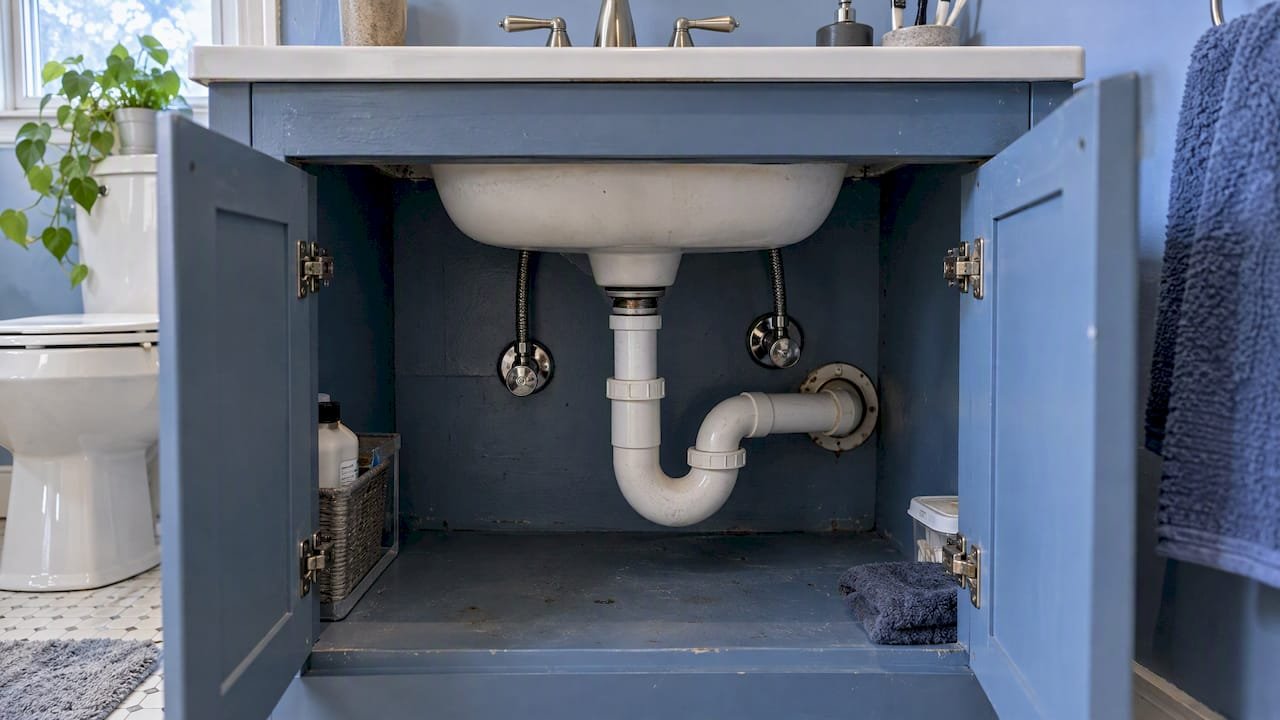
A bathroom that smells like sewage usually has one of a handful of problems: a dry trap, a worn toilet seal, a dirty drain, a blocked or cracked vent, or a damaged sewer pipe. The first two take minutes to check and cost nothing. The last two need a plumber with a camera. This guide shows you how to tell them apart, what is safe to try yourself, and when the smell means you should stop experimenting and make a call.
TL;DR
- The most common cause is a dry trap. Pour about a gallon of water down every drain in the bathroom, including the ones you never use, and see if the smell fades.
- If water does not fix it, suspect a worn toilet wax ring, a dirty or clogged drain, a cracked or blocked vent, or a damaged pipe. A plumber can confirm with smoke testing or a drain camera.
- A smell that comes and goes often points to a trap that is drying out or to a venting problem that pulls water out of the trap.
- Strong rotten-egg odor, headaches, nausea, or sewage coming up a drain is not a wait-and-see situation. Leave the area and get help.
Table of Contents
- Safety first: when the smell means leave the house
- Quick triage: what the clues usually mean
- The dry P-trap: the fix that takes 30 seconds
- The toilet seal: a smell at the base of the toilet
- Dirty or clogged drains: the smell is the drain itself
- Vents: the hidden reason a smell comes and goes
- Damaged or blocked sewer pipes
- Washing machine drains and the laundry room
- What about a rotten-egg smell from drains?
- A sensible order for finding the source
- Our perspective
- When to call a plumber, and what we do
- FAQ
- Sources
Safety first: when the smell means leave the house
Most bathroom sewer smells are a nuisance, not an emergency. But the same smell can hide something worse, so read this part before you start poking around.
Sewer gas contains hydrogen sulfide, a flammable, colorless gas with a rotten-egg odor. CDC’s ATSDR notes that it is heavier than air, so low and enclosed spaces such as a basement or a small bathroom carry more exposure risk. Low exposure can irritate the eyes, nose, or throat, and some people with asthma may have trouble breathing, along with headaches, nausea, and vomiting. At higher concentrations it can cause loss of smell, unconsciousness, or death.
That loss of smell is the reason you should not treat your nose as a safety meter. If the odor seems to vanish after a few minutes in a closed room, that is not proof the gas is gone.
What to do:
- If you think a high concentration of sewer gas is in an enclosed space, the Wisconsin Department of Health Services advises evacuating the building and calling the fire department. Do not create a spark, strike a match, or use a lighter.
- If the smell is more like sulfur or rotten eggs throughout the house, Poison Control points out that it can also signal a natural gas leak, and that carbon monoxide has no odor at all. If you have symptoms or cannot tell what the fume is, get everyone outside and seek help.
- Never mix cleaners to fight the smell. Poison Control specifically warns against combining bleach with ammonia or acidic cleaners, which can release hazardous fumes. Pick one product, or just use water.
If none of that fits and the smell is mild and local to the bathroom, keep reading.
Quick triage: what the clues usually mean
Before you test anything, notice when and where the smell shows up. This table matches the common patterns to the most likely source. It narrows the search; it does not replace an inspection.
| What you notice | Most likely source | First thing to try |
|---|---|---|
| Smell near one sink, tub, or shower you rarely use | Dry trap | Run water for a minute, then pour in about a gallon |
| Smell strongest right around the toilet base, toilet rocks slightly | Failed wax ring seal | Check for rocking and damp flooring, then call a plumber |
| Smell with slow draining or gurgling | Clog or buildup in the drain or a venting problem | Clean the drain; if gurgling persists, get it inspected |
| Smell comes and goes, worse after other fixtures run | Trap losing water through pressure changes, or vent trouble | Note the pattern and have the vents checked |
| Smell in several rooms or the basement, plus slow drains | Main sewer line problem | Stop using water and call a plumber |
| Smell plus sewage coming up a drain | Blockage in the sewer line | Stop all water use and call right away |
The dry P-trap: the fix that takes 30 seconds
Every sink, tub, and shower drain has a curved section of pipe that holds a small plug of water. That water is a seal. The Metropolitan Sewer District of Greater Cincinnati explains that traps hold water to block sewer gases, while vents let wastewater flow and equalize air pressure. When the water evaporates, the seal opens and the smell walks right in.
This is why the guest bathroom or a seldom-used shower is the usual suspect. It is also why a bathroom smells worse after a vacation or a stretch of dry winter heating.
The fix, per the same guide: pour about one gallon of water into each drain. If that works, adding water to the drains roughly monthly can keep the problem from returning. Do it for every drain in the bathroom, including the tub overflow opening if the smell seems to come from there, and any floor drain nearby. If you want to understand the hardware, our guide on what a plumbing trap is walks through how it works.
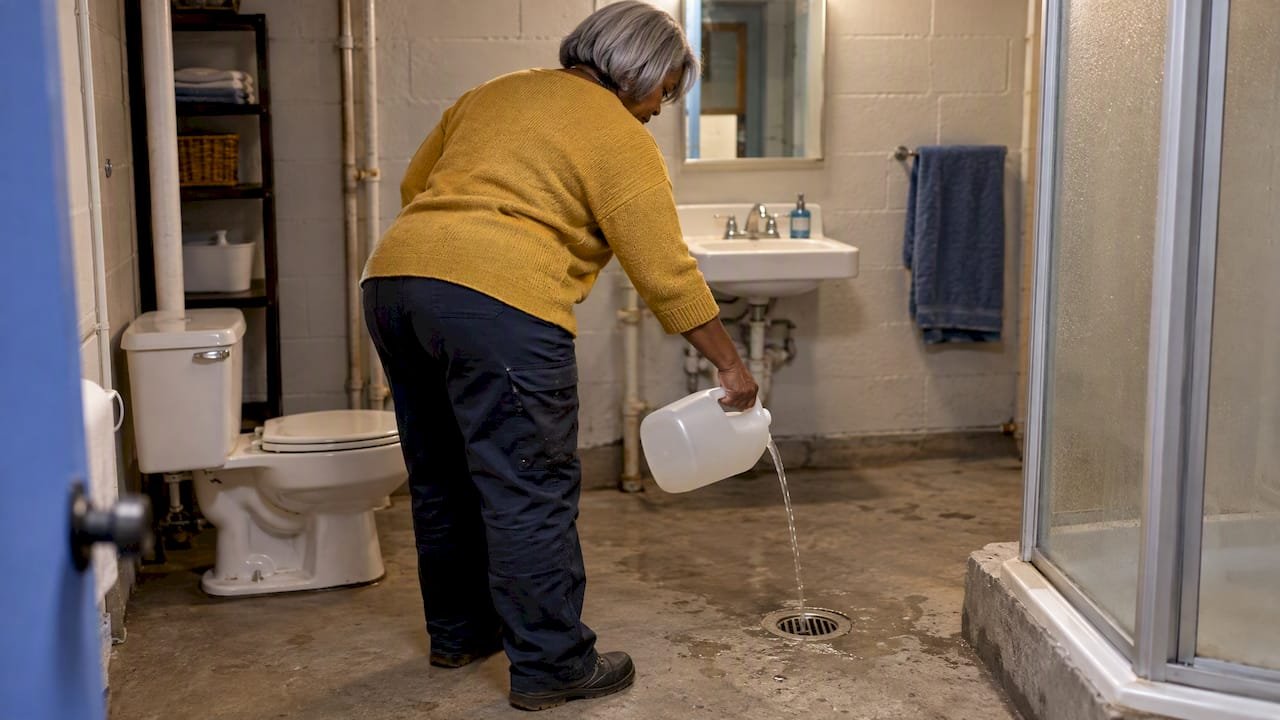
A floor drain deserves special mention. The Wisconsin DHS lists a floor drain as one way sewer gas enters a home, and recommends adding water to a dry one. A basement bathroom or laundry area with a floor drain that has not seen water in months is a classic source of a basement sewer smell.
If the smell returns within days even though you filled the trap, water is leaving the trap for a reason. That points to a leak, a cracked trap, or a venting problem, not just evaporation.
The toilet seal: a smell at the base of the toilet
A toilet sits on a wax ring that seals the connection between the bowl and the drain pipe. When the ring is old, dried out, or no longer compressed properly, gas can leak into the room even though the toilet flushes normally.
The MSDGC guide lists an old or dried-out wax-ring seal among the common causes of sewer odor. The County of Brant’s odor guidance adds the practical clue: a toilet that rocks may have a failed wax seal, and damp wood or a small leak around the base is another warning sign.
Try this:
- Sit on the closed toilet and shift your weight side to side. Any movement is a red flag.
- Look at the floor around the base for staining, soft spots, or discoloration.
- Check that the bolts at the base are present and snug, without cranking them hard on porcelain.
A failed ring means the toilet has to be lifted and reset, and any damaged flooring checked. That is a small repair if caught early and a bigger one if water has been seeping into the subfloor for months. This is exactly the kind of job our plumbing repair service handles.
Dirty or clogged drains: the smell is the drain itself
Not every sewer smell is sewer gas. Hair, soap scum, and organic buildup coat the inside of a sink, tub, or shower drain, and that film can smell like sewage on its own. The giveaway is that the odor comes straight out of one drain, gets stronger when you run water, and the drain may also be slow.
Start with the simple route: remove the stopper, pull out what you can, and flush with hot water. Skip harsh chemical openers when you can. They do not remove the buildup that causes odors, and they are hard on older pipes. Our article on why regular drain cleaning prevents blockages explains how buildup forms, and the signs your drains need professional cleaning are a good checklist if the smell keeps coming back.
When buildup is deeper in the line, a plumber can clear it with a cable or with hydro jetting, which scours the pipe walls with high-pressure water instead of just punching a hole through the clog.
Vents: the hidden reason a smell comes and goes
Your drain pipes are vented through the roof. The vent lets air in behind the water as it drains, so the water flows smoothly and does not siphon the traps empty. If the vent is blocked, cracked, or missing, pressure changes can pull water out of a trap, and the smell appears without warning.
That is also the best explanation for a smell that is intermittent. As HowStuffWorks describes, an odor can come and go when a trap dries or loses its seal, or when pressure changes from venting problems remove trap water.
What the official sources say about vents:
- The Wisconsin DHS lists a leaking or blocked roof plumbing vent as an entry route for sewer gas, and suggests checking for a blocked rooftop vent.
- The County of Brant lists clogged roof vents, leaking vent piping, and holes or corrosion in vent pipes among the causes of odor.
- EPA’s septic guidance names roof-vent obstruction, freezing, and downdrafts as possible odor sources for homes on septic systems.
A clue worth noting: gurgling in the toilet or tub when another fixture drains. That sound is air being pulled through the water seal, and it suggests a venting or drainage problem rather than a dry trap. Do not climb onto a roof to check a vent unless you can do it safely. A plumber can inspect it, and a leak inside a wall often takes a professional to find. The Wisconsin DHS notes that a leak behind a wall may need a plumber to locate and repair.
Damaged or blocked sewer pipes
The MSDGC guide lists broken, cracked, or clogged pipes and loose or unsealed joints in the wastewater piping among the common sources. The County of Brant also names cracked older cast-iron pipes. When the damage is in the line that carries everything out of the house, the smell tends to show up in more than one place, and it comes with other signs:
- Slow drains in several fixtures at once
- Gurgling in toilets or tubs
- Sewage or water backing up in a floor drain, tub, or shower
- Damp or sunken patches in the yard, or a sewage smell outdoors
Our guides to sewer line warning signs and collapsed sewer line signs cover what to look for in more detail, and if the smell is strongest outside, see our piece on a wet yard with a sewage smell.
If your home is on a septic system, EPA lists warning signs including sewage or water backing up indoors, slow drains, gurgling plumbing, standing or damp ground near the tank or drainfield, sewage odors outdoors, and unusually lush grass over the system. EPA also stresses that an odor alone cannot be diagnosed remotely, and recommends contacting a local septic provider or plumber. Its guidance on septic malfunctions is worth reading if that describes your property.
The South Davis Sewer District gives a clear rule for the worst cases. Sewage coming from a drain when no water is running points to a likely plugged sewer main, and calls for immediate contact with the sewer authority. If flow is slow or intermittent, or several fixtures will not drain, stop all indoor water use and arrange sewer-lateral service. That district is in Utah, but the logic holds anywhere: running more water into a blocked line pushes it toward your floor drains.
If you are seeing these signs, a camera inspection tells you what is actually wrong. Our sewer repair service starts with finding the problem, and our overview of the repair process shows what to expect from start to finish.
Washing machine drains and the laundry room
A smelly washing machine drain is a close cousin of the bathroom problem. The washer empties into a standpipe with its own trap, and if that trap dries out, is missing, or sits above a partly blocked line, the smell can fill the laundry room. Lint and detergent residue also build up inside the standpipe and can smell sour or sewage-like on their own.
What to check:
- Shine a light into the standpipe. Is the trap there, and does it hold water?
- Run a rinse-only cycle and watch whether the standpipe overflows or drains slowly. Slow draining means a partial clog.
- Pour a gallon of water into any nearby floor drain, which may be dry.
- Check that the hose is not pushed so far into the standpipe that it seals the air gap, which can cause gurgling.
A laundry line that backs up regularly needs cleaning, not perfume. Our guide to laundry drain clogs without caustic cleaners explains the approach.
What about a rotten-egg smell from drains?
Rotten-egg odor is the signature of hydrogen sulfide, the gas ATSDR describes as commonly associated with sewers. In a drain, it usually means gas is coming through a dry or failing trap, or from a sewer-side problem. Two cautions:
- If the smell is not tied to a particular drain and fills the house, consider a gas leak first. Poison Control notes that strong rotten-egg or sulfur odors may indicate natural gas. Leave and call your gas utility or emergency services.
- If the smell only appears when you run hot water, mention that to the plumber, since the water heater can be part of the picture.
We cover the gas itself in more depth in what sewer gas is, and its risks.
A sensible order for finding the source
Work from cheapest and safest to most involved:
- Find the room and the fixture. Sniff near each drain and the toilet base with the door closed for a few minutes.
- Refill every trap. Run water, then pour about a gallon into each drain, including floor drains and rarely used fixtures.
- Clean the drain. Remove the stopper and clear visible buildup.
- Check the toilet. Rock test, floor condition, bolts.
- Listen. Gurgling or slow drains in multiple fixtures means this has moved past a bathroom fix.
- Wait a few days. If the smell returns after the traps are full, something is removing the water or leaking gas.
- Call a plumber. The MSDGC guide says that when simple trap refilling does not identify the source, plumbers may use smoke testing or a video camera to track down a persistent odor.
What not to do: do not cover the smell with air fresheners or pour more chemicals down the drain, and do not cut into walls to chase a leak you cannot see.
Our perspective
People usually call us after weeks of trying candles and drain cleaners. The smell had a cause the whole time, and it was rarely complicated: a trap in a bathroom nobody uses, a toilet that had started to rock, or a drain with years of buildup. Those are quick, inexpensive fixes when they are caught early.
What changes the picture is when the smell is accompanied by slow drains in more than one place. That is when we stop thinking about one fixture and start thinking about the line. After 30 years working in Pittsburgh and the surrounding areas, our advice is consistent: do the free checks first, and when they do not solve it, get a real diagnosis rather than guessing. We would rather show you a camera image of what is going on than ask you to take our word for it, and we explain the options and the process before any work begins.
And if the smell is strong, the house is making you feel unwell, or sewage is coming up a drain, put safety ahead of the repair. Get out, get help, and we will sort out the plumbing once it is safe.
— Maayan
When to call a plumber, and what we do
Call a plumber if any of these are true:
- The smell returned after you refilled every trap
- The toilet rocks or the floor around it is damp or soft
- Several drains are slow or gurgling
- You hear gurgling when other fixtures run, or the odor tracks with laundry or showers
- Sewage or water is backing up anywhere
- You cannot find the source and the smell is getting stronger
At AG Heating, Cooling & Plumbing, we handle drain cleaning, hydro jetting, sewer repair, leak repair, and general plumbing repair for homes and businesses in Pittsburgh, PA and nearby areas. Our team is licensed and certified, and we are BBB accredited. If you want someone to track down a bathroom sewer smell, book a visit through our main page and tell us what you have already tried. Discounts are available for seniors, military, new customers, and referrals.
If the problem might be a sewage backup rather than just an odor, our guide to preventing sewer backups covers the habits and the one valve that make the biggest difference. For after-hours situations, see our emergency plumbing guide.
FAQ
How do I get rid of a sewer smell in my bathroom?
Start by pouring about a gallon of water into every drain in the bathroom to refill the traps. If the smell fades, repeat that roughly monthly for seldom-used drains. If it does not, check the toilet for rocking, clean the drains, and have a plumber inspect the vents and pipes.
Why does a sewer smell come and go?
Usually because a trap is drying out slowly or losing its water seal. Pressure changes caused by a blocked or damaged vent can also pull water out of a trap when other fixtures run. Note when the smell appears, since the pattern helps a plumber find the cause.
What are the first signs of sewer gas poisoning?
According to CDC’s ATSDR, hydrogen sulfide exposure can irritate the eyes, nose, and throat, and may cause headaches, nausea, and vomiting, with breathing difficulty for some people with asthma. Higher levels can cause loss of smell, unconsciousness, or death. If you feel unwell, go outside into fresh air and get medical help.
Is it safe to stay in a house that smells like sewer?
A mild, local odor that clears after you refill a trap is generally a plumbing nuisance. A strong smell, symptoms, or a suspected high concentration in an enclosed space is different: leave the building and call the fire department, and avoid any spark or flame. If the smell resembles rotten eggs throughout the house, treat it as a possible natural gas leak until proven otherwise.
Sources
- Sewer Backups and Other Issues, Metropolitan Sewer District of Greater Cincinnati
- Air: Sewer Gas, Wisconsin Department of Health Services
- Hydrogen Sulfide ToxFAQs, ATSDR
- What’s that smell? Identifying unknown fumes in your home, Poison Control
- Odours, County of Brant
- Resolving Septic System Malfunctions, US EPA
- Sewer Emergencies, South Davis Sewer District
- Bathroom Smells Like Sewage? Causes and Fixes, HowStuffWorks
Recommended
- Sewer Line Warning Signs Every Homeowner Should Know
- How Sewer Repair Can Prevent Major Plumbing Problems
- Common Plumbing Repair Issues and How to Fix Them
- Facility Teams: Stop Commercial Restroom Odor by Removing the Source
