
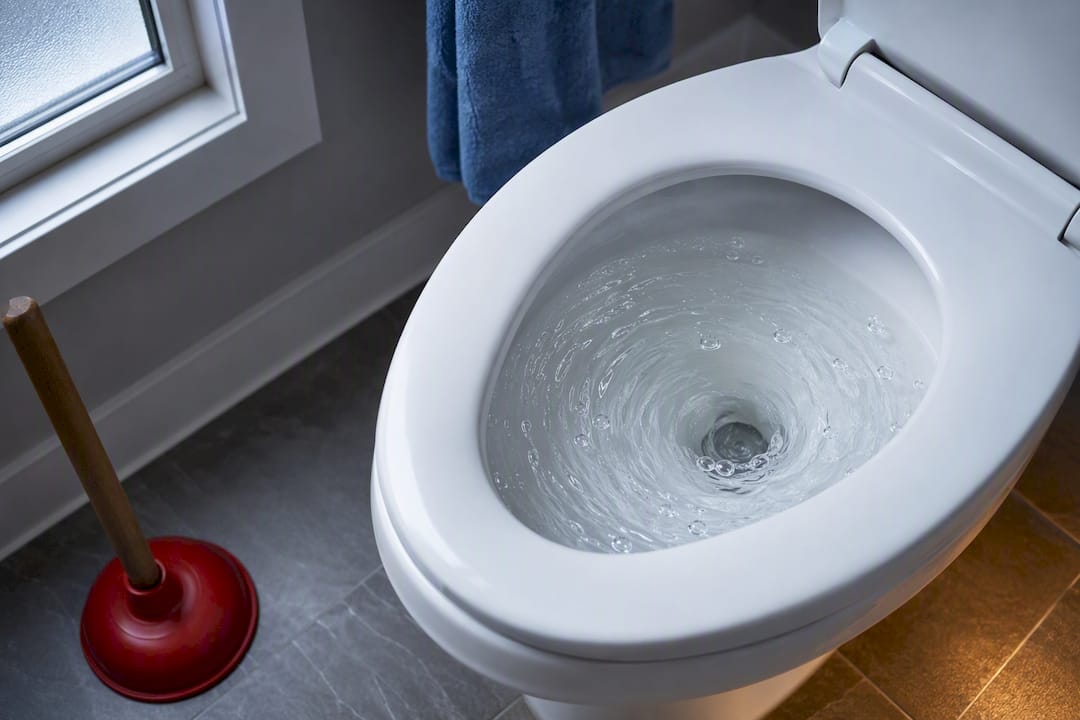
A gurgling toilet almost always means trapped air is fighting its way through a drainage restriction, not a problem with the toilet itself. The usual suspects are a partial clog in a branch line, a blocked roof vent, a main sewer-line obstruction, or a septic issue on a non-municipal system. Run a quick cross-fixture test before you touch a plunger or call anyone: flush the toilet, then run the nearest sink or shower and listen for when the gurgle happens.
TL;DR:
- Gurgling toilets usually indicate trapped air fighting a drainage restriction rather than a toilet fault, often caused by clogged vents or main sewer obstructions.
- Running multiple fixtures and listening patterns help diagnose whether the issue is a branch clog, vent blockage, or main sewer problem, especially when combined with odors or soggy patches.
- Simple plunging or snaking from accessible points can fix partial clogs, but avoiding chemical cleaners and unsafe roof checks is advised; professional inspection is recommended for uncertain causes.
- Symptoms like multiple slow drains, sewage smells, or water backing up signal a serious main line or septic failure requiring immediate professional intervention rather than DIY attempts.
- Regular preventive checks of vent stacks, avoiding flushable wipes, and trimming tree roots reduce future gurgling risks and help maintain proper drainage.
Table of Contents
- Gurgling Toilet Causes: What’s Actually Blocking the Air
- How to Diagnose a Gurgling Toilet in Under 10 Minutes
- Safe DIY Fixes for a Gurgling Toilet
- When a Gurgling Toilet Signals a Real Emergency
- Preventing Future Gurgles: Lessons From 30 Years in Pittsburgh Plumbing
- An Honest Take on Why Homeowners Get This Wrong
- Get a Real Diagnosis Instead of Guessing at Fixes
- Sources
- FAQ
Gurgling Toilet Causes: What’s Actually Blocking the Air
Every drain pipe needs air moving through it as freely as water. When that air gets blocked, it has nowhere to go but backward, bubbling up through the closest water seal, which is usually your toilet trap. That’s the whole mechanism behind toilet gurgling when flushed or right after another fixture drains.
Partial or branch-line clogs. A clog in the branch line connecting your toilet to the main stack narrows the pipe. Water rushing past the narrowed section compresses the air ahead of it, and that air pushes back through the toilet, since it’s the fixture with the least resistance.
Blocked vent stack. Every home has a vent pipe running up through the roof that equalizes pressure so drains don’t glug. Leaves, bird nests, and winter ice are common culprits, and a blocked vent creates a vacuum that pulls air straight through your toilet’s water seal, which is why a gurgling toilet often traces back to negative air pressure rather than a clog you can see.
Main sewer line or lateral obstruction. Root intrusion, grease buildup, or a collapsed section of pipe restrict the whole system at once, not just one branch. This is the scenario that makes multiple fixtures act up simultaneously.
Septic system issues. If you’re on a septic system rather than municipal sewer, a failing drain field or a full tank can back pressure into your plumbing. The EPA’s guidance on septic malfunctions is worth reading if you notice slow drains alongside soggy patches over your drain field.
Weather and municipal overload. Heavy rain can overwhelm municipal sewer capacity or saturate a septic drain field, and sudden barometric pressure swings during storms can momentarily worsen a vent problem that was already borderline.
How to Diagnose a Gurgling Toilet in Under 10 Minutes
You don’t need a plumber’s van in the driveway to narrow this down. A short sequence of tests points you toward the right cause almost every time, using the same pattern logic plumbing pros rely on to triage calls before they even grab a wrench.
- Run the washing machine, a sink, and the shower one at a time, and listen at the toilet each time. If it only gurgles when one specific fixture drains, that fixture likely shares a branch line with the toilet.
- Flush the toilet alone and wait 15 seconds. A gurgle right after the bowl empties, with no other fixture running, points to a vent stack problem, since the toilet is losing its air supply from above.
- Run two or more fixtures at once, like the shower and a sink. If several drains gurgle or drain slowly together, suspect the main line, not a branch.
- Check for extra clues: a sewage smell, standing water in a basement floor drain, or a soggy patch in the yard over the sewer route all point toward the main line or septic system.
Look at the toilet’s own trap and a nearby cleanout if you have one, and glance at the roof vent from ground level with binoculars before climbing anything.
Pro Tip: Keep a simple log for a day or two, noting exactly which fixture was running each time the toilet gurgled. That pattern alone often tells a plumber more than a five-minute phone description ever could.
Safe DIY Fixes for a Gurgling Toilet
Start with a plunger. A few firm, steady pushes clear plenty of partial clogs on their own, and it costs you nothing but a couple of minutes. Retest with the cross-fixture check afterward to see whether the gurgle is gone.
- A closet auger works better than a standard plunger for clogs sitting inside the toilet trap itself.
- For a suspected branch-line clog farther down the pipe, snaking from a cleanout access point reaches obstructions a toilet-only tool cannot.
- If you’re comfortable on a ladder, a quick visual check of the roof vent for leaves, a nest, or ice can solve the problem in minutes; a broom handle can often clear surface debris.
- Skip chemical drain cleaners entirely when the issue is air pressure related. They rarely fix vent problems and can damage older cast-iron pipe in the process.
- Don’t keep plunging over and over if a vent blockage is the real cause. It won’t help and can push water further into fixtures you don’t want flooded.
- Don’t climb onto a wet or steep roof without proper footing and a spotter. That call belongs to a professional once it’s beyond a quick look from a stable ladder.
For step-by-step plunging and augering technique, our DIY toilet unclogging guide walks through the exact motions that clear most partial clogs.
When a Gurgling Toilet Signals a Real Emergency
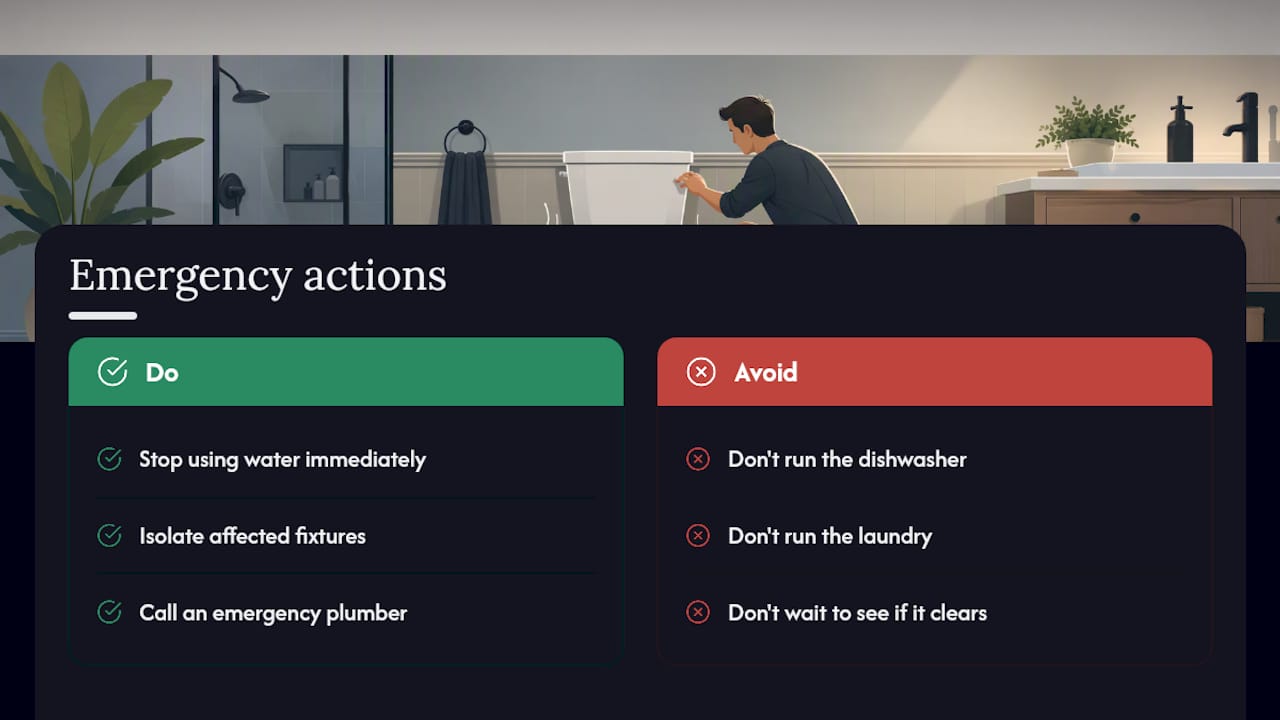
Stop using water in the house the moment more than one fixture gurgles or drains slowly at the same time. That pattern, combined with a sewage smell, water backing up into a basement floor drain, or soggy ground along your sewer line, points to a main sewer lateral problem rather than a simple clog. These symptoms together are among the most reliable indicators of a partially blocked sewer line, and they tend to get worse, not better, over a few days as root mass grows or grease continues to build.
If you notice this pattern, isolate the affected fixtures, avoid running the dishwasher or laundry, and call an emergency plumber rather than waiting to see if it clears on its own.
Preventing Future Gurgles: Lessons From 30 Years in Pittsburgh Plumbing
With extensive experience, professional teams often lean on camera inspection before recommending anything invasive. Camera work distinguishes root intrusion from grease buildup from a structural failure, and those three problems get three completely different repairs.
- Schedule a vent stack check every fall before leaves pile up and before the first freeze.
- Avoid flushing wipes of any kind, even ones labeled flushable. They’re a leading cause of branch-line clogs.
- Have tree roots near your sewer lateral trimmed or professionally treated before they find a crack to grow into.
- In cold climates, insulating exposed vent pipe or adding a vent extension prevents the ice blockages that show up every January.
Pro Tip: Hydro-jetting clears grease and buildup better than snaking alone, but it’s the wrong tool for a cracked or collapsed pipe. That’s exactly why a camera goes down the line first.
An Honest Take on Why Homeowners Get This Wrong
Most people hear a gurgle and assume the toilet is broken, so they replace parts that were never the problem. The toilet is almost always just the messenger. What surprises homeowners more is how often a five-minute cross-fixture test would have saved them a service call, or conversely, how often they plunge repeatedly at a vent problem that plunging can never fix. Trust the pattern over your instinct to blame the fixture in front of you.
— Maayan
Get a Real Diagnosis Instead of Guessing at Fixes
If your cross-fixture test points toward the main line or you’d rather not climb onto a roof to check a vent, Professional plumbing services handle the parts of this job that go beyond a plunger, including drain cleaning, camera inspection, hydro-jetting, and full sewer repair when a line has cracked or collapsed.

A call gets you a straight answer: a technician inspects the line, tells you exactly what’s causing the gurgle, and gives you a clear estimate before any work starts. There’s no upsell script, just a diagnosis based on what the camera actually finds. If your symptoms match the emergency pattern above, standing water, sewage smell, or multiple slow drains, treat it that way and reach out the same day. Explore our drain cleaning services or visit Ag-plumbing to schedule an inspection before a slow gurgle turns into a backup you can’t ignore.
Sources
- Resolving septic system malfunctions | US EPA
- How To Fix a Gurgling Toilet | This Old House
- Why Is My Toilet Gurgling (And How to Stop It) | HomeFixer101
FAQ
Why is my toilet gurgling but not clogged?
A gurgle without a visible clog usually points to a blocked vent stack pulling air through the trap, or a partial clog farther down a branch line that hasn’t fully stopped water flow yet.
How do I get my toilet to stop gurgling?
Plunge the toilet first and retest, then run the cross-fixture check to confirm whether the cause is a branch clog, a blocked vent, or the main line, since each needs a different fix.
Should you flush a gurgling toilet?
You can flush once to observe the pattern, but avoid repeated flushing or heavy water use once you suspect a vent or main-line issue, since that risks pushing water into fixtures you don’t want affected.
Does a gurgling toilet mean a broken sewer line?
Not necessarily. A single gurgling toilet often means a localized branch or vent issue, but gurgling across multiple fixtures paired with slow drains or sewage odor is a strong sign of a main sewer-line problem that likely needs professional camera inspection.
Recommended
- Emergency Toilet Repair: What to Do in the First 10 Minutes
- Diagnose Plumbing Noise: Step-by-Step Guide for Homeowners
- Emergency Plumbing Guide: Quick Solutions for Homeowners
- How to Fix a Running Toilet: a DIY Guide
