
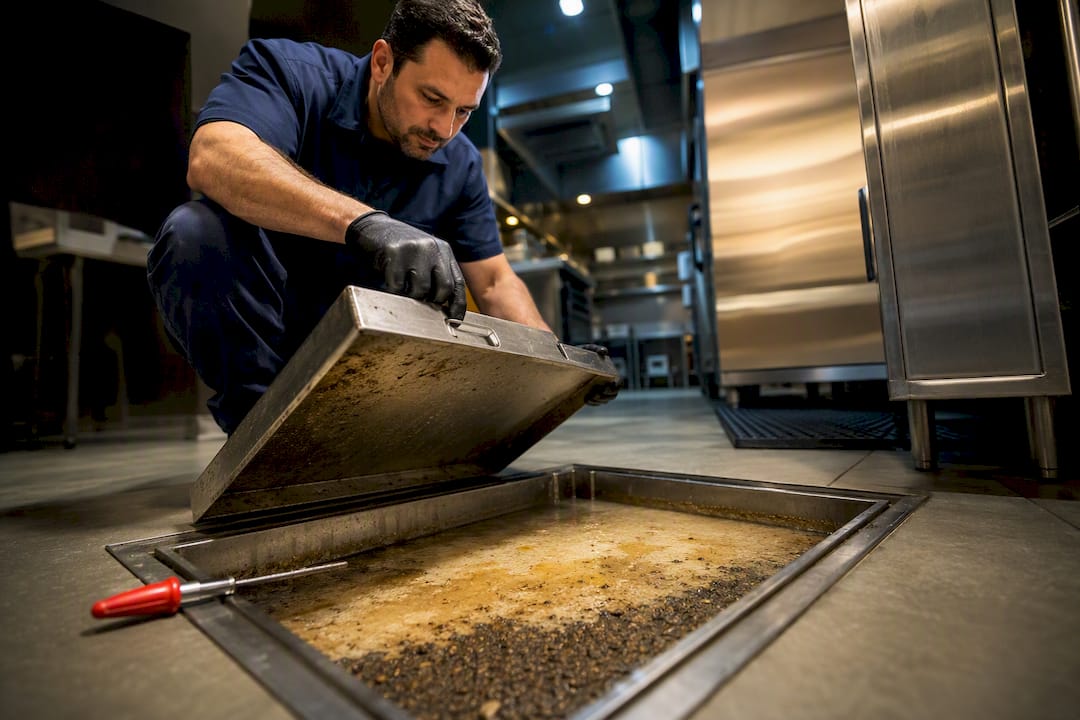
Service your grease trap once fats, oils, grease, and solids reach 25% of its liquid capacity, which usually lands somewhere between every 30 and 90 days depending on your kitchen’s volume. A compliant service means a full pump-out of FOG, solids, and water by a licensed hauler, not a partial skim, and that hauler needs to leave you a manifest. Skip the enzyme packets sold as a shortcut. Most municipalities ban them, and inspectors keep records on-site for years, not weeks.
TL;DR:
- Most municipalities recommend cleaning grease traps every 30 to 90 days once FOG and solids reach 25% of capacity, with higher frequency needed in high-volume kitchens.
- Proper maintenance involves full pump-outs by licensed haulers, manual cleaning of the interior, and diligent record-keeping on manifests that include measurements, condition notes, and signatures.
- Installing sink strainers, scraping pots and pans before washing, and avoiding enzyme additives significantly reduce grease buildup and service frequency.
- Signs of an overdue or failing trap include slow drains, foul odors, backups, and gurgling sounds, which require immediate inspection and possible professional intervention.
- Technicians often find worn gaskets, missing flow restrictors, and improperly plumbed fixtures during inspections, highlighting the importance of supervision, accurate records, and potential retrofit improvements.
Table of Contents
- How Often Should You Clean a Restaurant Grease Trap?
- How Do You Clean a Restaurant Grease Trap Step by Step?
- Building a Grease Trap Maintenance Schedule That Holds Up
- Daily Habits That Cut Your Grease Trap’s Workload
- Grease Trap Warning Signs and When to Call a Plumber
- What Technicians Actually Find During Grease Trap Inspections
- Why Discipline Beats Damage Control
- When to Bring In a Licensed Plumbing Team
- Sources
- FAQ
How Often Should You Clean a Restaurant Grease Trap?
The 25% rule is the number that drives almost every municipal FOG (fats, oils, and grease) policy in the country. Once accumulated grease and solids reach a quarter of the trap’s total liquid volume, the unit loses enough retention capacity that grease starts slipping past the baffles and into the sewer line. That’s the trigger point regulators care about, and it’s why Boston Water & Sewer Commission and similar utilities set 30 to 90 day cleaning windows as the default, with bi-weekly service common in high-volume kitchens like buffets or fry-heavy operations.
Frequency also depends on equipment type. Municipal best-practice manuals generally split the requirement two ways:
- Hydromechanical (point-of-use) traps: monthly minimum, per guidance from the City of Phoenix.
- Gravity interceptors (larger, often outdoor units): quarterly minimum, though many cities require more frequent service based on documented FOG accumulation.
- Nashville’s Metro Water Services ties its schedule to the same 25% threshold but caps intervals at 90 days maximum for interceptors, regardless of measured fill.
Certified inspectors typically check whether you’re meeting your mandated service intervals, whether your manifests align with service logs, and whether the trap shows evidence of enzyme or chemical treatments. That last one matters more than most managers realize. Additives that emulsify grease so it passes through the trap don’t reduce your FOG load. They just move the problem downstream into the municipal sewer, and most jurisdictions treat that as a violation rather than a maintenance technique.
How Do You Clean a Restaurant Grease Trap Step by Step?
Whether your staff handles interior cleaning between hauler visits or you’re supervising a contracted pump-out, the sequence matters. Skipping steps is how you end up with a trap that looks serviced on paper but still fails inspection.
- Suit up and prep the area. Gloves, eye protection, and old clothes are non-negotiable. Never run hot water into the trap before service. It liquefies hardened grease and makes accurate measurement impossible. Post a wet-floor or “trap service in progress” sign for staff.
- Remove the lid carefully. Check gaskets for cracking or compression damage while it’s off. Inspect vents and baffles for warping.
- Measure the FOG and solids layer. This is where you determine whether you’re actually at 25% or servicing early. A measuring stick with markings works fine for this.
- Pump the full contents. FOG, solids, and water all get removed by a licensed hauler. Partial removal, or reintroducing pumped waste back into the interceptor, defeats the purpose and violates most municipal policies.
- Scrape and scrub the interior. Walls, baffles, and the bypass or vent line need manual cleaning, not just a rinse. BWSC guidance specifically calls out baffle removal and wall scraping as separate steps from pumping.
- Rinse with cold water only. Hot water re-liquefies any residual grease and pushes it toward the outlet side.
- Reassemble and run a flow test. Reinstall baffles and the lid, then run water to confirm normal drainage before closing out the job.
- Record everything on the manifest. Gallons removed, condition notes, and technician signature all need to be logged before the hauler leaves.
Pro Tip: Keep a laminated copy of this sequence taped inside the kitchen’s utility closet. When a new hire or a rushed technician skips steps, having the checklist visible on-site catches it before the lid goes back on.
Building a Grease Trap Maintenance Schedule That Holds Up
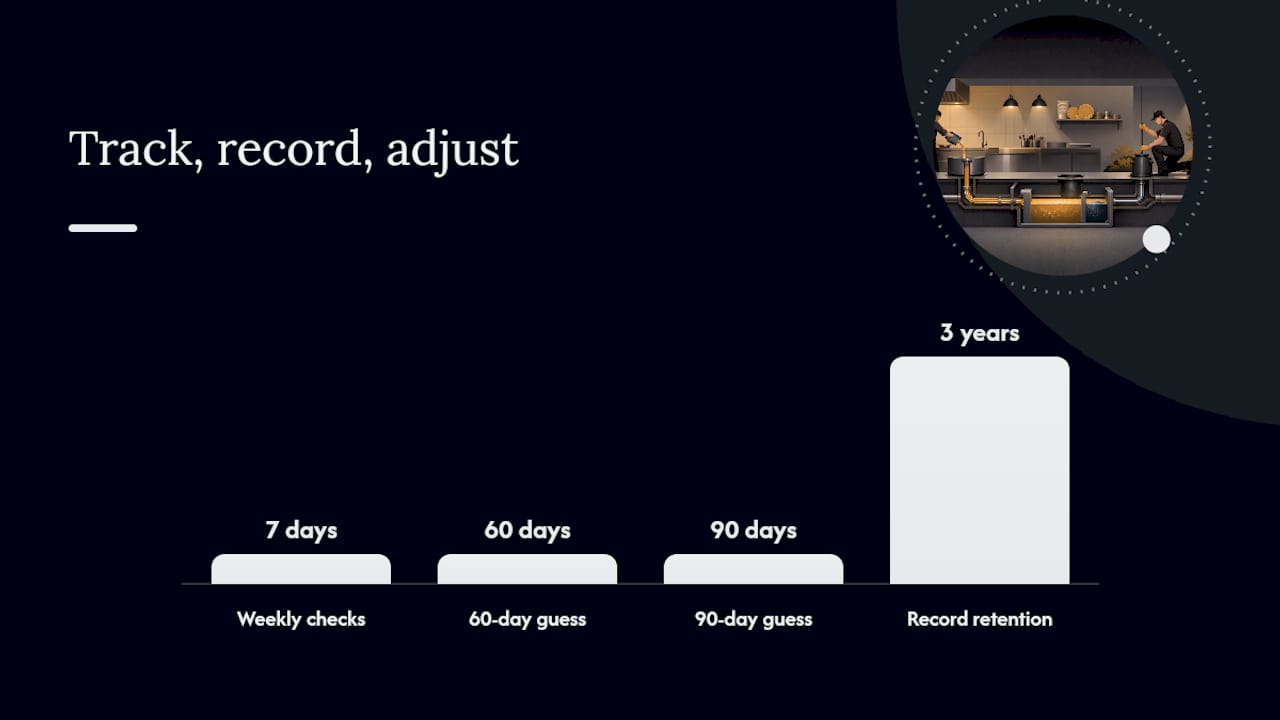
A pump-out on a calendar isn’t a maintenance program. You need a system that tracks accumulation between services and produces the paperwork inspectors expect to see. Start by checking FOG and solids depth weekly using a measuring stick, then adjust your service interval based on what you actually find rather than guessing at 60 or 90 days and hoping.
Whether you use a licensed hauler exclusively or handle light interior maintenance in-house between visits, some jurisdictions require certified haulers for any full pump-out, so check your local FOG program before assuming your maintenance staff can do it solo.
Your manifest and log should always include:
- Date and time of service
- Gallons of FOG, solids, and water removed
- Hauler company name and license number
- Condition notes (gasket wear, baffle damage, odor)
Most programs, including Nashville’s Metro Water Services, require these records stay on-site for at least three years. Photograph the trap’s interior at each service. If an inspector questions your frequency, photo evidence paired with manifest history is what gets you a variance instead of a citation.
Daily Habits That Cut Your Grease Trap’s Workload
Every gallon of grease that never reaches the trap is a day added to your service interval. The Austin Water Utility and comparable city programs point to a short list of habits that make the biggest difference:
- Scrape and dry-wipe pots, pans, and plates before washing.
- Install sink strainers on every prep and dish station and empty them into the trash, not the drain.
- Empty fryer baskets into a dedicated grease skid or sealed container, never into a sink.
- Never connect a dishwasher directly to a point-of-use trap where local code prohibits it.
- Collect used cooking oil in a secured, leak-proof container for rendering or recycling pickup.
Pro Tip: Post a one-page BMP sheet above each dish pit sink. Line cooks and dishwashers rotate fast, and a visual reminder catches bad habits before they become six months of accelerated grease buildup.
Grease Trap Warning Signs and When to Call a Plumber
A trap that’s overdue for service rarely fails quietly. Watch for these signals and treat more than one appearing together as urgent:
- Slow-draining sinks or floor drains near the kitchen
- Persistent sewage or rotten-egg odors near the trap or drain lines
- Repeated backups or overflow at the trap lid
- Gurgling sounds from drains during dish or prep rushes
If you spot any of these, stop using the affected fixtures, call a licensed hauler, and photograph the trap’s condition before service begins. Resist the temptation to dump an enzyme treatment in as a stopgap. It doesn’t fix hydraulic overload, and it can mask the exact problem an inspector needs to see documented. Persistent failures often point to an undersized trap that needs replacement or resizing, something worth flagging with a professional plumber before the next scheduled service rather than waiting it out.
What Technicians Actually Find During Grease Trap Inspections
After decades of commercial service calls, a handful of issues show up again and again. Worn or cracked gaskets top the list. So do missing flow restrictors that let water move through the trap too fast for grease to separate properly, and fixtures plumbed directly into the trap in ways that violate local code.
A few habits separate kitchens that pass inspection consistently from those that don’t:
- Have a manager physically witness every pump-out rather than leaving the hauler unsupervised.
- Verify the manifest lists accurate gallons, dates, and hauler license information before signing off.
- Photograph the interior before and after service as a running record.
- Ask about retrofit options, like added access ports or easier baffle removal, that cut future service time and follow PDI and ASME equipment standards.
Why Discipline Beats Damage Control
Grease trap compliance isn’t glamorous work, but it’s the difference between a kitchen that runs quietly and one that’s constantly firefighting backups and failed inspections. The operators who never have emergency shutdowns are the ones who show up for their own pump-outs and keep a checklist taped to the wall. Build the habit once, and the paperwork stops being a scramble every time an inspector calls.
— Maayan
When to Bring In a Licensed Plumbing Team
Some grease trap problems are simple enough for staff to catch early. Others, like a failed inspection, a trap that’s backing up despite regular service, or a kitchen that just doesn’t have the staff bandwidth to supervise pump-outs and manifests, call for a professional. Experienced plumbing professionals handle commercial plumbing services, including grease trap pump-outs, inspections, and repair of fixture plumbing and drain lines that feed into grease traps.
If your trap is overdue, showing signs of hydraulic overload, or you just want a second set of eyes before your next inspection, Ag-plumbing can assess the system and handle the repair work directly instead of leaving you to coordinate multiple vendors. Reach out through the Ag-plumbing services page to request an inspection or get a quote on grease trap related plumbing repairs before a small issue turns into a shutdown.
Sources
- Commercial kitchen grease trap guidelines — Boston Water & Sewer
- Metro Water Services Fats, Oils, and Grease Management Policy (FOG Program)
- FOG best management practices manual — City of Phoenix
- Commercial kitchen grease trap guidelines — BWSC
Always confirm exact requirements with your local water utility, since FOG programs vary by city and county.
FAQ
How Much Does It Cost to Clean a Restaurant Grease Trap?
Cost varies by trap size, accumulation level, and local hauler rates, and isn’t standardized nationally, so get quotes from licensed haulers in your area rather than relying on a flat estimate.
How Do Restaurants Clean Grease Traps?
A licensed hauler removes the full contents (FOG, solids, and water), while staff or the technician scrape and rinse the interior walls and baffles before reassembly, following the sequence outlined in the step-by-step section above.
Do Grease Traps Need Maintenance?
Yes. Most municipal FOG programs legally require it once FOG and solids reach 25% of liquid capacity, typically every 30 to 90 days, and skipping service risks fines, backups, and failed inspections.
How Do You Maintain a Grease Trap Between Pump-Outs?
Check the FOG and solids depth weekly, keep staff scraping cookware and using sink strainers, and avoid any enzyme or chemical additive since most jurisdictions prohibit them as a way to reduce accumulation.
Recommended
- The Role of Grease Traps in Commercial Kitchens
- Fix Most Grease Clogs in Two Flushes, When to Call a Pittsburgh Pro
