
TL;DR:
- Act within 15 minutes by shutting off water to minimize damage and repair costs.
- Identify pipe type and gather proper tools for safe, effective DIY repairs or call professionals.
- Prevention through insulation and temperature control helps avoid future pipe bursts.
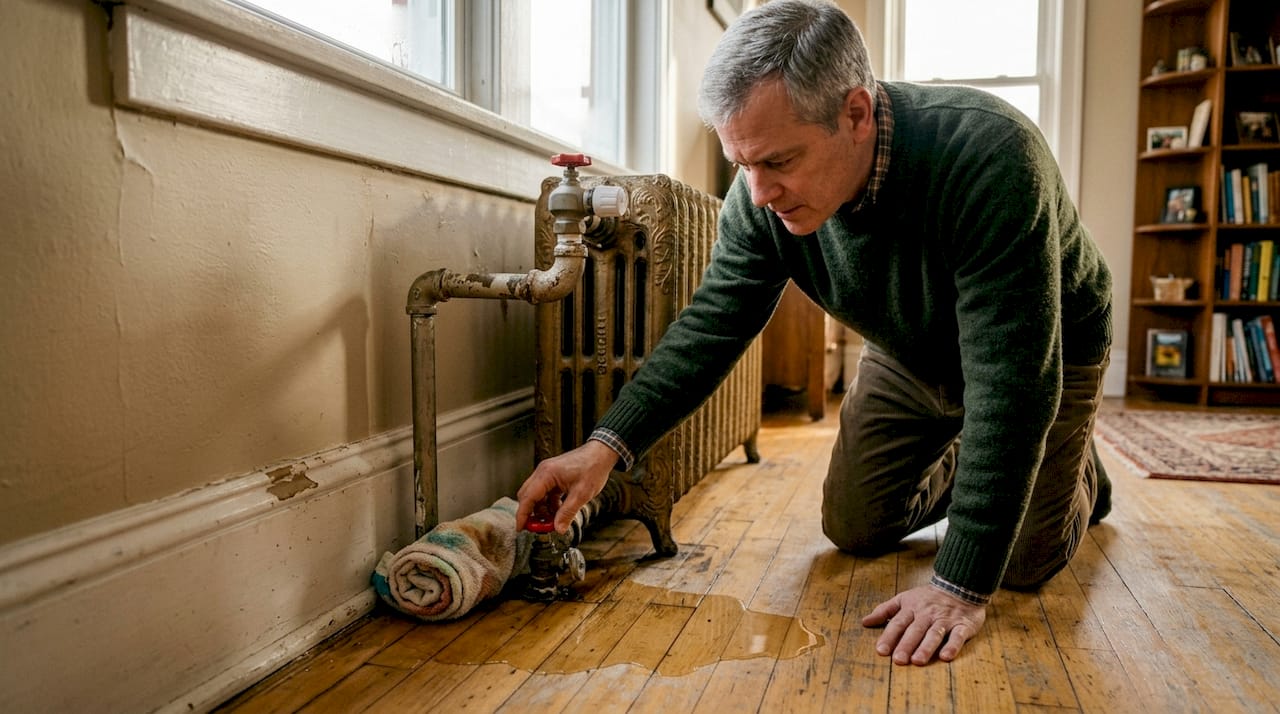
A Pittsburgh winter can turn brutal overnight, and when temperatures plunge below freezing, burst pipes become a real threat to your home. Water can start pouring through walls, ceilings, or floors within minutes, and every second you wait makes the damage worse. Whether it’s a PVC supply line in the basement or a copper pipe behind the kitchen wall, knowing exactly what to do right now can save you thousands of dollars in repairs. This guide walks you through every step, from shutting off the water to completing a solid, lasting fix, so you can handle the situation with confidence instead of panic.
Table of Contents
- Recognizing a pipe burst and your immediate next steps
- Gathering tools and materials: What you’ll need to fix a burst pipe
- Step-by-step repair: Fixing PVC, PEX, and copper pipe bursts
- Avoiding future bursts: Prevention and professional backup
- What most guides miss: The hidden costs and best-first steps for Pittsburgh homeowners
- Connect with expert plumbers in Pittsburgh for rapid burst pipe repair
- Frequently asked questions
Key Takeaways
| Point | Details |
|---|---|
| Act fast | Shutting off the water quickly prevents extensive damage. |
| Use the right tools | Choose supplies specific to your pipe type for a lasting repair. |
| Know your limits | DIY repairs work for simple cases—complex or hidden bursts need a pro. |
| Prevent future bursts | Insulate pipes and schedule inspections to avoid costly damage. |
Recognizing a pipe burst and your immediate next steps
The faster you identify a burst pipe, the less water damage you’ll face. Some signs are obvious. Others are easy to miss until things get serious.
Common symptoms of a burst pipe include:
- Sudden drop in water pressure throughout the house
- Water pooling on floors, ceilings, or inside walls
- Sounds of rushing or dripping water with no faucet running
- Wet spots or discoloration on drywall or flooring
- A spike in your water bill without explanation
Once you spot any of these, act immediately. Your first move is to shut off the main water supply valve, usually located near the water meter in your basement or utility room. Next, if the burst is near electrical outlets, panels, or appliances, switch off the power to that area at your breaker box. Do not step into standing water if electricity may be involved.
Move valuables, furniture, and electronics away from the wet area right away. Then open a cold faucet somewhere in the house to drain the remaining water from the pipes and reduce pressure. This small step limits how much water keeps flowing into the damaged area.
Timing matters enormously here. Frozen pipes are common in Pittsburgh winters, and a pipe that freezes and bursts can release dozens of gallons per minute. Delays of even 30 minutes can mean soaked insulation, warped subfloors, and mold starting to grow within 24 to 48 hours.
Act within the first 15 minutes. The difference between a $400 repair and a $4,000 restoration often comes down to how fast you shut off the water and contain the spread.
For a better sense of what these situations look like in real homes, check out these pipe burst repair examples from Pittsburgh homeowners. You can also review early warning signs to catch problems before they escalate into a full burst.
Once the water is off and the area is safe, call a licensed plumber if you have any doubt about your ability to complete the repair. Getting a professional on the phone early, even just for guidance, is always a smart move.
Gathering tools and materials: What you’ll need to fix a burst pipe
Once the emergency is under control, assembling the right tools and materials sets you up for a smooth repair. The supplies you need depend entirely on your pipe type, so the first step is identifying what you’re working with.
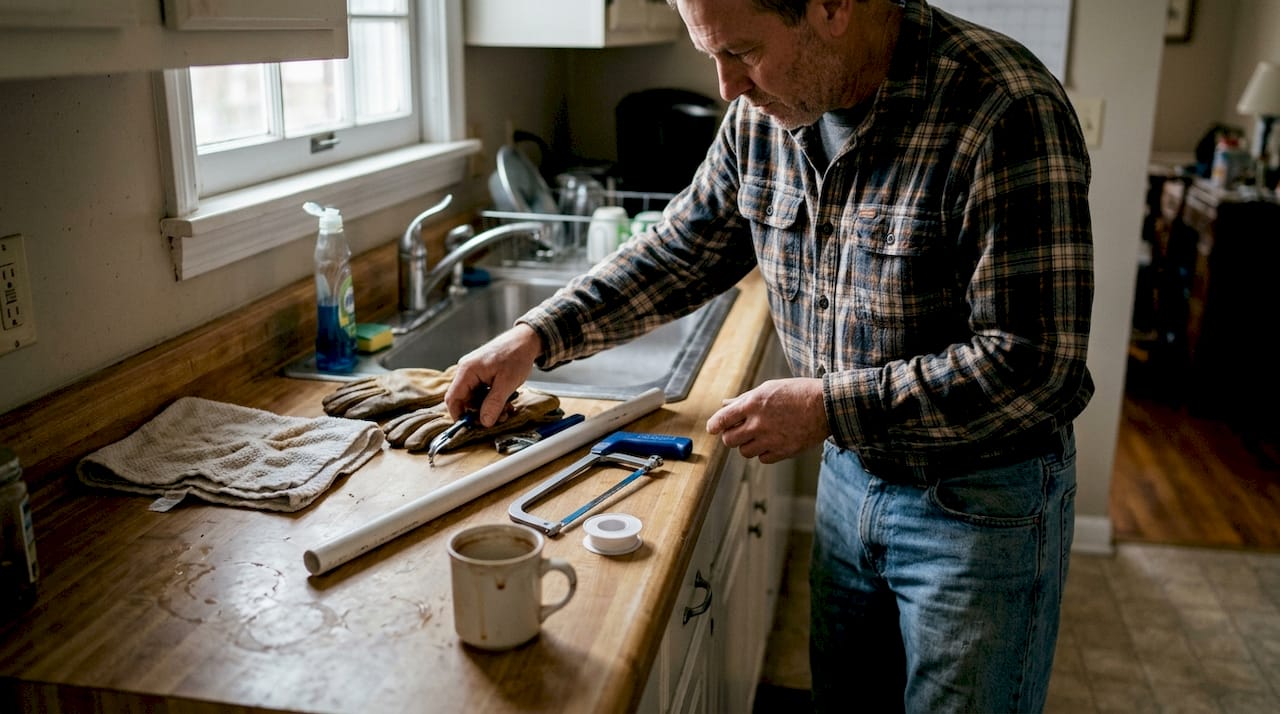
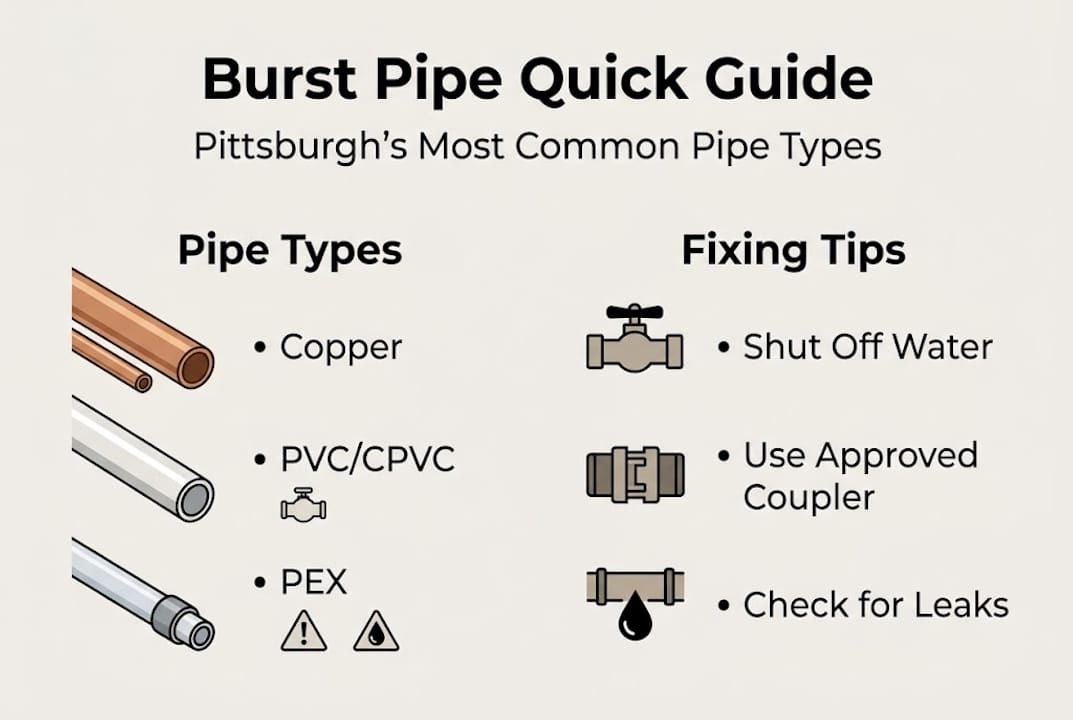
The three most common pipe materials in Pittsburgh homes are copper, PVC/CPVC, and PEX. Each requires a different repair approach. Permanent repair methods vary by pipe type: copper requires cutting out the damaged section and soldering a new piece or using push-to-connect fittings; PVC/CPVC requires cutting out the section and cementing new couplings with primer; PEX uses crimp, clamp, or push-to-connect couplings.
| Pipe type | Tools needed | Key materials |
|---|---|---|
| Copper | Pipe cutter, torch, flux brush | Solder, flux, couplings or push-to-connect fittings |
| PVC/CPVC | Pipe cutter or hacksaw, applicator brush | PVC primer, PVC cement, slip couplings |
| PEX | PEX cutter, crimp or clamp tool | Crimp rings or clamps, PEX couplings |
Safety gear you should always have on hand:
- Safety glasses
- Work gloves (heat-resistant if soldering copper)
- Dry rags and a bucket
- A flashlight or headlamp for low-light spaces
Pro Tip: PEX and accessible PVC repairs are realistic DIY projects for most homeowners. Copper soldering, however, requires a steady hand, proper ventilation, and real practice. If you’ve never soldered before, push-to-connect fittings like SharkBite are a safer and faster option for copper pipes.
For Pittsburgh homeowners, most hardware stores carry all of these supplies. Bring a short sample of your pipe to the store so staff can match the correct diameter and fitting type. Getting the wrong size is the most common and most frustrating mistake at this stage.
For tips on reducing costs and minimizing downtime, review these same-day plumbing tips that apply directly to burst pipe situations.
Step-by-step repair: Fixing PVC, PEX, and copper pipe bursts
Armed with your supplies, move methodically through the repair for the best chance of success.
Repairing a PVC or CPVC pipe:
- Dry the pipe and surrounding area completely.
- Mark and cut out the damaged section using a pipe cutter or hacksaw, leaving clean, square edges.
- Measure and cut a replacement section to fit, plus two slip couplings.
- Apply PVC primer to all joining surfaces and let it dry for 30 seconds.
- Apply PVC cement, push the fittings together with a quarter-turn, and hold for 30 seconds.
- Wait at least one hour before turning the water back on.
Repairing a PEX pipe:
- Cut out the damaged section cleanly with a PEX cutter.
- Slide crimp rings or clamps onto each end of the existing pipe.
- Insert the coupling into both ends.
- Position the rings and use the crimp or clamp tool to secure them.
- Turn the water on slowly and check for any drips.
Repairing a copper pipe:
- Cut out the damaged section and clean the pipe ends with emery cloth.
- Apply flux to the inside of the fittings and the outside of the pipe ends.
- Fit the new section and heat with a torch until solder flows into the joint.
- Let it cool completely before testing.
| Method | Difficulty | Time needed | Special tools |
|---|---|---|---|
| PVC/CPVC | Easy | 1 to 2 hours | Pipe cutter, brush |
| PEX | Easy to moderate | 30 to 60 minutes | Crimp or clamp tool |
| Copper (solder) | Advanced | 1 to 3 hours | Torch, emery cloth |
Pro Tip: DIY is realistic for accessible PEX and PVC, but copper soldering requires real skill. If your repair involves a joint inside a wall or near a structural element, call a professional before you start cutting.
After the repair, turn the water on slowly and watch the joint for at least five minutes. A successful repair shows no drips, no moisture, and steady pressure restored at your faucets. For more detail on what a full plumbing repair process looks like, you can review real examples from Pittsburgh jobs.
Avoiding future bursts: Prevention and professional backup
Even the best DIY fix means little if you’re not protecting your pipes against the next freeze or leak. Prevention is where Pittsburgh homeowners can really save money over the long run.
Key steps to protect your pipes this winter:
- Insulate exposed pipes in unheated spaces like crawl spaces, garages, and exterior walls using foam pipe insulation
- Keep your home’s thermostat at or above 55°F, even when you’re away
- Open cabinet doors under sinks on exterior walls during cold snaps to let warm air circulate
- Disconnect and drain outdoor hoses before the first freeze
- Know where your main shutoff valve is before an emergency happens
Insulating exposed pipes and maintaining 55°F heat are the two most effective ways to prevent burst pipes in Pittsburgh’s cold winters. These steps cost very little compared to the average repair bill.
A failed DIY repair can void your homeowner’s insurance claim. If the damage worsens because of an improper fix, insurers may deny coverage. Document everything and call a licensed plumber if you’re unsure.
Routine checks also matter. Look under sinks and around appliances monthly for soft spots, discoloration, or small drips. Catching a slow leak early is far cheaper than responding to a burst. Scheduling annual plumbing inspections gives you a professional set of eyes on the system before problems develop.
Knowing when to call a professional is just as important as knowing how to fix things yourself. If the burst is inside a wall, involves multiple pipes, or happens near your water heater or main line, the risk of a DIY attempt outweighs the savings. Explore the full range of plumbing services in Pittsburgh to understand what licensed plumbers can handle quickly and safely.
What most guides miss: The hidden costs and best-first steps for Pittsburgh homeowners
Most burst pipe articles stop at the repair steps. But here’s what we’ve learned after 30 years of working in Pittsburgh homes: the repair itself is often the smallest part of the bill.
Repair costs average $500, ranging from $150 to over $3,000, depending on pipe type, access, and the length of the damaged section. Emergency plumbers charge $45 to $200 per hour plus fees. But the costs that surprise homeowners most are the ones that follow: drywall replacement, mold remediation, flooring restoration, and insurance deductibles.
Pittsburgh’s older housing stock makes this worse. Many homes here still have original copper or galvanized steel pipes from the 1950s and 1960s. These pipes are thinner, more brittle, and far more vulnerable to freeze damage than modern PEX. A burst in an older home often reveals a larger problem hiding nearby.
Our honest advice: if the burst is accessible and involves PVC or PEX, a confident DIYer can handle it. But if there’s any doubt about the pipe’s age, location, or surrounding damage, calling a professional early saves money in the long run. Understand the full roles of professional plumbers before deciding to go it alone. Acting fast is right. Acting recklessly is expensive.
Connect with expert plumbers in Pittsburgh for rapid burst pipe repair
Sometimes a burst pipe is more than a DIY situation, and that’s completely okay. AG Heating, Cooling & Plumbing has spent 30 years responding to exactly these moments for Pittsburgh homeowners. Our team knows the local housing stock, the seasonal risks, and how to get your water running safely as fast as possible.
Whether you need local plumbing repair today or want to understand your options before the next freeze hits, we’re ready to help. From emergency response to preventive maintenance, our essential plumbing services cover every situation Pittsburgh homes face. Call us to schedule same-day service and get the peace of mind that comes with a repair done right the first time.
Frequently asked questions
How do I know if my pipe burst or just froze?
A burst pipe causes active water leakage and visible damage, while a frozen pipe in Pittsburgh winters typically blocks water flow without immediate leaks. If water is actively dripping or pooling, you likely have a burst.
Can I repair a burst pipe in my wall myself?
Hidden leaks inside walls require professional detection equipment and carry real risk of a failed DIY repair voiding your insurance coverage. It’s best to call a licensed plumber for any pipe you cannot fully see and access.
How much does a typical pipe burst repair cost in Pittsburgh?
Repair costs range from $150 to over $3,000, with an average around $500 depending on pipe type and access. Licensed plumbers in Pittsburgh typically charge $45 to $200 per hour plus service fees.
What should I do while waiting for the plumber to arrive?
Shut off the main water supply immediately, move valuables and electronics away from the wet area, and use towels or a wet vacuum to keep the space as dry as possible while you wait.
Recommended
- Examples of plumbing repairs Pittsburgh homeowners need – AG-Plumbing
- Same Day Plumbing in Pittsburgh: Cut Damage Costs 30% – AG-Plumbing
- Spot Plumbing Problems Early: Key Signs for Pittsburgh – AG-Plumbing
- Sewer line repair guide for Pittsburgh homeowners – AG-Plumbing
- How to fix leaking pipes fast: step-by-step repair guide
- 7 Practical Examples of Drain Repairs Every Homeowner Should Know
