
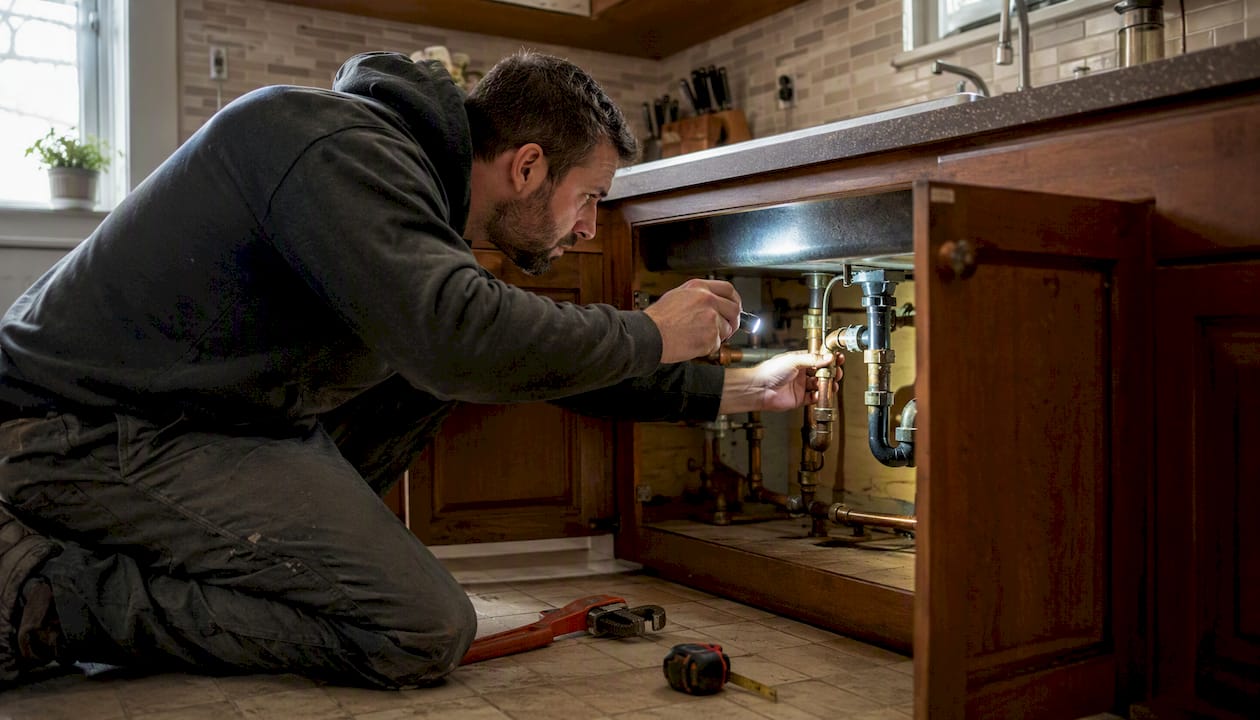
A solid plumbing plan for a house isn’t a blueprint you draw yourself. It’s a licensed, insured plumber walking your property, mapping what’s already there, and giving you a written scope you can actually trust. Hire a contractor who can verify their license with the state’s licensing board, carries liability insurance, and can pull permits when the job requires them.
Before anyone touches a wrench, take three steps:
- Verify the license number and confirm active liability insurance and workers’ compensation coverage.
- Get a written, itemized estimate before agreeing to any scope of work.
- Locate your main shutoff valve and photograph or video the problem area.
A survey by This Old House breaks plumbing hires into three categories: remodels, routine maintenance, and emergencies. Each one calls for a different pricing model and a different level of urgency. A local provider like AG Heating, Cooling & Plumbing works across all three, which matters when you’d rather call one trusted number than shop around mid-crisis.
Key Takeaways
Hiring a licensed, insured plumber who provides a written itemized estimate and handles permits correctly is the single most reliable way to plan and execute plumbing work for a house.
| Point | Details |
|---|---|
| Verify credentials first | Confirm the license number with the state board and request proof of liability insurance and workers’ comp. |
| Get an itemized written estimate | Compare scope, materials, labor structure, and warranty terms rather than shopping on price alone. |
| Confirm permit responsibility | Ask directly whether the plumber pulls permits and schedules required inspections for the job. |
| Budget a 15 to 20% contingency | Hidden corrosion or subfloor issues are common enough to plan for financially. |
| Keep records after every job | Save estimates, permit numbers, and as-built notes to speed up future service visits. |
| Consider AG Heating, Cooling & Plumbing | A 30-year local Pittsburgh provider offering itemized estimates, permit handling, and modern diagnostic tools like video inspection and hydro-jetting. |
Table of Contents
- When Do You Actually Need to Call a Plumber?
- What Happens During a Professional Plumbing Visit?
- How Do You Verify a Plumber’s License and Insurance?
- What Should You Ask Before Getting a Written Estimate?
- What Do Plumbing Repairs Typically Cost and How Long Do They Take?
- Which Plumbing Technologies Will You Actually Encounter?
- When Do Plumbing Jobs Require a Permit?
- How Should You Prepare Your Home Before the Plumber Arrives?
- How Do Maintenance Plans and Warranties Protect You Long-Term?
- How Do You Build or Review a Full Plumbing Layout Plan?
- How Does Plumbing Coordinate With Electrical and HVAC Work?
- What Symbols and Elements Show Up on a Residential Plumbing Plan?
- What Are the Most Common Plumbing Planning Mistakes?
- How Long Does a Plumbing Project Take From Plan to Final Inspection?
- Why Choose AG Heating, Cooling & Plumbing for Your House Plumbing Plan
- Where Can You Verify Credentials and Learn More?
- A Contractor’s Perspective on Planning Before You Dig
- Sources
- FAQ
When Do You Actually Need to Call a Plumber?
Most plumbing needs fall into three buckets, and knowing which one you’re in shapes how fast you need to move and how much you should expect to pay.
Planned remodels and installations give you the most control. Moving a drain line for a bathroom remodel, adding a laundry hookup, or repiping part of a kitchen means you can get multiple bids, compare materials, and schedule around your life. These jobs benefit most from a proper on-site layout review, since moving fixtures affects venting, drain slope, and water pressure throughout the house.
Routine maintenance is the boring, unglamorous work that prevents the exciting, expensive work. Flushing a water heater annually, snaking a slow drain before it clogs completely, or having a plumber check supply line connections during a home inspection all fall here.
Emergencies are the burst pipe at midnight, the sewage backup during a dinner party, the water heater that dies on the coldest week of the year. Timing is not on your side here, and pricing usually reflects that with after-hours premiums.
Pro Tip: Vet a plumber before you’re desperate. Save the number of a licensed local contractor now, so a burst pipe doesn’t force you into paying inflated emergency rates to a stranger who answers the phone at 2 a.m.
What Happens During a Professional Plumbing Visit?
A typical service call follows a consistent sequence, and knowing it helps you judge whether the plumber in front of you is doing a thorough job or rushing through one.
- Arrival and walkthrough, where the plumber asks what you’ve noticed and looks at the affected area.
- Diagnosis, which typically takes some time depending on complexity.
- Options and a written estimate covering repair paths and costs.
- Agreement on scope before any work starts.
- Repair or installation, followed by testing and cleanup, the duration varying by job complexity.
On the layout side, a good plumber doesn’t just fix the immediate problem. They trace supply and return routes, mark shutoff locations you may not have known existed, and often sketch a simple as-built diagram of what they found and what they changed. That sketch becomes part of your home’s paper trail.
Expect these deliverables from a professional visit:
- An itemized written estimate before work begins.
- A basic plumbing schematic or as-built notes for anything non-obvious.
- A permit application, if the scope requires one.
- Written warranty terms on labor and parts.
How Do You Verify a Plumber’s License and Insurance?
Two credentials matter more than anything else: an active license and current liability coverage. Ask for the license number directly, then check it against your state’s licensing board or local building department. A legitimate contractor will hand this over without hesitation.
Run through this sequence before signing anything:
- Confirm the name on the license matches the business name on the estimate.
- Check permit history in your local public permit database, since a plumber who has genuinely pulled permits for sewer or repipe work has a real track record you can verify, not just a claim. Checking permit history is one of the more reliable ways to confirm someone has actually done buried or code-sensitive work before.
- Request a certificate of insurance showing current policy dates, not an expired one from last year.
- Ask directly about workers’ compensation, especially if a crew (not a solo operator) will be on your property.
Watch for these red flags, any one of which should end the conversation:
- No proof of license when asked directly.
- Refusal to provide insurance documentation.
- Demands for full payment upfront before work starts.
- A vague scope of work with no written estimate.
Pro Tip: A plumber with a genuine permit history on sewer laterals or repipes is a safer bet for buried work than one who only shows you good reviews. Reviews describe how a job felt. Permits prove a job actually happened.
Nationally, licensing standards vary by state and municipality, so the specific board you check depends on where the property sits. A homeowner’s guide to plumbing insurance is worth a skim if you want to understand what a policy certificate is actually protecting you against.
What Should You Ask Before Getting a Written Estimate?
An estimate is only useful if it lets you compare apples to apples. Before you agree to anything, ask who will physically perform the work, whether pricing is hourly or flat, what’s included in materials, and whether there’s a warranty on both labor and parts.
Cover these points in every conversation:
- Who performs the work (the person quoting versus the crew doing it).
- Confirmation of licensing and insurance in writing.
- Who is responsible for pulling permits.
- Pricing structure: hourly rate versus flat fee for the full job.
- What materials are included, down to brand and model where it matters.
- Warranty length on labor and on parts separately.
- Realistic timeline for completion.
A thorough estimate itemizes each of these:
- Description of the work being performed.
- Materials list with brand and model specifics.
- Labor rate or flat fee, clearly stated.
- Permit fees, if applicable.
- Haul-away and cleanup charges.
- Exclusions and the change-order policy for surprises found mid-job.
Prioritize the itemized, transparent bid over the cheapest number on the page. A low bid that leaves out permit fees or cleanup costs isn’t actually cheaper once the invoice arrives.
Here’s a short script you can use to request an estimate: “Hi, we have [describe the issue] at our home and would like an on-site estimate. Could you confirm you’re licensed and insured, and let us know your typical turnaround for scheduling and for the estimate itself? We’d also appreciate an itemized quote once you’ve seen the job.”
What Do Plumbing Repairs Typically Cost and How Long Do They Take?
Costs vary by job scale, region, and material choice, so treat any figure as a planning range rather than a guarantee.
Small fixture or leak repairs usually run from under an hour to a few hours of labor. These are same-day fixes in most cases.
Emergency after-hours calls carry a premium on top of standard rates, since the plumber is rearranging their schedule or working outside normal business hours to reach you.
Larger remodel or repipe work scales with the number of fixtures involved and whether walls or flooring need to be opened. AG-plumbing’s installation cost breakdown walks through labor and material factors for bigger jobs if you want a fuller sense of what drives the total.
On timeline: small repairs often wrap in a few hours. Medium jobs, like replacing a water heater or repiping a bathroom, typically take a shorter to moderate amount of time. Whole-home repipes or major remodel plumbing can take several days to weeks once permits and inspections are factored in.
Hidden corrosion, mold behind a wall, or subfloor damage discovered mid-job are common enough that a contingency isn’t paranoia, it is just planning.
Which Plumbing Technologies Will You Actually Encounter?
Modern diagnostic and repair tools reduce guesswork and, in many cases, reduce how much of your yard or wall gets torn up.
| Method | What it does | Best used for |
|---|---|---|
| Video pipe inspection | Sends a camera through pipes to show blockages, cracks, or root intrusion | Diagnosing before any digging or excavation decision |
| Trenchless pipe lining/bursting | Repairs or replaces underground pipe with minimal excavation | Sewer laterals and underground sections where access is limited |
| Hydro-jetting | Uses high-pressure water to clear grease, scale, and root buildup | Recurring drain clogs, grease buildup, root intrusion |
| Electronic leak detection | Locates hidden leaks without cutting into walls or slabs | Slab leaks or leaks behind finished walls |
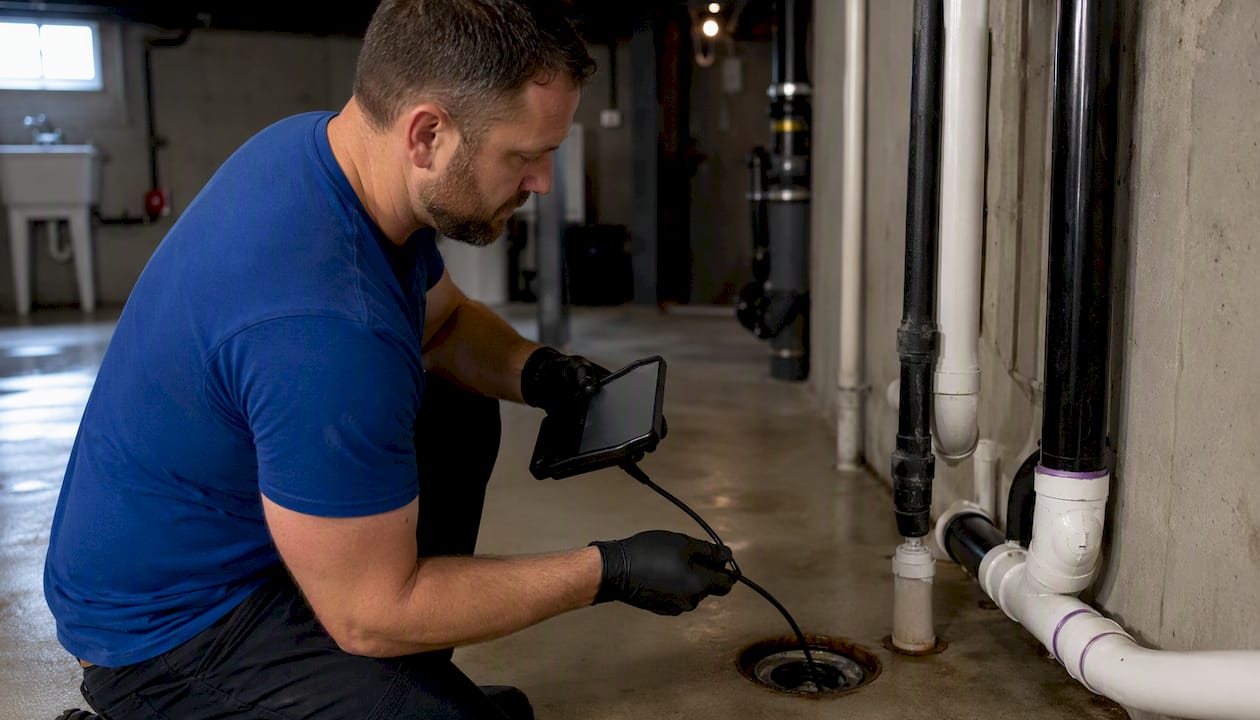
Trenchless methods can replace or reline underground pipe with far less landscaping damage than a traditional dig-and-replace job, which matters if you’ve got mature trees or hardscaping over the line.
One caution worth taking seriously: older pipe materials, particularly cast iron or aging clay, can be brittle enough that aggressive hydro-jetting causes more damage than it fixes. An experienced plumber scopes with video first and recommends replacement over clearing when the pipe simply can’t take the pressure. Ask to see footage before agreeing to an aggressive clearing method on an older system.
When Do Plumbing Jobs Require a Permit?
Permits aren’t a formality plumbers use to pad invoices. They’re how your municipality confirms the work meets code, and skipping them creates real downstream risk.
Jobs that commonly trigger a permit include:
- Water heater replacement.
- Whole-home or partial repipes.
- Sewer lateral repair or replacement.
- Gas piping work.
- Major relocation of fixtures or drainage lines.
The process usually goes: the plumber confirms whether a permit is required, pulls it under their business name, schedules the required inspections, and hands you the documentation once it’s closed out.
Skipping permits on required work risks fines, a failed inspection when you eventually sell the home, and even denied insurance claims if something related to that work fails later. Before hiring anyone for permit-triggering work, confirm directly: will you pull the permit and schedule the inspection yourself?
How Should You Prepare Your Home Before the Plumber Arrives?
A little prep on your end speeds up the visit and can keep costs down, since time spent moving furniture or hunting for a shutoff valve is time you’re paying for.
Before the appointment:
- Clear access to the affected area, whether that’s under a sink, a crawlspace, or a utility closet.
- Move fragile or valuable items out of the work zone.
- Secure pets somewhere they won’t be underfoot.
- Know where your main water shutoff is located, even if you expect the plumber to use it.
- Take photos or a short video of the symptom (a leak, a slow drain, a strange sound) before the visit.
On the day of service, confirm your appointment window, stay reachable to answer questions, and make sure the plumber has access to any relevant shutoffs. If you have a preference for cleanup standards or parking, say so up front rather than after the fact.
How Do Maintenance Plans and Warranties Protect You Long-Term?
A single repair fixes today’s problem. A maintenance relationship with a plumber catches tomorrow’s problem before it becomes an emergency.
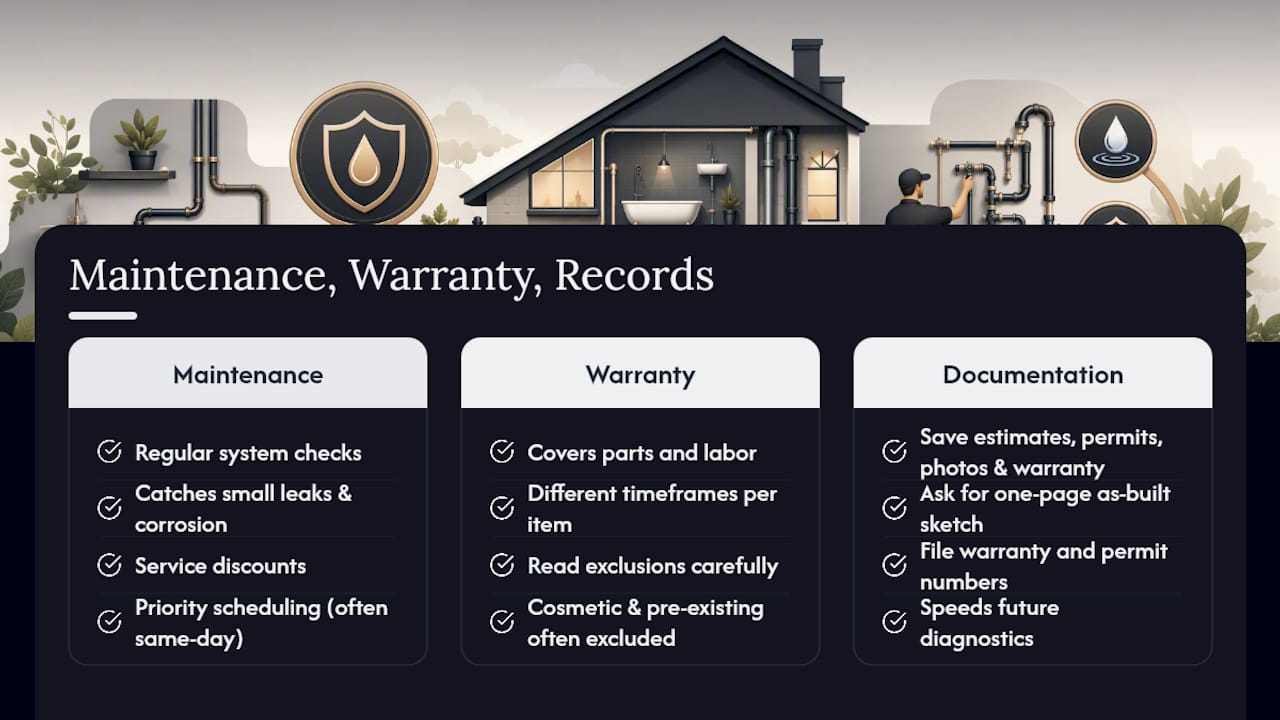
Maintenance agreements typically offer regular system checks, which catch small leaks or corrosion before they become a burst pipe, along with service discounts and priority scheduling when something does go wrong. That last part matters more than it sounds. Being an existing customer often means getting seen same-day instead of waiting in a queue behind first-time callers.
On warranties, expect coverage on both labor and parts, usually with different time frames for each. Read the exclusions carefully. Cosmetic restoration (drywall, paint, flooring cut into during a repair) and pre-existing damage are commonly excluded, so don’t assume warranty coverage means everything gets made whole.
Keep a simple file with every estimate, permit number, before-and-after photo, and warranty document from past work. Ask your plumber for a basic as-built note describing what they found and what they changed. Keeping that record on hand speeds up diagnostics significantly the next time something goes wrong, since the next plumber isn’t starting from zero.
Pro Tip: Ask your plumber to leave a one-page as-built sketch after any significant repair, even a simple one. It costs them a few minutes and saves the next visit real diagnostic time.
How Do You Build or Review a Full Plumbing Layout Plan?
A comprehensive on-site plumbing plan starts with a walkthrough, not a drawing pad. The plumber traces every visible supply line, drain, and vent stack, then notes what’s hidden behind walls or under slabs based on the home’s age and construction style.
From there, the process usually moves through a few concrete steps: mapping existing fixture locations and their connections, identifying the main shutoff and any secondary shutoffs, confirming drain slope and vent routing meet basic function, and sketching a simple schematic showing what exists and what will change. That schematic doesn’t need to be architectural. It needs to be accurate enough that another plumber could pick it up years later and understand the system without cutting into a wall to find out.
If you’re reviewing a plan someone else drew up, whether from a past renovation or a previous owner, cross-check it against what’s actually behind your walls before trusting it. Old sketches are notoriously unreliable once a house has had two or three owners’ worth of “quick fixes.”
How Does Plumbing Coordinate With Electrical and HVAC Work?
Plumbing rarely operates in isolation once a project involves opening walls or floors. Water heaters share electrical circuits, HVAC condensate lines tie into drain systems, and gas lines for furnaces or ranges often run alongside water supply in the same wall cavity.
On a remodel, the sequence typically matters more than people expect. Rough plumbing usually goes in before drywall, but coordination with the electrician matters when a water heater needs a dedicated circuit or when a tankless unit requires specific amperage. HVAC ductwork and plumbing vent stacks can compete for the same joist bays, so a plumber who flags conflicts early saves a contractor from cutting into finished work later.
If you’re managing a multi-trade remodel yourself, ask your plumber to walk the site with (or at least review notes from) whoever’s handling electrical and HVAC before rough-in begins. A five-minute conversation avoids a much more expensive fix after drywall goes up.
What Symbols and Elements Show Up on a Residential Plumbing Plan?
A basic residential plumbing schematic uses a small, consistent set of markings, and understanding a handful of them helps you actually read the sketch your plumber leaves behind.
Supply lines are typically drawn as solid lines, while drain, waste, and vent (DWV) lines appear as different line weights or dashed patterns to distinguish them from pressurized supply. Fixtures get simple icons: a circle or rectangle for sinks, an oval for tubs, a specific symbol for toilets. Shutoff valves show up as small perpendicular marks along a line, and cleanouts, which matter a lot if a drain ever backs up, get their own distinct marker.
None of this needs to look professional. A hand-drawn version with clear labels works just as well as anything more polished, as long as shutoffs, cleanouts, and fixture locations are marked in a way you or a future plumber can actually use.
What Are the Most Common Plumbing Planning Mistakes?
The most frequent planning error is undersizing drain lines or vent stacks when adding a fixture, like tying a new bathroom into an existing line that wasn’t built to handle the added load. This shows up later as slow drains or gurgling that never existed before the remodel.
A second common mistake is ignoring existing shutoff locations when planning a layout change, which forces an expensive retrofit later when a section needs isolation for repair. A third is skipping the permit step on work that clearly requires one, either out of cost concerns or a belief that “it’s a small job.” That decision tends to cost more later than it saves upfront, especially if the home ever gets inspected for a sale.
The fix for all three is the same: have a licensed plumber walk the plan before work starts, not after something goes wrong. A short consultation catches sizing and code issues that are cheap to fix on paper and expensive to fix once the wall is closed.
How Long Does a Plumbing Project Take From Plan to Final Inspection?
Timelines scale directly with project size. A single fixture repair or replacement, with no permit required, often finishes in a single visit lasting a few hours.
A permit-required job, like a water heater swap or a small repipe, typically runs from a few days to about two weeks once you account for scheduling the permit, completing the work, and waiting for the inspector’s availability. A larger remodel involving multiple fixtures, rough-in work, and final inspection can stretch several weeks, particularly if inspection scheduling in your municipality runs behind.
Build inspection wait times into your schedule from the start rather than assuming the plumber’s calendar is the only bottleneck. Local building departments often have their own queue that adds days regardless of how fast the actual plumbing work goes.
Why Choose AG Heating, Cooling & Plumbing for Your House Plumbing Plan
If you’ve read this far, you know what to look for: a licensed, insured plumber who gives you a real written estimate and can pull permits without hesitation. AG Heating, Cooling & Plumbing has been doing exactly that in Pittsburgh, PA for 30 years.
The team uses the same modern diagnostic tools covered above, video pipe inspection, hydro-jetting, and trenchless repair, so a layout review or a repair doesn’t mean guesswork or unnecessary excavation in your yard. Every estimate is itemized and written before work begins, and every schematic or as-built note left behind is built to speed up your next service call, not just close out the current one.
Whether you need an emergency repair, a maintenance agreement, or a full on-site layout review for a remodel, request a written estimate through AG-plumbing’s service page and confirm active licensure and insurance coverage before you agree to anything. If you’re comparing service types first, the breakdown of essential plumbing services is a useful starting point.
Where Can You Verify Credentials and Learn More?
A few resources are worth bookmarking before you hire anyone for plumbing work on your house.
- Your state’s licensing board lookup tool confirms whether a license is active and in good standing, exactly the step recommended when verifying plumbing and gas fitting licenses.
- Your local building department’s permit portal lets you search past permits filed under a contractor’s business name, which is the clearest evidence of real project history on buried or code-sensitive work.
- Consumer-facing hiring guides, like the hiring checklist from This Old House or the step-by-step questions from Lowe’s, lay out practical vetting questions in plain language.
Using a permit portal takes a few extra minutes, but it’s the difference between trusting a contractor’s word and confirming it against a public record. For work involving sewer laterals or full repipes, that few minutes of checking is worth far more than a glowing five-star review.
A Contractor’s Perspective on Planning Before You Dig
The single biggest mistake homeowners make isn’t hiring the wrong plumber. It’s skipping the planning conversation entirely and jumping straight to “just fix it.” A rushed diagnosis on a remodel almost always costs more later, because a line gets moved without checking vent routing, or a fixture gets added without confirming the existing drain can handle the extra load.
Ask for the as-built sketch. Ask about permits before the work starts, not after an inspector shows up unannounced. And if you’re planning anything beyond a simple repair, invite the plumber to walk the whole space before quoting, not just the one fixture that’s currently broken. That short conversation is where most expensive mistakes get caught for free.
If you want a second opinion on a layout or a scope you’ve already been quoted, request an on-site estimate and ask directly for a written schematic when the work is done.
Sources
- Find a Plumber: Hiring, Qualifications, and Costs – This Old House
- How to hire a plumber for repairs or big jobs · Proven Pros
- What to Expect During a Plumbing Service Call Guide
FAQ
What Does “Plumbing Plans for a House” Actually Mean?
It refers to a licensed plumber’s on-site layout review and written service plan for repairs, maintenance, or installation work, not an architect’s blueprint.
How Do I Verify a Plumber’s License and Insurance?
Ask for the license number and check it directly against your state’s licensing board, then request a current certificate of liability insurance and workers’ compensation.
Do I Need a Permit for a Water Heater Replacement?
Most municipalities require a permit for water heater replacement, and a professional plumber should confirm this and pull it under their business name before starting work.
How Long Does a Small Plumbing Repair Usually Take?
Most small fixture or leak repairs finish within a few hours during a single visit, based on the typical service call sequence of diagnosis, estimate, and repair.
Is AG Heating, Cooling & Plumbing a Good Choice for a Full Plumbing Layout Review?
AG Heating, Cooling & Plumbing has served Pittsburgh, PA for 30 years, offers itemized written estimates, and uses modern diagnostic tools like video inspection and hydro-jetting for accurate on-site layout reviews.
Recommended
- Heating, Cooling & Plumbing Services Pittsburgh, PA
- Practical Plumber Advice Every Homeowner Should Know – AG-Plumbing
- Tips for hiring a plumber in Pittsburgh: 5 key criteria – AG-Plumbing
