
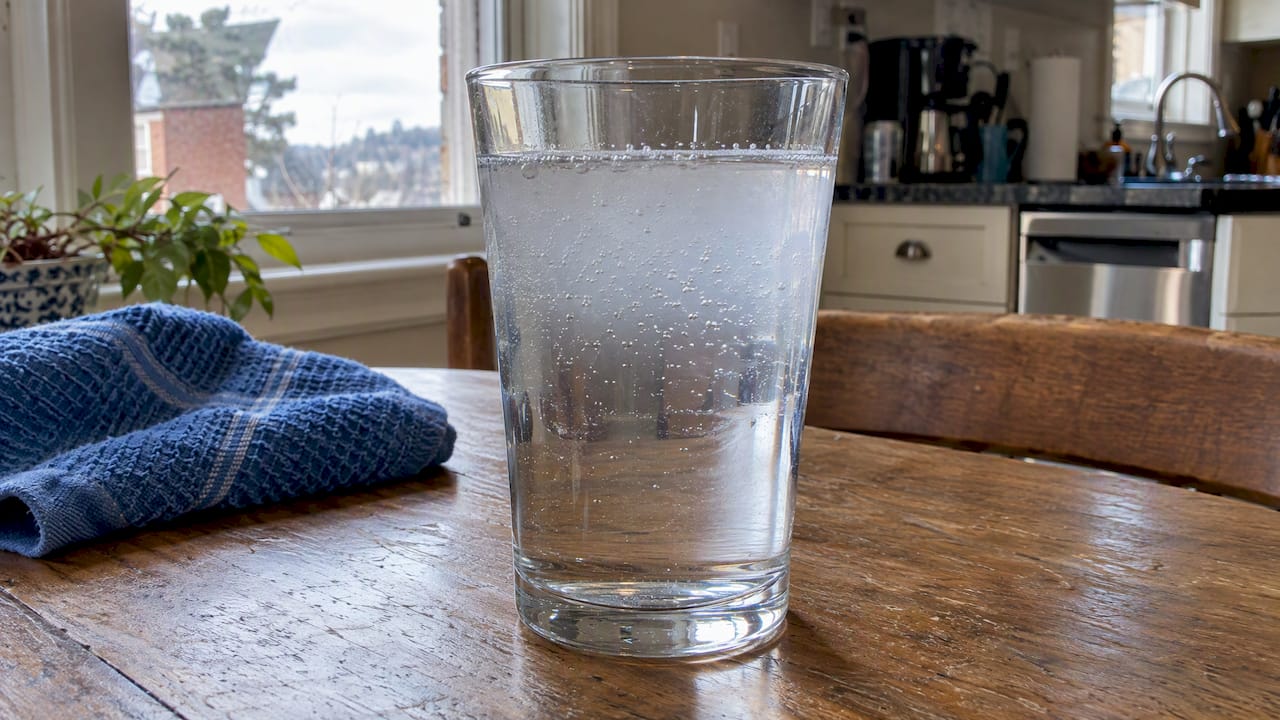
Most cloudy tap water comes from tiny air bubbles trapped in the pipes, and it usually clears from a glass within a few minutes without causing any harm. If the cloudiness lingers, turns the water a color, or comes with an odd smell or taste, treat it as a signal to test the water or call a professional rather than assume it is fine.
TL;DR:
- Fill a clear glass from the cold tap; if it clears from the bottom up within minutes, trapped air is the likely cause.
- Any of these signs, especially persistent cloudiness or illness affecting multiple household members, warrants testing instead of relying on appearance alone.
- Public water systems must keep filtered water at or below 0.3 NTU in at least 95% of monthly samples, and never above 1 NTU.
- Cloudiness limited to one fixture often points to its aerator; hot water alone suggests heater sediment, while every tap warrants checking with neighbors.
- Private well owners should test annually for coliform bacteria, nitrates, total dissolved solids, and pH; after flooding, use bottled or boiled water pending testing.
Table of Contents
- Common causes of cloudy tap water
- Try the glass test before you worry
- When cloudy water is fine and when it isn’t
- What to do next: fixes and when to call a plumber
- Private well owners: your testing and safety checklist
- A plumber’s view: what we check when water looks cloudy
- What homeowners get wrong about cloudy water
- How we can help if cloudy water points to a plumbing issue
- FAQ
- Sources
Common causes of cloudy tap water
Several things can make water look milky or dull, and the cause usually matches a specific pattern you can spot at home.
Aeration is the most frequent culprit. Cold, pressurized water holds dissolved air, and when that water hits the lower pressure at your faucet, tiny bubbles form and scatter light, making the water look white or milky. Geological Survey](https://www.usgs.gov/media/images/air-bubbleswater-can-make-clear-water-appear-cloudyfor-a-few-seconds). This kind of cloudiness is harmless and typically fades within minutes as the bubbles rise and pop.
Other causes leave different clues:
- Hard-water minerals can create a faint haze that lingers longer than air bubbles but rarely changes the water’s color.
- Sediment or rust shows up as brown, orange, or reddish tints and often comes from corroding pipes or nearby main work, according to the Alabama Department of Environmental Management.
- Biofilm, including pink slime in a shower or black slime in a drain, grows on wet surfaces rather than in the water itself and points to a fixture or drain issue, not the water supply.
Matching what you see to one of these patterns narrows down whether you’re dealing with a quick nuisance or something that needs a closer look.
Try the glass test before you worry
A simple glass of water tells you more than guesswork, and it takes less than five minutes.
- Fill a clear glass straight from the cold tap and set it on a counter without disturbing it.
- Watch the glass: if it clears from the bottom up within a few minutes, you’re looking at trapped air, a pattern the USGS points to as the standard way to tell air apart from particles.
- Run the same test on the hot tap and on at least one other fixture to see if the cloudiness is isolated or widespread.
- If the water stays cloudy, looks colored, or smells off, snap a photo, note which taps are affected, and note how long it’s been happening.
That record becomes useful fast if you end up calling your utility or a plumber.
When cloudy water is fine and when it isn’t
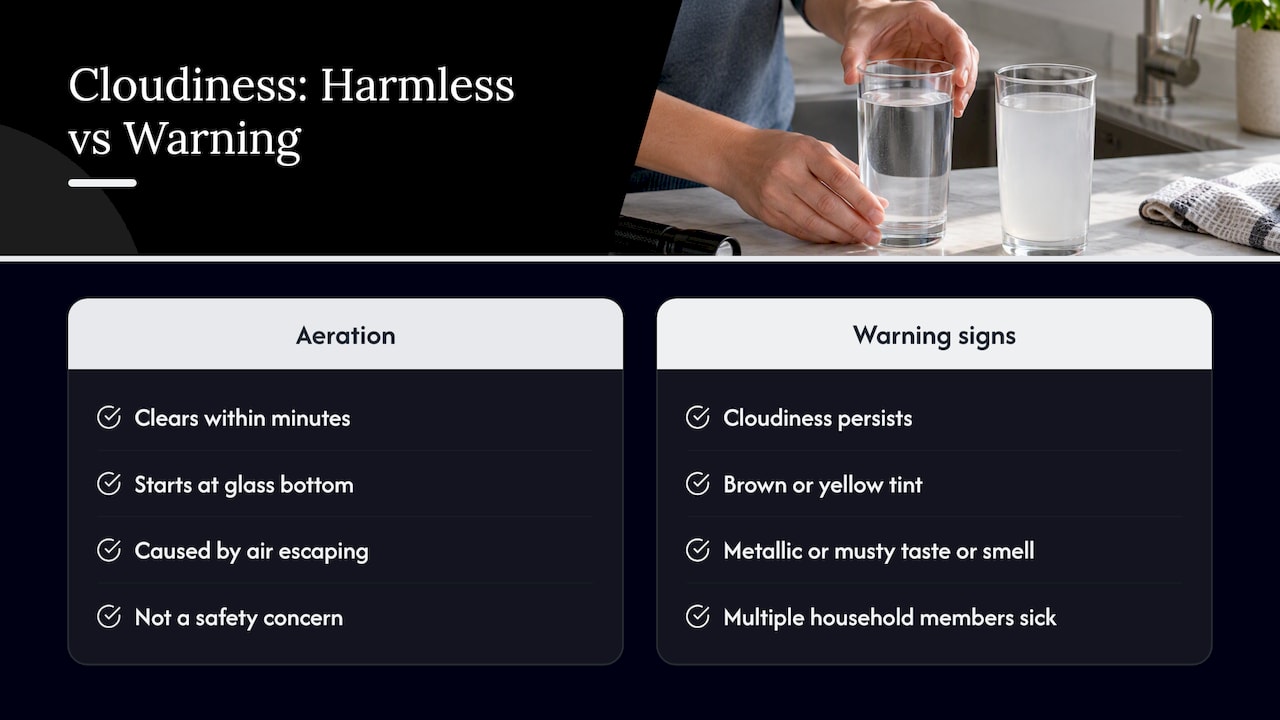
Cloudiness that clears from the bottom of a glass within a few minutes is almost always air escaping the water, a pattern described by the USGS. That kind of haze isn’t something to worry about.
Pay closer attention when cloudiness sticks around, the water is tinted brown or yellow, there’s a metallic or musty taste or smell, or more than one person in the house feels sick after drinking it. Any of those point to something beyond simple aeration, whether that’s corrosion, sediment, or a water-quality issue worth testing for.
The EPA requires public water systems to keep filtered water at or below 0.3 NTU (nephelometric turbidity units) in at least 95% of monthly samples, and never above 1 NTU.** Turbidity matters because cloudy water can shelter bacteria and other organisms from disinfection, according to the USGS Water Science School, so utilities treat clarity as both a cosmetic and a safety measure.
What to do next: fixes and when to call a plumber
Start with the cheapest, fastest checks before assuming the worst.
- Let a glass settle for a few minutes to confirm whether you’re dealing with air.
- Flush the affected line by running the cold tap for a minute or two.
- Unscrew the faucet aerator and rinse out any trapped sediment or mineral buildup.
- Check your water pressure if cloudiness shows up right after a pressure change or nearby repair work.
If only one fixture is affected, cleaning or replacing its aerator often solves it. If the problem is limited to hot water, sediment settled in the water heater tank is a common cause and usually needs a tank flush. If the cloudiness shows up at every tap in the house, check whether neighbors are seeing the same thing (which points to the utility or main line) before scheduling a plumber’s diagnostic visit.
A plumber’s visit for persistent or whole-house cloudiness typically starts with isolating fixtures one at a time, inspecting aerators and shutoff valves, checking line pressure, and running a camera inspection if corrosion or a blocked section is suspected. From there, common fixes include clearing corroded fittings and sediment buildup, flushing trapped air after a repair, or, if lines show real wear, discussing repiping options.
Pro Tip: Before cleaning away any stains or discoloration, pull a sample of the first water out of the tap. Scrubbing first can destroy evidence you’d want for testing later.
Private well owners: your testing and safety checklist
If you’re on a private well, no utility is monitoring your water for you. The Safe Drinking Water Act doesn’t cover private wells, so testing responsibility falls on the homeowner.
- Test annually for coliform bacteria, nitrates, total dissolved solids, and pH, and reach out to your local health department for specific guidance.
- If cloudiness follows flooding or heavy rain, stop drinking the water, switch to bottled or boiled water, and test before resuming normal use.
- If a test comes back positive for coliform, a common next step is boiling the well, shocking it with chlorine, and retesting before using the water again.
- Common treatments for ongoing cloudiness include sediment filtration, shock chlorination, and a professional well inspection to rule out structural issues.
Keeping test records over time also helps you and anyone who eventually works on the well spot patterns tied to weather or land disturbance nearby.
A plumber’s view: what we check when water looks cloudy
When a homeowner calls us about cloudy water, we start by isolating which fixtures are affected and inspecting aerators and screens for buildup. From there we check water pressure and, for persistent or unexplained cases, run a camera inspection to look for corrosion or trapped air pockets left behind after recent repair work.
In practice, the most common in-home causes we find are:
- Sediment settled at the bottom of a water heater tank, which shows up as hot-only cloudiness.
- Corroded fittings or aging galvanized pipe sections that shed rust into the line.
- Air trapped in the system after a repair, main shutoff, or pressure change.
When you call for service, having photos, a list of which taps are affected, and a timeline of when the cloudiness started helps us diagnose faster.
What homeowners get wrong about cloudy water
The biggest mistake isn’t ignoring cloudy water, it’s over-reacting to it. Most calls about milky tap water turn out to be air bubbles that would have cleared on their own in the time it took to find a glass and worry about it. The glass test exists precisely because sight alone is unreliable: cloudy does not mean contaminated, and clear does not mean safe.
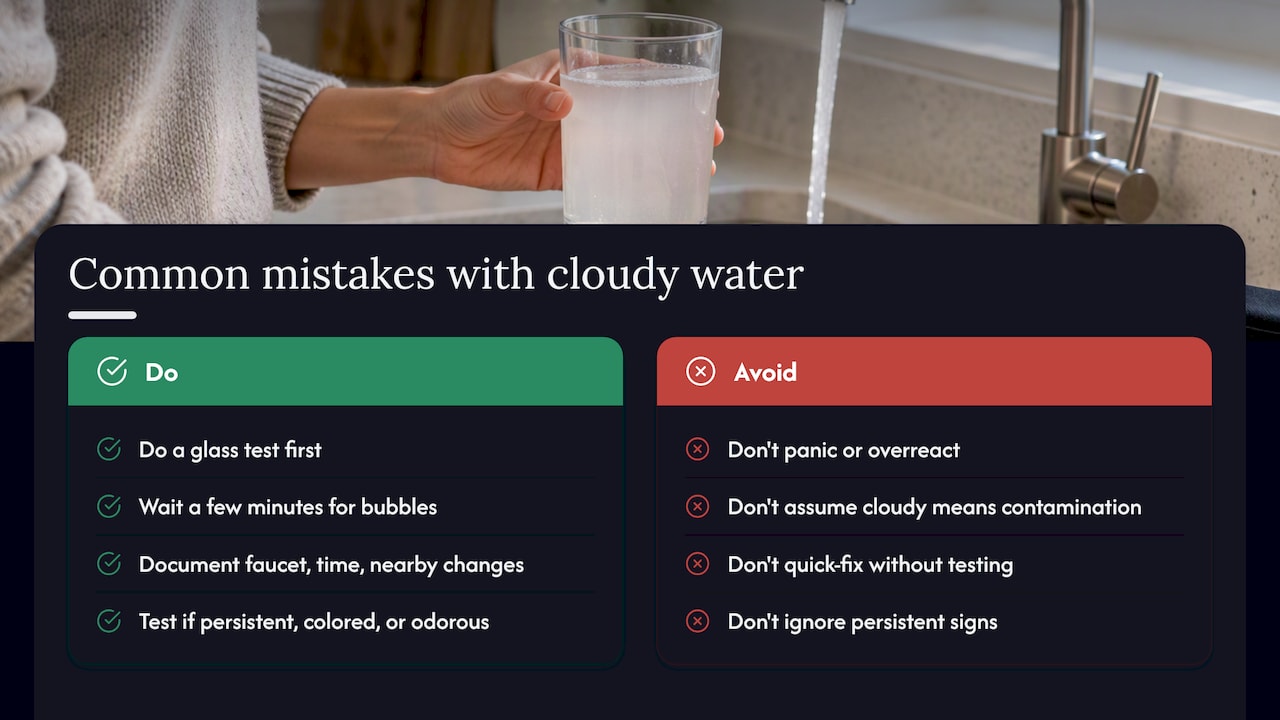
The advice that gets underused is the opposite kind of patience: taking a few minutes to document the problem, which faucets, what time, what changed nearby, before jumping to either panic or a quick fix. That record is what turns a vague complaint into something a lab or a plumber can actually act on.
If there’s one priority, it’s this: treat the glass test as your first move every time, and treat persistence, color, or odor as your signal to stop guessing and start testing. Everything else, aerators, pressure, water heaters, is secondary to getting that first read right.
— Maayan
How we can help if cloudy water points to a plumbing issue
When cloudy water turns out to be more than air, a hands-on diagnosis saves you from guessing at the fix. We handle a variety of issues that commonly sit behind persistent cloudiness, from corroded fittings and sediment buildup to aging lines that need a closer look.

Our plumbing repair visits start with the same checks described above: isolating fixtures, inspecting aerators, and testing pressure, and we’ll walk you through what we find. If a line has corroded or degraded beyond a simple fix, we also handle plumbing repiping and hydro jetting for buildup deeper in the system.
Before you call, have ready:
- Photos of the cloudy or discolored water.
- Which taps are affected and whether it’s hot, cold, or both.
- How long the issue has been going on.
Reach out through Ag-plumbing to schedule a diagnostic visit.
FAQ
Why is my tap water all cloudy?
The most likely cause is trapped air bubbles from pressurized or cold water, which the USGS notes typically clears within a few minutes. If the cloudiness persists or the water is colored, the cause is more likely sediment, rust, or a water-quality issue worth testing.
Does cloudy water always mean there’s a problem?
No. If a glass clears from the bottom up within a few minutes, that pattern points to harmless air rather than particles. Cloudiness that lingers, changes color, or comes with an odd smell or taste is the kind that calls for testing rather than assumption.
Is cloudy tap water safe to shower with?
Cloudiness caused by air bubbles poses no issue for showering. If the water is also discolored or has a strong odor, it’s worth checking the cause before regular use, since some underlying issues, like high turbidity, can affect more than just appearance according to the USGS Water Science School.
How can I tell if my tap water is making me sick?
Watch for symptoms that show up after drinking the water and affect more than one person in the household, along with water that has an unusual taste, smell, or color. If you notice any of that, switch to bottled or boiled water and test the supply, and private well owners should also check the CDC’s well-testing guidance for which contaminants to screen for.
Sources
Recommended
- Pull a First Draw Sample Before Scrubbing Blue Green Stains, Homeowners
- Common Plumbing Repair Issues and How to Fix Them
- Homeowners: Diagnose Low Water Pressure Upstairs in 20–30 Minutes
- Practical Plumber Advice Every Homeowner Should Know
