
Pittsburgh water runs moderately hard, typically 85 to 136 parts per million (about 5 to 8 grains per gallon), with most reports settling near 100 ppm. That’s enough to leave spots on glassware and film on fixtures, but not enough to require a whole-home softener for most households. The Pittsburgh Water and Sewer Authority publishes the official numbers every year, and it’s worth checking before you spend money on equipment you might not need.
TL;DR:
- Most Pittsburgh households do not need a water softener unless tests reveal hardness levels of 7 gpg or higher, especially with tankless water heaters or frequent descaling.
- Water hardness varies between 85 and 136 ppm, with some test points reaching up to 130 ppm, or about 7.6 gpg, indicating moderate hardness levels.
- Seasonal and local factors, such as source water differences and household pipe conditions, can cause your actual hardness to differ from citywide averages.
- Hardness impacts fixtures and appliances by causing scale buildup, which reduces efficiency and shortens appliance lifespan, especially in water heaters.
- Proper testing with lab or home tests and tailored treatment based on actual numbers prevent overspending on unnecessary equipment.
Table of Contents
- How Hard Is Pittsburgh Water, Exactly?
- Why Does Hardness Vary by Pittsburgh Neighborhood?
- Is Hard Water Bad for Your Health or Just Your Fixtures?
- What Are Your Options for Managing Hard Water in Pittsburgh?
- Where Can You Verify Your Own Water Hardness Number?
- A Local Plumber’s Take on Pittsburgh’s Water
- Get Your Water Tested and Your Plumbing Protected
- Sources
- FAQ
How Hard Is Pittsburgh Water, Exactly?
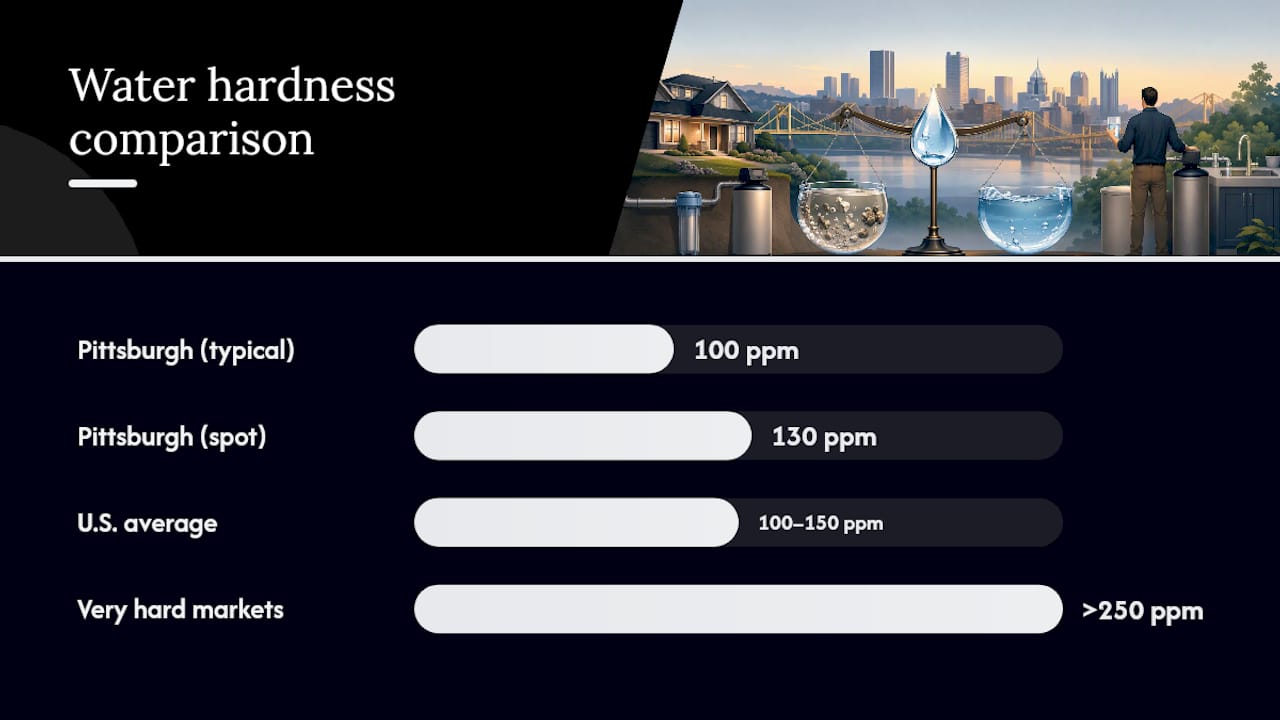
The most commonly cited figure puts Pittsburgh water hardness at roughly 100 ppm, or about 5.8 gpg, according to Tapwater. That lands squarely in the “moderately hard” category on the standard water hardness scale used across the plumbing and water treatment industries.
Here’s how that scale is generally understood:
- Soft: low hardness
- Moderately hard: moderate hardness values
- Hard: elevated hardness
- Very hard: very high hardness levels
Pittsburgh sits comfortably in the middle range, though some reports push toward the harder end. Some PWSID-level records show hardness closer to 130 ppm (7.6 gpg) for specific entry points in the distribution system, which is why a single citywide number only tells part of the story.
For comparison, the national average tends to fall somewhere between 100 and 150 ppm, so Pittsburgh sits at or slightly below the middle of the pack for U.S. cities. That’s a meaningfully better position than harder markets in the Midwest and parts of the Southwest, where groundwater sources often push hardness above 250 ppm. Pennsylvania as a whole is a mixed bag: some municipalities pull from softer surface water, others from mineral-rich groundwater, so a Pittsburgh number doesn’t necessarily match what you’d see in Erie or Allentown.
Why Does Hardness Vary by Pittsburgh Neighborhood?
Pittsburgh’s water hardness isn’t one flat number citywide. It shifts based on where your water enters the distribution system, how it’s treated at that point, and even the condition of the pipes running to your house.
Three main factors drive that variation:
- Source water differences. PWSA draws from the Allegheny River, and treatment happens at multiple points, so mineral content can shift slightly depending on your zone.
- Distribution zone effects. Water sits in different pipe networks for different lengths of time before reaching your tap, which can concentrate or dilute mineral content.
- Household plumbing age. Older galvanized pipes can add trace minerals that skew a home test slightly higher than the citywide average.
The only way to know your actual number is to test it. Check the PWSA Consumer Confidence Report for your general zone, then run a home test strip for a real-time reading, and interpret it against the ppm to gpg scale above.
Pro Tip: Test your water twice, once in winter and once in summer. Treatment adjustments and seasonal source shifts can nudge hardness readings up or down by 10 to 15 ppm.
If your home test comes back noticeably higher than what your zone’s CCR entry shows, a lab test through an independent water-testing service will give you a more precise number before you invest in equipment.
Is Hard Water Bad for Your Health or Just Your Fixtures?
Hard water isn’t a health risk. The PWSA confirms that the calcium and magnesium responsible for Pittsburgh’s water hardness pose no threat to human health, and federal drinking water standards don’t regulate hardness for that reason. What it does affect is everything the water touches on its way through your plumbing.
Common effects you’ll actually notice:
- White or chalky residue on faucets, showerheads, and glassware
- Spotting on dishes even after a full dishwasher cycle
- Reduced lather from soap and shampoo, leading some households to use more product than necessary
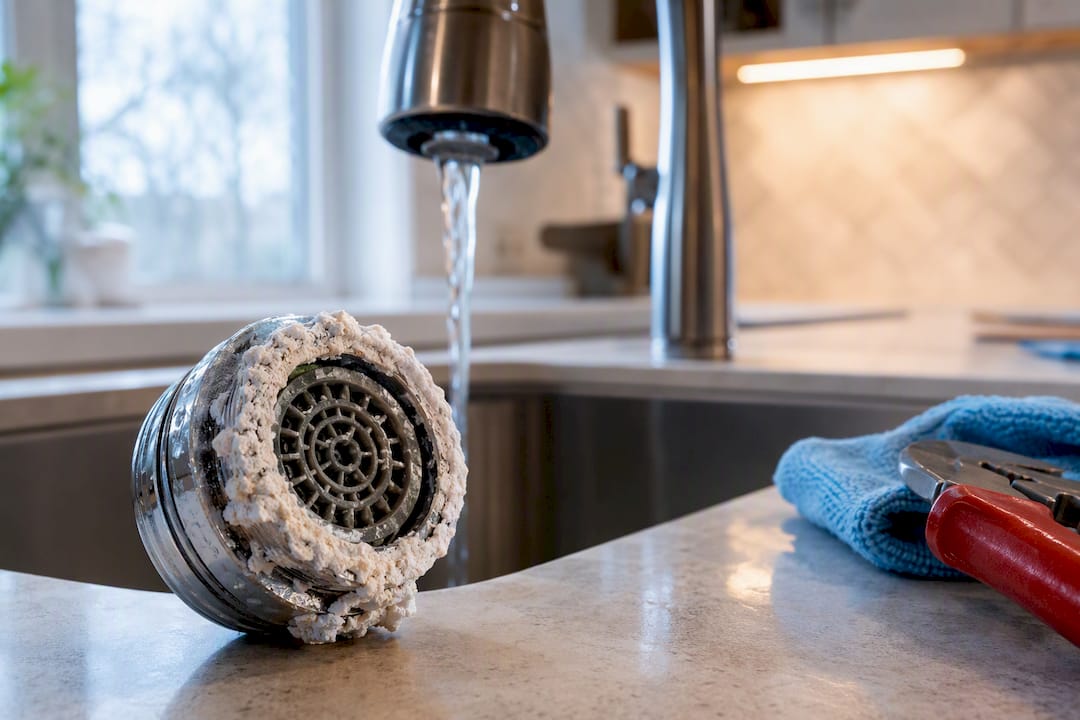
- Scale buildup inside water heaters, which cuts efficiency over time
That last point matters more than most homeowners realize. A water heater running with even a thin layer of scale on its heating element can lose a meaningful chunk of its efficiency, forcing it to work harder to hit the same temperature. If you’re noticing your water heater struggling to keep up, or you’re descaling fixtures more than once a month, that’s usually the point to call a plumber rather than keep fighting it with vinegar and a scrub brush.
What Are Your Options for Managing Hard Water in Pittsburgh?
Most Pittsburgh households don’t need to jump straight to a whole-home softener. Start with the cheapest fix that solves your actual problem, and work up from there.
Low-cost fixes worth trying first:
- White vinegar soaks for showerheads and faucet aerators, done monthly
- Dishwasher rinse aids to cut down on spotting
- Showerhead filters for households noticing skin or hair dryness
- Periodic water heater flushing to clear sediment before it builds into scale
When a whole-home softener actually makes sense:
- Your tested hardness sits at 7 gpg or higher
- You own a tankless water heater, which is far more scale-sensitive than a tank unit
- Someone in the household has a skin condition aggravated by mineral buildup
- You’re descaling fixtures weekly rather than monthly
A softener works by swapping calcium and magnesium ions for sodium ions as water passes through a resin bed, which stops scale from forming in the first place rather than treating it after the fact.
Pro Tip: Before buying a softener, get your exact hardness number in gpg first. Sizing a system off a city average instead of your home’s real number is one of the most common reasons softeners underperform.
If you’re on the fence, a decision checklist helps: check your test number against the 7 gpg threshold, note which appliances show symptoms, and track how often you’re already cleaning scale. If the answer to two of those three points toward “often,” professional sizing and installation is worth the conversation. Regular pipeline descaling can also extend the life of your plumbing regardless of which route you choose.
Where Can You Verify Your Own Water Hardness Number?
The PWSA Consumer Confidence Report is the authoritative source, published annually with sample dates, entry points, and distribution zone data. It’s the one document that reflects lab-tested results rather than estimates.
A few resources worth bookmarking:
- PWSA CCR: Official lab-reported hardness by zone and sample date
- TapWater.org’s Pittsburgh page: Quick city-average comparisons and context
- HardWaterHQ’s Pittsburgh page: A simplified breakdown of local hardness trends
- PWSID lookup tools: Zone-specific numbers tied to your exact water system
For a broader look at drinking water quality issues beyond hardness, including regional contaminant data, TapWaterIndex’s Pennsylvania page is a useful reference point.
A Local Plumber’s Take on Pittsburgh’s Water
Most of the mineral buildup calls we get aren’t dramatic. They’re slow, quiet problems: a water heater that’s taking longer to recover, a showerhead that’s lost half its pressure to scale, a dishwasher leaving cloudy glasses no matter what setting you run. Pittsburgh’s moderately hard water is rarely the headline issue. It’s the thing quietly shortening the life of appliances people already own.
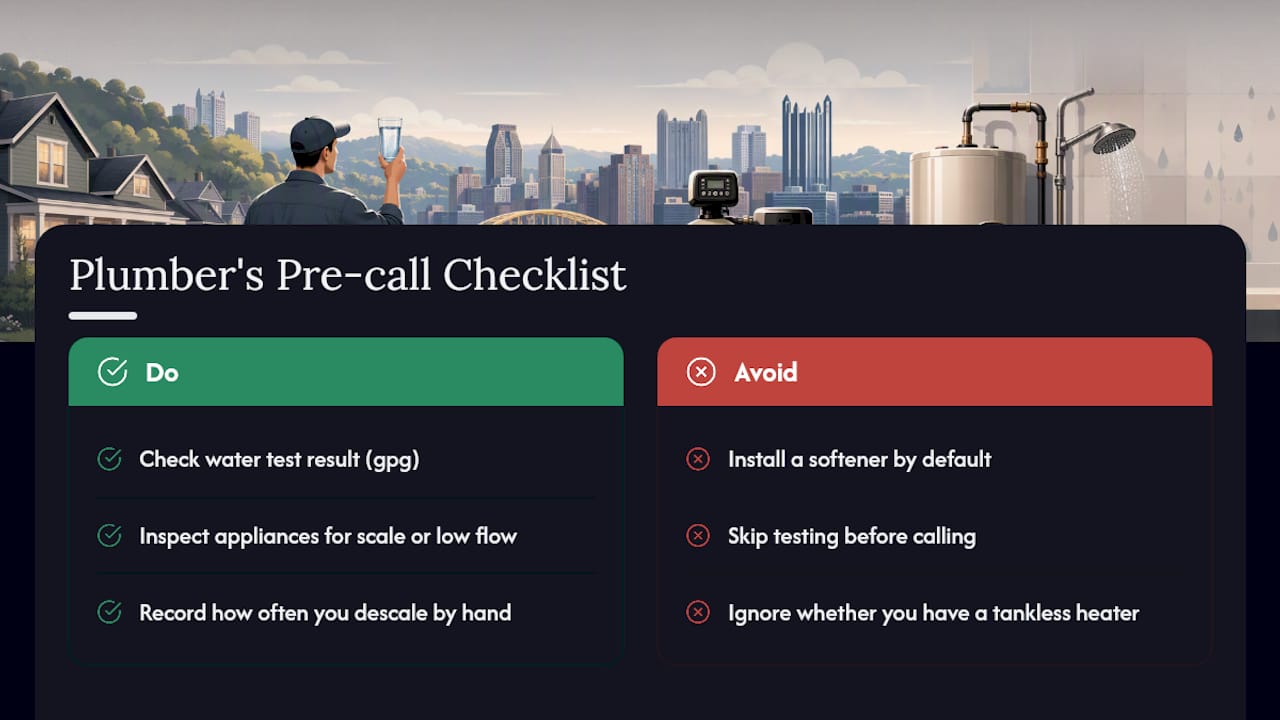
We recommend a softener when the numbers back it up, not by default. If your test comes back under 7 gpg and you’re not running a tankless heater, spot treatments usually solve the problem for less money. Before calling anyone, check three things: your actual test result in gpg, whether appliances are showing visible scale or performance drops, and how often you’re already descaling by hand. That’s the information that gets you the right fix the first time.
— Maayan
Get Your Water Tested and Your Plumbing Protected
Guessing at your hardness number costs you more in the long run than just testing it. On-site hardness testing can provide a real number tied to your actual plumbing instead of a citywide estimate that may not match your zone.
From there, the path is straightforward. If your water heater is already showing signs of scale, flushing and descaling can be handled on the spot. If your numbers justify a whole-home softener, sizing and installation based on your measured hardness and household water use rather than a generic chart is recommended. And if you’re not sure which category you fall into, an inspection gets you an assessment, a straightforward quote, and a service window that works around your schedule. Book a plumbing inspection with Ag-plumbing and get a number you can actually plan around.
Sources
FAQ
Does Pittsburgh Have Hard or Soft Water?
Pittsburgh water is moderately hard, typically in the 85 to 136 ppm range (5 to 8 gpg), with most sources citing an average near 100 ppm.
Which US Cities Have the Hardest Water?
Cities relying on groundwater in the Midwest and Southwest, including parts of Arizona, Texas, and Indiana, tend to report the highest hardness levels, often well above 250 ppm, compared to Pittsburgh’s moderate range.
Which US States Have the Hardest Water?
States with heavy reliance on mineral-rich groundwater, such as Arizona, Indiana, and Texas, generally report harder water than states like Pennsylvania that draw more from surface water sources.
Is Pennsylvania Water Hard or Soft?
Pennsylvania’s water hardness varies by municipality since it depends on local source water. Pittsburgh specifically falls into the moderately hard category, while other PA cities may test softer or harder depending on their water source.
Do I Need a Water Softener in Pittsburgh?
Most Pittsburgh households don’t need one. A softener becomes worth considering if your tested hardness is 7 gpg or higher, you own a tankless water heater, or you’re descaling fixtures weekly.
Recommended
- How to clean water lines: Pittsburgh homeowner guide
- Water Heater Tips Every Pittsburgh Homeowner Needs
- Common Water Heater Issues Pittsburgh Homeowners Face
- Smart Plumbing Tips Every Pittsburgh Homeowner Needs
