
TL;DR:
- Pittsburgh’s hard water causes mineral buildup, reducing water flow and damaging pipes over time.
- Regular cleaning of fixtures and annual flushing of water heaters help prevent costly repairs.
- Main water line cleaning requires professional intervention to avoid system damage and pressure issues.
Mineral buildup from Pittsburgh’s hard water is quietly working against your plumbing every day. Calcium and sediment accumulate inside pipes, fixtures, and water heaters, slowly reducing pressure and shortening the life of your system. As a Pittsburgh homeowner, you’re responsible for maintaining your private water service lines, which means the cost of neglect lands squarely on you. This guide walks you through understanding your water lines, gathering the right tools, cleaning interior fixtures safely, and knowing when to call a professional before a small problem becomes a very expensive one.
Table of Contents
- Understanding your water lines and Pittsburgh-specific challenges
- Gathering tools and preparing for safe water line cleaning
- Step-by-step process to clean interior water lines and fixtures
- Post-repair flushing, troubleshooting, and when to call a professional
- The truth about water line cleaning most homeowners miss
- Get expert help for your water lines in Pittsburgh
- Frequently asked questions
Key Takeaways
| Point | Details |
|---|---|
| Know your responsibilities | Pittsburgh homeowners must maintain their private water lines—neglect can lead to costly repairs. |
| Clean fixtures regularly | Monthly cleaning of aerators and annual water heater flushes prevent mineral buildup and maintain water quality. |
| DIY vs. professional | Interior fixture cleaning is safe for DIY, but main line maintenance and repairs require professional expertise. |
| Watch for warning signs | Low pressure or discolored water signals a need for professional inspection to avoid serious problems. |
| Protect against hard water | Using water softeners and regular maintenance mitigates Pittsburgh’s hard water effects on plumbing. |
Understanding your water lines and Pittsburgh-specific challenges
Before you grab a wrench, it helps to know exactly what you’re dealing with. Your home’s water system has two distinct parts: the public main (owned and maintained by the Pittsburgh Water and Sewer Authority) and the private service line that runs from the street to your home. Homeowners are responsible for that private stretch, which typically runs underground and connects directly to your interior plumbing.
Pipe material and age matter a lot here. Older Pittsburgh homes, especially those built before 1986, may still have lead service lines. Newer homes typically use copper or PEX tubing. According to water line depth and lifespan data, lines should be buried at least 42 inches deep and can last anywhere from 20 to 50-plus years depending on material and conditions. Here’s a quick comparison:
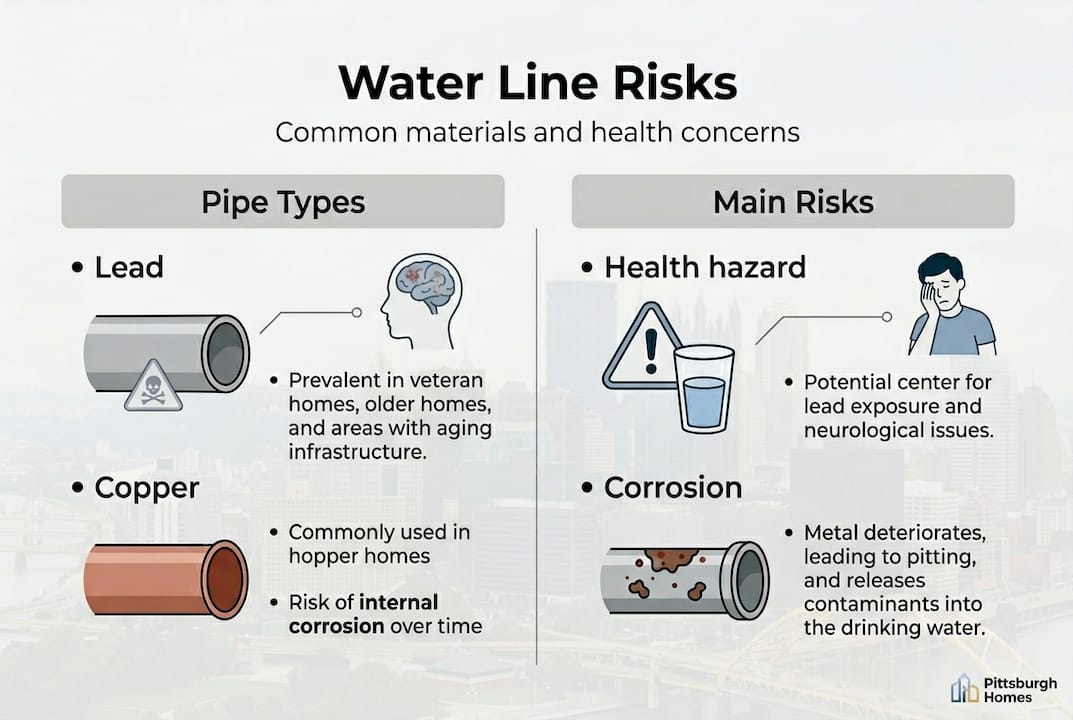
| Pipe material | Typical lifespan | Main risk |
|---|---|---|
| Lead | 100+ years (but toxic) | Health hazard, must replace |
| Galvanized steel | 20 to 50 years | Rust, corrosion, low pressure |
| Copper | 50 to 70 years | Pinhole leaks, mineral scale |
| PEX | 40 to 50 years | UV damage, rodent damage |
Pittsburgh’s water is moderately hard with mineral buildup, which means calcium and magnesium deposits form inside pipes over time. This isn’t just a cosmetic issue. Scale buildup restricts water flow, forces your water heater to work harder, and can eventually crack older pipes.
Common warning signs that your water lines need attention:
- Reduced water pressure at multiple fixtures
- White or yellowish crust around faucets and showerheads
- Discolored or cloudy water
- Metallic taste or odor
- Visible corrosion on exposed pipes
Staying on top of these signs with a regular maintenance checklist can prevent you from facing the kinds of plumbing repair examples that cost thousands to fix.
Pro Tip: Schedule an annual visual inspection of all exposed pipes in your basement and utility areas. Look for white mineral crust, green oxidation on copper, or rust stains. Catching these early is far cheaper than waiting for a failure.
Gathering tools and preparing for safe water line cleaning
Understanding your system is crucial, but you’ll also need the right tools and safety protocols before you tackle the cleaning process. The good news is that cleaning interior fixtures is genuinely DIY-friendly. Cleaning your main service line is not.
Here’s what you need for interior fixture cleaning versus what a professional handles:
| Task | DIY appropriate | Professional required |
|---|---|---|
| Aerator cleaning | Yes | No |
| Showerhead descaling | Yes | No |
| Water heater flush | Yes (partial drain) | For full sediment removal |
| Main service line flush | No | Yes |
| Hydrojetting or camera inspection | No | Yes |
For DIY cleaning, gather these supplies before you start:
- White distilled vinegar (at least one gallon)
- Adjustable wrench and pliers
- Small wire brush and old toothbrush
- Plastic bags and rubber bands (for soaking showerheads in place)
- Safety gloves and eye protection
- Bucket and towels
- Teflon tape for reassembly
Before touching any fixture, locate your main shutoff valve. Know how to turn off water to individual fixtures using the supply valves under sinks or behind toilets. This prevents water damage if something goes wrong mid-task.
Warning: Attempting to flush or clean your main water service line without professional equipment can cause pressure imbalances, stir up sediment into your entire system, or damage aging pipes. DIY is not suitable for main service line work. If you’re experiencing low pressure throughout the house or consistently discolored water, that’s a job for a licensed plumber. Repair costs for private water lines average $500 to $5,000, so catching problems early with professional help is almost always the smarter financial move.
Also review your fixture installation guide before starting, and keep your maintenance checklist nearby to track what you’ve done and when.
Step-by-step process to clean interior water lines and fixtures
Once your tools and prep are set, here’s how to clean the parts of your water lines and fixtures you can safely handle yourself.
Cleaning faucet aerators:
- Unscrew the aerator from the faucet tip by hand or with pliers (wrap with tape to avoid scratching).
- Disassemble the aerator screen and housing.
- Soak in white vinegar overnight to dissolve calcium deposits.
- Scrub gently with a toothbrush, rinse thoroughly, and reassemble.
- Reinstall and run water for 30 seconds to clear any loosened debris.
Cleaning showerheads:
- Fill a plastic bag with white vinegar.
- Secure the bag around the showerhead with a rubber band so the head is fully submerged.
- Leave it overnight, then remove the bag and run hot water for two minutes.
- For stubborn buildup, remove the showerhead entirely and soak it in a bowl of vinegar.
Repeat both of these tasks every one to three months if your home has hard water.
Annual water heater flush:
An annual flush removes sediment and extends the life of your water heater significantly. Pittsburgh’s hard water makes this especially important.
- Turn the water heater thermostat to the lowest setting.
- Connect a garden hose to the drain valve at the base of the tank.
- Run the other end of the hose to a floor drain or outside.
- Open a hot water faucet somewhere in the house to prevent a vacuum.
- Open the drain valve and let water flow until it runs clear.
- Close the valve, refill the tank, then restore the thermostat setting.
Pro Tip: The partial drain method is safer for DIY. Instead of fully draining the tank, drain just 2 to 3 gallons while keeping the cold water supply running. This circulates fresh water through the tank and flushes out loose sediment without the risk of air lock or thermal shock to older tanks.
If your home consistently shows scale buildup despite regular cleaning, consider exploring plumbing material choices or installing a whole-home water softener. A softener reduces the mineral content before water reaches your pipes, cutting down on buildup dramatically.
Post-repair flushing, troubleshooting, and when to call a professional
After interior cleaning, knowing how to respond to bigger plumbing events and troubleshooting problems will save you headaches and money.
If PWSA performs emergency repairs on a water main near your home, your pipes may temporarily carry discolored water or sediment. The correct response is to flush from the lowest faucet by running cold water for 10 to 15 minutes. Start at the lowest point in your home, usually a basement utility sink or outdoor spigot, and work your way up to higher floors.
Common troubleshooting scenarios after cleaning:
- Pressure still low after cleaning aerators: The issue may be inside the supply line itself, not the fixture.
- Water still discolored after flushing: This could signal corrosion inside galvanized pipes.
- Hot water smells like sulfur: Bacteria in the water heater tank; raise the thermostat to 120°F and flush again.
- Gurgling sounds after cleaning: Air in the lines; open faucets fully for 30 seconds to purge.
Knowing when DIY ends is just as important as knowing how to start. Signs like low pressure throughout the house, persistent discoloration, or visible corrosion on your service line mean it’s time to call a licensed plumber.
Important: Main service line issues in Pittsburgh are not cheap. Repair and replacement costs vary widely based on pipe material, depth, and length. Getting an annual plumbing inspection is the most cost-effective way to catch these problems before they become emergencies.
Professional services worth knowing about include hydrojetting (high-pressure water cleaning for stubborn blockages), camera inspection (visual diagnosis of interior pipe condition), and full line replacement for lead or severely corroded pipes. These aren’t optional extras. For older Pittsburgh homes, they’re often the difference between a functional system and a flooded basement. Review repair examples to understand what these jobs typically involve.
The truth about water line cleaning most homeowners miss
After 30 years working on Pittsburgh plumbing, we’ve noticed a pattern: most homeowners confuse sewer line cleaning with water supply line cleaning. They’re completely different systems that require different approaches. Sewer lines are cleaned via snaking or hydrojetting to remove waste buildup. Water supply lines are maintained through flushing, descaling, and softening. Mixing up these approaches leads to wasted money and missed problems.
The other thing most homeowners skip is the water heater flush. It feels optional until the heater fails early. Pittsburgh’s hard water accelerates sediment buildup, which means an annual flush here matters more than in softer-water cities. A heater running on a thick layer of sediment uses more energy and wears out faster.
Finally, lead line risk is underestimated. Many Pittsburgh homeowners assume their pipes were updated years ago. That assumption can be wrong. If your home predates 1986, get a sewer line repair guide and a water test before assuming everything is fine. Proactive maintenance isn’t just about pressure and flow. It’s about protecting your family.
Get expert help for your water lines in Pittsburgh
If today’s guide made you realize your water lines need more than a vinegar soak, you’re not alone. Many Pittsburgh homeowners discover that years of hard water have done more damage than a DIY fix can address.

At AG Heating, Cooling & Plumbing, our team brings 30 years of Pittsburgh plumbing experience to every job. Whether you need a full inspection, a water line repair, or help understanding your options, we’re ready to assist. Explore our plumbing repair services to see what we handle, check out common plumbing repair issues for quick guidance, or browse the essential types of plumbing services available to Pittsburgh homeowners. Your water lines deserve professional attention.
Frequently asked questions
How often should Pittsburgh homeowners clean their water lines?
Interior fixtures and water heaters should be cleaned or flushed annually. Homes with hard water may need aerator and showerhead cleaning every one to three months, since Pittsburgh’s conditions accelerate mineral buildup faster than average.
What signs indicate my water lines need professional cleaning or repair?
Low pressure, discolored water, persistent mineral buildup, or leaks are clear cues to call a professional. These symptoms often indicate corrosion or blockages inside the service line that no DIY method can safely address.
Can I clean main water service lines myself?
No. Main water service line cleaning requires professional equipment and training. DIY is not suitable for this work, and attempting it can cause pressure damage or stir sediment throughout your entire system.
Should I test for lead in older Pittsburgh homes?
Yes. Homes built before 1986 may still have lead service lines. Testing and replacement are strongly recommended, and PWSA offers resources to help homeowners identify and address lead line risks.
What are the DIY steps for cleaning faucet aerators?
Remove the aerator, disassemble it, and soak it in vinegar overnight to dissolve calcium. Rinse, scrub lightly with a toothbrush, reassemble, and reinstall. Repeat monthly if you notice buildup returning quickly.
Recommended
- Sewer line repair guide for Pittsburgh homeowners – AG-Plumbing
- How to snake a drain: DIY guide for Pittsburgh homeowners – AG-Plumbing
- Install plumbing fixtures: Pittsburgh homeowner guide – AG-Plumbing
- How cleanouts in plumbing save 67% of Pittsburgh homeowners – AG-Plumbing
- Preventative plumbing tips for Tampa Bay homeowners 2026
