
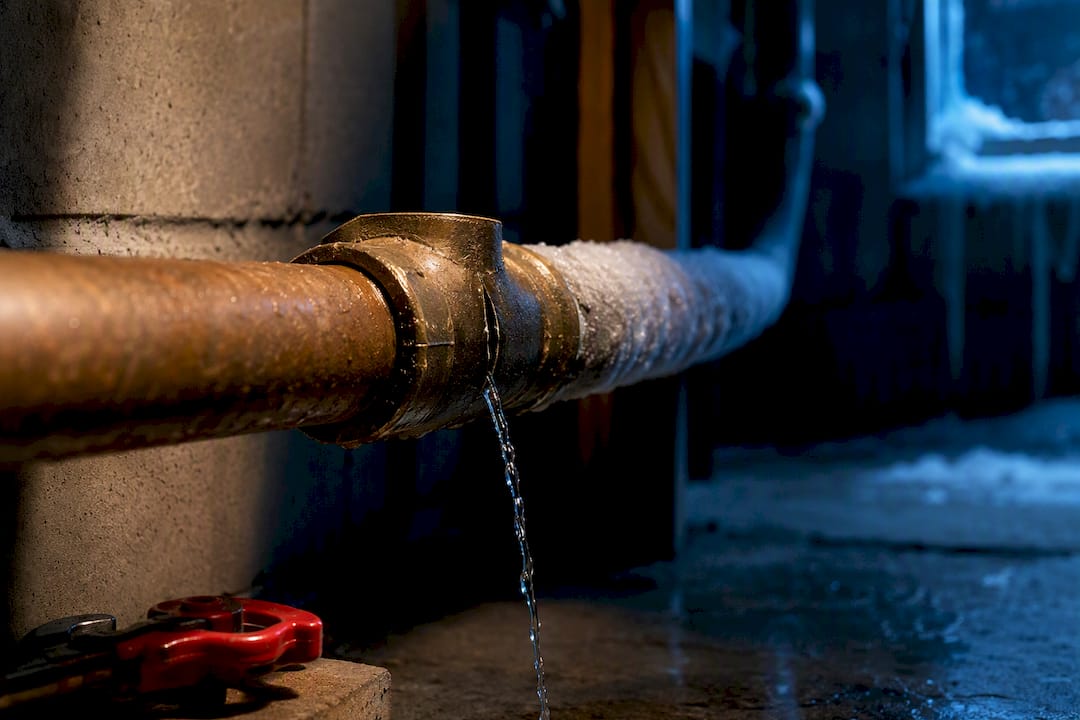
Pipes burst in winter because ice plugs trap water between two sealed points, and the water pressurizes as it keeps freezing. Water expands roughly 8% in volume when it turns to ice, and since it can’t compress, that expansion pushes pressure through the pipe until something gives. The rupture usually shows up after a thaw, when the plumbing at your home starts running again and reveals the split.
TL;DR:
- Most pipe failures occur at joints, elbows, or fittings where wall thickness changes or materials meet, making these the most vulnerable points.
- A pipe can seal completely within about 5 to 11.5 hours at temperatures between 0°F and 20°F, with pressure exceeding 2,000 psi prior to failure.
- Home parts most at risk include exterior wall pipes, attic lines above insulation, crawl spaces, garages, and unprotected outdoor hoses or irrigation lines.
- Prevention measures such as keeping the thermostat above 55°F, letting faucets drip, sealing drafts, and insulating exposed pipes significantly reduce the risk of bursting.
- Insurance typically covers sudden, accidental water damage but may deny claims if maintenance negligence, like ignoring freezing risks, is proven.
Table of Contents
- What Are the Winter Pipe Burst Causes Behind Every Failure?
- When and Where Is Your Home Most at Risk?
- Which Parts of Your Plumbing Fail First?
- How Do You Prevent Pipes From Bursting in Cold Weather?
- What Should You Do If a Pipe Freezes or Bursts?
- Will Homeowners Insurance Cover a Burst Pipe?
- What Does a Professional Winter Plumbing Inspection Look Like?
- Pressure, Not Cold, Is the Real Enemy
- How Ag-Plumbing Handles Winter Pipe Emergencies
- Sources
- FAQ
What Are the Winter Pipe Burst Causes Behind Every Failure?
Ice doesn’t burst pipes by physically pushing outward on the walls the way most people picture it. It bursts pipes by sealing off a section of water first, then building pressure from behind.
Here’s the sequence. Cold reaches a pipe and ice starts forming along the inside wall, a process engineers call an annular ring. That ring thickens until it closes the pipe’s cross section completely, creating what’s known as an ice plug. Water on either side of that plug is now trapped and incompressible. As freezing continues past the plug, the trapped water has nowhere to go, so pressure inside that closed section climbs, sometimes past 2,000 psi, according to forensic engineering research on freeze failures.
Forensic testing shows that once an ice plug isolates a water column, continued freezing keeps building pressure until the system’s weakest point fails, and that failure often becomes visible only after the ice thaws.
Fact check: Water’s 8% expansion on freezing is enough, under constant volume, to burst even very strong sealed containers, not just household pipe, according to a thermodynamic analysis of freezing pressure.
This also explains a detail that confuses a lot of homeowners: the split often shows up in a heated section of pipe, nowhere near the ice itself. The pressure travels through the water column and finds the weakest joint or fitting, wherever that happens to sit.
When and Where Is Your Home Most at Risk?
Certain parts of your home freeze first because they sit closest to outside air with the least protection from your furnace. Time matters just as much as location. Laboratory testing found a pipe can seal into a complete blockage in roughly 11.5 hours at 20°F, about 6.5 hours at 10°F, and under 5 hours at 0°F. A sudden cold snap can close that window fast, especially in a pipe that’s already partially exposed.
The highest-risk spots share one thing in common: distance from your home’s heated air.
- Pipes running through exterior walls, especially on the north or west side of a house
- Attic lines that sit above insulation instead of below it
- Crawl spaces and unheated basements
- Garages, where a single cold night can drop temperatures well below freezing
- Hose bibs and irrigation lines left connected into winter
Vacant homes carry extra risk. Vacation properties or houses left unattended during a trip often get the thermostat turned way down to save money, which removes the one factor keeping borderline pipe segments above freezing. Drafts around garage doors and other weather seals compound the problem, letting cold air infiltrate spaces that were never meant to see outdoor temperatures. Weatherization research on garage seals shows how much a failed seal can shift the temperature inside an attached garage during a hard freeze.
Which Parts of Your Plumbing Fail First?
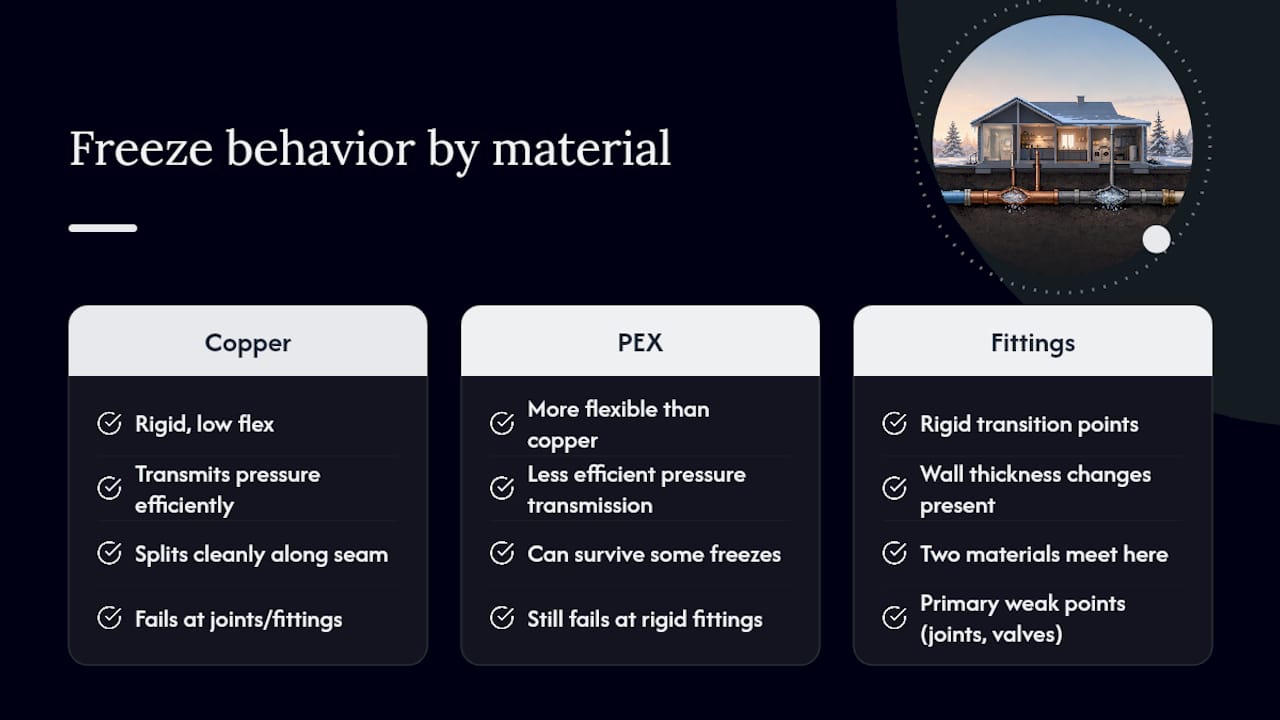
Straight, unbroken lengths of pipe rarely burst. The failure almost always shows up at a joint, an elbow, a fitting, or wherever a shutoff valve interrupts the run. These are the weak points where wall thickness changes or where two materials meet, and that’s exactly where built up pressure finds an exit.
Material matters, too, but not in the way people expect. Copper is rigid and transmits pressure efficiently, so it tends to split cleanly along a seam once pressure exceeds its limit. Plastic piping like PEX has more flex, which sometimes lets it survive a freeze that would crack copper, but plastic isn’t immune, particularly at rigid fittings and connections where flexibility disappears.
Layout is the factor most homeowners overlook. A long exterior run with no insulation, an isolated segment tucked behind a wall with poor airflow, or a section that dips above the insulation line in an attic all create the same setup: a length of pipe that cools faster than the rest of the system and freezes first.
How Do You Prevent Pipes From Bursting in Cold Weather?
Prevention works best when you tackle it in order of impact, starting with the free steps and moving toward permanent fixes.
- Keep your thermostat no lower than 55°F, even if you’re leaving town, since that’s the minimum temperature insurers commonly recommend to keep interior plumbing safe.
- Let faucets served by vulnerable lines drip slightly. A moving trickle acts as a pressure release valve and keeps a fully sealed ice plug from forming in the first place.
- Open cabinet doors under sinks along exterior walls so warm room air can reach the pipes underneath.
- Disconnect garden hoses and drain outdoor spigots before the first hard freeze.
- Seal drafts around doors, dryer vents, and foundation gaps that let cold air reach pipe in walls or crawl spaces.
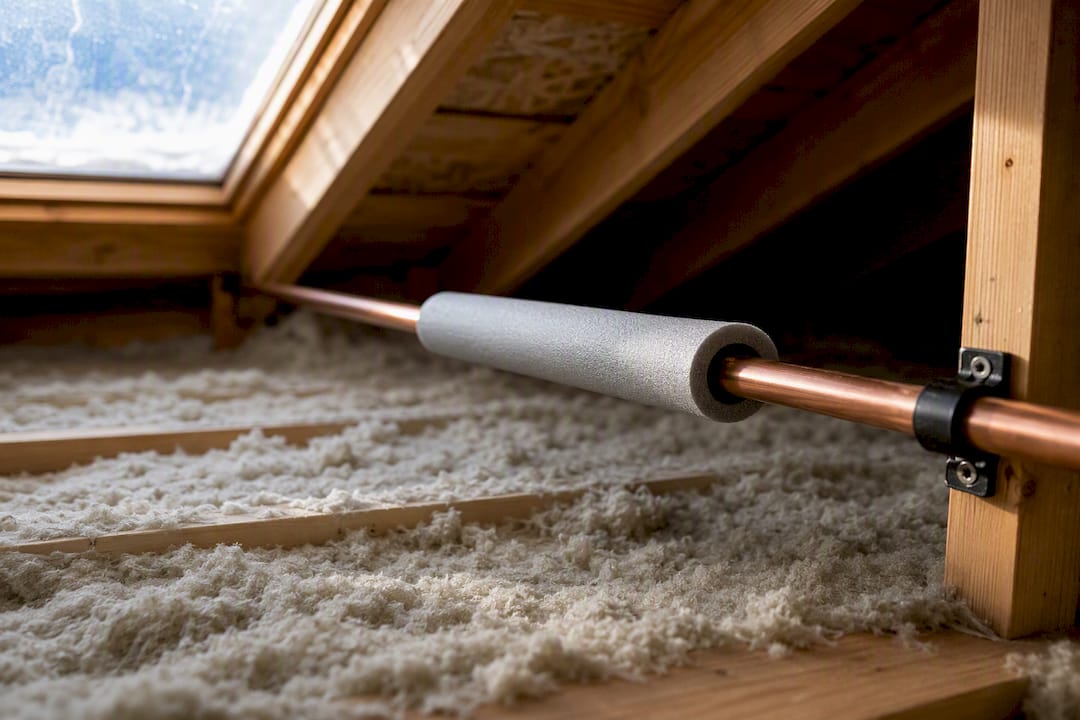
- Add pipe insulation or heat tape to exposed lines in attics, crawl spaces, and garages, following the manufacturer’s instructions exactly. Our guide to insulating water pipes walks through the materials that hold up best.
- Reroute chronically vulnerable lines during a remodel if a section keeps freezing every winter despite insulation.
Pro Tip: A dripping faucet feels wasteful, but it’s cheaper than a burst pipe. A slow trickle, even less than a gallon an hour, keeps a static column of water from ever fully sealing off.
Never use a torch or open flame on a frozen section, and call a licensed plumber for winterization work involving heat tape near combustible materials or for any section you can’t safely reach.
What Should You Do If a Pipe Freezes or Bursts?
Speed matters more than technique once you suspect a frozen or burst line. Shut off the main water valve first, before you do anything else, to stop water from feeding an active leak.
Then work through the rest of the response:
- Open any faucets fed by the frozen section to relieve pressure and give melting ice somewhere to go.
- Contain visible water with towels or buckets while you assess the damage.
- Thaw a suspected frozen section gently using a hair dryer, an electric heating pad, or towels soaked in warm water.
- Never use a blowtorch, propane heater, or other open flame near pipe, insulation, or wall framing.
- Call a plumber immediately if you see an active leak after thawing, multiple fixtures with weak flow, a visibly bulging section of pipe, or a frozen run you simply can’t reach.
If you’re already dealing with water damage, our quick-fix guide for burst pipe repair covers what to expect before a plumber arrives.
Will Homeowners Insurance Cover a Burst Pipe?
Most homeowners policies cover water damage from a burst pipe under the “sudden and accidental” standard, meaning the failure has to look like an unexpected event rather than the result of ongoing neglect. Coverage typically pays for the water damage itself but often excludes the cost of repairing the pipe. Insurers can deny a claim if they decide the homeowner was negligent, and failing to maintain heat is the most common reason cited.
Documentation is what separates a paid claim from a denied one. Photograph the damage before you touch anything, keep every receipt tied to repairs and water mitigation, and call your insurer as soon as the immediate danger is handled. Our breakdown of what to do in the first 72 hours after a burst pipe covers the documentation insurers actually ask for.
What Does a Professional Winter Plumbing Inspection Look Like?
After three decades handling Pittsburgh winters, Ag-plumbing has seen the same pattern repeat: a home freezes once, gets patched, then freezes again in the same spot next year. Repeated freezes, aging copper, or any visible damage justify a full inspection. A typical visit covers pipe inspection, targeted insulation of exposed runs, and repair of weak joints before they fail outright.
Pressure, Not Cold, Is the Real Enemy
Treat a burst pipe as a pressure event, not a cold event. Small spot warming rarely helps as much as keeping water moving and giving pressure somewhere to go. If your home has known weak runs, book an inspection before the next freeze, not after.
— Maayan
How Ag-Plumbing Handles Winter Pipe Emergencies
Professional plumbing services offer alternatives to DIY fixes or big-box repair kits when a pipe freezes or splits. Years of experience with local winters mean plumbing teams often know which neighborhoods and housing types freeze first, so inspections focus on the joints and runs most likely to fail instead of guessing.
Beyond emergency response, we handle the upgrades that stop the same pipe from freezing twice: targeted insulation, plumbing repiping for chronically vulnerable lines, and full plumbing repair for anything already damaged. If you’ve had a close call this season or want a professional set of eyes on your exterior walls, attic runs, or crawl space before the next cold snap, request a winterization inspection or emergency repair through Ag-plumbing today.
Sources
- Freezing and expansion of water — Penn State (course material)
- Forensic engineering research on freeze failures | Journal of the National Academy of Forensic Engineers
- How can freezing water burst pipes and containers? (Iopscience)
- Does Homeowners Insurance Cover Burst Pipes? | Travelers
- Will My Homeowners Insurance Policy Cover Water Damage From a Burst Pipe? | NAIC
FAQ
Will Homeowners Insurance Pay for a Burst Pipe?
Most policies pay for water damage from a burst pipe when the event qualifies as sudden and accidental. Insurers can deny coverage for the pipe repair itself or the whole claim if they find evidence of negligence, such as letting the heat drop below the recommended minimum while you were away.
Why Would a Pipe Suddenly Burst?
A pipe bursts when an ice plug seals off a section of water and continued freezing pressurizes that trapped column until it fails at its weakest joint or fitting. The break often becomes visible only once the ice thaws and water starts moving again.
How Do I Stop My Pipes From Bursting in Cold Weather?
Keep your thermostat at 55°F or higher, let faucets on vulnerable lines drip, and insulate exposed pipe in attics, crawl spaces, and exterior walls. Our winter plumbing preparation guide covers the full seasonal checklist.
Why Do Water Pipes Sometimes Burst in Winter?
Water expands about 8% when it freezes, and because it can’t compress, that expansion builds intense pressure inside a pipe once ice seals off a section. The pressure, not the ice itself, is what cracks the pipe wall.
What Does It Cost to Repair a Burst Pipe?
Repair costs depend on the extent of the damage and how accessible the pipe is, so Ag-plumbing provides pricing after an on-site assessment rather than a flat rate. Current service details are listed on the Ag-plumbing site.
Recommended
- How to Prevent Frozen Pipes This Winter
- How to Insulate Water Pipes and Prevent Freezing
- Winterize your Pittsburgh plumbing: a step-by-step workflow
- Cold Climate Outdoor Plumbing Tips for Homeowners
