
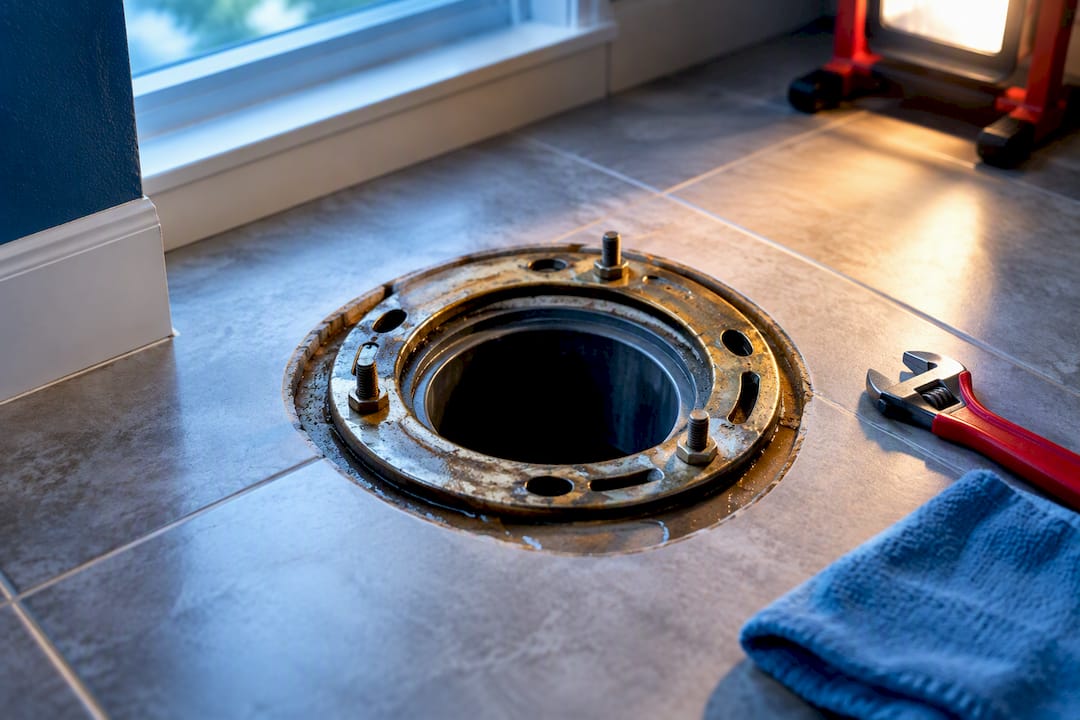
If your toilet wobbles or you see water at its base after flushing, a toilet flange leak is the most likely cause. Stop using the toilet if the leak is heavy, shut off the water supply at the wall valve, and mop up standing water immediately. The rest of this guide walks through confirming the diagnosis, trying the right DIY fix, and knowing when the job needs a plumber.
TL;DR:
- Wobbling toilets typically indicate a failed wax ring or flange, often caused by recessed flanges, cracked or corroded flanges, or over-tightened bolts; confirm by flushing with the floor dry and inspecting water at the base.
- Floor upgrades or new flooring can raise the flange height, requiring an extra-thick wax ring or flange spacer kit to maintain a proper seal while preventing future leaks.
- DIY fixes such as replacing the wax ring or installing a repair ring generally take 1 to 2 hours and cost between $10 and $50 in parts, but full flange replacement involves more complex work.
- Structural rot, damaged drain pipes, or persistent backups require professional inspection and repair, with typical costs ranging from $85 to $350 for straightforward flange fixes.
- Regular maintenance such as checking bolt tightness, addressing wobbling immediately, and monitoring for stains or odors can prevent flange leaks and subfloor damage.
Table of Contents
- What Are the Symptoms of a Toilet Flange Leak?
- Why Do Flange and Wax-Ring Leaks Happen?
- How Do You Confirm the Leak Is Coming From the Flange?
- How Do You Fix a Toilet Flange Leak Yourself?
- When Should You Call a Plumber, and What Will It Cost?
- How Can You Prevent Future Flange Leaks?
- Field Notes From AG Heating, Cooling & Plumbing
- Where Most DIY Guides Get This Wrong
- Get Your Flange or Subfloor Repair Done Right
- Sources
- FAQ
What Are the Symptoms of a Toilet Flange Leak?
A wobbly or rocking toilet is the single biggest tell. Once the seal between the toilet base and the drain pipe fails, the fixture loses its solid footing and shifts slightly every time someone sits down. Watch for these signs together, since one alone can be misleading:
- The toilet rocks side to side or front to back when you push on the bowl.
- Water appears on the floor at the base, especially right after a flush.
- A persistent sewer smell lingers in the bathroom even after cleaning.
- Brown or yellow stains show up on the ceiling below the bathroom.
- The caulk line around the base looks cracked or has separated from the floor.
Loose or wobbly toilets commonly compress and damage the wax ring underneath, which is exactly what turns a minor wobble into an active leaking around the toilet base. Not every damp spot is a flange problem, though. Condensation on the tank in humid weather, a worn flapper valve dripping into the bowl, or a loose supply line fitting can all mimic base leaks. Before you assume the worst, dry the floor completely, flush once, and watch closely. If water shows up right at the base and nowhere else, the flange or wax ring is your prime suspect.
Why Do Flange and Wax-Ring Leaks Happen?
Most flange-area leaks trace back to one of a handful of mechanical failures, and knowing which one you’re dealing with determines the right fix.
- A cracked, corroded, or broken flange no longer holds the toilet bolts securely, letting the bowl shift with every use.
- A flange recessed below the finished floor, usually after new tile, laminate, or vinyl was installed over the old surface, leaves the wax ring unable to form a complete seal.
- A compressed or missing wax ring happens naturally over years of use, or gets crushed the first time someone rocks a loose toilet.
- Loose or corroded closet bolts let the bowl shift even when the flange and ring are otherwise fine.
- A clogged drain downstream can back water up past the seal, mimicking a flange leak even when the flange itself is intact.
Flooring changes cause more of these problems than people expect. A flange should sit level with the finished floor, and when a new floor covering raises the surface height without adjusting the flange, the wax ring has to bridge a gap it was never designed for. Oatey’s installation guidance recommends an extra-thick wax ring or a flange spacer kit whenever that gap shows up. Left alone, a wobbling toilet doesn’t just leak; it grinds against the subfloor with every use, and that repeated stress speeds up rot, invites mold, and eventually spreads odor throughout the bathroom.
How Do You Confirm the Leak Is Coming From the Flange?
Before touching a wrench, shut off the water at the wall valve behind the toilet and flush to drain the tank and bowl as much as possible. Dry the entire floor around the base with towels so any new moisture is easy to spot.
- Lay a strip of tissue paper or a folded paper towel around the base and flush once, watching closely for moisture soaking through at the joint.
- Push firmly on the bowl from several angles to check for rocking or shifting.
- Drop food coloring into the tank and wait ten minutes without flushing. If color shows up in the bowl, the problem is a tank leak, not the flange.
- Check the supply line fitting and tank bolts for drips, since both can fake a base leak.
- If the toilet rocks or the tissue test comes back wet, remove the toilet to inspect the wax ring and flange directly. Look for crushed or missing wax, a cracked or corroded flange, a flange sitting below the floor surface, and any soft or discolored subfloor wood.
Pro Tip: If the subfloor feels soft, spongy, or discolored when you press on it, stop right there. That’s structural rot, and repairing it before resealing the toilet is not optional.
Do not attempt to push forward with a standard wax-ring swap if you find heavy contamination or subfloor damage. That’s the point where DIY repair and a phone call to a plumber part ways.
How Do You Fix a Toilet Flange Leak Yourself?
Once you’ve confirmed the wax ring or flange is the culprit, the fix depends on how much damage you’re actually looking at. Three paths cover most situations, in order from simplest to most involved.
1. Replace the wax ring (the most common fix). Turn off the water, disconnect the supply line, and remove the closet bolts. Lift the toilet straight up and set it on towels. Scrape off every trace of the old wax from both the toilet horn and the flange, being careful not to push debris down into the drain trap. Set a new wax ring on the flange, lower the toilet straight down onto it, and press evenly with your body weight rather than rocking it into place. Hand-tighten the new closet bolts in a criss-cross pattern, then snug them a bit more with a wrench. Stop as soon as they’re firm.
- Over-tightening is the single most common mistake here. Cracking the porcelain base is an expensive lesson in how much torque a toilet bolt actually needs.
- Under-tightening leaves the bowl loose again within weeks, undoing the whole repair.
2. Try a waxless seal. Foam or rubber gasket seals work well for flanges that sit at or slightly above floor level, and many homeowners prefer them because they don’t melt in summer heat or squish out of place during installation.
3. Install a repair ring or extension kit. For a cracked flange or one that ended up recessed under new flooring, a low-cost repair ring like Oatey’s Fix-it flange repair ring bridges the gap without a full flange replacement. These work well when the flange is intact enough to bolt into but sits too low or has minor cracking.
A straightforward wax-ring swap or repair-ring install typically takes 1 to 2 hours for someone doing it for the first time, and parts run $10 to $50 at most hardware stores. Full flange replacement is a bigger job. It usually means cutting out the old flange, gluing or bolting in a new one anchored to the subfloor, and sometimes cutting into the drain pipe itself, which is where a lot of confident DIYers decide to call for backup.
When Should You Call a Plumber, and What Will It Cost?
Some situations are worth handling yourself. Others aren’t, and pretending otherwise usually costs more in the end.
Call a plumber if you find any of the following:
- Visible subfloor rot or a soft, spongy floor around the toilet base.
- A flange that’s cracked below the floor line or fused directly into a concrete slab.
- A cracked or broken drain pipe beneath the flange.
- Repeated backups or clogs that keep causing the same leak to return.
- A sewage odor that persists after a wax-ring replacement.
A plumber’s visit for a straightforward flange job typically runs $85 to $350 in labor, on top of DIY-level parts costs. Jobs involving subfloor replacement or pipe repair cost more, since they involve cutting into flooring and sometimes replacing sections of drain pipe. Regional pricing and job complexity vary enough that a plumber’s on-site estimate is the only reliable number for anything beyond a basic seal swap.
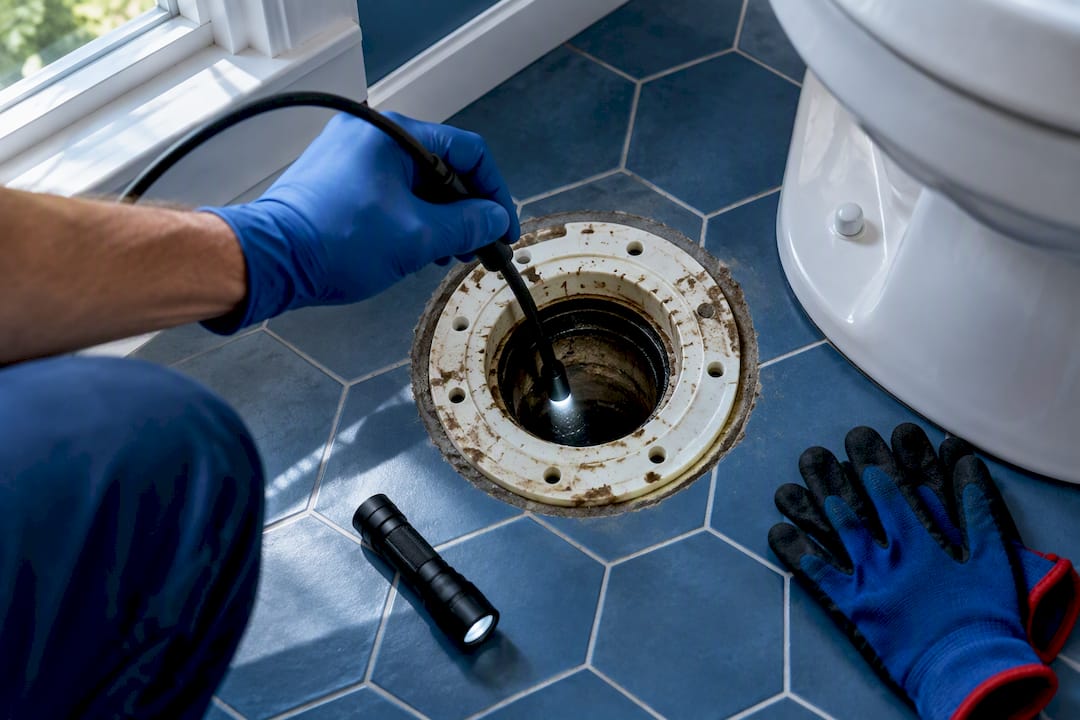
Expect a plumber to run a camera down the drain line if backups are recurring, inspect the flange’s connection to the subfloor, and give you a written estimate before starting anything beyond the initial diagnosis. Before the appointment, note when the leak started, whether it only happens during flushing, and whether you’ve already tried a wax-ring replacement. That saves diagnostic time and gets you a tighter quote.
How Can You Prevent Future Flange Leaks?
A few minutes of attention a couple of times a year beats a subfloor repair every time.
- Address any wobble the moment you notice it, rather than living with it for months.
- Recheck flange height any time you install new flooring, before the toilet goes back down.
- Match your seal type to the flange height. Use an extra-thick wax ring or spacer if the flange sits below the finished floor.
- Snug closet bolts periodically, but never crank them past firm resistance.
- Deal with slow drains right away, since a backup can force water past a perfectly good seal.
- Do a quick visual check under the tank and around the base every few months, watching for new stains or odor.
Pro Tip: Keep a spare wax ring and a set of closet bolts in your utility closet. If you ever have to pull the toilet for any reason, replacing the seal while it’s already off costs you nothing extra.
Field Notes From AG Heating, Cooling & Plumbing
After three decades of pulling toilets off bathroom floors across the Pittsburgh area, a few patterns hold up every single time. A wobble means pull the toilet and replace the wax ring. There’s no shortcut that actually works. A flange sitting below the floor after a remodel means a proper spacer or flange replacement anchored to the subfloor, not a double stack of wax rings hoping for the best.
The surprises tend to show up once the toilet is off the floor: a flange fused solid into an old concrete slab, closet bolts that sheared off years ago and were never replaced, or tile subfloor that looks fine from above but crumbles at the touch underneath. Our plumbing repair crews see this often enough that we now assume every recessed-flange job needs a subfloor check before quoting.
Where Most DIY Guides Get This Wrong
Most advice online treats a wobbly toilet like a minor annoyance you can tighten your way out of. That’s backwards, and it’s the single biggest reason people end up with rotted subfloor instead of a five-dollar wax ring replacement. A loose toilet isn’t a bolts problem. It’s a seal problem that bolts happen to expose.
The conventional wisdom also underplays how often flooring projects create the leak in the first place. Homeowners install new tile or vinyl, reset the toilet, and never think about flange height until water shows up months later. If you’re planning any flooring change, checking flange height before you set the toilet back down takes five extra minutes and saves a repair bill.
My honest take: try the wax ring first, every time, unless you already see rot or a cracked pipe. It’s cheap, it’s fast, and it fixes the overwhelming majority of these leaks. But don’t let pride talk you into skipping the pull-and-inspect step when the subfloor feels soft. That’s the one call where DIY confidence costs real money.
— Maayan
Get Your Flange or Subfloor Repair Done Right
Experienced plumbers inspect the flange, the subfloor, and the drain line in one visit instead of guessing your way through a second DIY attempt.
A service call starts with a straightforward inspection, a camera check of the drain line if backups are part of the problem, and a written estimate before any work begins. If the flange needs full replacement or the subfloor has taken on water damage, our plumbing repair team handles it in one visit rather than sending you back to a hardware store for round two. For leaks tied to a damaged drain line further down the system, our sewer repair service covers that separately. Book a visit through Ag-plumbing and get a real diagnosis instead of another guess.
Sources
- Loose toilet repairs — InspectAPedia
- Five best practices when installing toilet flange — Oatey
- How Much Does it Cost to Replace a Toilet Flange? (2026) — HomeGuide
FAQ
How Do You Stop a Toilet Flange From Leaking?
Remove the toilet, scrape off the old wax, and install a new wax ring or waxless seal matched to your flange height. If the flange itself is cracked, corroded, or sitting below the finished floor, a repair ring or spacer kit usually solves it without full replacement.
What Are the Symptoms of a Broken Toilet Flange?
The clearest signs are a wobbling or rocking toilet, water pooling at the base right after a flush, a lingering sewer smell, and stains on the ceiling below the bathroom. A compressed wax ring is usually the direct cause of the leak itself.
What’s the Average Cost to Replace a Toilet Flange?
DIY parts run $10 to $50, and a plumber doing a straightforward flange job typically charges $85 to $350 in labor. Complex jobs involving subfloor or pipe repair cost more, and Ag-plumbing provides a written estimate on site before starting any work.
Is It Okay for a Toilet Flange to Be Flush With the Floor?
Yes, a flange flush with the finished floor works fine as long as it matches the toilet’s spud depth. If flooring changes leave the flange sitting below floor level, an extra-thick wax ring or spacer kit is needed to keep the seal watertight.
Recommended
- Toilet Installation Guide for Homeowners: 2026 Edition
- Emergency Plumbing Guide: Quick Solutions for Homeowners
- Common Plumbing Repair Issues and How to Fix Them
- Emergency Toilet Repair: What to Do in the First 10 Minutes
