
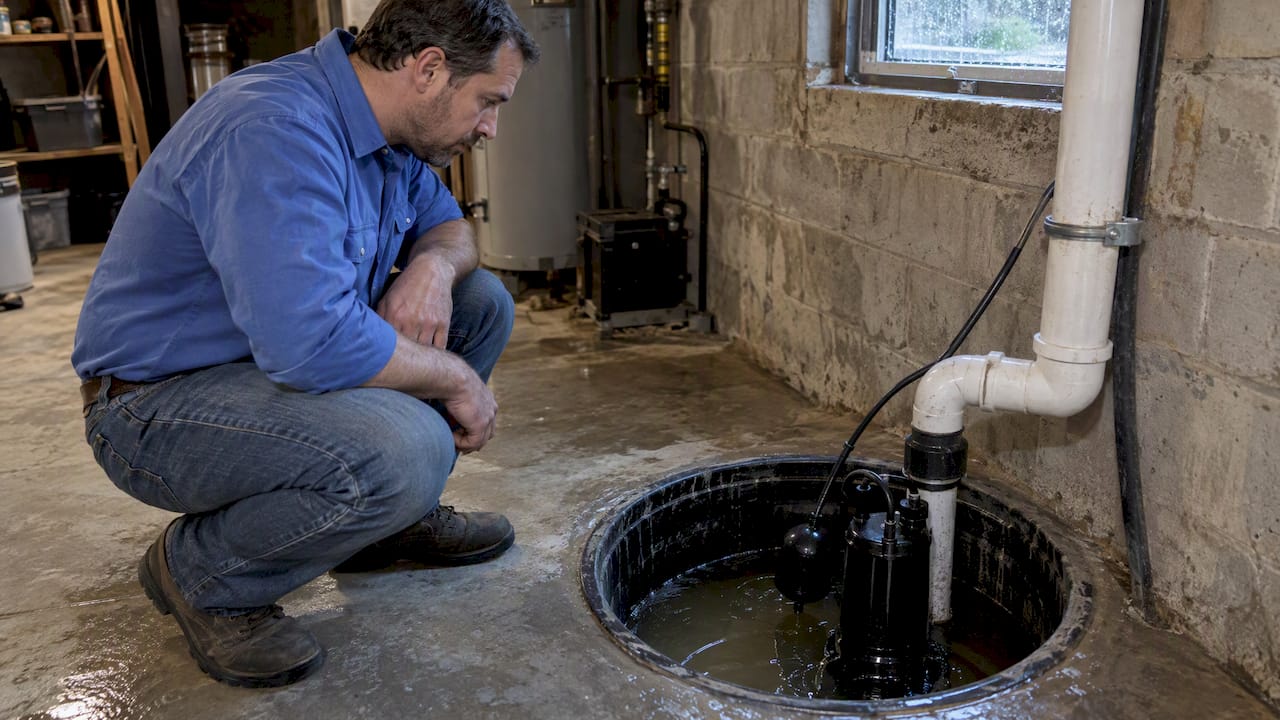
When your sump pump runs constantly, the cause is usually either heavy groundwater coming in nonstop or a mechanical trigger such as a stuck float switch or a failed check valve. Start with a safety-first check: confirm the pump has power, then look at the float and the outdoor discharge flow. If you smell burning or the motor feels overheated, cut power and call a plumber.
TL;DR:
- After rain stops, rapid cycling with a nearly empty pit points to a stuck float or leaking check valve; gurgling after shutdown suggests backflow.
- Continuous operation can reduce a pump’s expected 7–10 year service life to months, so repair persistent running promptly and consider a backup before storms.
- Annual upkeep should include clearing pit debris, checking the valve and float, and testing the pump with a bucket of water.
- A 1/3 HP pump typically suits most homes, while 1/2 HP handles higher volume; choose a battery backup within manufacturer limits.
- Unplug the pump before inspecting the pit by hand, but cut power and call a plumber immediately for burning smells, an overheated motor, or electrical trouble.
Table of Contents
- What makes a sump pump run nonstop?
- Which quick checks are safe to do in 10 minutes?
- How do you test the float, check valve, and discharge line?
- When is constant running normal, and when is it a malfunction?
- How does nonstop running affect pump lifespan?
- How can you prevent nonstop running and plan a backup?
- When should you call a plumber, and what should you have ready?
- A note from our desk on acting early
- Get your sump pump diagnosed by our plumbers
- FAQ
- Sources
What makes a sump pump run nonstop?
Most constant running traces back to one of a handful of causes. Knowing how each one forces the pump to keep going tells you which check to do first.
- Stuck or faulty float switch: The float rides up and down with the water level. If it snags on the pit wall, a cord, or debris, it stays “up” and tells the pump to run even when the pit is nearly empty.
- Failed or leaking check valve: This valve stops water in the discharge pipe from falling back into the pit. When it fails, the same water cycles around again and again.
- Blocked, frozen, or restricted discharge line: Water has to leave the house. A clog, ice plug, or crushed pipe slows the outflow, so the pump works far longer to move the same volume.
- High groundwater or ongoing rain: Saturated soil can push water into the pit for hours or days, and the pump simply keeps up with it.
- Pit size or pump size: A small pit fills quickly and triggers frequent starts. A pump that is too weak for your inflow may never get ahead of it. Oregon State research notes that too-frequent starts shorten equipment life and that adequate sump storage reduces how often the pump starts.
- An aging pump: A tired motor moves less water per minute, so it needs more run time. Weak flow, odd noises, or slow starts are common signs.
A clogged or damaged drainage system can also overwhelm the pump by letting water build up around the foundation.
Which quick checks are safe to do in 10 minutes?
Safety first: never reach into the pit while the pump is plugged in. Wear gloves, and unplug the pump before any hands-on work.
- Confirm the pump is plugged in, then check the breaker or fuse and any GFCI outlet for a trip.
- Look into the pit with a flashlight. Check for debris, tangled cords, or anything pinning the float.
- Watch the float while the pump is powered. If it is quiet, pour water in slowly to trigger one cycle.
- Go outside and check the discharge outlet. Water should flow freely, with no ice, clog, or broken section.
- Listen right after the pump shuts off. Gurgling or rushing water points to backflow.
- Stop and unplug the unit if you smell burning or the motor is hot to the touch.
Pro Tip: Keep a phone handy and shoot a short video of the pump cycling. A clip of how often it starts and stops tells a technician more than a verbal description ever will.
How do you test the float, check valve, and discharge line?
These three tests isolate the failing part and give you evidence for a service call.
- Float test: With the pump unplugged, lift the float by hand, plug the pump back in, and confirm it starts. Lower the float and confirm it stops. Then pour a bucket of water into the pit to see a normal cycle, as FEMA suggests. If it fails to start or sounds irregular, it may be near the end of its life.
- Check valve test: After shutoff, listen for a distinct gurgling or rushing sound. According to the Building America Solution Center, that sound means water is flowing back from the discharge pipe into the pit.
- Discharge test: Outside, confirm steady flow while the pump runs. Clear visible blockages from the end of the pipe. Do not try to thaw sections you cannot safely reach.
- Document everything: Write down what you saw, and take photos of the float, the pit, and the outlet.
When is constant running normal, and when is it a malfunction?
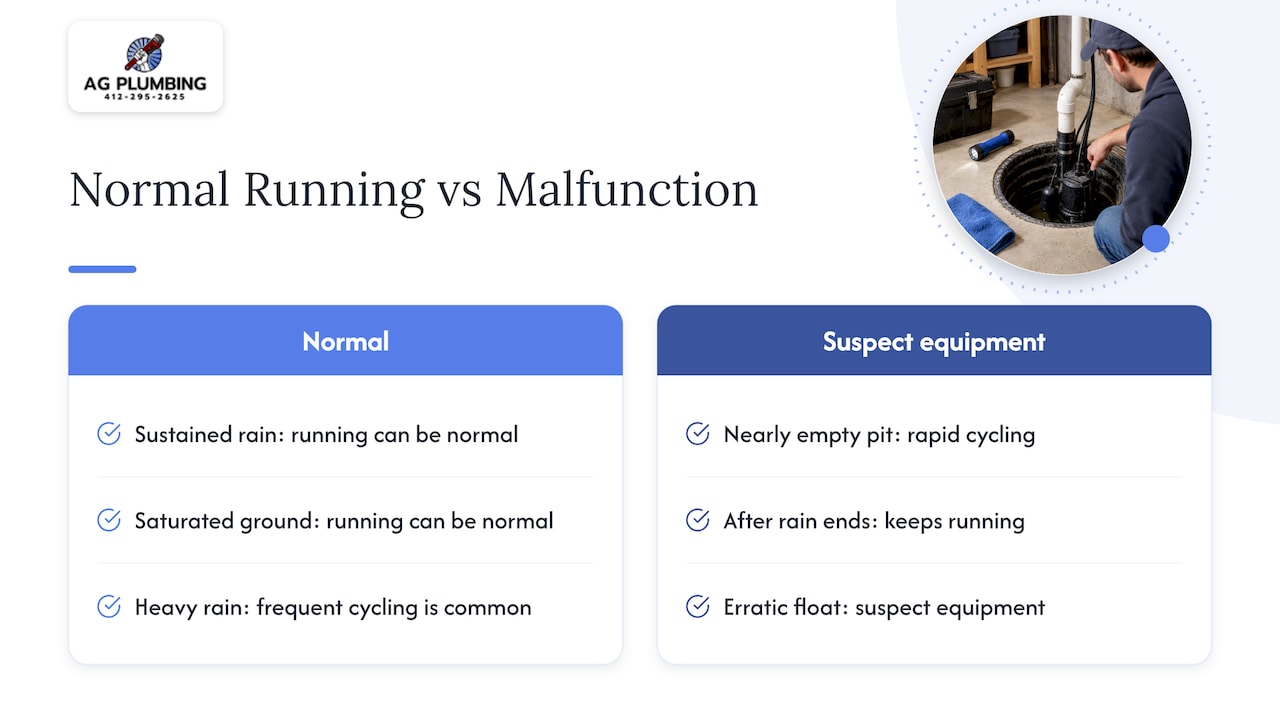
Sustained running during a downpour or a stretch of saturated ground can be perfectly normal. Frequent cycling in heavy rain is common, according to NDSU Extension, but rapid cycling when the pit is nearly empty or after the rain has stopped points to a mechanical trigger, like a float caught on debris.
Match the pump’s behavior to the weather. If it runs while the pit is almost dry, keeps going long after the rain ends, or the float moves erratically, suspect equipment. In the meantime, monitor it, keep a simple log of run times, and leave it plugged in unless there is an electrical or overheating danger. For more on why the pump matters, see our piece on sump pumps and basement flood prevention.
How does nonstop running affect pump lifespan?
Standard residential pumps are built for intermittent duty. Running one around the clock heats the motor and wears the switch and bearings far faster than normal cycling. Thermal protection can shut a motor down, but repeated overheating still shortens its life.
Continuous running can cut a pump’s service life from the expected 7–10 years to just months, according to NDSU Extension.
The practical takeaway: a pump that runs nonstop is closer to failure than its age suggests. Repair it quickly, and think about a backup before the next storm.
How can you prevent nonstop running and plan a backup?
A little yearly upkeep goes a long way. NDSU water quality guidance calls neglected maintenance a primary reason pumps fail during floods.
- Clean the pump inlet screen and clear any debris from the pit.
- Inspect the check valve for debris or wear.
- Confirm the float moves freely without touching the walls.
- Run a bucket test at least once a year.
- Put the pump on its own electrical circuit, and check GFCI requirements with local code, as NDSU recommends.
- For capacity, a 1/3 HP pump typically suits most homes, while 1/2 HP handles higher volume.
- Add a battery-backed backup pump with the highest amp-hour battery the manufacturer supports.
Pro Tip: Test your backup the same way you test the main pump. Pour in water with the primary unplugged and note how long the battery pump keeps up.
When should you call a plumber, and what should you have ready?
Call right away if you notice electrical problems, a burning smell, or an overheated motor. If the pump keeps running after the checks above, contact a plumber. Call too if you cannot reach or safely inspect the pump.
A technician will examine the float, the check valve, the discharge path, the pump’s capacity, and the motor’s health, then tell you whether a repair or replacement makes sense. Our guide to repairing a sump pump shows what that work looks like.
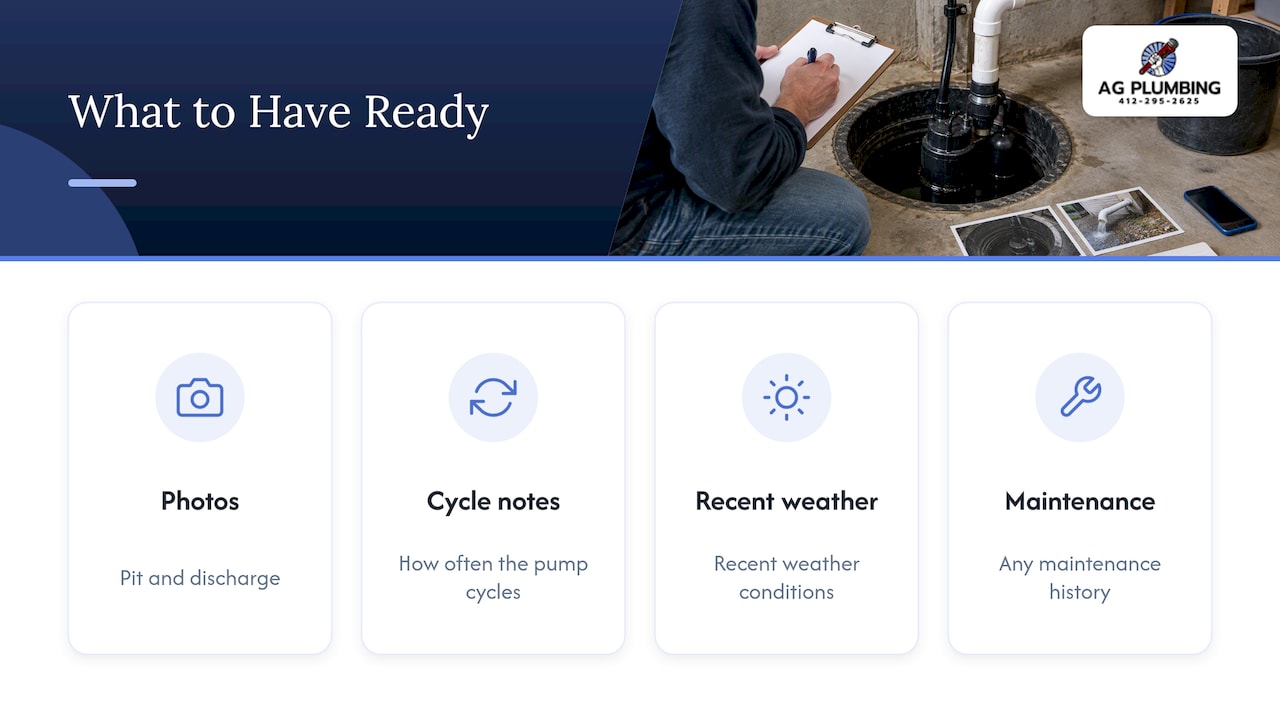
Have these ready: photos of the pit and discharge, notes on how often the pump cycles, recent weather, and any maintenance history. That helps the technician diagnose the problem.
A note from our desk on acting early
Most sump pump trouble is cheap to fix when you catch it early, and expensive once water reaches the floor. A stuck float or a clogged outlet may be straightforward to address. Electrical trouble, a failing motor, or a pump that never stops belongs with a plumber. Write down what you tested before anyone arrives. Acting early almost always costs less than cleaning up a flooded basement.
— Maayan
Get your sump pump diagnosed by our plumbers
We handle plumbing repair and sump-related problems, including float, check valve, and discharge issues. Our process is simple: we inspect the system, give you an estimate, and then make the repair. Send us the notes and photos you gathered, and we can work faster. Book plumbing repair with us to discuss your pump issue.
FAQ
What do I do if my sump pump keeps running?
Check the power, the float, and the outdoor discharge first. If the float is stuck or the outlet is blocked, clear it safely with the pump unplugged. If it keeps running after those checks, or you notice burning smells, call a plumber.
Is it bad for a sump pump to run continuously?
Yes, if it happens often. Residential pumps are designed for intermittent use, and continuous running can shorten their service life dramatically. Heavy rain is the exception, since long run times then are normal.
Is it normal for a sump pump to run every 2 minutes?
It can be during a storm with high groundwater. Outside of heavy rain, especially when the pit is nearly empty, it suggests a stuck float, a failed check valve, or an undersized pit.
How long can a sump pump run continuously before it burns out?
There is no safe fixed time, because it depends on the pump and the motor’s heat protection. Running nonstop for extended periods raises burnout risk, so repair a pump that never stops as soon as you can.
Sources
Recommended
- How to Repair a Sump Pump: Pittsburgh Homeowner’s Guide
- The Role of Sump Pumps in Basement Flood Prevention
- Leak Detection Tips for Homeowners: 10 Quick Checks
- Pittsburgh Homeowners: Stop Damage From a Basement Floor Drain Backup
