
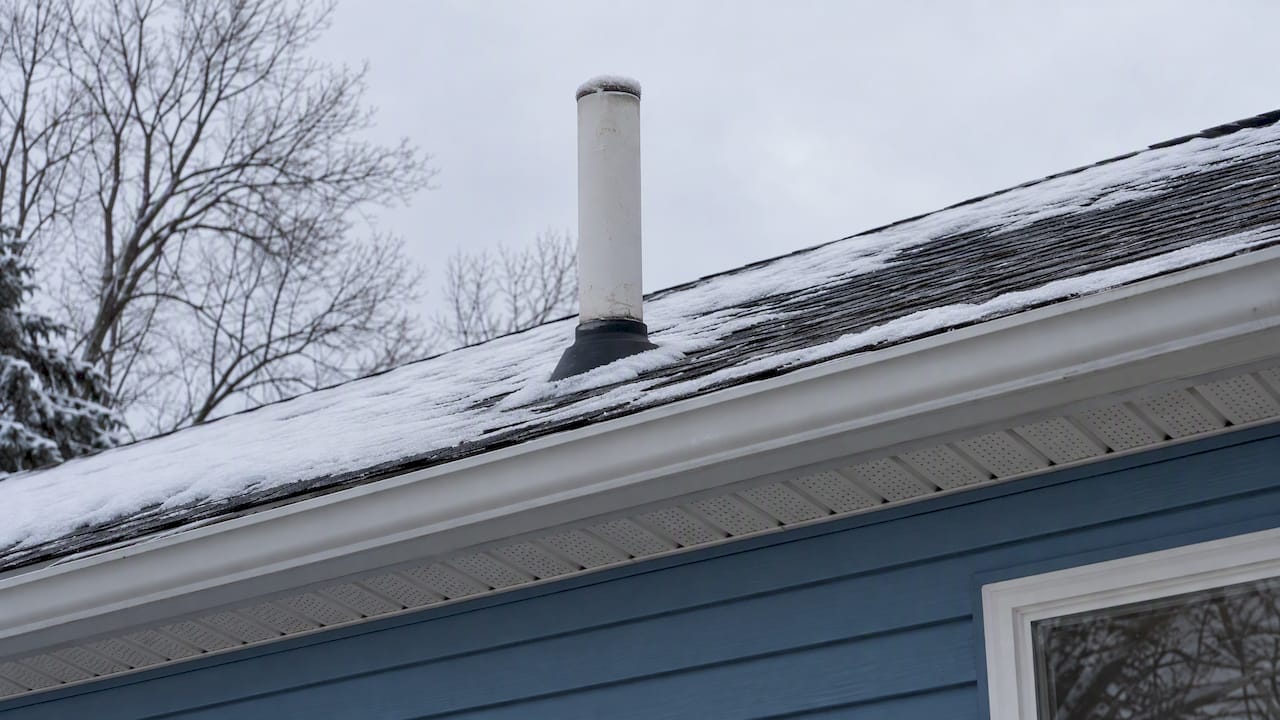
A frozen vent stack means ice has closed the pipe at your roof, so your drains can’t breathe and sewer gas can’t escape. Don’t climb an icy roof. Ventilate the house, try the ground-level steps below, and call a licensed plumber if you can’t reach the vent safely. A camera inspection confirms the cause, and UL-approved heat trace is the usual permanent fix.
TL;DR:
- Test fixtures separately: slow drainage or gurgling across several fixtures points toward a blocked vent, while a camera inspection rules out pipe damage.
- Run bathroom fans, open interior doors, and reduce water use; if symptoms persist after a few hours, stop and call a plumber.
- Never use an open flame, pour hot water down the vent, or climb an icy roof; none safely clears a hard ice plug.
- Seal air leaks around the roof penetration, and consider heat trace cable approved by UL, installed by an electrician after checking local code.
- Heat trace cannot keep a vent open when snow covers it; extending the stack may be necessary, subject to local code.
Table of Contents
- How can you tell your vent stack is frozen?
- What can you safely do to thaw it without climbing on the roof?
- How do you keep a vent stack from freezing again?
- When should you call a licensed plumber?
- Why this advice holds up in the field
- How we can help with a frozen vent stack
- FAQ
- Sources
How can you tell your vent stack is frozen?
Your drains usually tell you first. Watch for these signs:
- A persistent sewer odor inside the house, often strongest near a bathroom or basement drain.
- Gurgling from sinks, tubs or floor drains after a toilet flushes.
- Slow drainage in several fixtures at once, not just one.
- A toilet bowl that bubbles or drains water out of the bowl after another fixture runs.
Start inside. Run each fixture separately and note which ones gurgle or drain slowly. If every fixture misbehaves, the problem is likely at the vent, not in a single branch line. Professionals confirm it with a suction or plug test at the roof vent: if air can’t move freely through the opening, the vent is blocked. That test requires roof access, so leave it to a trained plumber.
A drain camera is the reliable way to rule out a collapsed or damaged pipe. We cover how that works in our guide to drain camera diagnosis.
What can you safely do to thaw it without climbing on the roof?
Research on frost closure of roof vents explains why this happens: moist, warm air rises through the stack, hits the cold vent rim, and builds a ring of ice until the opening closes. Your goal is to warm things up and cut off new moisture, not to force the ice out. Try these steps in order:
- Run bathroom fans and open interior doors so warm air moves through the house, especially near the stack.
- If your attic is safely accessible, open the hatch to let heated air in, and keep your hands and body clear of insulation edges and wiring.
- From the ground, clear heavy snow near any low vent terminations with a roof rake or long-handled broom.
- If an exposed section of vent pipe is reachable from a safe, stable position, wrap it with UL-approved plug-in heat tape and plug it into a GFCI outlet, following the manufacturer’s directions.
- Reduce water use while the vent is blocked. Skip long showers and extra laundry loads until venting returns.
- If the odor and gurgling continue after a few hours, stop and call a plumber.
Pro Tip: Keep a flashlight and binoculars handy. You can often spot a frosted or capped vent from the ground without ever touching a ladder.
Some things are off the table. Never use an open flame, which is unsafe on any frozen plumbing, as NC State Extension notes. Never pour hot water down the vent, because it won’t clear a hard ice plug and can back up into fixtures. And never walk an icy or steep roof without fall protection.
How do you keep a vent stack from freezing again?
The best prevention is a layered one, and it often needs a pro. Here are the main options:
- Heat trace on the vent pipe. The Building America Solution Center recommends self-regulating, UL-approved cable, ideally hardwired on its own circuit with a labeled pilot switch. Have a licensed electrician involved, and make sure the cable is compatible with plastic piping.
- A taller or wider vent. Raising the exposed vent above the snow line, or increasing its diameter where code allows, slows ice buildup. Check local code before changing any vent.
- Air sealing at the roof penetration. Warm, moist house air leaking into the attic condenses on cold pipe. Sealing around the stack cuts that supply. Our winter plumbing preparation guide covers attic and insulation basics.
- Balanced attic ventilation and insulation. Tight, well-insulated homes leak less heat to the vent, so the pipe at the roof stays colder than it would in an older house. If you’re already winterizing other parts of your home, these door winterizing tips pair well with attic sealing.
Roof heating products have limits too. When snow piles higher than the vent, no heater at the pipe will keep it open, so the stack itself may need to be extended.
Insulation alone is rarely enough. According to the Building America Solution Center, insulation will not prevent freezing of pipes exposed to low temperatures for extended periods, which is why electric resistance heating plus insulation is recommended.
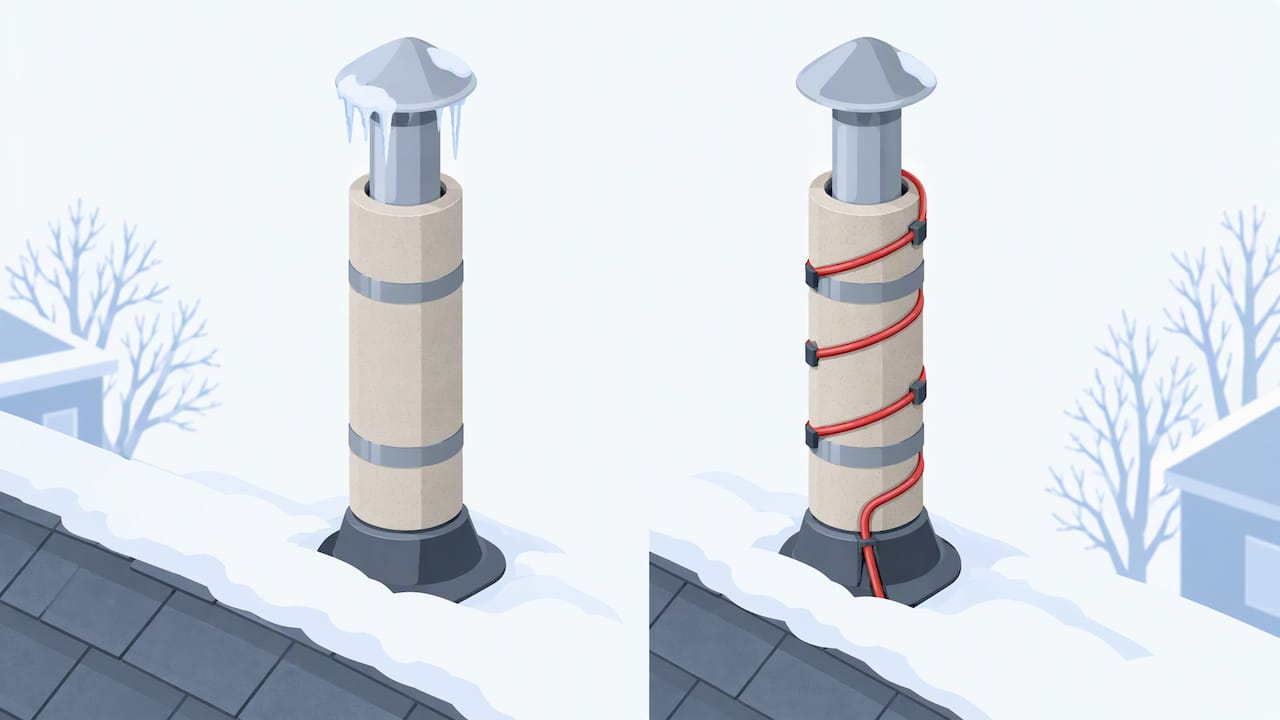
Our frozen pipe prevention article goes deeper on insulation and heat tape. Permanent fixes usually need a professional diagnosis and a permit check first.
When should you call a licensed plumber?
Call when the roof is icy or steep, the odor won’t go away, the vent keeps refreezing, you see damage, or you simply can’t reach the vent safely. NC State Extension cautions against DIY roof work because of the fall risk, and the fix has to happen at the vent source anyway.
Here is what a professional visit typically involves:
- A safety evaluation of the roof and attic before anyone climbs.
- A camera inspection to rule out structural problems.
- Safe thawing at the roof, or installation of heat trace.
- A measurement of how much vent pipe is exposed.
- A written estimate before permanent work begins.
If the vent is reachable, a temporary thaw may be possible. Permanent fixes take scheduling, and heat-trace wiring may need an electrician and a permit, depending on local code. For background on how the whole system fits together, see our plumbing stacks guide.
Why this advice holds up in the field
Most frozen vent advice online tells you to get on the roof. We think that’s the wrong starting point. Ice at the vent is a symptom of moist air, cold pipe and a tight house, so lasting fixes come from air sealing, heat trace and proper vent sizing, not from clearing ice again and again. We lean on licensed electricians for heat-trace wiring and on camera work for structural questions, because guessing at either causes expensive repeat visits. And if it’s snowing and the roof is slick, the safest repair is the one that waits for the right equipment.
— Maayan
How we can help with a frozen vent stack
Our team at AG Heating, Cooling & Plumbing provides plumbing services in Pittsburgh and the surrounding areas. Our plumbing repair service is the place to start.

- Drain cleaning and plumbing repair when the freeze has caused other problems.
- A clear estimate before work begins.
Call us or request a service estimate through our site, and we’ll schedule a visit.
FAQ
How do you fix a blocked plumbing vent?
Start by confirming the vent is the problem, since slow drains and gurgling can also come from a clogged drain line. A plumber can test the vent at the roof, thaw ice safely, or clear debris with the right equipment. A camera inspection first avoids guessing.
How much does it cost to unclog a plumbing vent?
Cost depends on roof access, how long the blockage takes to clear, and whether permanent prevention is added. Current prices are on our website. Ask any plumber for an itemized quote first.
How do you prevent a plumbing vent from freezing?
Seal air leaks around the stack, balance attic insulation and ventilation, and consider heat trace on the exposed pipe. The Building America Solution Center recommends self-regulating, UL-approved cable on its own circuit. Raising or widening the vent can help where local code allows.
Can you run water down a roof vent pipe?
It’s not recommended. Water won’t clear a hard ice plug, and it can back up into your fixtures. Safe thawing happens at the vent opening, ideally by a professional.
Sources
- Winter Weather Overview Guide | Building America Solution Center
- Frost closure of rood vents in plumbing systems
- Preventing Frozen Pipes – Healthy Homes | NC State Extension
Recommended
- 10 Min Safe Steps to Thaw Frozen Outdoor Faucets for Homeowners
- How to Prevent Frozen Pipes This Winter
- Plumbing stacks explained: homeowner’s guide (2026)
- How to Insulate Water Pipes and Prevent Freezing
