
TL;DR:
- Most toilet clogs can be fixed with proper plunging techniques and the right tools.
- Flange plungers are highly effective and essential for clearing toilet blockages.
- When DIY methods fail, professional plumbing help is recommended to address deeper or recurring clogs.
The water is rising, the toilet won’t flush, and your heart rate is climbing fast. A clogged toilet is one of the most stressful household surprises, but here’s the good news: most blockages are minor and completely fixable without calling a plumber. Whether you’re dealing with a slow drain or a full-on backup, the right tools and technique make all the difference. This guide walks you through everything you need, from choosing the best plunger to knowing when a clog is beyond DIY territory. We’ve helped Pittsburgh homeowners deal with these exact problems for 30 years, and we’re sharing what actually works.
Table of Contents
- Essential tools and materials you need before starting
- Step-by-step guide: Clearing most toilet clogs with a plunger
- For stubborn clogs: Alternative methods that work
- Troubleshooting, prevention, and when to call a plumber
- A plumber’s perspective: Why technique matters and what most guides miss
- When it’s time to call your local Pittsburgh plumbing experts
- Frequently asked questions
Key Takeaways
| Point | Details |
|---|---|
| Start with a flange plunger | This simple tool clears most toilet clogs quickly and safely. |
| Dish soap and hot water | This combination often resolves soft clogs without special tools. |
| Avoid harsh chemicals | Mechanical and gentle methods are safer, especially for old Pittsburgh pipes. |
| Know when to call a pro | Persistent or multi-fixture clogs need professional plumbing service. |
Essential tools and materials you need before starting
Once you recognize the problem, gather the right tools for a smooth and safe fix. Reaching for the wrong equipment wastes time and can even make things worse. Knowing what to grab before you kneel down next to that toilet will set you up for success.
Plunger types: what’s the difference?
Not all plungers are equal. The two you’ll encounter most often are the cup plunger and the flange plunger.
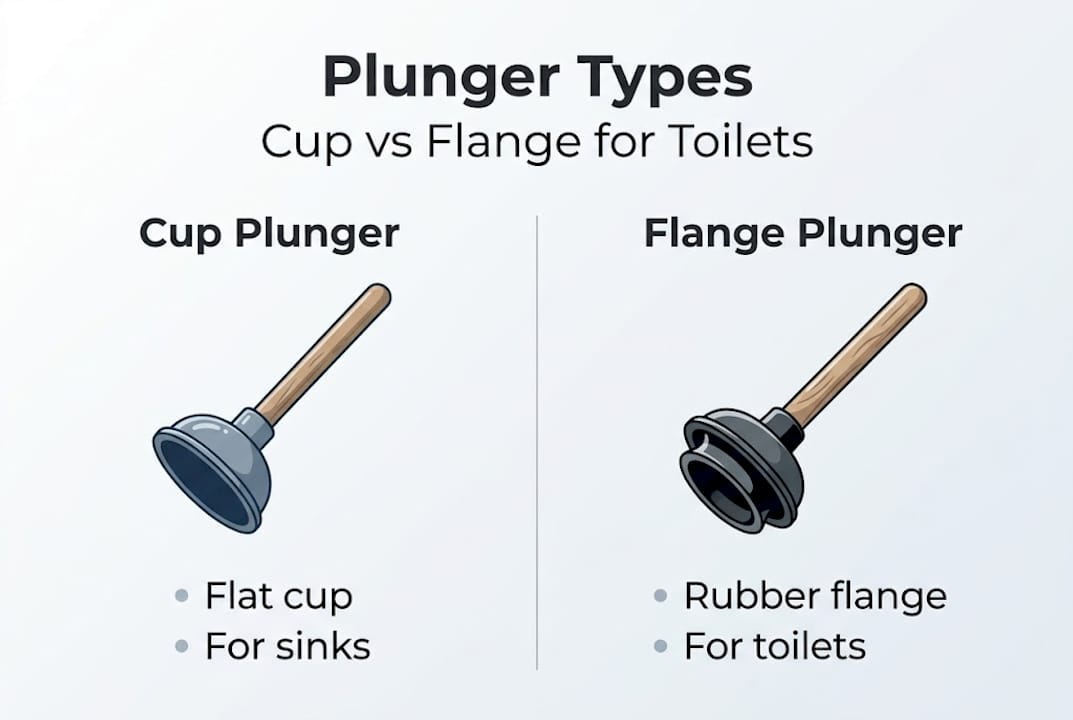
| Plunger type | Shape | Best for | Effectiveness on toilets |
|---|---|---|---|
| Cup plunger | Flat rubber cup | Sinks and tubs | Low |
| Flange plunger | Cup with rubber flap extended | Toilets only | High |
The flange plunger creates a tight seal inside the toilet bowl’s drain opening, which is what gives it the suction needed to clear a blockage. Flange plungers handle 80% of toilet clogs, making them the one tool worth having under every bathroom sink. If you only buy one tool after reading this, make it a flange plunger.
Other materials to have ready:
- Rubber gloves (long-cuffed if possible)
- Old towels or rags to protect the floor
- A bucket for removing excess water
- Dish soap (Dawn or similar)
- Hot tap water (not boiling)
- Baking soda and white vinegar (optional)
- A closet auger, also called a toilet snake, for stubborn clogs
For more on what tools help with different plumbing situations, check out these essential plumbing services every homeowner should know about.
What NOT to use:
Skip the chemical drain cleaners. Products like Drano are designed for sink clogs and can damage toilet internals and older pipes. Many Pittsburgh homes were built decades ago, and the plumbing in those houses may not handle harsh chemicals well. You can learn more about common plumbing repair issues that stem directly from chemical overuse.
Pro Tip: Before you start, lay old towels in a wide circle around the toilet base. Remove anything stored on the floor nearby. If the bowl is nearly overflowing, use a bucket to scoop out some water first so you have room to plunge without splashing.
Step-by-step guide: Clearing most toilet clogs with a plunger
With your tools ready, it’s time to tackle the clog using tried-and-true plunging techniques. This works for the majority of standard household clogs, so follow each step before moving on to anything more involved.
- Put on your rubber gloves. Protect yourself. Toilet water contains bacteria, and splashing is almost guaranteed during vigorous plunging.
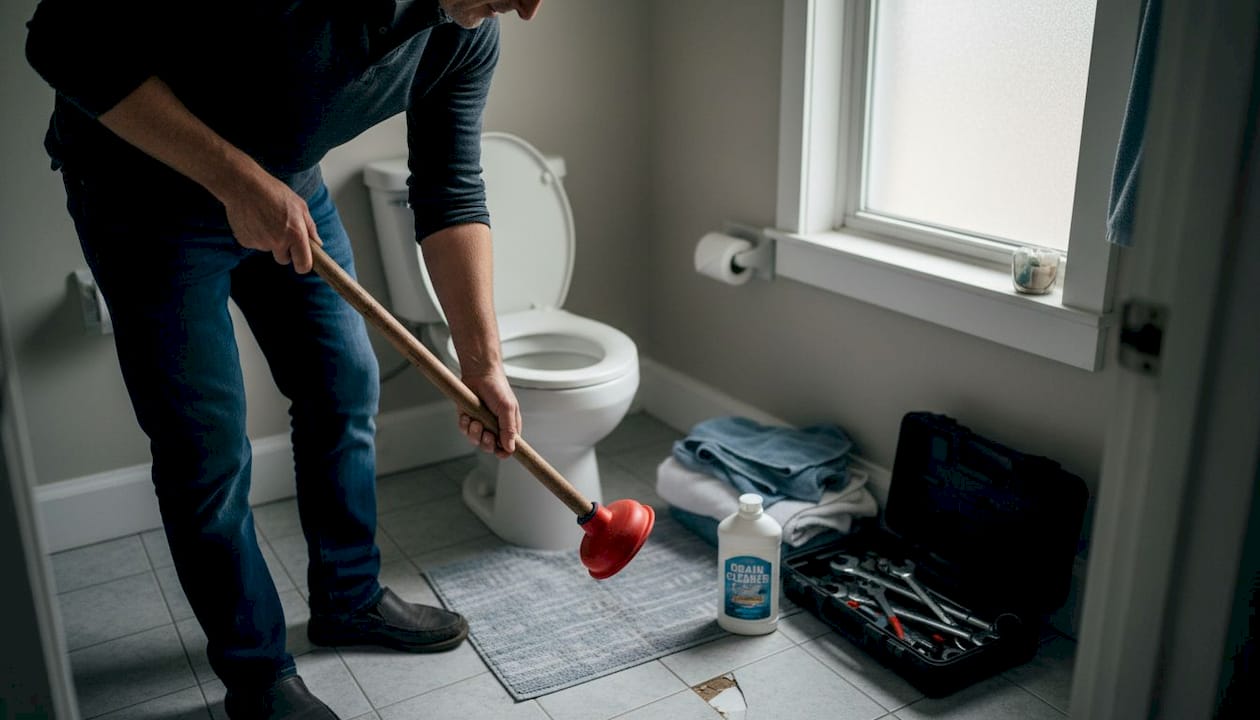
- Position the flange plunger. Lower it into the bowl at an angle to let it fill with water, not air. An air-filled plunger creates noise but almost no pressure. Water is what clears the clog.
- Create a tight seal. Press the rubber flange firmly into the drain opening at the bottom of the bowl. The seal must be complete. If you see gaps, adjust the angle until it locks in.
- Begin with a slow first push. A hard first thrust can blow the seal and spray water. A steady, controlled push builds the initial pressure you need.
- Use 15 to 20 push-pull strokes in a steady rhythm. Keep the plunger sealed throughout. Maintain consistent pressure going down and coming up.
- Focus on the upstroke. Most people push hard and yank back fast without thinking about it. Pulling up on the upstroke actively dislodges the blockage rather than just compressing it. This single detail is what separates a cleared clog from a frustrating 20-minute battle.
- Watch the water level. If it starts to drop, you’re making progress. Don’t flush yet.
- Test with a careful flush. Once the water drains, flush once and watch. If the bowl drains normally, you’re done. If it rises again, repeat the process.
For situations where things escalate fast, our emergency plumbing quick fixes guide covers what to do when water keeps rising. If plunging doesn’t resolve the issue after two or three rounds, your clog may be deeper in the line, and clearing sewer line blockages may be necessary.
Safety note: Always keep a dry towel within arm’s reach during plunging. Splashing is common and the floor can get slippery. Never flush repeatedly hoping it will push the clog through. That only raises the water level and risks an overflow.
Pro Tip: Warm the rubber flange under hot water for about 60 seconds before use. Warmer rubber is more pliable and forms a better seal, especially in colder bathrooms during Pittsburgh winters.
For stubborn clogs: Alternative methods that work
If plunging isn’t successful, try these expert-backed alternative strategies. Not every clog gives up without a fight, and these methods address softer blockages and foreign objects differently than a plunger does.
Dish soap and hot water method:
Dish soap and hot water clear many soft clogs within 15 to 30 minutes. Here’s how to do it right:
| Step | Action | Time to wait |
|---|---|---|
| 1 | Squirt a generous amount of dish soap into bowl | 0 min |
| 2 | Pour 1 gallon of hot tap water from waist height | 0 min |
| 3 | Let soap and water sit | 15 to 30 min |
| 4 | Attempt a flush or follow with plunging | After wait |
The dish soap acts as a lubricant, coating the clog and helping it slide through the pipe. Pouring from waist height adds just enough force to help move the soap into the blockage without sending water over the rim. Use hot tap water, not boiling. Boiling water can crack porcelain.
Baking soda and vinegar:
This combination creates a fizzing reaction that can loosen organic material. Pour one cup of baking soda into the bowl first, followed by one cup of white vinegar. Let it fizz for 30 minutes, then flush. It works best on soft, organic clogs but won’t touch a toy or a wad of wipes. Baking soda and vinegar work for minor clogs but mechanical methods should always be your first line of action.
Wire hanger:
A straightened wire coat hanger can reach just past the drain opening to break up or hook a foreign object. Wrap the end in a rag so it doesn’t scratch the porcelain. This is a makeshift option for something visibly near the opening, not a deep clog. For anything further down, you need a proper plumbing snake.
What to avoid:
- Chemical drain cleaners (risk to older pipes)
- Boiling water (cracks porcelain)
- Repeated flushing when water is high
- Multiple makeshift attempts without checking for improvement
Troubleshooting, prevention, and when to call a plumber
Sometimes, even the best DIY solutions can’t solve every clog. Here’s when to recognize those moments and how to keep clogs from coming back in the first place.
Signs you need a professional:
- More than one drain in the house is backing up at the same time
- Water from a flushed toilet appears in the shower or bathtub drain
- You smell a persistent sewer odor from any drain
- The toilet clogs repeatedly even without obvious causes
- You’ve plunged and used alternative methods with zero improvement
Older Pittsburgh pipes may have issues with venting or recurring blockages that no plunger can fix. Vent pipes let air into the drain system so water can flow freely. When they’re clogged or damaged, slow drains and gurgling sounds become a regular problem. This is especially common in Pittsburgh neighborhoods where homes were built in the mid-20th century.
Prevention tips:
- Flush only toilet paper. Nothing else, including wipes labeled “flushable,” dissolves reliably
- Keep a small trash can beside the toilet for cotton rounds, tissues, and hygiene products
- Address slow drainage immediately rather than waiting for a full clog to develop
- Clean the toilet and drain area monthly
- Run hot water through the drain weekly to clear soft buildup
For more background on why consistent maintenance matters, our guide on preventing drain blockages walks through the real cost of ignoring early warning signs. Pittsburgh homeowners can also find practical plumbing cost-saving tips that reduce the chance of expensive emergencies down the road.
Pro Tip: If your home was built before 1980, schedule a professional drain cleaning once a year. Older clay or cast iron pipes accumulate buildup faster and are more prone to root intrusion from nearby trees.
A plumber’s perspective: Why technique matters and what most guides miss
After 30 years of working in Pittsburgh bathrooms, we’ve seen one pattern repeat itself more than any other: homeowners with the right tool still struggle because the technique is off. Everyone focuses on the push. The pull is where the clog actually breaks loose. Pulling up on the upstroke is the single most overlooked step in virtually every DIY guide, and it’s the one that makes plunging actually work.
We’ve also seen real damage caused by chemical cleaners poured into toilets connected to old cast iron pipes. The corrosion isn’t visible right away, but it shows up eventually as pinhole leaks or cracked joints inside the wall. Fixing that is far more expensive than any clog repair.
The other thing most guides miss is the difference between a localized clog and a system problem. If your toilet keeps clogging every few weeks with no obvious cause, the issue is rarely the toilet. It’s usually further down the line, often near a sewer line blockage or a damaged vent stack. Fixing the symptom over and over without addressing the root cause costs you time, stress, and eventually money. When the same clog keeps coming back, stop and call a pro.
When it’s time to call your local Pittsburgh plumbing experts
If you’ve tried plunging, dish soap, and alternative methods and the toilet still won’t clear, you’ve done the right things. Some clogs are simply beyond what DIY tools can reach.
AG Heating, Cooling & Plumbing has served Pittsburgh homeowners for 30 years, handling everything from stubborn toilet clogs to full blocked sewer lines. Our team arrives ready with the tools and local knowledge to resolve what home methods can’t. Fast response matters when water is backing up, and our plumbing repair services are built around getting your home back to normal quickly. Reach out to your local plumbing experts at AG Heating, Cooling & Plumbing whenever a clog is too stubborn to handle alone. We’re here to help.
Frequently asked questions
Does dish soap and hot water really clear a clogged toilet?
Yes, for many soft clogs, dish soap followed by hot tap water and a 15 to 30-minute wait can loosen debris so a flush or plunge finishes the job. Dish soap and hot water work best on organic material, not foreign objects.
Is it safe to use chemical cleaners in older Pittsburgh homes?
No, harsh chemicals can damage older pipes common in Pittsburgh neighborhoods. Avoid chemicals in old pipes and rely on safer mechanical methods like plunging or a toilet snake instead.
How do I know if the clog is in the main sewer line?
If multiple drains back up at once or water appears in other fixtures after flushing, the main sewer line is likely blocked. Older pipes and main lines almost always require professional diagnosis and clearing.
Will a wire hanger or baking soda and vinegar work on a major clog?
These can help with minor blockages near the drain opening, but rarely move a major clog. Mechanical methods are preferred for serious blockages where reach and pressure matter most.
Recommended
- Common Plumbing Repair Issues and How to Fix Them – AG-Plumbing
- Clear Sewer Line Blockages: 2026 Homeowner’s Guide – AG-Plumbing
- Heating, Cooling & Plumbing Services Pittsburgh, PA
- Emergency Plumbing Guide: Quick Solutions for Homeowners – AG-Plumbing
