
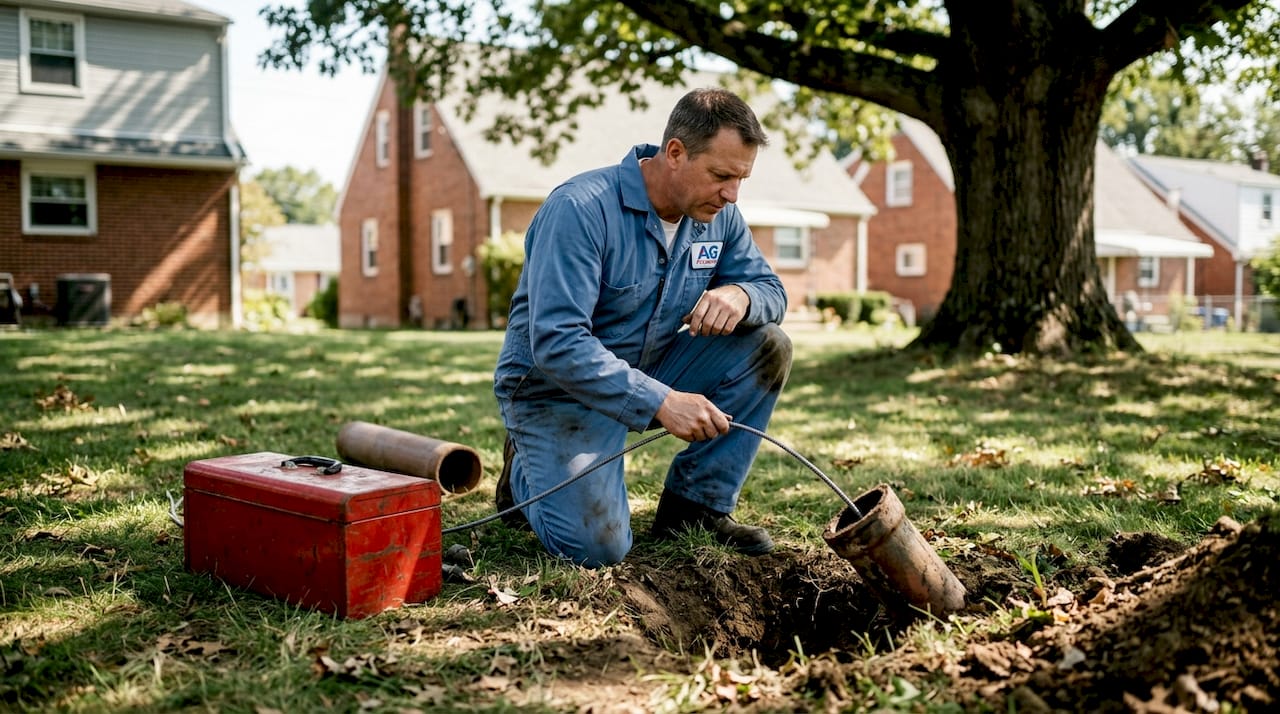
TL;DR:
- Pipe bursting is a modern trenchless method that replaces old underground pipes with minimal yard disruption and faster completion. It involves inserting a bursting head through small access pits to fracture old pipes and pull in new HDPE pipes, often with the option to upsize for better flow. Proper assessment, utility locating, and contractor certification are essential for successful, long-lasting pipe replacement.
Most Pittsburgh homeowners assume that fixing a damaged underground pipe means tearing apart their yard, killing their landscaping, and living with a construction mess for days. That assumption is understandable but outdated. Pipe bursting is a modern trenchless technique that replaces failing pipes underground without major excavation, and it’s changing what’s possible for homeowners dealing with aging sewer and water lines. This guide covers exactly how pipe bursting works, when it’s the right call, and what to expect from start to finish.
Table of Contents
- What is pipe bursting? The basics
- How pipe bursting works: Step-by-step for homeowners
- Pipe bursting limitations and edge cases
- Expert tips: Maximizing pipe bursting success
- The real value of pipe bursting: What most guides miss
- Next steps: Professional pipe bursting help in Pittsburgh
- Frequently asked questions
Key Takeaways
| Point | Details |
|---|---|
| Trenchless solution | Pipe bursting replaces underground pipes with minimal digging and disruption. |
| Know the limits | It cannot fix sags, major bends, or collapsed pipes without a clear pathway. |
| Professional assessment | Soil, utilities, and pipe path must be carefully checked by certified experts. |
| Upsizing advantage | You can often upgrade to larger pipes to improve flow and future-proof your system. |
| Faster repairs | Pipe bursting typically completes quicker than traditional trench repairs. |
What is pipe bursting? The basics
Pipe bursting is a
trenchless method that replaces old pipes without traditional excavation. Instead of digging a long trench across your yard to access the damaged pipe, a technician inserts a specialized device called a bursting head directly into the existing pipe through small access pits. As the bursting head moves forward, it fractures the old pipe outward into the surrounding soil while simultaneously pulling a brand-new pipe into place behind it.
The contrast with traditional open trench repair is significant. Conventional sewer line work can require excavating trenches several feet deep and stretching across your entire property, removing trees, cutting through driveways, and disrupting landscaping that took years to grow. With pipe bursting, those access points are typically just two small pits, one at each end of the pipe section being replaced.
Here’s a quick comparison so you can see the difference clearly:
| Feature | Pipe bursting | Open trench repair |
|---|---|---|
| Yard disruption | Minimal (2 small pits) | Extensive trench |
| Project duration | 1 to 2 days | 3 to 7 days or more |
| Landscaping damage | Very low | High |
| Restoration costs | Low | Significant |
| Pipe upsizing option | Yes | Yes |
| Works on collapsed pipe | No | Yes |
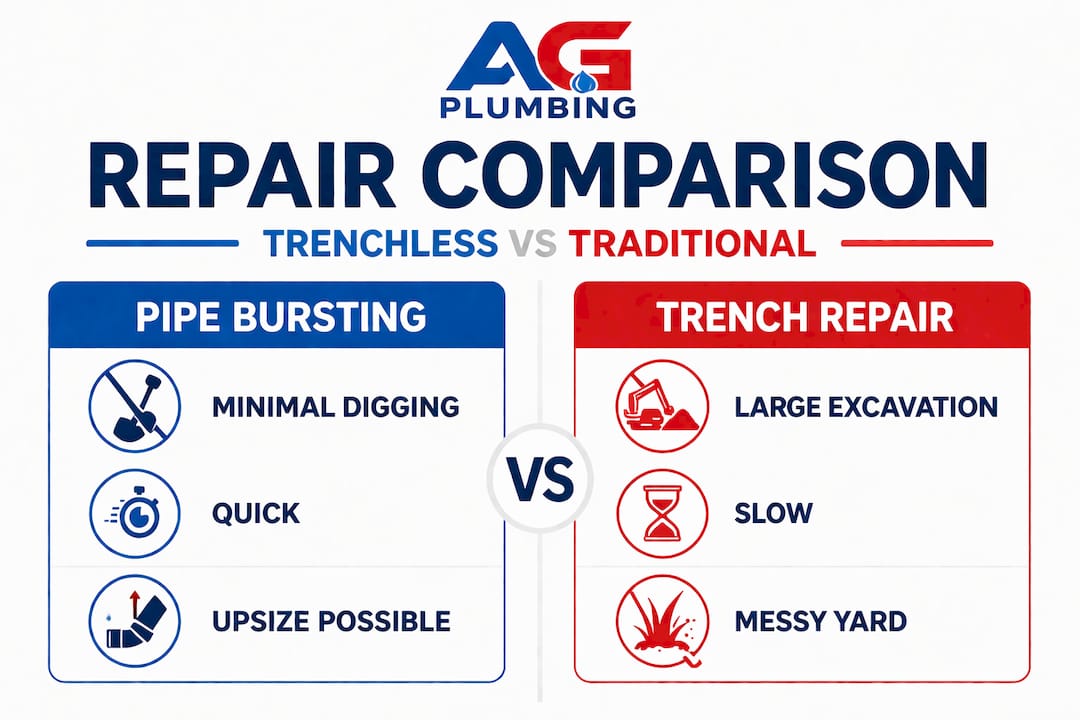
For minimal disruption trenchless repair in Pittsburgh specifically, pipe bursting makes a lot of sense given how many neighborhoods here have mature trees, tight lots, and decades-old clay or cast iron sewer lines that are well past their service life.
Key benefits of pipe bursting at a glance:
- Significantly less yard and driveway damage compared to trenching
- Faster project completion, usually one to two days for residential lines
- New HDPE (high-density polyethylene) pipe is stronger and more durable than what it replaces
- Option to upsize the pipe diameter during replacement, which improves flow
- Lower overall restoration costs because there’s so little surface damage to repair
If you want a broader picture of what’s involved with underground plumbing work, the sewer line repair guide for Pittsburgh homeowners covers several important topics alongside pipe bursting.
How pipe bursting works: Step-by-step for homeowners
With a basic idea in mind, let’s walk through the actual steps homeowners can expect during pipe bursting. The process is more straightforward than most people imagine, and understanding each stage helps you prepare and know what questions to ask.
Step 1: Camera inspection and diagnosis
Before any work begins, a technician runs a specialized camera through your existing pipe to assess its condition. This step confirms that pipe bursting is actually appropriate for your situation and shows the crew exactly what they’re working with, including pipe material, diameter, and any problem areas.
Step 2: Utility locating
Your contractor will mark and confirm the location of all underground utilities near the repair area, including gas lines, electrical conduit, water mains, and other buried infrastructure. This step is non-negotiable. The sewer repair process explained in detail shows why proper utility locating is the foundation of safe trenchless work.
Step 3: Excavating the access pits
Two small pits are dug, one at the entry point and one at the exit point of the pipe section. These pits are usually only a few feet across, much smaller than the trench that would be needed for traditional repair.
Step 4: Inserting the bursting head and pulling cable
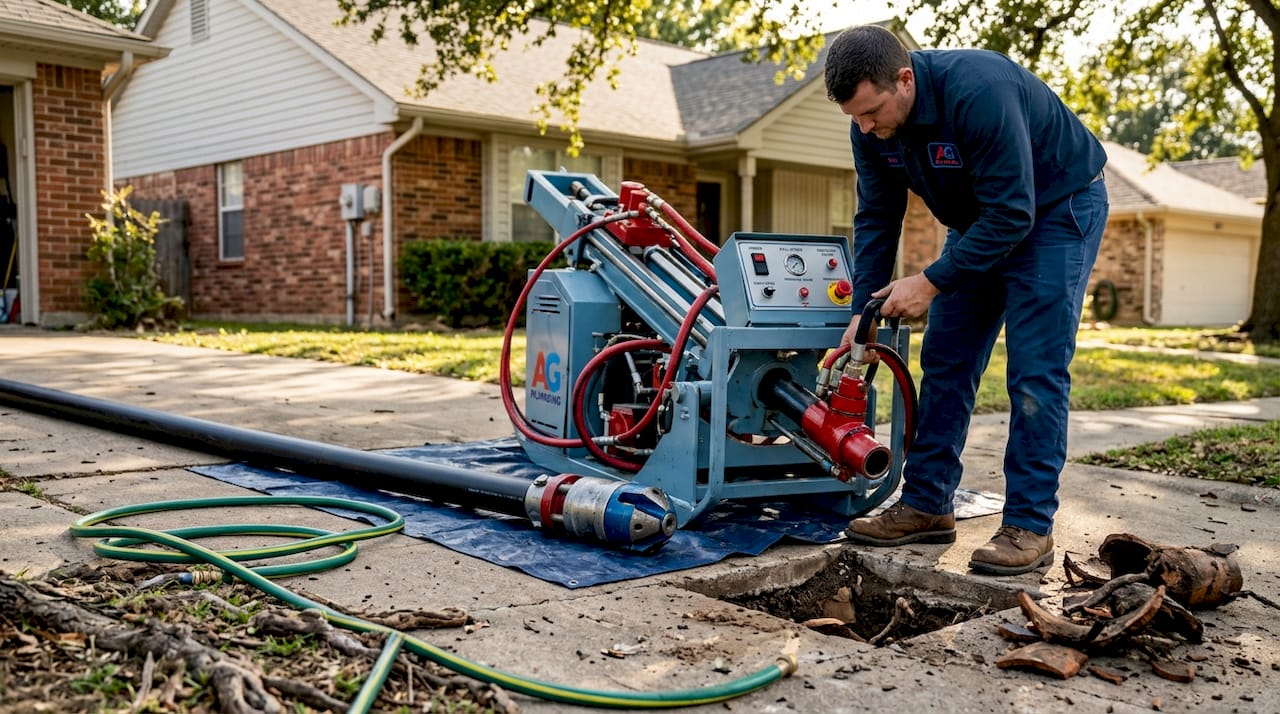
A steel cable or rod is threaded through the existing pipe from one pit to the other. The bursting head, which is a cone-shaped device slightly larger than the existing pipe, is attached to the cable along with the new HDPE pipe.
Step 5: Bursting the old pipe and installing the new one
A hydraulic or pneumatic machine pulls the cable, drawing the bursting head through the old pipe. As it moves forward, it breaks the old pipe apart and pushes the fragments into the surrounding soil. The new pipe follows directly behind, slipping into the void created.
Step 6: Final inspection and restoration
Once the new pipe is in place, another camera inspection confirms everything is aligned correctly and the connection points are solid. The access pits are backfilled and the surface is restored. You can visit our sewer repair services page for more detail on what post-project care involves.
Pro Tip: Ask your contractor to show you the post-installation camera footage. This gives you visual confirmation that the new pipe is seated correctly and that there are no issues at connection points, which could cause problems down the road.
It’s important to note that pipe bursting requires access points and does not work for fully collapsed pipes without a pathway. If the old pipe has no interior space remaining, the bursting head simply cannot travel through it.
Pipe bursting limitations and edge cases
Knowing the process, it’s vital to understand where pipe bursting works and where it doesn’t. This isn’t a universal solution, and applying it in the wrong situation can create more problems than it solves.
Pipe bursting has specific requirements that not every damaged pipe situation will meet. Understanding those constraints before you get a quote will save you time and help you have a more productive conversation with your contractor.
Where pipe bursting is not suitable:
- Fully collapsed pipes with no internal pathway remaining
- Pipes with more than three or four significant bends or curves, since the bursting head cannot navigate sharp turns
- Rocky soil conditions where fracturing the pipe outward could destabilize the ground or damage adjacent structures
- Situations where other utilities run too close to the target pipe, generally within 18 inches
- Pipe sections with sags or bellies, since pipe bursting cannot re-grade the line or correct slope issues
That last point is worth pausing on. If your sewer line has a low spot where waste and water pool instead of flowing freely, pipe bursting will replace the pipe but won’t fix the underlying grade problem. You’d end up with a new pipe that still has the same drainage issue. For situations like that, you may need to look at repairing burst pipes quickly combined with targeted excavation to correct the slope, or explore a different trenchless method entirely.
Important: Soil and site conditions matter more than most homeowners realize. Always insist on a professional assessment before committing to any trenchless repair method. What works on a neighboring property may not work on yours due to differences in soil type, pipe layout, or proximity to other underground infrastructure.
If pipe bursting turns out to be the wrong fit for your situation, pipe relining is often a strong alternative. The pipe relining option works by inserting a liner inside the existing pipe rather than replacing it entirely, which can work in situations with more bends or where the pipe is structurally intact but cracked or leaking. You can also review common plumbing repair scenarios to get a sense of which method tends to fit which situation.
Expert tips: Maximizing pipe bursting success
Now, let’s look at expert strategies to make your trenchless pipe repair as effective and safe as possible. There’s a significant difference between a job done adequately and a job done right, and a few key decisions on your end can tip the balance.
Choosing the right contractor matters more than price
Prioritize certified contractors with utility locating capability, because soil and utility assessment is what separates safe, successful pipe bursting from costly mistakes. Trenchless repair requires specialized equipment and training. A contractor who primarily does traditional excavation work but occasionally offers pipe bursting is not the same as one whose team performs trenchless jobs routinely.
Look for contractors who:
- Hold certifications in trenchless pipe replacement techniques
- Use GPS-assisted utility locating, not just basic call-before-you-dig marking
- Provide pre-job and post-job camera inspection as standard practice
- Can show you completed project examples in similar soil and site conditions
- Offer a clear written scope including what pipe material will be used
Don’t overlook the pipe upsizing opportunity
One of the most underused advantages of pipe bursting is the ability to install a larger diameter pipe than what’s being replaced. If your home’s sewer line was originally a four-inch pipe, you may be able to replace it with a six-inch pipe for relatively little additional cost. This pays off over time in better drainage, less likelihood of blockages, and increased capacity if you ever add bathrooms or fixtures. When choosing the best pipes for a replacement project, HDPE is almost always the top choice for pipe bursting installations because of its flexibility, joint-free construction, and resistance to root intrusion.
Know the signs that trenchless is the right move
Understanding when plumbing repair is necessary helps you act before a manageable problem becomes a full-scale emergency. Slow drains throughout the house, recurring sewage odors, or wet spots in your yard without rain are all signs the sewer line needs attention. Catching these early means pipe bursting is more likely to be viable, since the pipe still has an intact pathway for the bursting head to travel.
| Pipe material | Pipe bursting compatible | Typical lifespan |
|---|---|---|
| Clay | Yes | 50 to 60 years |
| Cast iron | Yes | 75 to 100 years |
| Orangeburg | Yes | 50 years or less |
| PVC | Generally yes | 100+ years |
| Concrete | Yes with caveats | 50 to 75 years |
| Fully collapsed | No | N/A |
Pro Tip: Request that your contractor upsize your pipe during the bursting job if the pipe material and soil conditions allow it. The cost difference is usually modest compared to the total project price, but the long-term benefit in flow capacity is real.
The real value of pipe bursting: What most guides miss
Most articles on pipe bursting stop at “less digging, less mess” and call it a day. That framing undersells what this method actually delivers for homeowners who think long term.
Here’s what we’ve seen over 30 years working with Pittsburgh homeowners: the biggest value of pipe bursting isn’t just avoiding a torn-up yard. It’s the opportunity to reset your underground plumbing infrastructure for the next several decades. When a contractor replaces an aging clay or Orangeburg pipe with seamless HDPE, you’re not just patching a problem. You’re installing a material that is essentially root-proof, corrosion-resistant, and rated to last well over 50 years in typical residential conditions. That’s a fundamentally different asset than what most homes in Pittsburgh’s older neighborhoods currently have underground.
The upsizing potential is what truly improves flow long-term, yet it’s almost never mentioned prominently in contractor estimates. Homeowners who ask about it often find the cost is minimal relative to the full job, but nobody volunteered the option. That’s a missed opportunity that we think every homeowner deserves to know about before signing a contract.
There’s also the hidden cost savings angle. When you skip the trench, you skip the restoration. No replanting, no driveway repaving, no retaining wall repairs. Those costs add up fast in Pittsburgh neighborhoods where mature landscaping and paved surfaces are the norm. Cost-saving plumbing tips often focus on maintenance, but choosing the right repair method is one of the biggest financial decisions a homeowner makes. Pipe bursting, when it’s the right fit, often comes out ahead on total project cost once restoration expenses are factored in honestly.
The method isn’t perfect for every situation, and we won’t pretend otherwise. But for the right property and the right pipe condition, pipe bursting offers something rare in home repair: a solution that’s less invasive and more future-proof at the same time.
Next steps: Professional pipe bursting help in Pittsburgh
Ready to find out whether pipe bursting is right for your home? Getting the right assessment from a qualified local contractor is the critical first step.
At AG Heating, Cooling & Plumbing, our team brings 30 years of experience to trenchless and conventional plumbing repair services throughout Pittsburgh and the surrounding areas. We perform thorough camera inspections, utility locating, and site assessments before recommending any repair method. Whether pipe bursting is the right fit or another trenchless solution makes more sense for your situation, we give you honest guidance backed by real experience. Visit AG Heating, Cooling & Plumbing to learn more about our services, or explore our guide to essential plumbing services to understand everything we can help with.
Frequently asked questions
Can pipe bursting be used on any type of pipe?
No, pipe bursting works best for pipes with a clear internal pathway and fewer than three or four bends; it cannot fix sags, bellies, or fully collapsed sections where no pathway remains.
How long does pipe bursting take compared to traditional trench repair?
Pipe bursting is less disruptive and typically completes in one to two days, while traditional trench repair on the same line can take three to seven days or longer depending on site conditions.
Does pipe bursting increase the diameter of my pipe?
Yes, in many cases the replacement pipe can be upsized during the bursting process, and upsizing improves flow long-term by increasing drainage capacity and reducing the likelihood of blockages.
Are there risks to nearby utilities during pipe bursting?
Yes, the process causes ground heave that can impact utilities within close range, which is why 18-inch clearance and utility locating are essential requirements before any pipe bursting job begins.
Who should I hire for pipe bursting in Pittsburgh?
Always hire certified contractors with utility locating experience, because successful pipe bursting depends entirely on proper soil assessment, GPS-assisted utility mapping, and hands-on trenchless repair expertise.
Recommended
- Trenchless Repair: Save Your Pittsburgh Home from Disruption – AG-Plumbing
- Pipe relining: Smart, cost-saving fix for Pittsburgh pipes – AG-Plumbing
- How to repair a burst pipe: quick fixes for Pittsburgh – AG-Plumbing
- Examples of plumbing repairs Pittsburgh homeowners need – AG-Plumbing
