
TL;DR:
- Most household leaks waste around 10,000 gallons of water annually, causing damage and increasing bills. Pittsburgh’s aging infrastructure and climate accelerate pipe deterioration, making early leak detection crucial. Combining professional inspections with smart sensors offers the best protection against hidden plumbing issues.
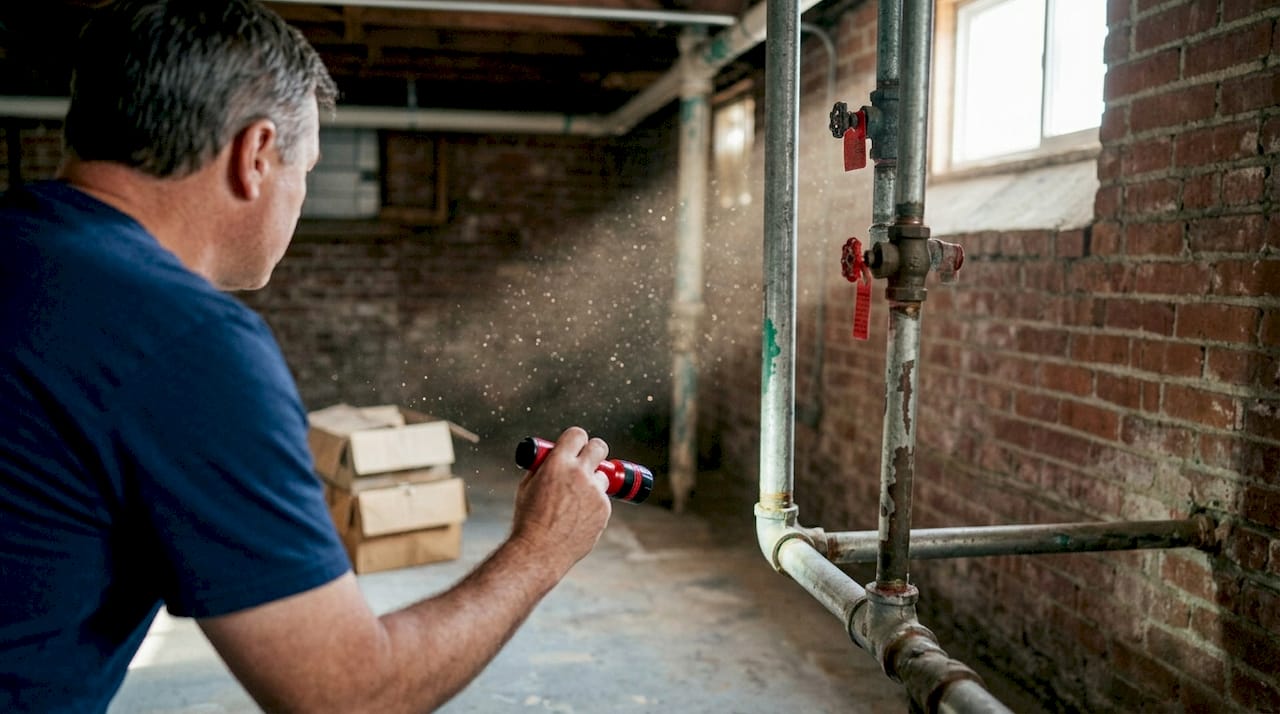
Most homeowners in Pittsburgh assume a dripping faucet is a minor annoyance. They put a cup under it, plan to fix it “someday,” and move on. But household leaks waste roughly 10,000 gallons of water per year on average, and 10% of homes waste more than 90 gallons every single day. That adds up to structural damage, mold growth, and water bills that quietly drain your bank account. Pittsburgh homes face an extra layer of risk thanks to aging infrastructure and freeze-thaw cycles that stress pipes season after season. This guide walks you through why leak detection matters, how it works, and exactly what to do if you suspect a problem.
Table of Contents
- Why leak detection matters for Pittsburgh homeowners
- How plumbing leaks are detected: modern methods and tools
- Comparing leak detection solutions: Traditional vs. smart devices
- What to do when you suspect a leak: Action steps for Pittsburgh homeowners
- A Pittsburgh plumber’s perspective: What most homeowners miss about leak detection
- Professional plumbing help in Pittsburgh: Take the next step
- Frequently asked questions
Key Takeaways
| Point | Details |
|---|---|
| Small leaks cost big | Even minor leaks can waste thousands of gallons and lead to expensive repairs. |
| Modern detection tools | Smart sensors and acoustic devices help catch hidden leaks before major damage occurs. |
| Quick action matters | Turning off your water and calling a plumber right away can prevent costly structural issues. |
| Annual inspections save | Proactive professional plumbing checks help prevent leaks and save Pittsburgh homeowners money. |
| Combining methods works best | Using both manual and smart leak detection offers the strongest protection for your home. |
Why leak detection matters for Pittsburgh homeowners
From the eye-opening statistics about household leak waste, let’s talk about why Pittsburgh homeowners face a particularly high risk.
Water leaks are not just a budgeting problem. They are a structural, health, and safety issue that grows with every day you ignore it. When water seeps into walls, floors, or foundations, it does not just sit there. It moves, spreads, and feeds mold colonies that can take hold within 24 to 48 hours. By the time you see discoloration on a ceiling or smell something musty in the basement, the damage has often been building for weeks.
Pittsburgh’s housing stock makes this worse. A large portion of homes in the city were built before 1970, many with galvanized steel or cast iron pipes that corrode from the inside out. You cannot see that corrosion happening, but it shows up in water pressure changes, discolored water, and eventually pinhole leaks. Proper water loss in Pennsylvania prevention starts with understanding how these older systems behave under stress.
The financial numbers are sobering. According to leak detection guidance for plumbers, undetected leaks cause water waste, structural damage, mold growth, and inflated water bills, all problems that compound over time. A leaky toilet alone can waste up to 200 gallons per day. A dripping faucet wastes around 3,000 gallons per year. Neither of those feels catastrophic on its own, but together they represent hundreds of dollars annually in wasted water and potentially thousands in repair costs.
Here is a quick look at what different types of leaks cost in water waste:
| Leak type | Water wasted per year | Approximate cost impact |
|---|---|---|
| Dripping faucet | ~3,000 gallons | $20 to $50 in water bills |
| Leaky toilet | Up to 73,000 gallons | $200 or more annually |
| Average household leaks combined | ~10,000 gallons | Hundreds in bills and repairs |
| High-waste homes (10%) | 32,850+ gallons | Structural damage risk |
Beyond bills, the structural risks are real. Persistent moisture leads to wood rot in floor joists, weakened drywall, and in serious cases, foundation erosion. Mold exposure causes respiratory problems, allergic reactions, and long-term health effects, especially for children and the elderly. Addressing common plumbing repair issues early is always less expensive than restoring a water-damaged home.
Signs that a hidden leak may already be happening in your home:
- Unexplained spike in your monthly water bill
- Damp or soft spots on floors, walls, or ceilings
- Musty odor in rooms that should not have moisture
- Peeling paint or bubbling wallpaper
- Sounds of running water when all fixtures are off
- Visible mold or mildew growth near plumbing fixtures
How plumbing leaks are detected: modern methods and tools
Understanding the risks leads us to ask how professionals actually find hidden leaks that you cannot see with your eyes.
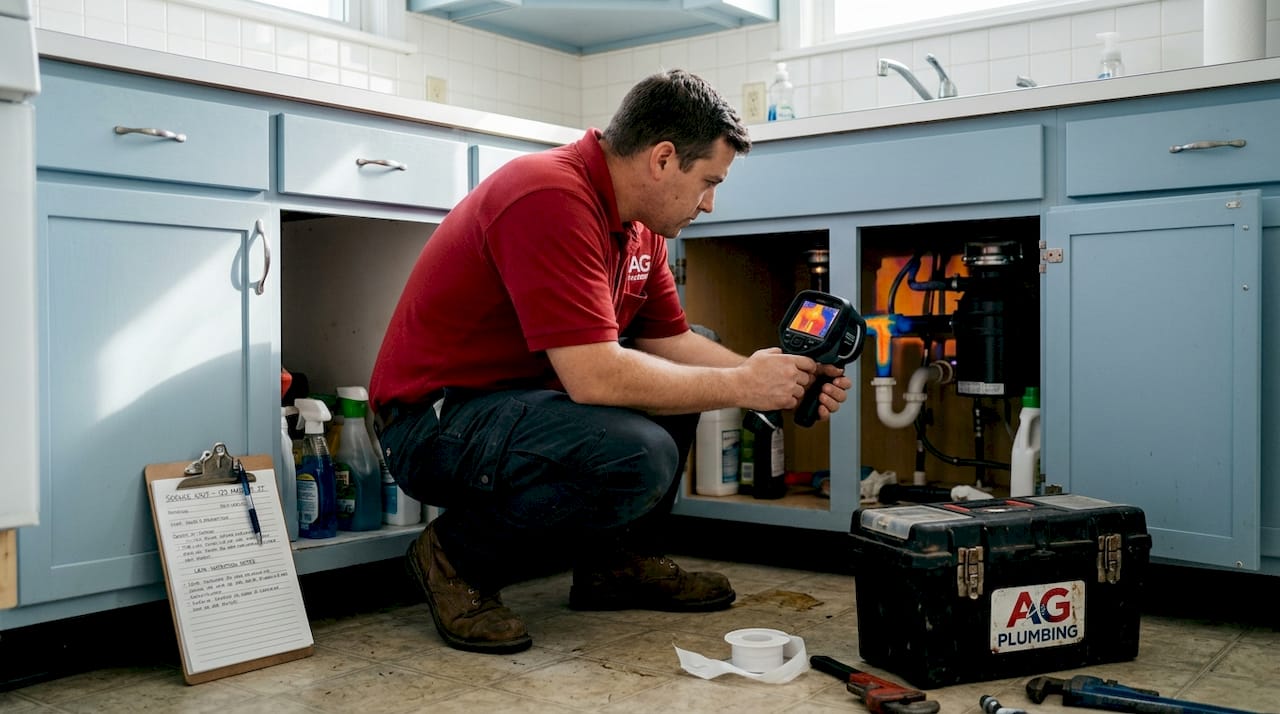
The short answer is that plumbers use a layered approach. No single method catches every type of leak in every situation. Experienced technicians combine multiple techniques based on what they observe and where they suspect the problem originates. Here is how the main methods work in practice.
The most common leak detection methods professionals use:
-
Visual inspection. The starting point for any leak investigation. Plumbers check under sinks, around toilet bases, along exposed pipes, and at supply line connections. Staining, rust, mineral deposits, and soft materials all point toward moisture issues.
-
Water meter test. Turn off every water-using fixture and appliance in the house. Watch the water meter for 15 to 30 minutes. If the meter moves, water is leaving the system somewhere it should not. This test is fast, free, and surprisingly effective at confirming whether a leak exists.
-
Dye testing. Commonly used for toilets. A few drops of food-grade dye go into the tank. If color appears in the bowl without flushing, the flapper valve is leaking, often silently wasting gallons every hour.
-
Pressure testing. Technicians isolate sections of pipe and apply controlled air or water pressure. A pressure drop over time confirms a breach in that section. This method is especially useful for checking underground or wall-encased pipes before opening them up.
-
Acoustic listening devices. Specialized microphones pick up the frequency of water escaping a pressurized pipe. Even under concrete slabs or behind finished walls, the sound signature of a leak is distinct from normal pipe flow. This approach is one of the most effective for slab leaks, which are common in older Pittsburgh homes.
-
Thermal imaging cameras. These cameras detect temperature differences in walls and floors. A wet area behind drywall shows up as a cooler zone because evaporating water pulls heat away from surrounding materials. Thermal imaging is non-invasive and does not require opening walls to find the problem.
-
Smart water sensors. Devices placed near water heaters, under sinks, and along main supply lines send real-time alerts to your phone the moment moisture is detected. Some systems integrate with the main shutoff valve and automatically cut water flow when a leak triggers the sensor.
A helpful resource that breaks down these detection methodologies reinforces how each technique targets a different leak type and location. No single tool does everything, which is why professional plumbers bring multiple approaches to every inspection.
Pro Tip: Before calling a plumber, run your own water meter test. Write down the meter reading, avoid using any water for 30 minutes, and check the reading again. Any change confirms a leak is present and gives the technician a starting point for investigation.
You can also save money long term by applying plumbing cost-saving tips alongside professional inspections. Understanding what essential plumbing services include helps you ask better questions when you call for help.
Comparing leak detection solutions: Traditional vs. smart devices
Now that you know the tools plumbers use, let’s evaluate which detection method fits your home and budget.
Manual and traditional methods have real advantages. They cost little to nothing for basic checks like the meter test or dye test. A skilled plumber using acoustic equipment can find leaks that would otherwise require tearing out walls. These approaches are well-suited to one-time inspections and diagnosing known problems.
Smart leak detection devices are a different category entirely. They do not replace professional plumbers, but they do something manual methods cannot: they monitor your home 24 hours a day, 7 days a week, every single day of the year. For Pittsburgh homeowners who travel frequently or own rental properties, this kind of continuous surveillance is invaluable.
| Feature | Traditional methods | Smart leak devices |
|---|---|---|
| Upfront cost | Low to moderate | Moderate to high |
| Ongoing monitoring | Requires active checking | Automatic and continuous |
| Response speed | Depends on when checked | Real-time alerts |
| Hidden leak detection | Needs professional tools | Sensors at risk points only |
| Best for | Diagnosis and repair | Prevention and early warning |
| Automatic shutoff | No | Available in advanced models |
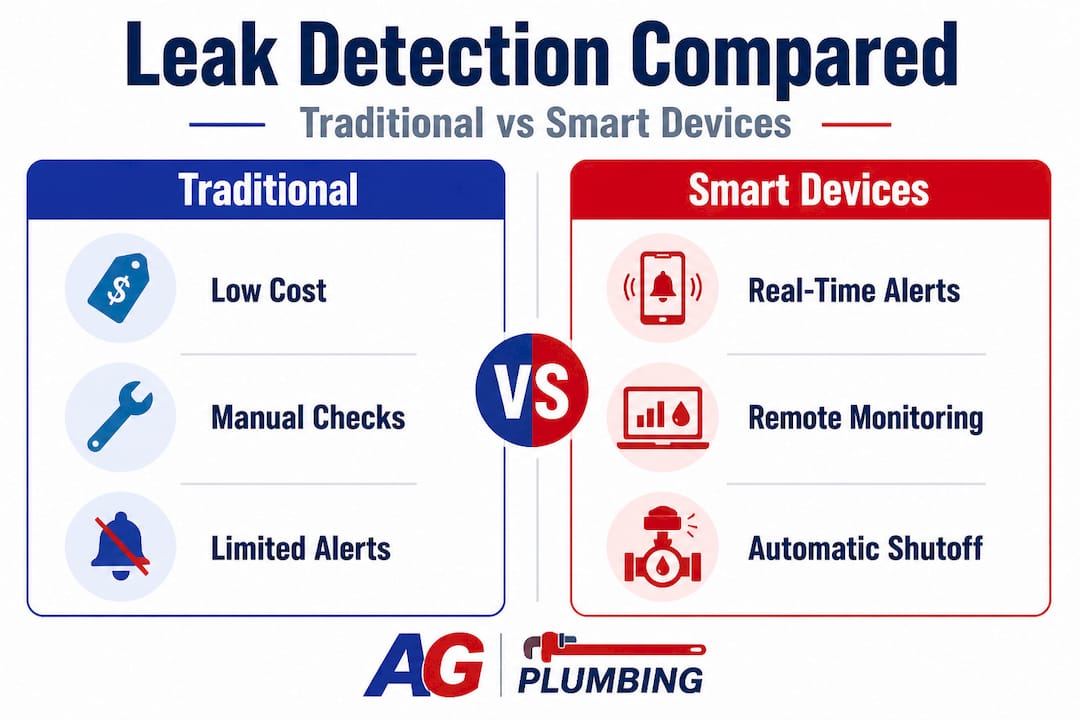
Smart devices are especially valuable for Pittsburgh’s aging housing stock, where leaks can develop quickly in deteriorating pipes. An unoccupied home during a winter vacation can suffer enormous damage from a burst pipe. Smart sensors with automatic shutoff can stop that from turning into a catastrophe.
The smartest strategy combines both approaches. Start with annual plumbing inspections to catch deteriorating pipes, worn fixtures, and developing weak points. Layer smart sensors on top to monitor between inspections. Address any sewer repair advantages that your plumber identifies before they escalate.
Who benefits most from smart leak detection:
- Homeowners with frequent travel schedules
- Landlords with rental properties in Pittsburgh
- Owners of older homes with galvanized or cast iron plumbing
- Anyone who has had a past leak and wants to prevent recurrence
- Homeowners with finished basements or valuable flooring
Pro Tip: Place smart sensors in the three highest-risk spots first: under the kitchen sink, near the water heater, and at the base of the toilet. These locations account for the majority of household leaks and give you the most protection per dollar spent.
What to do when you suspect a leak: Action steps for Pittsburgh homeowners
Once you’ve chosen your detection approach, here’s what to do if you suspect a leak or want to get ahead of one.
Acting quickly is the most important thing. Every hour a leak runs unchecked is more water wasted, more damage done, and more money spent on repairs. A structured response limits the damage and helps your plumber diagnose the problem faster.
Step-by-step action plan for a suspected leak:
-
Turn off the main water supply. Locate your shutoff valve, typically near the water meter or where the main line enters the house. Shutting it off stops ongoing water damage immediately.
-
Check the water meter. With everything shut off, look at your meter. If it is still moving, the leak is between the meter and your shutoff valve, which requires immediate professional attention.
-
Inspect visible plumbing. Check under every sink, behind the toilet, around the washing machine connections, and near the water heater. Look for moisture, rust, mineral buildup, or soft flooring materials.
-
Document what you find. Take photos of any visible moisture, staining, or damage. This helps your plumber understand the scope before arriving and supports any insurance claims.
-
Call a licensed Pittsburgh plumber. Professional plumbing repair services include both diagnosis and repair, and a good plumber will use the detection methods described earlier to find what you cannot. When identifying necessary plumbing repairs, professionals look at the whole system, not just the obvious symptom.
-
Install smart sensors after repairs are complete. Once the leak is fixed, add sensors to the most vulnerable spots so you get early warning next time.
Being able to spot plumbing problems early is one of the most valuable skills a Pittsburgh homeowner can develop. The warning signs are almost always there before a leak becomes a crisis.
As guidelines for leak detection consistently show, proactive homeowners who act on early warning signs avoid the most expensive repairs. Do not wait for a ceiling to collapse or a floor to buckle before picking up the phone.
Pro Tip: Take a photo of your water meter reading on the first of every month. Compare readings over three months. A consistent upward trend beyond normal usage patterns is a reliable early indicator that a slow leak is present somewhere in your system.
A Pittsburgh plumber’s perspective: What most homeowners miss about leak detection
After 30 years of fixing plumbing problems across Pittsburgh, we have noticed a pattern. The homeowners who end up with the most expensive repairs almost never had a dramatic, obvious leak. Their problem started as something small, a slight drop in water pressure, a faint musty smell in the laundry room, a water bill that crept up by $15 over three months. They rationalized it. They waited.
The uncomfortable truth is that slow leaks are more dangerous than burst pipes. A burst pipe gets your attention immediately and you act. A slow leak behind a finished wall can run for a year before you notice anything wrong. By then, the structural damage and mold growth require full remediation, not just a pipe repair.
Most homeowners also underestimate how much Pittsburgh’s climate accelerates plumbing wear. We get hard freezes in winter and significant temperature swings through spring and fall. That freeze-thaw cycle stresses pipe joints, accelerates corrosion in older galvanized lines, and pushes weak connections toward failure. Homes built in the 1950s and 1960s were never designed with today’s water pressure demands in mind.
Our honest recommendation is this: treat annual inspections as prevention, not as a service you call for when something breaks. A skilled plumber can spot a fitting that is losing its seal or a supply line that is starting to crack long before water appears. That one call prevents a $200 repair from becoming a $12,000 restoration project.
Smart devices are genuinely useful. But they catch leaks after water has already left the pipe. Professional inspection catches the conditions that lead to leaks before they start. The combination of both is the strongest protection you can give your Pittsburgh home.
Professional plumbing help in Pittsburgh: Take the next step
Now that you know how leaks are found and what to do about them, AG Heating, Cooling & Plumbing is ready to help you protect your home.
Our team brings 30 years of hands-on Pittsburgh plumbing experience to every inspection and repair. From acoustic leak detection to thermal imaging, we use the same advanced tools described in this guide to find what you cannot see. Whether you need urgent expert plumbing repair after discovering a leak or a scheduled inspection to prevent one, we handle it all. You can explore our full plumbing services online, or check out how we fix common plumbing issues for Pittsburgh homeowners every day. Call us and let’s keep your home safe, dry, and efficient.
Frequently asked questions
How much water can a typical leak waste each year?
A typical household leak wastes about 10,000 gallons of water annually, though high-waste homes can lose more than 32,850 gallons per year. Small leaks across multiple fixtures add up surprisingly fast.
What signs should Pittsburgh homeowners look for to spot leaks early?
Watch for unexplained increases in your water bill, damp spots on ceilings or floors, mold growth near fixtures, musty odors, or the sound of running water when nothing is turned on. Any one of these warrants a closer look.
Are smart leak detectors worth installing in older Pittsburgh homes?
Yes. Smart devices offer real-time alerts and automatic shutoff, which is especially valuable in aging Pittsburgh properties where pipe deterioration is ongoing and freeze-related failures are a real seasonal risk.
Can DIY methods find all leaks or should I call a plumber?
DIY checks like the water meter test or visual inspection catch obvious leaks, but acoustic and thermal imaging tools are required to locate hidden pipe failures behind walls, under slabs, or in hard-to-reach areas. A plumber finds what you cannot.
What is the first action I should take if I think I have a leak?
Shut off your main water supply right away to stop additional damage, then call a licensed plumber. Acting immediately limits structural damage, mold risk, and repair costs significantly.
Recommended
- Cost-saving plumbing tips for Pittsburgh homeowners – AG-Plumbing
- Spot Plumbing Problems Early: Key Signs for Pittsburgh – AG-Plumbing
- How to repair a burst pipe: quick fixes for Pittsburgh – AG-Plumbing
- Why annual plumbing inspections save Pittsburgh homeowners thousands – AG-Plumbing
