
TL;DR:
- Proper maintenance and careful system design are essential to prevent basement water problems in Pittsburgh. Homeowners should winterize pipes, ensure proper drainage and venting, and routinely inspect sump pumps and fixtures to avoid costly failures. Consistent attention and professional help can keep basement plumbing functional and dry for decades.
Basement plumbing tips are practical guidance for maintaining, troubleshooting, and designing below-grade plumbing systems to prevent costly failures. Pittsburgh homes face specific challenges: hard winters that freeze exposed pipes, clay-heavy soil that drives groundwater pressure against foundations, and older housing stock with aging drain lines. The basement is where sump pumps, sewage ejector systems, floor drains, and main water shut-off valves all converge. Getting these systems right protects your home from water damage, sewer gas, and expensive emergency repairs. This guide covers every major area, from winterizing to drainage design to routine maintenance.
1. top basement plumbing tips for pittsburgh winters
Pittsburgh winters push pipes to their limits. Temperatures regularly drop below 20°F, and any exposed pipe in an unheated basement or crawl space becomes a freeze risk.
The most effective defense is keeping water moving. Letting faucets drip during extreme cold relieves pressure at ice blockages and prevents pipes from bursting. Even a small, steady drip in a vulnerable line makes a measurable difference.
Beyond dripping faucets, these steps protect basement pipes during cold snaps:
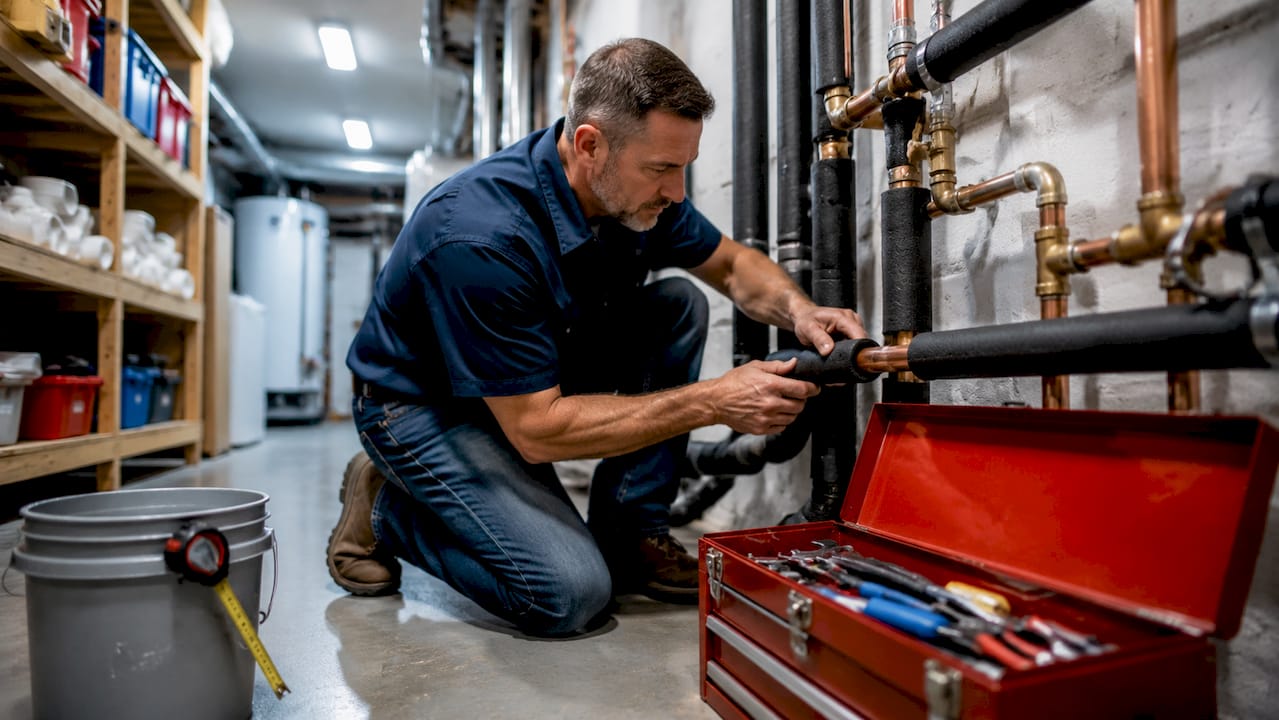
- Insulate exposed pipes with foam pipe insulation or fiberglass wrap, especially along exterior walls and rim joists.
- Seal basement drafts around windows, utility penetrations, and the sill plate to cut cold air infiltration.
- Shut off and drain outdoor faucets using the interior shut-off valve before the first freeze. Follow the manufacturer’s guidance for frost-free sillcocks.
- Set your thermostat no lower than 55°F even when traveling. That floor keeps interior pipes above the freeze threshold.
- Know your main water shut-off valve location. In a burst-pipe emergency, every second counts.
Pro Tip: Tag your main shut-off valve with a bright label and test it once a year. A valve that hasn’t moved in a decade may be stuck when you need it most.
For a full winter prep workflow, Ag-plumbing’s Pittsburgh winterizing guide walks through every step in sequence.
2. how to ensure proper drainage and venting in basement plumbing
Drainage design is the most common area where DIY basement plumbing goes wrong. The physics are simple, but the execution requires precision.

Horizontal drain pipes 3 inches or smaller require a minimum slope of 1/4 inch per foot. That slope keeps solids suspended in the flow and prevents the buildup that causes chronic clogs. Too little slope and waste settles. Too much slope and water races ahead of solids, leaving them behind.
Basement fixtures below the main sewer line cannot drain by gravity alone. They require a sewage ejector system, a sealed basin with a pump that grinds and lifts waste up to the sewer. Gravity drainage works for fixtures above sewer grade. Understanding which system your basement needs before you start rough-in work saves significant rework.
Venting is equally critical. Without a properly sized vent, trap seals get siphoned out, drains gurgle, and sewer gas enters the living space. Every fixture needs a vent connection back to the main stack or a properly installed air admittance valve where code permits.
Common installation mistakes that cause long-term problems:
- Wrong pipe diameter. A basement toilet needs a 3-inch drain minimum. A shower drain requires at least 2 inches.
- Missing or undersized vents. A single vent serving too many fixtures creates negative pressure across the whole system.
- Single 90-degree elbows in drain lines. These create turbulence and clog points in horizontal runs.
Pro Tip: Use two 45-degree fittings instead of one 90-degree elbow wherever a drain line changes direction horizontally. Flow stays smoother and clogs are far less frequent.
Ag-plumbing’s sanitary drainage guide covers pipe sizing and slope requirements in detail for Pittsburgh homeowners.
3. sump pumps vs. sewage ejector systems: what you need to know
These two systems are not interchangeable, and confusing them is a costly mistake. A sump pump handles clean groundwater collected in a pit below the basement floor. A sewage ejector handles wastewater from below-grade fixtures, including solids from toilets.
Sewage ejector systems must have sealed, gas-tight, vented basins to prevent sewer gas from entering the home. This is a code requirement, not a suggestion. An open or improperly sealed ejector pit releases hydrogen sulfide and methane into your basement.
| Feature | Sump Pump | Sewage Ejector |
|---|---|---|
| Handles | Groundwater only | Wastewater and solids |
| Basin type | Open or covered | Sealed, gas-tight, vented |
| Typical use | Basement water control | Below-grade bathrooms |
| Discharge | Outside or storm drain | Into main sewer line |
| Maintenance | Monthly test, quarterly check | Annual inspection, seal check |
Proper sizing matters for both systems. An undersized ejector pump will cycle too frequently and fail early. An oversized one may not run long enough to clear the basin fully.
Float switch binding and check valve failure are the leading causes of unexpected pump failure during storms, not motor burnout. This means routine checks of the float arm and check valve prevent the majority of failures.
Pro Tip: Choose a sewage ejector pump with a built-in high-water alarm. When the float fails silently, the alarm gives you time to act before the basin overflows.
For detailed repair guidance, Ag-plumbing’s sump pump repair guide covers Pittsburgh-specific maintenance scenarios.
4. basement drainage solutions that actually control water intrusion
Water in a Pittsburgh basement usually enters through three routes: cracks in the foundation wall, the cove joint where the wall meets the floor, or through the floor slab itself under hydrostatic pressure. Each entry point requires a different fix.
Interior perimeter drainage routes groundwater to a sump pump for ejection. This system manages water after it enters and works well in finished basements where exterior excavation is not practical. It does not stop water from entering. It intercepts it before it causes damage.
Surface patching at cove joints often fails under sustained hydrostatic pressure. Interior drainage intercepts water before it stresses any sealant, which is why it outperforms surface patches as a long-term solution.
Exterior water control is the first line of defense. Cleaning gutters twice a year and extending downspouts at least 6 feet from the foundation reduces the volume of water that reaches the soil around your basement walls. This single habit prevents a significant share of basement water problems.
Additional basement water protection ideas:
- Grade soil away from the foundation at a slope of at least 1 inch per foot for the first 6 feet.
- Seal visible cracks in foundation walls with hydraulic cement or polyurethane injection, depending on crack type and location.
- Check window well drains annually. Blocked well drains send water directly into basement window frames.
Pro Tip: Address exterior water control before investing in interior drainage systems. Reducing inflow volume first makes any interior system more effective and less stressed.
One more consideration: sump pits can be radon entry points and should be sealed airtight while still allowing service access. Radon levels above 4 pCi/L require mitigation. Sealing the pit reduces entry but does not eliminate all soil-gas pathways.
5. routine maintenance tasks that prevent basement plumbing failures
The most expensive basement plumbing repairs are almost always the result of deferred maintenance. A $20 float switch replacement prevents a $4,000 flooded basement. The math is straightforward.
- Test your sump pump monthly. Pour a bucket of water into the pit and confirm the pump activates and clears the water. Monthly testing and quarterly inspections that include float switch and discharge checks are the standard for reliable performance.
- Refill floor drain traps quarterly. Rarely used floor drains lose their water seal through evaporation. A dry trap lets sewer gas rise directly into your basement. Pour a quart of water into each drain every few months.
- Inspect visible pipes for moisture and corrosion. Early detection of a weeping joint or pinhole leak prevents structural damage and mold growth. Ag-plumbing’s guide on fixing leaks early explains why timing matters.
- Check vent pipe openings on the roof once a year. Bird nests, debris, and ice dams can block vents and cause gurgling drains or sewer odors throughout the house.
- Inspect ejector and sump pit covers for cracks or gaps. A damaged seal allows both sewer gas and radon to enter. Replace covers that no longer seat firmly.
- Winterize outdoor plumbing before November. Shut off interior valves, drain the lines, and confirm frost-free sillcocks are fully closed.
Pro Tip: Schedule an annual professional plumbing inspection every fall before Pittsburgh’s cold season begins. A licensed plumber catches issues that are invisible to the untrained eye, and fall timing means problems get fixed before freeze risk peaks.
Key takeaways
Effective basement plumbing maintenance in Pittsburgh combines winter preparation, correct drainage design, and consistent routine checks to prevent the majority of costly failures.
| Point | Details |
|---|---|
| Winterize before the cold | Drip faucets, insulate pipes, and locate your shut-off valve before temperatures drop. |
| Slope drains correctly | Horizontal drain pipes 3 inches or smaller need at least 1/4 inch per foot slope to prevent clogs. |
| Seal ejector systems | Sewage ejector pits must be gas-tight and vented to prevent sewer gas and radon entry. |
| Control exterior water first | Clean gutters twice a year and extend downspouts before investing in interior drainage. |
| Test sump pumps monthly | Float switch and check valve failures cause most storm-season pump failures, not motor issues. |
What 30 years of pittsburgh basements taught me
After three decades of working in Pittsburgh basements, the pattern I see most often is this: homeowners invest in a fix after a failure instead of the maintenance that prevents it. A sump pump that hasn’t been tested since installation. A floor drain that’s been dry for years. An ejector pit cover that cracked two winters ago and nobody noticed.
Pittsburgh’s climate makes this especially costly. The freeze-thaw cycle stresses pipes and foundation walls every single year. Clay soil holds water against your foundation for weeks after a heavy rain. These are not abstract risks. They are the reason I’ve seen otherwise well-built homes develop serious water problems in their 20s and 30s.
The homeowners who avoid major repairs share one habit: they treat basement plumbing as a system to maintain, not a set of components to ignore until something breaks. They test their sump pump in October. They check their ejector pit seal in spring. They know where their main shut-off valve is.
The DIY tasks in this article are genuinely within reach for most homeowners. But the annual professional inspection is not optional if you want real peace of mind. A trained eye catches the slow leak behind the water heater, the float arm that’s about to bind, and the vent that’s been partially blocked for a season. Catching those early is always cheaper than the alternative.
Pittsburgh basements are workable. They just require consistent attention.
— Maayan
Ag-plumbing keeps pittsburgh basements dry and functional
Ag-plumbing has served Pittsburgh homeowners for 30 years, handling everything from sump pump installations to full basement bathroom rough-ins. Whether you need a sewage ejector system inspected, a drain line resloped, or a winter-ready plumbing checkup, the Ag-plumbing team brings the experience to get it right the first time.
Ag-plumbing’s plumbing repair services cover the full range of basement plumbing needs, from leak detection to ejector pump replacement. You can also visit Ag-plumbing’s homepage to schedule an inspection or learn more about what the team offers Pittsburgh homeowners. Don’t wait for a flooded basement to make the call.
FAQ
What is the minimum drain slope for basement plumbing?
Horizontal drain pipes 3 inches or smaller require a minimum slope of 1/4 inch per foot. This keeps solids suspended and prevents chronic clogs in basement drain lines.
How often should i test my basement sump pump?
Test your sump pump monthly by pouring water into the pit and confirming it activates. Perform a more detailed quarterly inspection that includes the float switch, check valve, and discharge line.
Do i need a sewage ejector if my basement bathroom is below the sewer line?
Yes. Any basement fixture below the main sewer elevation requires a sewage ejector system to lift waste up to the sewer. Gravity drainage cannot work below sewer grade.
Can a sump pit increase radon levels in my home?
Yes. Sump pits are a known radon entry point. Sealing the pit with a gas-tight cover reduces radon entry, but if levels exceed 4 pCi/L, dedicated radon mitigation is still required.
How do i stop water from entering my pittsburgh basement?
Start with exterior controls: clean gutters twice a year, extend downspouts 6 feet from the foundation, and grade soil away from the house. Interior perimeter drainage with a sump pump is the next step for persistent groundwater intrusion.
Recommended
- Smart Plumbing Tips Every Pittsburgh Homeowner Needs – AG-Plumbing
- Cost-saving plumbing tips for Pittsburgh homeowners – AG-Plumbing
- Essential plumbing safety tips for Pittsburgh homeowners – AG-Plumbing
- Advantages of updated plumbing for Pittsburgh homeowners – AG-Plumbing
