
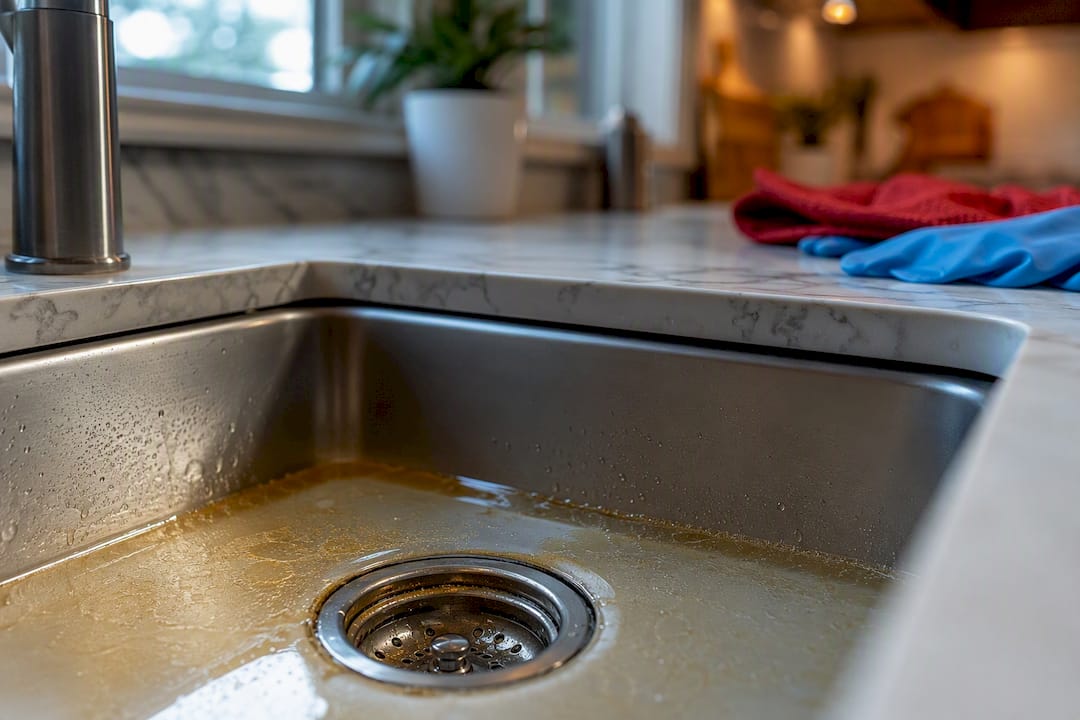
Dish soap and very hot water break down a fresh grease clog faster than anything else you’ll find under the sink, and in most cases it works within two or three flushes. If your sink is completely blocked, or you’ve already run this fix twice with no change, stop pouring water down there and call a plumber. Skip caustic drain openers and never combine bleach with vinegar.
TL;DR:
- Dish soap and staged hot water are the most effective at clearing fresh grease clogs within two to three flushes, especially when combined with repeated cycles.
- Baking soda and vinegar help with odors and light residues but do not dissolve heavy grease buildup, which requires mechanical or professional cleaning.
- Recurrent clogs indicate wall buildup of grease coating the pipe walls, which cannot be fixed by snaking alone and often requires hydro-jetting for long-term relief.
- The P-trap is a common accumulation point for grease and food debris and should be cleaned manually if the clog persists after DIY methods.
- Avoid caustic drain openers and pouring grease down the drain, as they pose safety risks and accelerate pipe deterioration, making professional hydro-jetting the most reliable solution for persistent issues.
Table of Contents
- What Causes a Grease Clog in Your Kitchen Sink?
- Step-by-step DIY methods to clear the grease
- How to Check and Clean the P-Trap
- When Should You Call a Plumber Instead?
- Simple Habits That Prevent Grease Buildup
- What 30 Years of Pittsburgh Drain Calls Have Taught Us
- What Actually Matters Here
- Get Your Drains Cleared for Good
- Sources
- FAQ
What Causes a Grease Clog in Your Kitchen Sink?
Grease clogs don’t announce themselves right away. The first sign is usually a sink that drains slower than it used to, followed by a soft gurgling sound as air gets trapped behind the buildup. A rancid smell drifting up from the drain is another giveaway, especially if it gets worse after you run the dishwasher, since that extra water pushes against whatever is already stuck in the pipe.
Run the hot tap for thirty seconds and watch the water level. If it drains, even slowly, you’re likely dealing with a fresh or partial clog near the drain opening or in the P-trap. If the water just sits there, the blockage is more established.
A few quick checks tell you what you’re working with:
- Standing water that drains slowly but doesn’t stop entirely usually means a partial grease plug close to the surface.
- A backup that shows up in the sink when you run the dishwasher points to a shared line clog further down.
- If you’ve been rinsing bacon grease, butter, or frying oil down that drain for months, assume some of it has hardened into a wax-like coating on the pipe walls, not just a single plug. That kind of grease film clings to pipe interiors and traps food particles, which is why the same sink keeps clogging even after you clear it.
- A clog that reappears within a week or two of clearing it is a strong sign of wall buildup rather than a one-time plug.
Step-by-step DIY methods to clear the grease
Start with the method that works on the widest range of grease clogs, then move to more targeted fixes if it doesn’t fully clear the line.
- Dish soap and staged hot water. Squeeze a generous amount of dish soap directly into the drain, then follow with a pot of very hot (not boiling, if you have PVC pipes) water poured in stages rather than all at once. The soap acts as a surfactant, breaking the grease into tiny droplets that hot water can carry away. Wait five minutes, then repeat once or twice.
- Plunge a stubborn near-drain plug. If soap and water alone don’t move it, fill the sink with a couple of inches of water, seal the plunger over the drain, and give it 15 to 20 firm strokes. Plunging breaks up grease sitting close to the drain opening, and you should always follow it with another hot water and soap flush to clear what you loosened.
- Baking soda and vinegar, if odor or light residue lingers. Pour a half cup of baking soda down the drain, follow with a half cup of vinegar, and let it fizz for 10 minutes before flushing with hot water. The reaction is good for freshening a smelly drain, but fizzing alone rarely dissolves a real grease plug, so don’t expect it to do the heavy lifting on its own.
- Baking soda and salt for mild abrasion. Mixing baking soda with table salt before the hot water flush adds a little scrubbing action against sticky residue clinging to the pipe wall, useful as a follow-up step rather than a standalone fix.
- Enzyme cleaner for overnight maintenance. Pour an enzyme-based drain cleaner in before bed once a week. These products use bacteria that digest fat over several hours, and they’re a safer long-term habit than any caustic product.
Pro Tip: Pour your dish soap and hot water in two or three smaller rounds instead of one big dose. A staged approach gives the soap time to emulsify the grease before more water pushes it downstream, and that sequencing is exactly what makes the dish-soap-and-hot-water method the most effective at-home fix for fresh clogs.
Grease clogs form through a chemistry problem, not just a plumbing one: fat molecules don’t dissolve in water on their own, they need a surfactant to break into suspended droplets small enough to flow through the pipe. That’s the same principle behind the three-step routine many commercial drain-cleaning brands recommend: clear standing water, apply a grease-cutting soap, then flush with staged hot water.
If you’re not seeing real progress after two full cycles of these steps, stop. Continuing to pour water into a sink that isn’t draining risks an overflow, and it’s a sign the clog has moved past what plunging and soap can reach.
How to Check and Clean the P-Trap
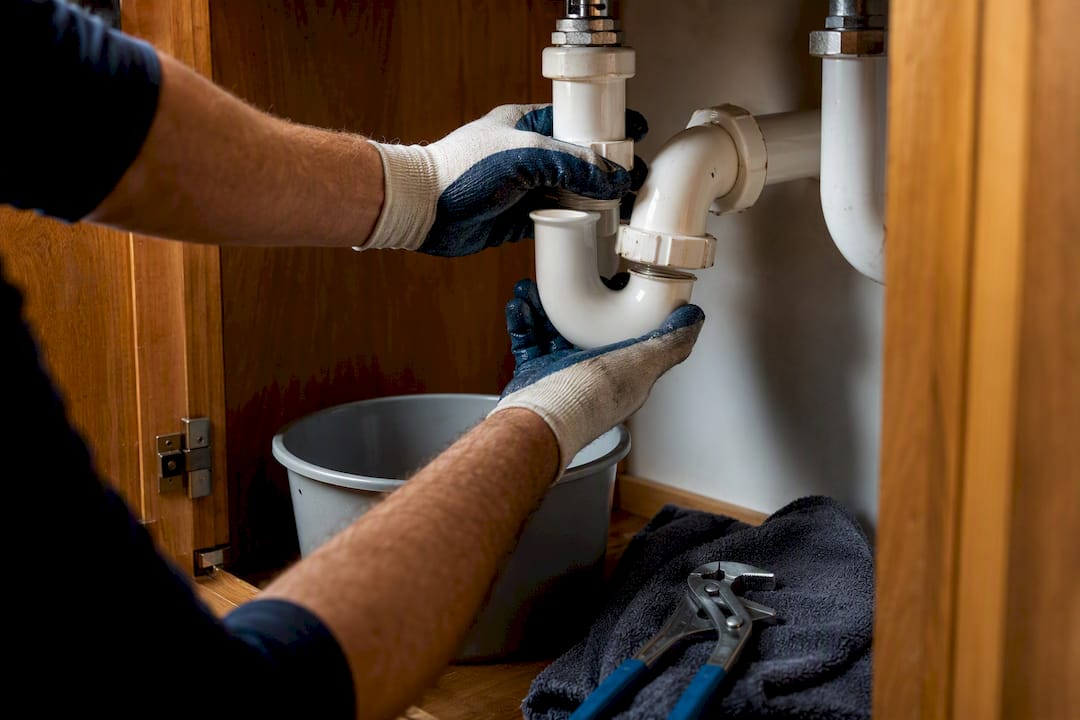
When the drain still won’t clear, the P-trap under your sink is usually next in line. That curved pipe is the low point where grease and food sludge tend to collect, and it’s designed to come apart by hand.
Set up first: grab a bucket to catch the water and gunk, channel-lock pliers for the slip nuts, gloves, and an old towel for the inevitable drip. Loosen the nuts on both ends of the trap, slide it off, and dump the contents into the bucket. You’ll often see a ring of hardened grease coating the inside, sometimes with food debris packed into it. Scrub it out with an old brush, rinse it clean, then reattach it, hand-tightening the nuts before giving them a final quarter turn with the pliers.
If the trap itself is clean but the clog is further down the line, a manual drain snake is your next tool. Feed it slowly into the pipe, rotating the handle as you go rather than forcing it forward. When you feel resistance, work it gently through the clog and pull back slowly to bring debris out with it.
Pro Tip: Never force a manual snake past resistance. Pushing hard can punch through a soft PVC elbow joint, turning a clog into a leak. If you’d rather see the exact motion before trying it, our guide to snaking a drain safely walks through it step by step.
When Should You Call a Plumber Instead?
Some signs mean it’s time to stop troubleshooting and pick up the phone. A total blockage that won’t drain even an inch of standing water, backups showing up in multiple fixtures at once, or a sewer smell that wasn’t there before are all indicators the problem has moved beyond what a plunger or a hand snake can fix. So is a clog that keeps coming back within days of clearing it, which usually points to grease coating the pipe walls rather than a single plug.
Professionals have two main tools for this:
- Motorized snaking clears a discrete, localized plug quickly, and it’s the right call when the blockage is confined to one section of pipe.
- Hydro-jetting blasts high-pressure water through the line to strip the grease film off the pipe walls entirely, rather than just punching a hole through the clog. That distinction matters because hydro-jetting can restore a pipe’s full internal diameter, giving heavy-cooking households one to three years of improved flow before buildup returns.
If the trouble seems to extend past your kitchen line into the main sewer connection, symptoms like gurgling toilets or multiple slow drains at once are worth ruling out, and a partner resource on main sewer line clogs covers those signs in more depth.
Whatever you do, skip the bottle of caustic drain opener sitting under your sink. Those chemicals carry real safety risks and can damage garbage disposals or pipe seals if residue lingers, which makes them a poor substitute for either DIY soap treatments or a proper professional cleaning.
Simple Habits That Prevent Grease Buildup
Most grease clogs are the result of small daily habits, and fixing them is just as simple.
- Wipe greasy pans with a paper towel before washing them, instead of rinsing the fat straight down the drain.
- Pour cooled cooking grease into an old jar or can and toss it in the trash rather than the sink.
- Install a fine-mesh sink strainer to catch food scraps before they mix with grease and harden.
- Run a hot water and dish soap flush once a week, even when nothing seems clogged.
- Soak the drain with an enzyme cleaner once a month as ongoing maintenance.
- If you fry food often or cook for a large household, a small under-sink grease trap catches fat before it ever reaches the pipe.
| Habit | Frequency | What it prevents |
|---|---|---|
| Wipe pans before washing | Daily | Fat entering the drain at all |
| Grease jar for disposal | Daily | Hardened plugs near the drain opening |
| Hot water and soap flush | Weekly | Early-stage film on pipe walls |
| Enzyme cleaner soak | Monthly | Long-term buildup and odor |
| Professional inspection | Yearly (or after repeat clogs) | Hidden buildup deep in the line |
Our homeowner’s guide to preventing clogged sinks breaks these habits down further, and if you’ve had more than one clog this year, the drain clog prevention tips for Pittsburgh homeowners is worth a read before the next one hits.
What 30 Years of Pittsburgh Drain Calls Have Taught Us
AG Heating, Cooling & Plumbing has spent three decades pulling grease clogs out of kitchen sinks across Pittsburgh, and the pattern repeats itself constantly: homeowners try one caustic product, it doesn’t work, and they call us with a sink that’s now both clogged and coated in a hazardous chemical.
A few rules we hold to on every job:
- Never use caustic drain chemicals in a kitchen sink; they’re a safety risk and can damage disposals.
- Stop adding water the moment a sink is fully blocked. It won’t help, and it risks an overflow.
- Reach for hydro-jetting when a clog keeps recurring. Snaking clears the immediate plug, but it leaves grease film on the walls that regrows the same problem within weeks.
If your DIY attempts have stalled, our drain cleaning service covers both motorized snaking and hydro-jetting for exactly this kind of buildup.
What Actually Matters Here
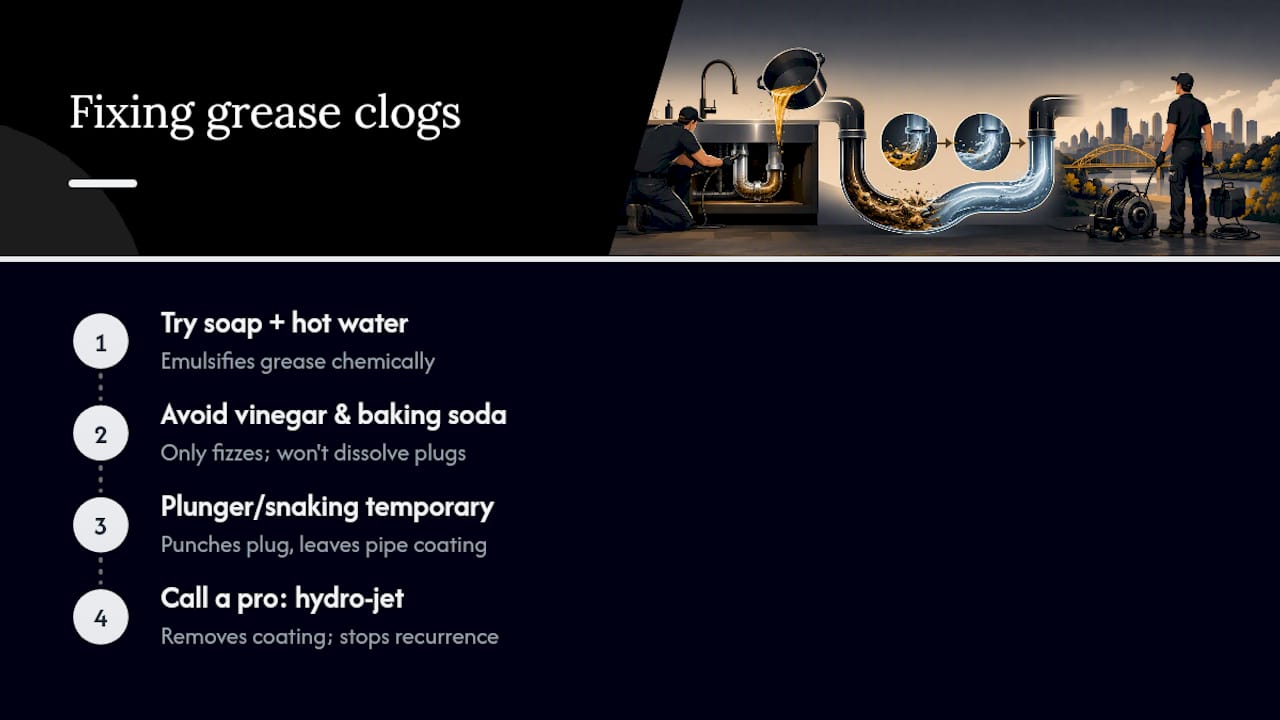
Most advice on grease clogs treats every method as equally valid, listing baking soda, vinegar, plungers, and soap as interchangeable options. They’re not. Dish soap and hot water work because they emulsify grease at a chemical level; baking soda and vinegar mostly just fizz and smell nice. If you’ve been reaching for the vinegar bottle expecting it to dissolve a real plug, that’s the gap between the home remedy that gets repeated online and the one that actually holds up.
The bigger blind spot is recurrence. A clog that clears with a plunger and comes back in ten days isn’t a plunger problem, it’s a pipe-wall problem, and no amount of snaking fixes that because snaking only punches through the plug rather than removing the coating. Homeowners who keep calling for the same clog every few months are usually one hydro-jetting appointment away from actually solving it instead of managing it. Try the soap and hot water first. Respect the point where DIY stops being useful. That’s the whole judgment call, and it’s simpler than most guides make it sound.
— Maayan
Get Your Drains Cleared for Good
If you’ve run through the soap, the plunger, and the baking soda and you’re still staring at standing water, Ag-plumbing is the next step, not another bottle off the shelf. Unlike a one-time chemical fix that leaves grease film on the pipe walls, our technicians clear the immediate clog and, when buildup is the real issue, use hydro-jetting to strip the pipe clean so the same sink doesn’t clog again in a month.
We’ve been doing this across Pittsburgh and the surrounding area for 30 years, which means we’ve seen the difference between a quick snake job that buys you two weeks and a hydro-jet cleaning that buys you years. If your kitchen sink keeps backing up no matter what you try, schedule a drain cleaning appointment and we’ll diagnose whether you need a simple clearing or a full pipe-wall cleaning, then quote you a straight answer before we start.
Sources
- Grease Clogged Kitchen Drain — How to Clear and Prevent | WA
- How to Fix a Grease Clogged Drain at Home | Action Arizona
- How to Remove Grease From Kitchen Sink Drain
FAQ
What dissolves grease in a kitchen sink?
Dish soap combined with very hot water is the most effective at-home solution because the soap acts as a surfactant that breaks grease into droplets small enough to flush away. Enzyme-based cleaners work more slowly but are a good option for ongoing maintenance.
How do I unclog a grease-clogged sink?
Start by pouring dish soap into the drain followed by staged rounds of hot water, then plunge if the clog sits close to the drain opening. If the sink stays fully blocked after two attempts, stop and call a professional for snaking or hydro-jetting.
Do baking soda and vinegar really unclog drains?
They can loosen light residue and freshen odors through the fizzing reaction, but fizzing alone usually isn’t strong enough to break down a thick grease plug. Treat it as a supporting step, not the main fix.
What happens if you drain grease in the sink?
Grease hardens as it cools and coats the inside of your pipes, gradually narrowing the space water can flow through until the sink slows down or backs up. Repeated grease disposal down the drain is the leading cause of the recurring clogs that eventually need professional pipe cleaning to fully resolve.
Should I use a chemical drain cleaner on a grease clog?
No. Caustic drain openers carry real safety risks and can damage disposals or leave residue that harms pipes over time. Stick to dish soap, hot water, and mechanical methods instead.
Recommended
- Drain Clog Prevention Tips for Pittsburgh Homeowners
- Why clog prevention matters for Pittsburgh homeowners
- Why regular drain cleaning protects Pittsburgh homes
- How cleanouts in plumbing save 67% of Pittsburgh homeowners
