
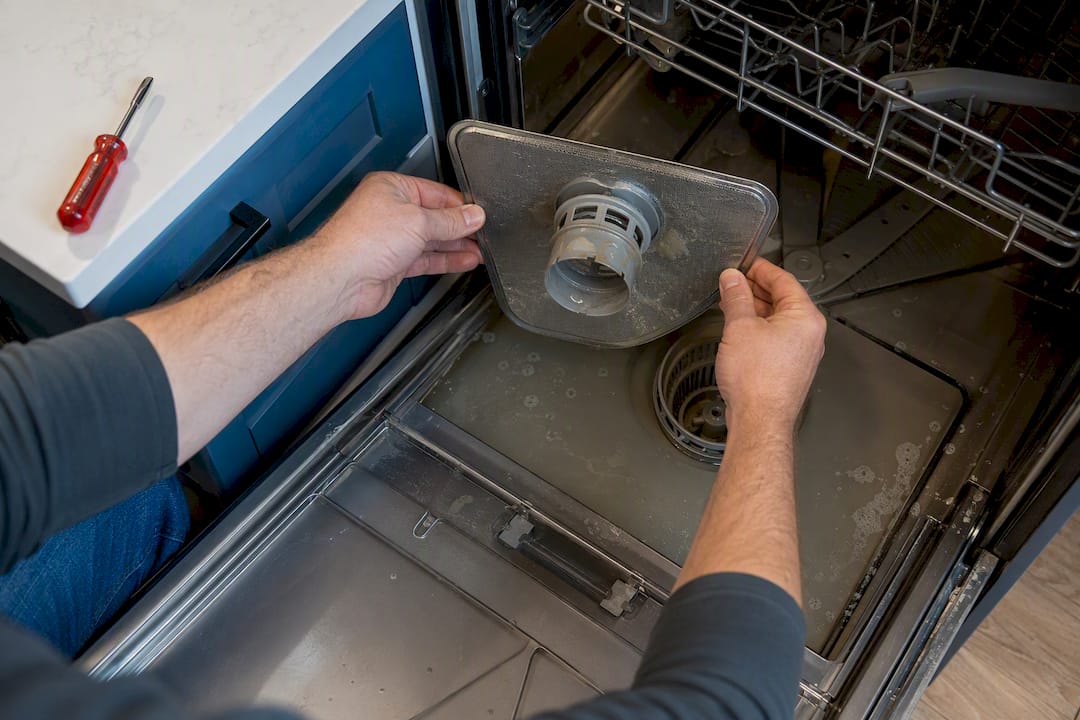
A dishwasher drain backing up almost always comes down to one of three things: a clogged filter or sump, a blocked garbage disposal connection, or a drain hose that’s kinked or missing its high loop. Turn off the dishwasher, cut power at the breaker if you’re reaching into the tub, and remove standing water with a cup or wet/dry vacuum before you touch anything else. Most cases are fixable in under an hour.
TL;DR:
- Most drain backups stem from clogs in the filter, sump, disposal connection, or kinked drain hose, not from internal dishwasher failure.
- Regularly cleaning the filter, running the disposal before cycles, and maintaining the drain hose and high loop prevent most issues.
- If the sink also backs up or water leaks persist after cleaning, a clog is likely downstream in the shared plumbing line.
- A humming pump with no water movement indicates a jam or electrical fault, requiring professional diagnosis rather than further DIY troubleshooting.
- Routine maintenance with baking soda and vinegar helps prevent buildup, but persistent backups or signs of electrical issues warrant quick professional intervention.
Table of Contents
- What Causes a Dishwasher Drain to Back Up?
- How Do You Troubleshoot a Dishwasher That Won’t Drain?
- What Pros Know That Most Homeowners Miss
- When Does This Stop Being a DIY Job?
- Get Professional Help for a Dishwasher Drain That Won’t Quit
- Sources
- FAQ
What Causes a Dishwasher Drain to Back Up?
Standing water in the tub after a cycle almost always starts at the filter. Food particles, glass shards, and grease build up in the removable filter and the sump beneath it, and once that path narrows, water has nowhere to go. Pull the filter, rinse it under the faucet, and check the sump basin underneath for anything sharp or stuck.
The garbage disposal is the second-most common culprit, and it’s the one most people forget to check. If your dishwasher shares a drain line with the disposal, food debris lodged in that connection point blocks flow entirely. Run the disposal for 15 seconds before starting a dishwasher cycle. It clears the path and cuts down on buildup before it starts, according to Axis Appliance Repair.
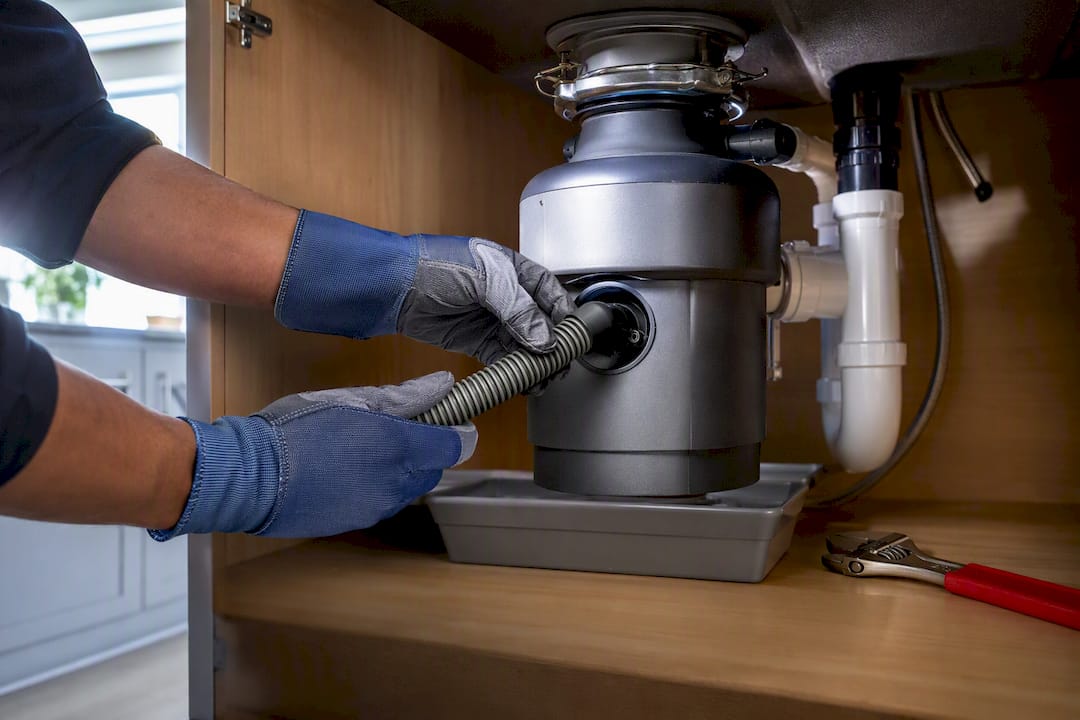
Roughly 7 out of 10 drainage failures trace back to a clogged disposal connection or a blocked filter, not a mechanical failure inside the machine itself. That’s the good news: most of this is cleanable, not repairable.
The drain hose itself can also be the problem. A kink behind the dishwasher, sludge built up inside the hose, or a high loop that’s sagged or come loose lets sink water siphon backward into the dishwasher between cycles. An air gap, if your setup uses one, works the same way: its job is to stop dirty water from being pulled back in, and it clogs with the same grease and debris as everything else.
Beyond that:
- Impeller jam vs. pump failure: a humming sound with no water movement usually means the impeller is jammed by debris; a silent pump that draws power but does nothing points to a failed pump.
- Downstream clogs: if both the sink and dishwasher back up together, the problem sits in the shared P-trap or branch line, not the dishwasher itself.
- Never run a load while the sink is clogged. Water has nowhere to go but back into the tub, and repeated cycles can push it up around the door gasket and onto your floor.
Pro Tip: If the dishwasher backs up but the sink drains fine on its own, the fault is almost always inside the dishwasher’s own filter, hose, or pump, not the house plumbing.
How Do You Troubleshoot a Dishwasher That Won’t Drain?
Work through this in order. Skipping steps is how people miss the actual cause and end up calling a plumber for a five-minute fix.
- Kill the power. Switch off the dishwasher and flip the breaker if you’ll be reaching into the tub or touching the drain hose.
- Remove standing water. Scoop it out with a cup, or use a wet/dry vacuum for a faster, cleaner job. Lay towels down first.
- Pull the lower rack and locate the filter. Twist it counterclockwise (most models) and lift it out.
- Clean the filter and inspect the sump. Rinse the filter thoroughly. Shine a flashlight into the sump basin and check around the impeller for glass shards, fruit pits, or bottle caps, which are frequent culprits even when the filter itself looks clean, according to Whirlpool’s product support guidance.
- Run the disposal. Confirm it’s clear, and if you recently had one installed, check that the knockout plug in the disposal inlet was actually removed. It’s a common miss during remodels.
- Disconnect and flush the drain hose. Detach it at the sink or disposal connection and run water through it to check for kinks or sludge. Reposition the high loop so it sits at least 32 inches off the floor, which helps prevent back siphoning regardless of local code requirements.
- Clear the air gap, if you have one. Pop off the cap on the counter and scrape out any buildup inside.
- Check the impeller by hand, power off. It should spin freely. If the pump hums during a cycle but no water moves, that’s a strong sign of a jam or failed pump.
- If the sink backs up too, check the P-trap. Remove it and look for a clog, or feed a handheld drain snake into the stub-out.
- Test it. Run a short rinse cycle and watch for leaks or returning standing water.
Pro Tip: Keep a bucket under the P-trap before you remove it. That last step saves you a bigger cleanup than the clog itself.
What Pros Know That Most Homeowners Miss
After 30 years fixing drain problems across Pittsburgh, a few patterns show up again and again. The most common: a leftover knockout plug in the disposal inlet after a new disposal install, which blocks drainage completely and gets mistaken for a “broken” dishwasher. The second: a drain hose routed flat under the sink cabinet with no high loop at all, quietly siphoning sink water back with every use.
A few habits cut down on repeat problems:
- Run the disposal for a few seconds before every dishwasher cycle.
- Clean the filter monthly. It takes two minutes and prevents most sump buildup.
- Inspect the drain hose and high loop once a year for sagging, kinks, or cracked fittings.
- Use baking soda and vinegar as a light preventative rinse only, not a clog remover. Applied monthly, it’s fine; used weekly, the vinegar’s acidity can wear down rubber seals and gaskets over time.
- Skip caustic liquid drain cleaners entirely. If they get pushed backward during a backup, they can sit in the pump or hose and eat away at the same seals you’re trying to protect.
If you hear a persistent hum with no drainage after checking the impeller by hand, or you notice a burnt smell near the control panel, stop troubleshooting. That’s often an electrical or control board issue, and testing it safely requires checking for voltage at the pump. That’s a job for a licensed pro.
When Does This Stop Being a DIY Job?
Call a plumber when the backup keeps returning after you’ve cleaned the filter and checked the disposal, when you see water leaking from under the unit, or when you smell something burnt near the controls. A pump that hums with zero water movement after you’ve confirmed the impeller spins freely by hand usually means an electrical or control fault, not a simple clog, and that’s outside safe DIY territory.
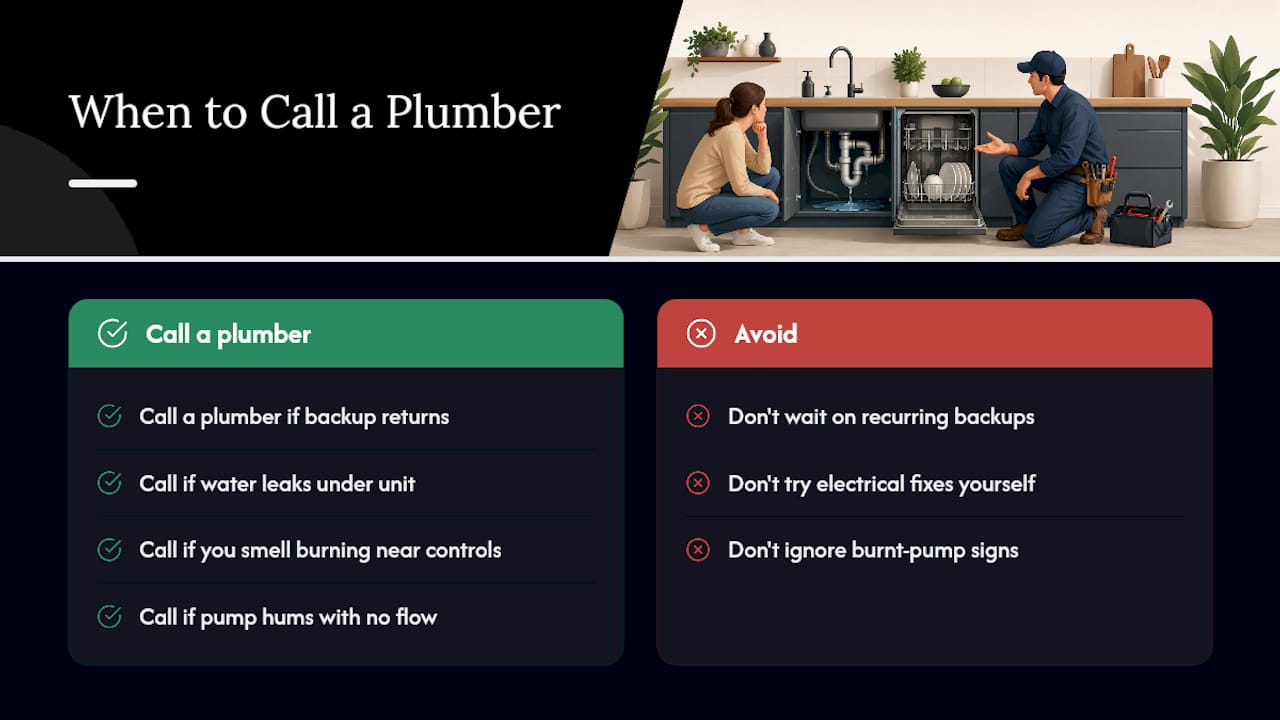
A technician’s visit typically starts with a camera inspection or a manual check of the P-trap, followed by a decision between snaking the line and hydro-jetting it if grease has built up further down the pipe. Expect the initial inspection to run 30 to 60 minutes, with straightforward fixes handled the same visit and pump replacements sometimes requiring a follow-up if parts need ordering.
Cost varies by the extent of the clog and whether a part needs replacing. What doesn’t vary: waiting on a recurring backup almost always turns a $150 fix into a $600 one once water damage or a burnt-out pump enters the picture.
— Maayan
Get Professional Help for a Dishwasher Drain That Won’t Quit
If you’ve worked through the filter, the disposal, and the hose and the backup keeps coming back, it’s time for a plumber, not another YouTube video. Our technicians check the whole path: filter, hose routing, disposal connection, and the shared line beyond it, before touching a wrench.
A typical service call includes a camera inspection when needed, a pump test, and a straightforward call on whether snaking or hydro-jetting clears the line. Plumbing services include drain cleaning, pump replacement, garbage disposal servicing, and sewer-line work behind a stubborn backup, using techniques that keep pace with evolving plumbing standards. If your dishwasher keeps backing up after trying the steps above, book a plumbing repair visit and get it diagnosed properly instead of guessing at it again next month.
Sources
- HowStuffWorks — Baking soda and vinegar cleaning guidance
- Whirlpool Product Help — Dishwasher not draining
- Axis Appliance Repair — Dishwasher not draining guide
- iFixit — Troubleshoot drainage issues in a dishwasher
FAQ
What can I put in my dishwasher to unclog the drain?
Start with the filter and sump, not a chemical additive. Pull the filter, rinse it clean, and check the sump and impeller area for debris before trying anything else.
Does Dawn dish soap really unclog drains?
Dish soap can help break up light grease film, but it won’t clear a physical clog from a jammed impeller, a blocked disposal, or a kinked hose. Those need to be inspected and cleared by hand.
How do I unclog my dishwasher drain pipe?
Disconnect the drain hose at the sink or disposal connection, flush it with water to check for sludge or kinks, and confirm the high loop is intact before reconnecting. If the sink also backs up, check the shared P-trap for a downstream clog.
Can vinegar and baking soda unclog a dishwasher drain?
They’re useful for light maintenance, not major clogs. Use vinegar and baking soda in sequence rather than mixed together for the best effect, and apply monthly at most since overuse of vinegar can degrade rubber seals.
When should I call a plumber instead of troubleshooting myself?
Call a pro if the backup returns after cleaning the filter and disposal, if you notice leaking or a burnt smell, or if the pump hums with no water movement after you’ve confirmed the impeller spins freely.
Recommended
- Skip Caustic Cleaners: Fix a Laundry Drain Clog Fast, Homeowners
- Emergency Plumbing Guide: Quick Solutions for Homeowners
- Pittsburgh Homeowners: Stop Damage From a Basement Floor Drain Backup
- Step by step drain cleaning guide for PA homeowners
