
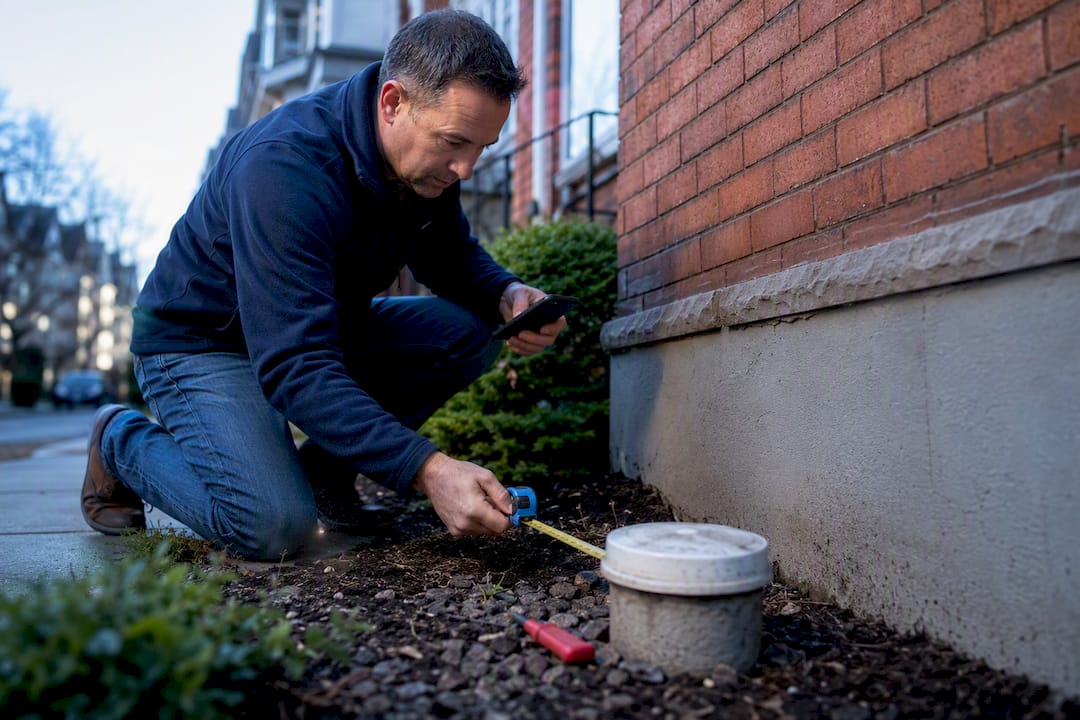
Your sewer cleanout is most likely outside near the foundation, in the basement, garage, or crawl space, or near the septic tank if you have one. It’s typically a 3 to 6 inch capped pipe with a square nut or a small access box flush with the ground. Check those spots now, snap a photo once you find it, and call a licensed plumber if the cap is buried, painted over, or won’t budge.
TL;DR:
- Most cleanouts are located within three to five feet of the foundation outside or near the septic tank, with caps that are often buried or painted over.
- Indoor cleanouts are typically found along the main soil stack near the basement, garage, or crawl space, usually close to the foundation wall.
- A real sewer cleanout features a 3 to 6 inch capped fitting with a threaded or square nut, connecting directly on a T or Y fitting in the main sewer line.
- Buried or hidden cleanouts may require professional tools like electronic locators or CCTV cameras to locate without excavation.
- Regularly photograph and keep the cleanout cap area clear, and contact a licensed plumber if the cap won’t turn or if the cleanout remains elusive.
Table of Contents
- How Do You Find a Sewer Cleanout Outside Your Home?
- Where Are Indoor Cleanouts Usually Located?
- What Does a Real Sewer Cleanout Look Like?
- What If You Can’t Find the Cleanout at All?
- How Do You Maintain and Prepare Your Cleanout for Emergencies?
- When Should You Call a Plumber to Locate a Buried Cleanout?
- A Practical Checklist Worth Keeping on Your Phone
- Need Help Locating or Servicing Your Sewer Cleanout?
- Sources
- FAQ
How Do You Find a Sewer Cleanout Outside Your Home?
Start by walking your yard along the path between your house and the street. Most modern homes place the cleanout within three to five feet of the foundation or right at the property line, so that stretch of ground is where you want to focus first.
Look for anything that breaks the pattern of grass, mulch, or concrete: a low riser pipe, a small flush box set into the lawn, or a round cap sitting almost level with the soil. Cap material tells you something about the home’s age. White or black PVC usually means newer construction, while brass or cast iron points to an older system that may not follow current spacing rules.
A few outdoor search tips worth trying:
- Walk the full perimeter facing the street, checking every few feet near the foundation line.
- Look for curb stamps, small metal markers, or nearby manhole covers, which often hint at where the lateral line runs.
- If you have a septic system, check near the tank lid or along the line running from the house to the tank, since that’s the typical spot for the cleanout in septic setups.
- Scan for a low vent pipe or riser sticking a few inches out of the ground, sometimes disguised by landscaping.
Pro Tip: In colder climates, installers sometimes recess cleanouts into frost sleeves so the cap sits flush with the grade instead of standing up as a riser. If your yard has mulch beds or gravel borders, gently sweep them aside before assuming there’s nothing there.
Where Are Indoor Cleanouts Usually Located?
If the exterior search comes up empty, move inside and trace your plumbing from the point where waste leaves the house. The main soil stack, the vertical pipe carrying waste down from upper floors, is your best landmark. Follow it down to where it meets the foundation wall, and look at the lowest horizontal section of pipe for a capped fitting.
A few spots to check in order:
- Basements: look along the foundation wall near where the main line exits the house, often close to a floor drain.
- Garages: check near water heater connections and laundry drain lines, especially in homes without basements.
- Crawl spaces: inspect the main line where it runs beneath the house, keeping in mind the space may be tight and poorly lit.
- Attics: rarely relevant. Cleanouts almost never sit above the main line, so don’t waste time up there.
Slab homes without basements almost always push the cleanout outdoors or into a garage, while basement homes usually have one indoors near the foundation and sometimes a second one outside.
What Does a Real Sewer Cleanout Look Like?
A genuine cleanout is a capped fitting, typically 3 to 6 inches in diameter, sitting on a T or Y shaped joint that connects directly to the main line. The cap usually has a square or hexagonal nut you’d turn with a wrench, or a recessed plug you pry with a flathead screwdriver. Some caps are stamped with an “S,” “C.O.,” or “Cleanout” label, which the The Spruce notes is one of the clearest identifiers homeowners can look for.
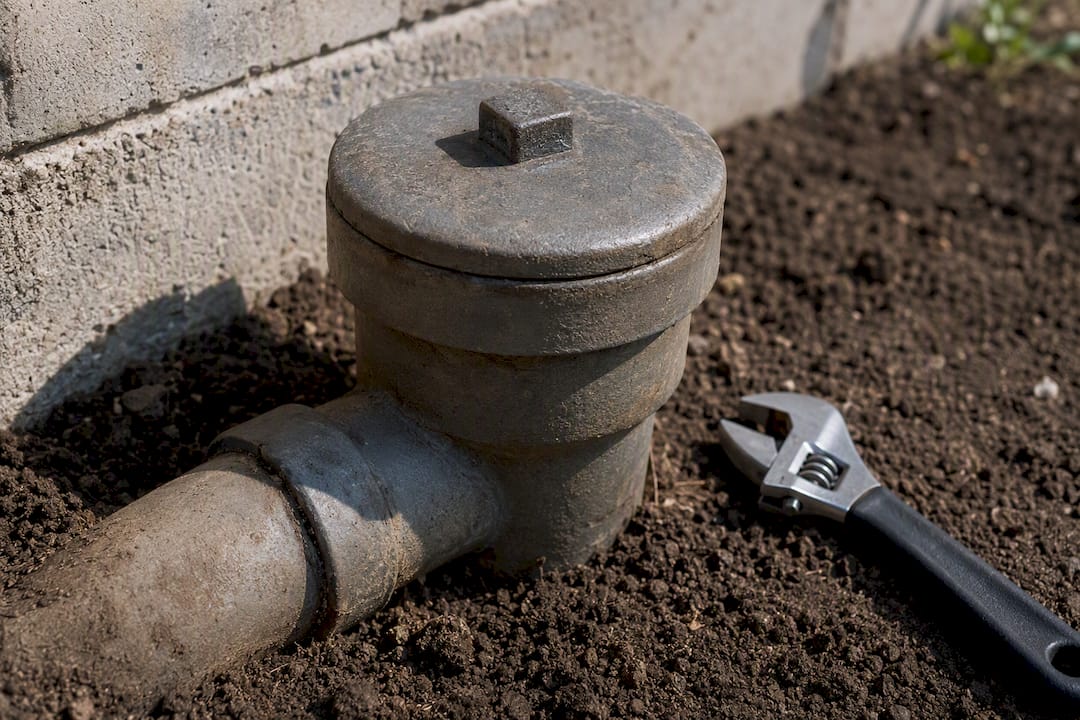
Watch out for lookalikes. Vent stacks poke through the roof, not the yard, and don’t have a threaded plug. Irrigation valve boxes are shallower and hold sprinkler components, not pipe fittings. Floor drains sit flat with a grate and lead to a trap, not a direct line to the sewer. The real giveaway is access: a cleanout is sized to accept a drain snake, and none of those other fixtures are.
Key identification points:
- Diameter of 3 to 6 inches, almost always round.
- A threaded plug or square nut, not a grate or valve handle.
- Direct connection to the main line on a T or Y fitting.
If the cap resists when you try to loosen it, stop. Forcing a stuck cleanout cap can crack aging pipe or send wastewater backward into the house. Call a plumber instead of reaching for a bigger wrench.
What If You Can’t Find the Cleanout at All?
Some homes hide the cleanout under decades of landscaping changes, driveway repaving, or additions that buried it entirely. Work through these steps in order before you start digging anywhere.
- Pull your property’s site plan, building permit records, or any plot plan filed with your municipality. These often mark the sewer lateral and cleanout location.
- Check with your local sewer authority. Many keep maps of residential lateral connections tied to the main line.
- Probe gently with a thin metal rod in areas where you suspect a shallow, buried cap. Never dig blind, and always call 811 or your local utility line before disturbing soil near known utility paths.
- If probing turns up nothing, a metal detector or electronic pipe locator can pinpoint a buried cap without any digging at all.
- When paperwork and DIY tools fail, hire a licensed plumber. Pros carry locators and CCTV cameras that map the line in minutes rather than hours.
Pro Tip: A thirty minute locating visit almost always costs less than an afternoon of guesswork with a shovel, especially if you hit a sprinkler line or electrical conduit by accident.
How Do You Maintain and Prepare Your Cleanout for Emergencies?
Once you’ve found the cleanout, the real value comes from keeping that knowledge somewhere useful. A quick phone photo, saved with a note on the location, turns a stressful backup call into a five minute fix for whoever shows up to help.
A short maintenance routine goes a long way:
- Photograph the cap and jot down its distance from a fixed landmark, like a downspout or the garage door.
- Check the cap periodically for cracks, corrosion, or a nut that’s worn smooth.
- Keep the area clear of mulch, planters, or parked equipment so the cap stays reachable.
- If a backup happens, stop using water fixtures immediately and skip any flushing. Call a plumber rather than attempting excavation yourself.
- If your home has no accessible cleanout, ask a plumber about extending one to grade during your next service visit.
When Should You Call a Plumber to Locate a Buried Cleanout?
Call a professional once you’ve exhausted the visual search and the cap still won’t turn up, or the one you found won’t open safely. Plumbers use electronic locators and CCTV cameras to trace the line’s exact path, which avoids the blind digging that damages landscaping or nearby utilities. Extending a cleanout to grade and keeping it unobstructed is standard code practice precisely because it cuts diagnostic time on every future service call.
A documented, accessible cleanout means less labor and a faster fix when something goes wrong. Certain plumbing services have extensive experience locating, inspecting, and clearing sewer lines for homeowners in the Pittsburgh area, often marking the cleanout’s exact position for client records during visits.
A Practical Checklist Worth Keeping on Your Phone
Here’s the short version I’d tell a neighbor: walk the foundation line, check the basement or garage, photograph whatever cap you find, and keep that spot clear of anything that could bury it again. If you strike out on all counts, or the cap won’t budge, that’s the moment to stop guessing and call someone who does this daily.

What surprises most homeowners isn’t the search itself, it’s realizing they’ve walked past their cleanout dozens of times without knowing what it was. That square nut sticking out of the lawn near the foundation isn’t decorative hardware. It’s the single most useful access point on the entire property when something backs up at 11 p.m. on a Sunday.
Save the photo. Share it with whoever handles your home’s maintenance. It costs nothing now and saves real money later.
— Maayan
Need Help Locating or Servicing Your Sewer Cleanout?
A licensed plumber with an electronic locator and CCTV camera can find the exact spot of a sewer cleanout, check the cap’s condition, and document the location to expedite future service calls, avoiding guesswork and possible damage from digging based on hunches.

A plumbing service provider experienced in drain cleaning, hydro jetting, and sewer repair for homes in the Pittsburgh area typically logs each locating visit so future work never starts from scratch. If your cleanout is missing, buried, or you’re dealing with a backup right now, book a sewer repair visit and get it mapped, inspected, and cleared in one trip.
Sources
- Sewer Cleanout: What it is & How to Find it | SERVPRO
- How to Locate Your Sewer or Plumbing Cleanout | The Spruce
- Up
- What Is a Sewer Cleanout? Location & Function Guide 2026 | All Clear Plumbing
FAQ
Where Should a Sewer Cleanout Be Located?
Most cleanouts sit outside within three to five feet of the foundation or at the property line, though many homes also have one indoors in the basement, garage, or crawl space near the main line.
Where Can I Find My Sewer Cleanout?
Walk the yard between your house and the street looking for a capped pipe or flush box, and check indoors along the foundation wall where the soil stack meets the lowest horizontal run of pipe.
What Do Old Sewer Cleanouts Look Like?
Older cleanouts often use cast iron or brass caps with a square nut, while some older homes may lack a dedicated cleanout entirely if they predate current code requirements.
Where Is the Cleanout Plug Located?
The plug sits on top of the cleanout pipe itself, usually a threaded cap with a square or hexagonal nut that a wrench can turn, positioned directly on the T or Y fitting where it joins the main sewer line.
Recommended
- What is a sewer cleanout? Pittsburgh homeowner guide 2026
- Clear Sewer Line Blockages: 2026 Homeowner’s Guide
- Home Sewer System Basics Every Homeowner Should Know
- Sewer Line Warning Signs Every Homeowner Should Know
