
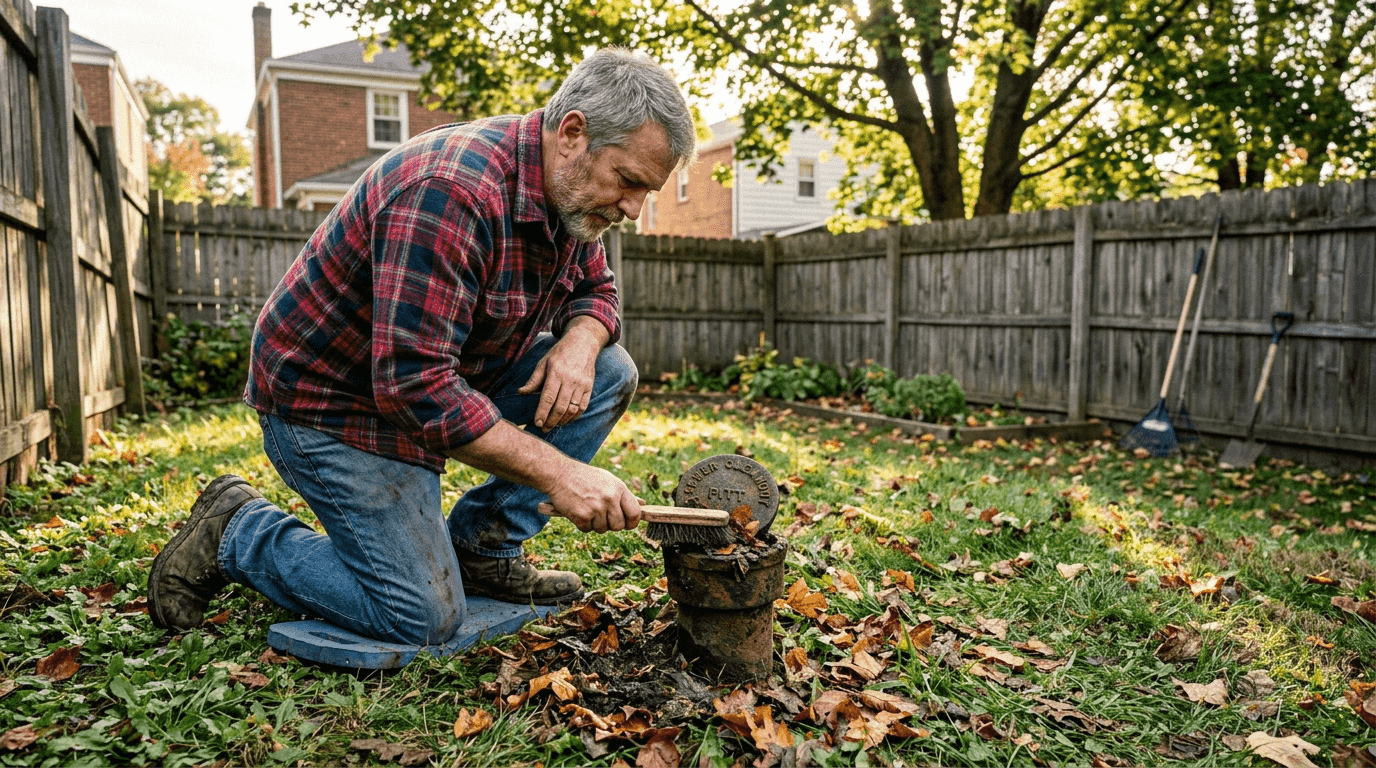
Many Pittsburgh homeowners discover too late that the city doesn’t maintain the sewer line running from their house to the street. This confusion leads to expensive emergencies when backups occur. Your sewer cleanout is the key access point that makes the difference between a quick fix and a plumbing disaster. Understanding what it does and where to find it protects your home from thousands in water damage. This guide explains everything you need to know about sewer cleanouts, from identifying yours to maintaining it properly and knowing when to call professionals.
Table of Contents
- What Is A Sewer Cleanout And Where Is It Located?
- How Sewer Cleanouts Protect Your Home And Make Maintenance Easier
- Types Of Sewer Cleanouts And How To Identify Them On Your Property
- Practical Steps For Pittsburgh Homeowners: Maintaining And Using Your Sewer Cleanout
- Keep Your Pittsburgh Home’s Plumbing Flowing With Expert Help
- Frequently Asked Questions
Key takeaways
| Point | Details |
|---|---|
| Access point function | A sewer cleanout provides direct entry to your main drain line for inspections, cleaning, and emergency repairs. |
| Homeowner responsibility | Pittsburgh property owners maintain the entire sewer lateral from house to street, including all cleanouts. |
| Backup protection | Opening the cleanout during a backup vents pressure away from your home’s interior fixtures and prevents flooding. |
| Maintenance savings | Regular cleanout access for professional cleaning prevents major blockages and reduces emergency repair costs significantly. |
| Inspection gateway | Modern sewer scope cameras enter through cleanouts to diagnose problems without excavation or demolition. |
What is a sewer cleanout and where is it located?
A sewer cleanout provides direct access to the main sewer line for maintenance and repairs, typically located near the home’s foundation or property line. This capped pipe extends from your building drain to ground level, creating an entry point for plumbing professionals to clear blockages, perform inspections, and test your sewer system. Most Pittsburgh homes built after 1950 have at least one cleanout, though older properties sometimes lack this essential feature.
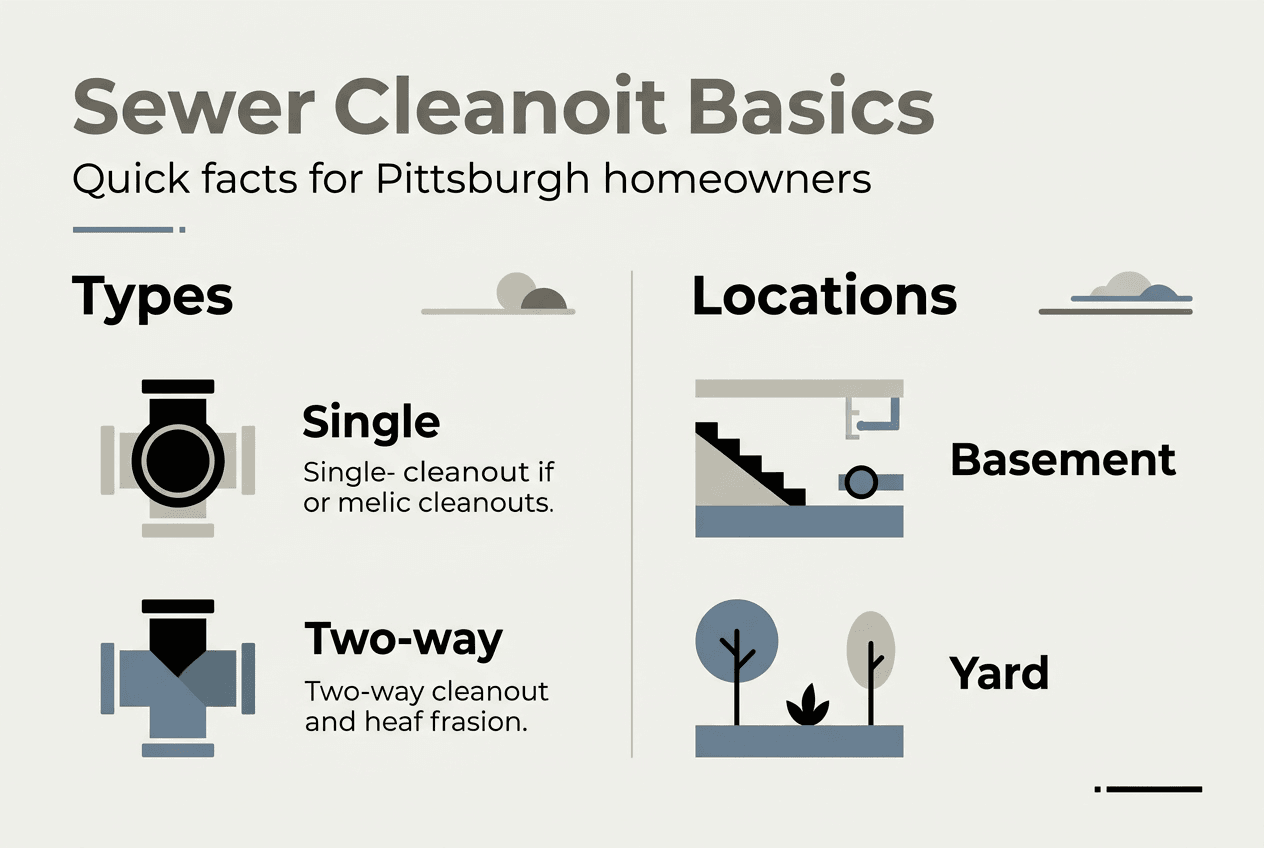
You’ll typically find cleanouts in specific locations around your property. The most common placement is outdoors near your foundation, often on the side of the house closest to the street. Some cleanouts sit closer to the property line or in the front yard between your home and the curb. Indoor cleanouts occasionally exist in basements or crawl spaces, usually in the floor or low on a wall. Two-way cleanouts feature dual openings that allow plumbers to work in either direction along your sewer line.
In Pittsburgh, homeowners are solely responsible for the sewer lateral, the pipe from the house to the main sewer line. This means you own and must maintain your cleanout, even though many assume the Pittsburgh Water and Sewer Authority handles everything. The city only maintains the main sewer lines running under streets. Your lateral and its cleanout fall entirely under your care and financial responsibility.
Common cleanout locations include:
- Outdoor cleanouts near the foundation, usually within 3 to 5 feet of the house
- Property line cleanouts positioned between your home and the street curb
- Indoor floor cleanouts in basements, often covered by a round or square cap
- Two-way cleanouts with separate openings pointing toward the house and street
- Cleanouts in crawl spaces or utility rooms near the main drain stack
Understanding drain cleaning benefits starts with knowing where your cleanout sits and recognizing your maintenance obligations. Locate yours now before an emergency strikes.
How sewer cleanouts protect your home and make maintenance easier
Cleanouts serve three primary functions: protecting the home during backups, providing access for clearing stoppages, and facilitating sewer testing. Each function saves you money and prevents property damage when used correctly. During a backup, opening your cleanout acts as a pressure relief valve. Sewage flows out the cleanout instead of backing up through your toilets, tubs, and floor drains. This simple action protects your interior from contamination and water damage.
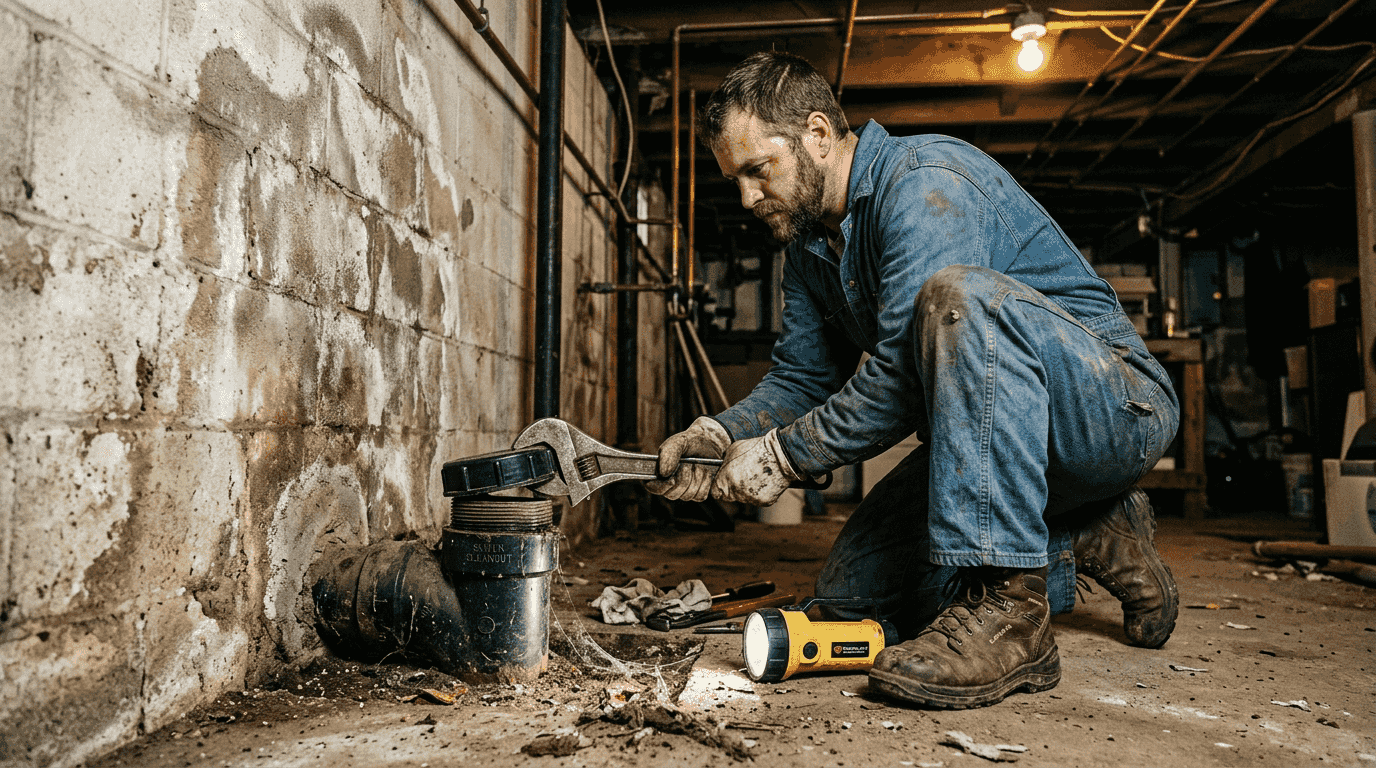
Direct cleanout access lets plumbers insert specialized drain cleaning equipment without tearing into your walls or floors. Professionals can snake cables, run hydro-jetting equipment, or insert inspection cameras through the cleanout opening. This approach dramatically reduces labor costs and completion time compared to cutting into pipes inside your home. Regular sewer line cleaning through the cleanout helps prevent major blockages, making maintenance faster and more affordable.
Routine cleanout maintenance delivers measurable financial benefits. Professional cleaning every 18 to 24 months removes buildup before it causes complete blockages. Emergency sewer repairs in Pittsburgh often cost $3,000 to $8,000 when tree roots or collapsed pipes require excavation. Preventive cleaning through your cleanout typically runs $200 to $400, making it a smart investment that prevents major plumbing problems down the line.
Key cleanout functions include:
- Venting sewage during backups to protect interior fixtures and flooring
- Providing tool access for mechanical cleaning and blockage removal
- Enabling sewer scope camera inspections to diagnose hidden problems
- Facilitating hydro-jetting to remove grease, roots, and mineral deposits
- Allowing smoke testing to identify illegal connections or damaged sections
Pro Tip: Always wear heavy-duty gloves, safety glasses, and old clothes when opening a cleanout during a backup. Sewage under pressure can spray out forcefully, creating a health hazard and messy cleanup situation.
Routine sewer maintenance through cleanouts saves Pittsburgh homeowners thousands in emergency repairs. A $300 annual cleaning prevents the $5,000 average cost of emergency excavation and pipe replacement.
Understanding why drain cleaning is essential helps you appreciate how cleanouts make this preventive care possible and affordable.
Types of sewer cleanouts and how to identify them on your property
Sewer cleanouts come in two main configurations: single and two-way designs. Single cleanouts feature one capped opening that provides access in a single direction along your sewer line. Two-way cleanouts offer directional control for clearing clogs and testing, with one opening sweeping towards the street and the other towards the house. This dual access makes them more versatile for professional plumbers tackling stubborn blockages.
Cleanout caps vary in material and attachment style. Understanding these differences helps you maintain and access your cleanout properly:
| Cap Type | Material | Attachment Method | Maintenance Notes |
|---|---|---|---|
| Threaded plastic | PVC or ABS | Screws into fitting | Easy to remove, can crack in cold weather |
| Threaded metal | Cast iron or brass | Screws into fitting | Durable but may corrode and seize over time |
| Twist-off plastic | PVC or ABS | Quarter turn bayonet | Quick access, rubber gasket needs replacement |
| Plug style | Rubber or plastic | Expands inside pipe | Common in older homes, can deteriorate |
Locating your cleanout requires some detective work if you’ve never noticed it before. Start by walking your property’s perimeter near the foundation, looking for a round or rectangular cap at ground level. The cap typically measures 3 to 4 inches in diameter and sits flush with or slightly above the soil. Check areas where your main drain exits the house, usually on the side facing the street. Some cleanouts hide under landscaping, mulch, or grass that’s grown over them.
Proper cap maintenance prevents access problems during emergencies. Cleanout caps should seal tightly to prevent sewer gas escape and groundwater infiltration. Check yours annually to ensure it’s not cracked, corroded, or loose. Replace damaged caps immediately to maintain your sewer system’s integrity. Keep the area around your cleanout clear of plantings, pavers, and debris so you or a plumber can reach it quickly.
Pro Tip: Two-way cleanouts are safer and more efficient because professionals can work in the direction of the clog rather than forcing equipment against the flow. If you’re installing a new cleanout, request a two-way design.
Follow this step-by-step drain cleaning guide to understand how professionals use your cleanout for maintenance. Knowing your cleanout type and location prepares you for both routine care and emergency situations.
Practical steps for Pittsburgh homeowners: maintaining and using your sewer cleanout
Maintaining your sewer cleanout requires minimal effort but delivers maximum protection. Follow these practical steps to keep your system accessible and functional year-round.
Routine inspection checklist:
- Locate your cleanout and mark it clearly with a flag or stake if it’s in your yard
- Check the cap quarterly for cracks, corrosion, or looseness
- Clear vegetation, mulch, and debris from a 2-foot radius around the cleanout
- Test that you can remove the cap with basic tools without excessive force
- Look for signs of sewage seepage or soil settling around the cleanout base
- Document the cleanout location with photos for future reference or emergency calls
Opening a cleanout during a sewer backup can be messy and requires safety precautions, including gloves, eye protection, and old clothes. Stand to the side when removing the cap, never directly over it. Sewage under pressure can erupt forcefully, creating a health hazard. Have a bucket and rags ready to contain initial flow. If sewage pours out continuously, the blockage sits between your cleanout and the street.
Schedule professional services strategically to avoid emergencies. A sewer scope inspection, costing under $500, can prevent a financial catastrophe by identifying problems before pipes fail. Book inspections when buying a home, after repeated slow drains, or every 3 to 5 years for preventive assessment. Professional cleaning every 18 to 24 months removes accumulation before it causes blockages.
Essential equipment for cleanout work:
- Heavy-duty rubber gloves rated for sewage contact
- Safety glasses or face shield to protect from splashes
- Adjustable wrench or pipe wrench for stuck caps
- Bucket and absorbent rags for cleanup
- Flashlight for inspecting inside the cleanout opening
- Replacement cap and gasket if yours shows wear
Pro Tip: Never force drain cables blindly into your cleanout without knowing the pipe’s direction and condition. You can puncture old pipes or push equipment through corroded sections, creating expensive damage that requires excavation to repair.
Maintain yard access by keeping cleanouts visible and reachable. Avoid planting shrubs or installing hardscaping over cleanouts. If you’re landscaping, photograph cleanout locations first and maintain clear access paths. During winter, keep cleanouts free of snow and ice so you can reach them during freeze-related backups.
Use this clear sewer line blockages guide to understand when DIY efforts make sense versus calling professionals. For serious blockages, recurring problems, or old sewer systems, contact experts who provide comprehensive sewer repair services using your cleanout as the primary access point.
Keep your Pittsburgh home’s plumbing flowing with expert help
Your sewer cleanout is only valuable when maintained properly and used by experienced professionals who understand Pittsburgh’s unique plumbing challenges. AG Heating, Cooling & Plumbing brings 30 years of expertise to every sewer service call, from routine cleanout inspections to emergency backup response. Our team uses advanced camera technology and cleaning equipment through your cleanout to diagnose and resolve problems without unnecessary excavation.
Preventive maintenance through your cleanout saves thousands compared to emergency repairs. We offer affordable inspection packages and routine cleaning services designed specifically for Pittsburgh’s aging sewer infrastructure. Our technicians understand local soil conditions, common tree root issues, and the cast iron pipe problems typical in older neighborhoods. Don’t wait for a backup to discover your sewer needs attention.
Protect your home with professional care from trusted local experts. Visit AG Heating, Cooling & Plumbing to schedule your sewer cleanout inspection today. Our comprehensive plumbing repair services and specialized drain cleaning service keep your system flowing smoothly year-round. Call now to prevent the next sewer emergency before it happens.
Frequently asked questions
What does a sewer cleanout look like and where can I find it?
A sewer cleanout appears as a capped pipe extending from the ground, typically 3 to 4 inches in diameter with a round or square cap. Most sit near your foundation on the side facing the street, though some are located closer to the property line or inside your basement floor.
Can I use my sewer cleanout to clear small clogs myself?
Homeowners can open cleanouts during backups to relieve pressure, but clearing clogs requires professional equipment and expertise. DIY cable snaking risks damaging old pipes or pushing blockages deeper into the system, creating more expensive problems.
How often should I have my sewer cleanout inspected or cleaned?
Schedule professional sewer scope inspections every 3 to 5 years for preventive assessment, or immediately if you notice slow drains or gurgling sounds. Professional cleaning every 18 to 24 months prevents buildup from becoming complete blockages that require emergency service.
What risks come from not maintaining my sewer cleanout?
Neglected cleanouts become inaccessible due to corrosion, soil buildup, or landscaping coverage, forcing plumbers to cut into your home’s interior pipes during emergencies. Hidden cleanouts also prevent you from venting backups away from your fixtures, leading to interior flooding and contamination damage.
Does the city of Pittsburgh maintain my sewer cleanout?
No, Pittsburgh homeowners own and maintain the entire sewer lateral from their house to the main line, including all cleanouts. The Pittsburgh Water and Sewer Authority only maintains the main sewer lines under streets, making your lateral and cleanout your complete financial responsibility.
Recommended
- Reliable Sewer Repair Services in Pittsburgh, PA
- Clear Sewer Line Blockages: 2026 Homeowner’s Guide – AG-Plumbing
- Types of drain cleaning methods for Pittsburgh homes – AG-Plumbing
- What do professional plumbers do in Pittsburgh? 2026 – AG-Plumbing
