
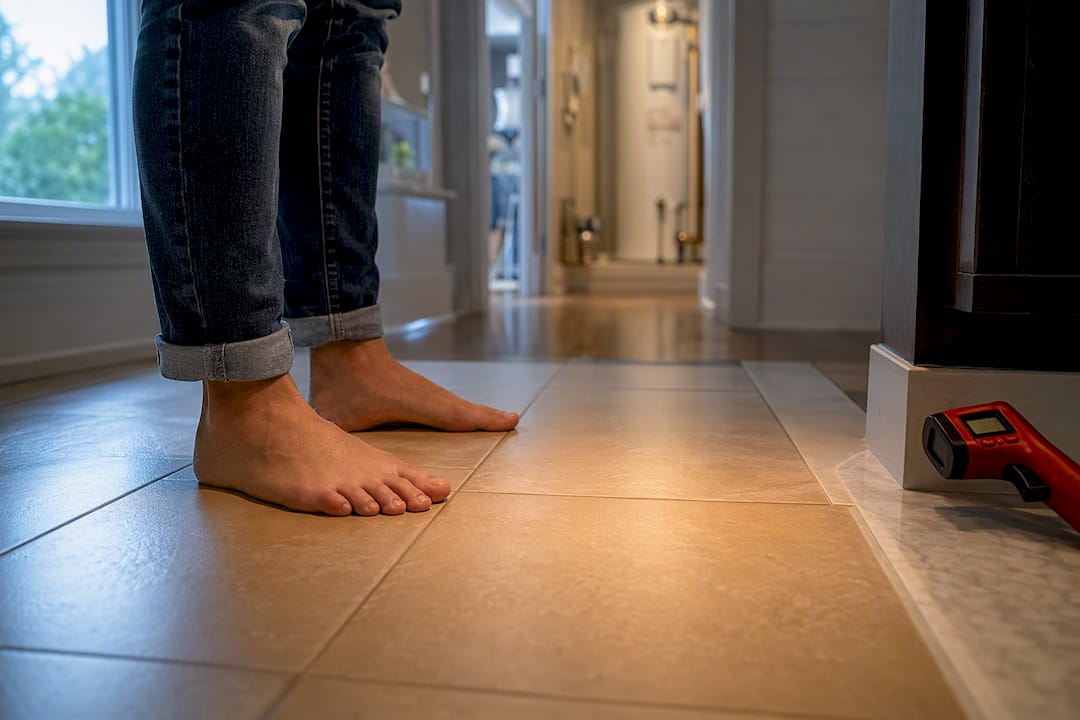
If you notice a warm patch on the floor, an unexplained jump in your water bill, or the sound of running water when every fixture is off, you likely have a slab leak. Run a quick water meter test to confirm it. If two or more signs show up at once, damp flooring plus a hot spot, or a bill spike plus low pressure, stop troubleshooting and call a licensed plumber before the water undermines your foundation.
TL;DR:
- Water bill spikes and unexplained sounds or hot spots can indicate a leak, especially if multiple signs appear simultaneously.
- Confirming a slab leak involves simple water meter tests and hot/cold isolation, which homeowners can perform before calling a professional.
- Early detection prevents extensive damage, as ongoing leaks can cause flooring issues, mold growth, and foundation erosion, increasing repair costs.
- Professional diagnosis combines acoustic, thermal, and tracer methods to pinpoint leaks accurately without invasive slab removal.
- Acting quickly to shut off water and document damage helps limit repair expenses and facilitates insurance claims for associated structural damages.
Table of Contents
- What Are the Most Common Slab Leak Signs?
- How to Confirm a Slab Leak Safely
- What to Do the Moment You Suspect a Slab Leak
- A Plumber’s View on Finding and Fixing Slab Leaks
- Getting a Slab Leak Diagnosed and Fixed With AG Heating, Cooling & Plumbing
- Sources
- FAQ
What Are the Most Common Slab Leak Signs?
Slab leaks rarely announce themselves with a puddle. They show up as small, easy to dismiss oddities that add up over weeks. Homeowner guides consistently point to the same handful of warning signs, and knowing what separates a real leak from a false alarm saves you from paying for diagnostics you don’t need.
Unexplained water bill spikes. A sudden increase over your normal usage, with no new appliances, guests, or garden watering to explain it, deserves attention. Before assuming the worst, rule out the obvious: check if your irrigation timer got reset, whether a toilet is running silently, or if lawn watering season just started. A hidden slab leak, by contrast, keeps draining water at a steady rate around the clock, so the spike shows up even in months when your household habits haven’t changed.
The sound of running water with everything off. Turn off every faucet, flush nothing, and run no appliances. Then walk through the house at night when it’s quiet and listen near the floor, especially in hallways and utility rooms. A faint hiss or trickle that persists is one of the more reliable signs of a pressurized line leaking somewhere beneath you. Ice makers, humidifiers, and running toilets are the usual false positives, so check those first.
Warm spots on the floor. This one is specific to leaks on the hot water line. Walk the floor barefoot, particularly over slab areas near the water heater or main bathroom, and note any patch that feels noticeably warmer than the surrounding surface. Homeowner reports describe a differential of roughly 5 to 10°F above ambient floor temperature as typical for a hot line leak. A heating vent or a slab section that gets more sun through a window can mimic this, so cross-check the location against your home’s plumbing layout before you panic.
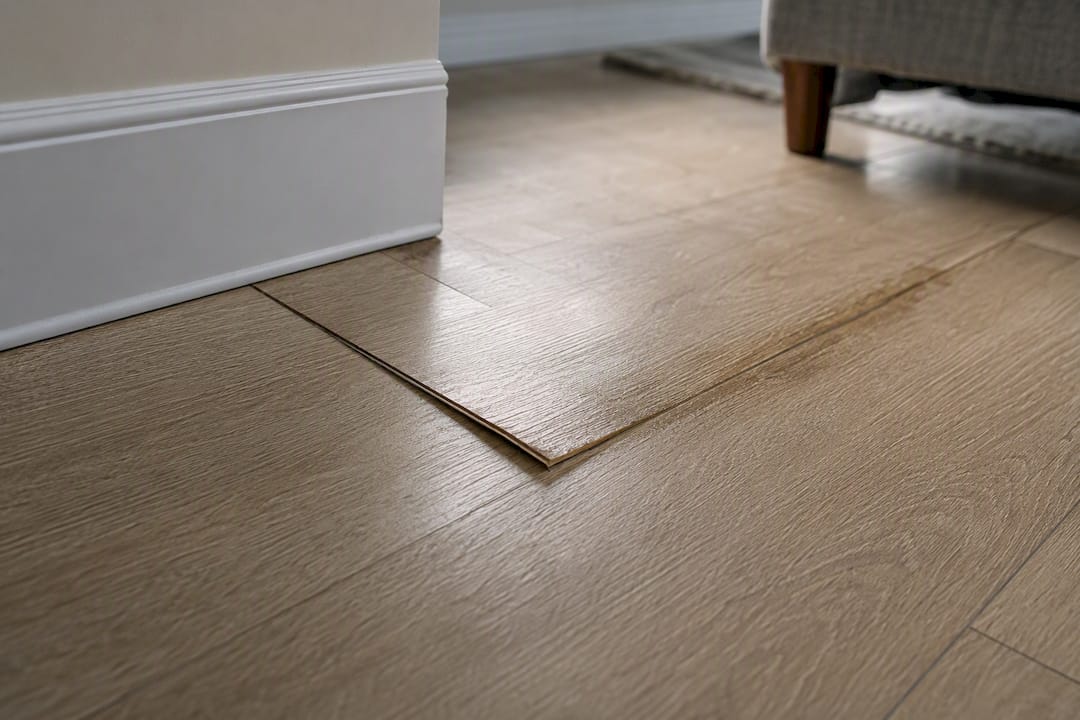
Damp carpet, warped hardwood, or lifting vinyl. Moisture pushing up through a crack in the slab will show up first at floor level, not on the ceiling. Press a hand flat against carpet or tile grout lines; a section that feels cool and slightly damp compared to the rest of the room is worth documenting with a photo and a date. Warped hardwood planks or vinyl tile edges that curl upward are later stage signs that the moisture has been there a while.
Low or unstable water pressure across multiple fixtures. One weak shower head is a fixture problem. Weak pressure at the shower, the kitchen sink, and the outdoor spigot at the same time points to a system wide issue, and a slab leak is one of the more common causes because it’s essentially a hole draining pressure out of the line before it reaches your fixtures.
Musty odors and early mold near the floor. Trapped moisture under carpet pads or behind baseboards breeds mold fast, often before you can see any visible staining. If a room smells musty and you can’t find a source at eye level, get down and check baseboards and flooring seams.
Cracked tile, grout, or shifting interior walls. This is the sign that means the leak has been active long enough to erode the soil supporting the slab. Hairline cracks that widen over a few weeks, or a door that suddenly starts sticking in its frame, suggest the ground under the foundation is settling unevenly.
Pooling water or unusually green grass at the slab’s edge. For homes on a perimeter foundation, water finding its way to the outside can pool near the exterior wall or create a patch of grass that stays greener and grows faster than the rest of the yard, even during dry spells.
Pro Tip: Keep a folder, digital or paper, where you log every odd observation with a date and photo. A single warm spot means little on its own, but three logged signs over two weeks builds a case a plumber can act on fast.
One more indirect clue worth watching: a water heater that cycles on more often than usual. A hot water line leak can force the heater to work overtime trying to maintain temperature, and you’ll notice it on your gas or electric bill before you notice anything on the floor.
How to Confirm a Slab Leak Safely
Before you pay for professional diagnostics, run the two checks that cost nothing but a few minutes of your time.
- Do the water meter test. Locate your water meter, usually near the curb or in a basement utility area. Turn off every fixture and appliance in the house, including the ice maker. Note the reading, then wait 15 to 20 minutes without using any water. Most meters have a small triangular or star shaped low flow indicator; if it’s spinning with nothing running, water is escaping somewhere in the system.
- Isolate hot from cold. Shut off the valve at your water heater’s inlet, which stops flow to the entire hot water line. Recheck the meter. If the indicator stops moving, the leak is on the hot side, which cuts your search area in half before a plumber even arrives. If it keeps moving, the leak is on the cold line or elsewhere in the system.
- Rule out the cheap explanations first. A running toilet flapper, an irrigation valve stuck open, or a water heater tank leak all mimic slab leak symptoms and cost far less to fix. Trade guidance consistently recommends checking these before assuming the problem is under the foundation.
Once the meter test confirms water is escaping and the hot/cold isolation narrows the location, stop there. Pressure testing beyond basic isolation and any concrete cutting should go to a licensed plumber. Amateur pressure testing can blow a fitting or crack a line further, and cutting into a slab without pinpointing the leak first risks hitting rebar, post tension cables, or electrical conduit.
Professionals confirm the exact spot using tools that don’t require guesswork. Acoustic listening equipment picks up the sound signature of pressurized water escaping through a small opening, often locating it within inches. Thermal imaging cameras read surface temperature differences to map a hot line leak across a room instead of just at one spot you happened to notice. Tracer gas and line tracing methods push a detectable gas or signal through the pipe and track where it surfaces, which works well on lines that acoustic tools can’t isolate clearly. Combining these methods is what lets a plumber cut a foot wide hole instead of tearing up an entire room.
What to Do the Moment You Suspect a Slab Leak
Acting in the first hour matters more than most homeowners realize, mainly because standing water under a slab starts affecting flooring and air quality faster than it affects the concrete itself.
- Shut off the main water supply if the leak seems severe (rapid meter movement, visible pooling, or a sudden pressure drop) rather than just suspected. The main shutoff is typically near where the water line enters the house or at the meter itself.
- Photograph everything with a timestamp: the meter reading, the warm or damp floor area, any cracked grout, and your last two water bills side by side.
- Write down when you hear the running water sound and under what conditions, since a plumber will ask about timing and it’s hard to remember accurately after a few days.
- Do not attempt to open the slab yourself, even if you think you know the exact spot. Rebar and post tension cables run through most slab foundations, and cutting into one is a structural and safety risk that outweighs any money saved.
- Run a dehumidifier or fan on any damp flooring area to slow mold growth while you wait for a professional visit, and move furniture or rugs off the affected spot if you can.
This documentation does double duty. It speeds up the plumber’s diagnosis, and it becomes part of the paper trail your insurer may need if the damage claim goes beyond the leak itself into flooring or drywall repair. For more on how ongoing leaks compound into bigger structural bills, see why water leaks matter for homeowners.
A Plumber’s View on Finding and Fixing Slab Leaks
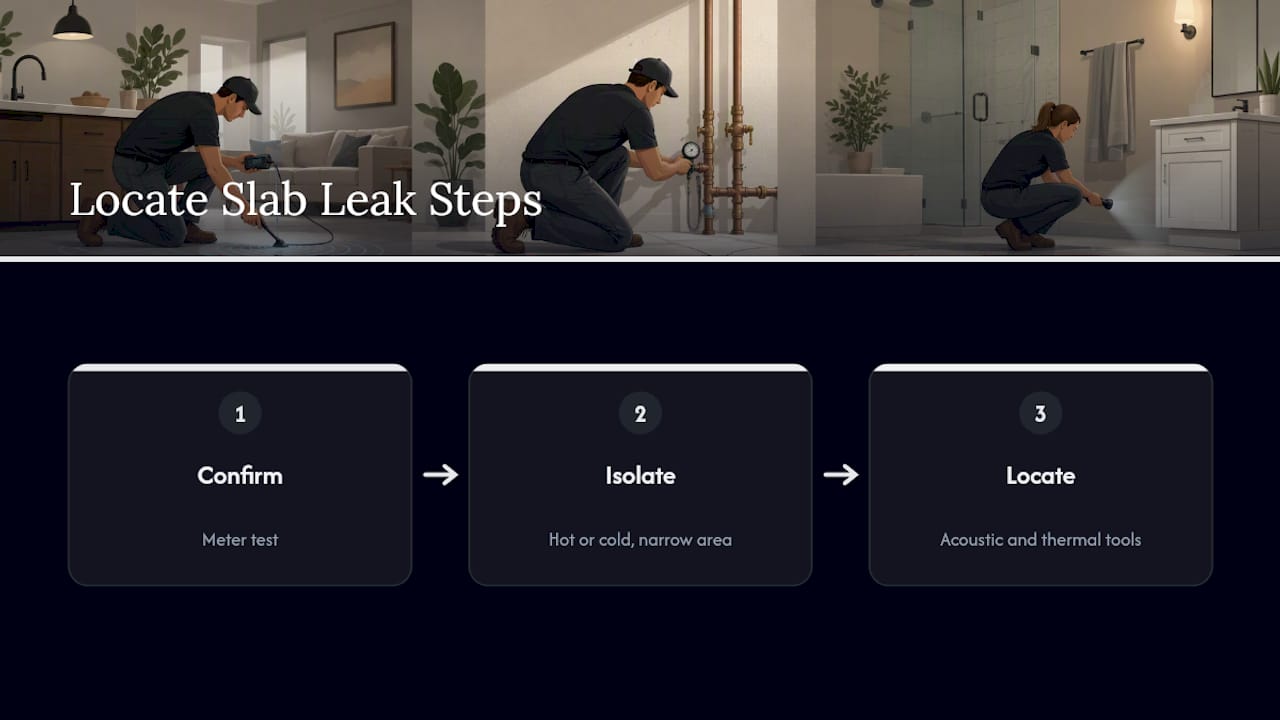
The workflow that actually limits floor damage is confirm, isolate, locate, in that order. Confirm with the meter test. Isolate by narrowing the search to hot or cold, then to a section of the house. Locate with acoustic and thermal tools before anyone touches a saw. Skipping straight to “let’s open the floor and see” is how a one leak job turns into a five hole search.
Once the leak is pinpointed, the repair decision comes down to pipe condition and accessibility, not just the size of the leak. A spot repair, cutting a small section of slab and patching the one damaged length of pipe, makes sense when the rest of the line is in good shape and the leak is isolated to one clear point. A reroute, running new pipe through walls or the attic instead of back through the slab, avoids cutting concrete entirely and is often the better call when the damaged section sits under a load bearing wall or finished flooring you don’t want to disturb. A full repipe gets considered when the home’s pipe material (older galvanized steel or certain plastic pipes from specific eras) shows signs of failing in multiple spots, not just the one you found.
Cost swings mainly on three things: how precisely the leak gets located before cutting, how much flooring has to come out and go back, and how hard the pipe is to reach. When you get an estimate, ask what detection method was used to confirm the exact spot, whether the quote includes flooring restoration or just the pipe work, and whether they’re proposing a spot repair or recommending a reroute and why.
— Maayan
Getting a Slab Leak Diagnosed and Fixed With AG Heating, Cooling & Plumbing
A thorough confirm, isolate, locate process is recommended on every slab leak call instead of jumping straight to demolition to reduce flooring damage and speed diagnosis.

A typical diagnostic visit starts with the meter and pressure checks, moves to acoustic listening and thermal imaging to narrow the exact location, and ends with a documented report showing where the leak is and which repair option fits your situation, spot repair, reroute, or full repipe. That documentation also gives you something concrete to hand your insurer if the claim covers flooring or drywall damage. Experienced plumbing professionals serving Pittsburgh, PA and the surrounding area have run this process enough times to know which shortcuts cost homeowners more later. If you’ve matched two or more signs from this guide, schedule a diagnostic visit or check out the plumbing repair services page to see what a slab leak repair involves before you book.
Sources
Here’s where some of the figures and detection methods in this guide come from, in case you want to dig deeper on your own.
- EPA — Fix a Leak Week / WaterSense
- Forbes — What is a slab leak? (Home improvement)
- Contractor Magazine — Pinpoint the slab leak before you break the floor
FAQ
Does homeowners insurance cover a slab leak?
Most policies cover the sudden, accidental damage caused by a slab leak, like flooring or drywall repair, but typically exclude the cost of the plumbing repair itself. Check your specific policy language, since coverage varies by insurer and by whether the leak was gradual or sudden.
How long can a slab leak go undetected?
A slow leak can run undetected for months, sometimes longer, especially if it’s on the cold line where there’s no warm floor spot to notice. Water bill spikes are usually the first signal, which is why checking your bill against prior months matters even without other symptoms.
Is a slab leak a big deal?
Yes. Left alone, a slab leak wastes water constantly, similar to the nearly 10,000 gallons a typical household leak wastes annually, and it can erode the soil under your foundation, leading to cracked slabs and shifting walls if it goes on long enough.
Is a slab leak an emergency?
It depends on severity. A slow leak with minor symptoms can usually wait a day or two for a scheduled diagnostic visit, but rapid water loss, visible pooling, or a sudden pressure drop calls for shutting off the main water supply and getting a plumber out the same day.
How much does it typically cost if a slab leak goes undetected too long?
Costs climb the longer a leak runs, since you’re paying for both wasted water and, eventually, flooring or foundation repair on top of the plumbing fix. Getting a diagnostic visit as soon as you spot two or more warning signs keeps the job closer to a single spot repair instead of a larger structural one.
Recommended
- What Is a Slab Leak? A Homeowner’s Guide
- Leak Detection Tips for Homeowners: 10 Quick Checks
- Top Leak Detection Methods for Homeowners and Pros
- Why Water Leaks Matter: A Homeowner’s Guide
