
TL;DR:
- Water leaks cause extensive water waste and hidden structural damage if left unaddressed. Prompt detection and repair protect your property, water supply, and insurance coverage, reducing long-term costs and property value loss. Regular inspections and smart leak monitoring devices are the most effective prevention strategies homeowners can employ.
Water leaks are the leading cause of preventable water waste and structural damage in American homes. Understanding why water leaks matter gives you the power to protect your property, your wallet, and your water supply before small drips become expensive disasters. According to the EPA WaterSense program, the average household wastes more than 9,300 gallons per year from leaks alone. Common culprits include worn toilet flappers, dripping faucets, and failing supply line connections. The consequences of water leaks go far beyond a higher water bill. They include mold, structural rot, and insurance headaches that can cost tens of thousands of dollars to resolve.
Why water leaks matter more than most homeowners realize
The scale of household water waste in the U.S. is staggering. American homes collectively waste nearly 1 trillion gallons of water every year from leaks. That number equals the annual water use of more than 11 million homes. It means the problem is not rare or isolated. It is happening in homes across Pittsburgh and every other city right now.
A single dripping faucet does more damage than most people expect. A faucet dripping once per second wastes over 3,000 gallons per year. That is enough water for 180 showers. One leaky faucet, left unrepaired for a year, consumes more water than most families use in two months of bathing.
The financial impact is just as real. Fixing household leaks saves homeowners about 10% on their annual water bills. For a family paying $100 per month for water, that is $120 back in your pocket every year from repairs that often cost less than $20 in parts.
Pro Tip: Check your water meter before bed and again first thing in the morning without using any water overnight. If the reading changes, you have a leak somewhere in your home.
The table below shows how common leak sources compare in water waste.
| Leak Source | Estimated Annual Water Waste |
|---|---|
| Dripping faucet (1 drip/second) | 3,000+ gallons |
| Running toilet (flapper failure) | Up to 200 gallons per day |
| Leaking showerhead | 500+ gallons |
| Outdoor hose bib drip | 6,000+ gallons |
| Supply line seep | Varies; often 50+ gallons daily |
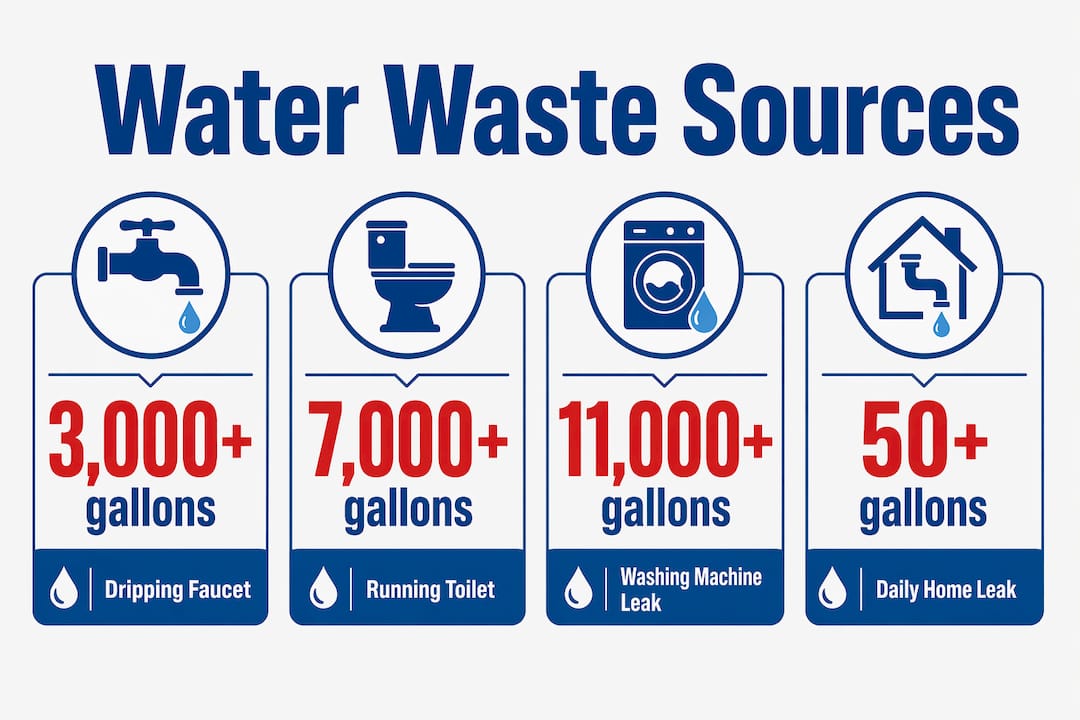
Nine percent of U.S. homes have leaks wasting 50 or more gallons daily. That is roughly one in eleven homes silently draining water and money every single day.
What hidden damage can water leaks cause in your home?
The visible stain on your ceiling is rarely the whole story. Water migrates behind walls and under floors along joists and subfloor panels, traveling far from where the leak actually started. By the time you see discoloration or bubbling paint, the moisture has often been spreading for days or weeks.
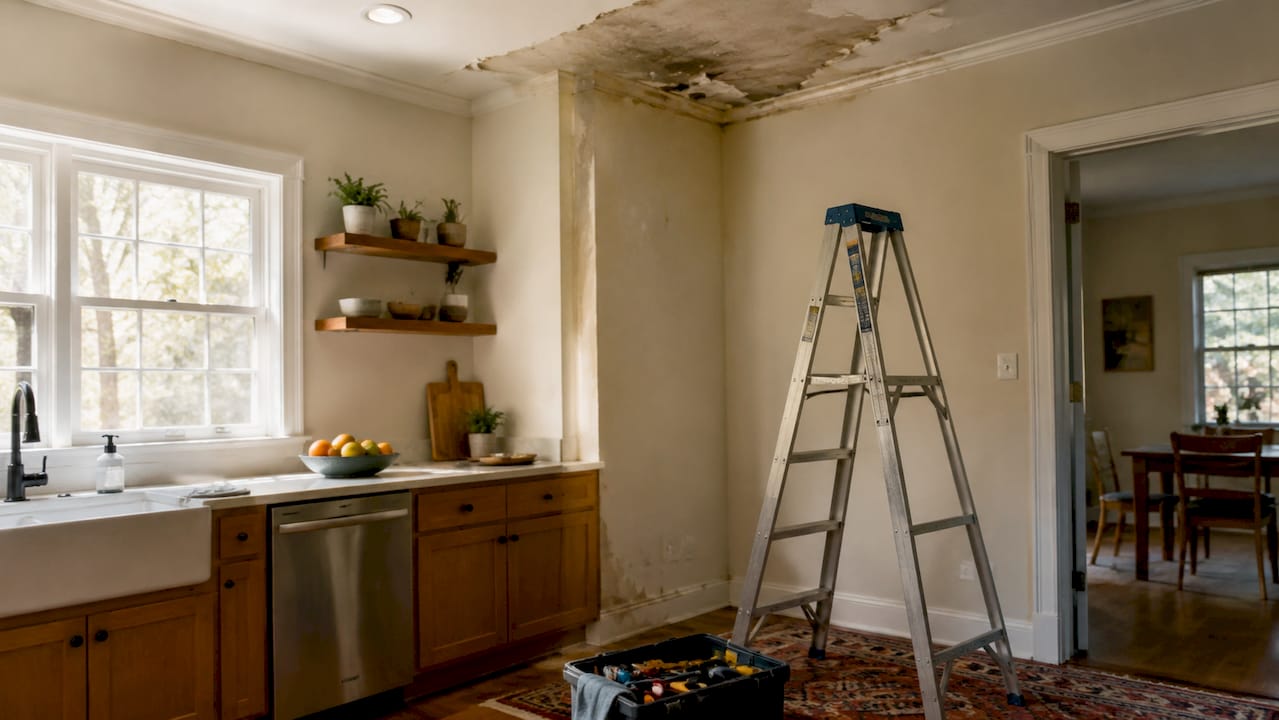
Mold is the most dangerous consequence of that hidden moisture. Water-damaged areas dried within 24–48 hours typically do not grow mold. Wait longer, and mold can begin growing within 3–7 days. That window is short, and most homeowners do not even know a leak exists until well after it has closed.
The structural damage that follows mold is where repair costs explode. A small leak under a bathroom sink can rot the cabinet floor, then the subfloor beneath it, then the floor joists supporting the room. What starts as a $15 supply line repair can become a $5,000 subfloor replacement if left alone for a season.
Here is what to watch for as warning signs of hidden leak damage:
- Soft or spongy spots in floors, especially near bathrooms and kitchens
- Peeling or bubbling paint on walls or ceilings
- A musty odor in rooms with no obvious source
- Warped or buckled hardwood flooring
- Visible mold growth along baseboards or in cabinet corners
- Unexplained spikes in your monthly water bill
“Leak paths are complex. Water travels along joists, behind drywall, and under subfloors far from visible stains, meaning damage extent often exceeds what you can see.” — Gateway Restoration
The financial hit to your property value is severe. Water damage can reduce property values by 20–30% or more, depending on the extent of the damage. Buyers who discover water damage history during inspection routinely deduct full estimated repair costs from their offers, and sometimes walk away entirely. Protecting your home from leaks is protecting your single largest financial asset.
How do insurance policies handle water leak claims?
Homeowners insurance and water leaks have a complicated relationship. Insurance typically covers sudden, accidental water damage but excludes gradual leaks or damage caused by maintenance neglect. A burst pipe that floods your basement overnight is likely covered. A slow drip under your sink that rotted the floor over six months is almost certainly not.
The distinction between “sudden” and “gradual” is where most claims get denied. Insurers look for evidence that you knew about a problem and failed to fix it. Delayed reporting makes that case easier for them to make. The longer you wait after discovering a leak, the higher your risk of a denied claim.
Follow these steps to protect your insurance coverage when a leak occurs:
- Document immediately. Take photos and video of the leak source, the water path, and all visible damage the moment you discover it.
- Stop the water. Shut off the supply valve to the affected fixture or the main shutoff if needed.
- Call your insurer the same day. Report the incident before beginning any cleanup or repairs.
- Preserve evidence. Do not throw away damaged materials like flooring or drywall until an adjuster has inspected them.
- Get a licensed plumber’s written assessment. A professional report documenting the leak source and onset helps establish that the damage was sudden, not gradual.
Pro Tip: Keep a simple home maintenance log. Recording the date you last inspected faucets, toilets, and supply lines gives you documented proof of diligence if an insurer questions whether you neglected a known problem.
For more on how insurance claims and water damage interact, understanding your contractor options before a crisis hits can save you significant money and stress.
What are the best ways to detect and prevent leaks?
Early detection is the fastest way to limit the impact of leaks on property. Most leaks give you signals before they cause serious damage. You just need to know what to look for and where.
Start with a monthly visual check of the fixtures most likely to leak:
- Toilets: Add a few drops of food coloring to the tank. If color appears in the bowl without flushing, the flapper is leaking.
- Faucets and showerheads: Look for drips when the fixture is fully off. Even a slow drip adds up fast.
- Under-sink supply lines: Check the braided hoses connecting your shutoff valves to faucets. Bulging or corrosion means replacement is overdue.
- Appliance connections: Inspect the supply lines behind your dishwasher, refrigerator ice maker, and washing machine every six months.
- Water heater base: A puddle or mineral staining around the base signals a failing tank or pressure relief valve.
Technology makes detection easier than it used to be. The EPA WaterSense program recommends leak detection and flow monitoring devices as a reliable way to catch leaks early and reduce both waste and damage. Smart water monitors like Flo by Moen and Phyn Plus attach to your main line and alert you on your phone when flow patterns suggest a leak. Some can automatically shut off water to your home if they detect a burst pipe.
The comparison below shows the difference between reactive and proactive leak management.
| Approach | Cost | Damage Risk | Water Waste |
|---|---|---|---|
| Reactive (fix after damage) | High (repairs + remediation) | High | High |
| Proactive (routine checks) | Low (parts + time) | Low | Minimal |
| Smart monitoring device | Medium (device cost) | Very low | Minimal |
For a full plumbing maintenance checklist that covers all the key inspection points, Ag-plumbing has put together a practical guide built specifically for Pittsburgh homeowners. Routine maintenance is the single most cost-effective thing you can do to prevent a small leak from becoming a major repair. You can also review common plumbing repair issues to know when a DIY fix is appropriate and when to call a professional.
Key takeaways
Water leaks cause serious, compounding damage to homes when left unaddressed. Fixing them promptly protects your water supply, your property value, and your insurance coverage.
| Point | Details |
|---|---|
| Scale of water waste | The average home wastes over 9,300 gallons per year from leaks. |
| Hidden damage risk | Water migrates behind walls and mold can start within 3–7 days of moisture exposure. |
| Property value impact | Water damage can reduce home values by 20–30% or more. |
| Insurance timing | Delayed reporting of leaks significantly increases the risk of a denied claim. |
| Best prevention strategy | Monthly visual checks combined with smart monitoring devices catch leaks before damage spreads. |
The leak mistake i see homeowners make every time
After years of watching homeowners deal with water damage, the pattern that frustrates me most is the “wait and see” approach. A homeowner notices a small stain on the ceiling or a slightly higher water bill and decides to monitor it for a few weeks before calling anyone. That decision almost always makes things worse.
The 24–48 hour drying window is real. Once you miss it, you are not just dealing with a leak anymore. You are dealing with a mold remediation project. I have seen a $200 toilet flapper repair turn into a $4,000 bathroom floor replacement because someone waited two months to act. The leak itself was trivial. The delay was the disaster.
The other mistake I see constantly is assuming that because nothing looks wet, nothing is wet. Water does not announce itself. It travels silently along structural members and soaks into materials that look perfectly fine from the surface. By the time a floor feels soft underfoot or a wall shows a stain, the damage behind it is already significant.
My honest advice: treat a suspected leak like a small fire. You would not “monitor” a small fire for a few weeks. You would act immediately. Leaks deserve the same urgency. Check your fixtures monthly, invest in a flow monitoring device if your home is older, and call a licensed plumber the moment something seems off. The cost of prevention is always a fraction of the cost of repair.
— Maayan
How Ag-plumbing helps pittsburgh homeowners stop leaks early
A leak found early costs a fraction of what it costs after damage sets in. Ag-plumbing has served Pittsburgh, PA homeowners for 30 years, and our team knows exactly where leaks hide and how to stop them before they become structural problems.
Whether you have a dripping faucet, a suspicious water bill, or a stain you cannot explain, our licensed plumbers provide thorough leak detection and repair across Pittsburgh and the surrounding areas. We use current detection methods to find leaks behind walls and under floors without unnecessary demolition. Visit our Pittsburgh plumbing services page or go directly to our plumbing repair services to schedule an inspection. Protecting your home starts with one call.
FAQ
How much water does a typical household leak waste per year?
The average U.S. household wastes more than 9,300 gallons of water annually from leaks. Across all American homes, that adds up to nearly 1 trillion gallons per year.
Can a small leak really cause mold in my home?
Yes. Mold can begin growing within 3–7 days of moisture exposure. Areas dried within 24–48 hours typically do not develop mold, which is why fast action after any leak is critical.
Will my homeowners insurance cover water leak damage?
Insurance covers sudden, accidental water damage but typically excludes gradual leaks or damage from maintenance neglect. Delayed reporting increases the risk of a denied claim significantly.
How do i know if i have a hidden leak?
Signs include unexplained increases in your water bill, soft spots in floors, musty odors, peeling paint, and visible mold near baseboards. A food coloring test in your toilet tank also reveals silent flapper leaks.
What is the fastest way to find and fix leaks in my home?
Start with a monthly visual inspection of faucets, toilets, supply lines, and appliance connections. Flow monitoring devices like Flo by Moen or Phyn Plus provide continuous detection. For leaks you cannot locate yourself, a licensed plumber can use professional detection equipment to find the source without guesswork.
Recommended
- Why Fix Leaks Early: a Pittsburgh Homeowner’s Guide – AG-Plumbing
- Leak detection in Pittsburgh: prevent costly damage – AG-Plumbing
- Common Plumbing Repair Issues and How to Fix Them – AG-Plumbing
- Cost-saving plumbing tips for Pittsburgh homeowners – AG-Plumbing
