
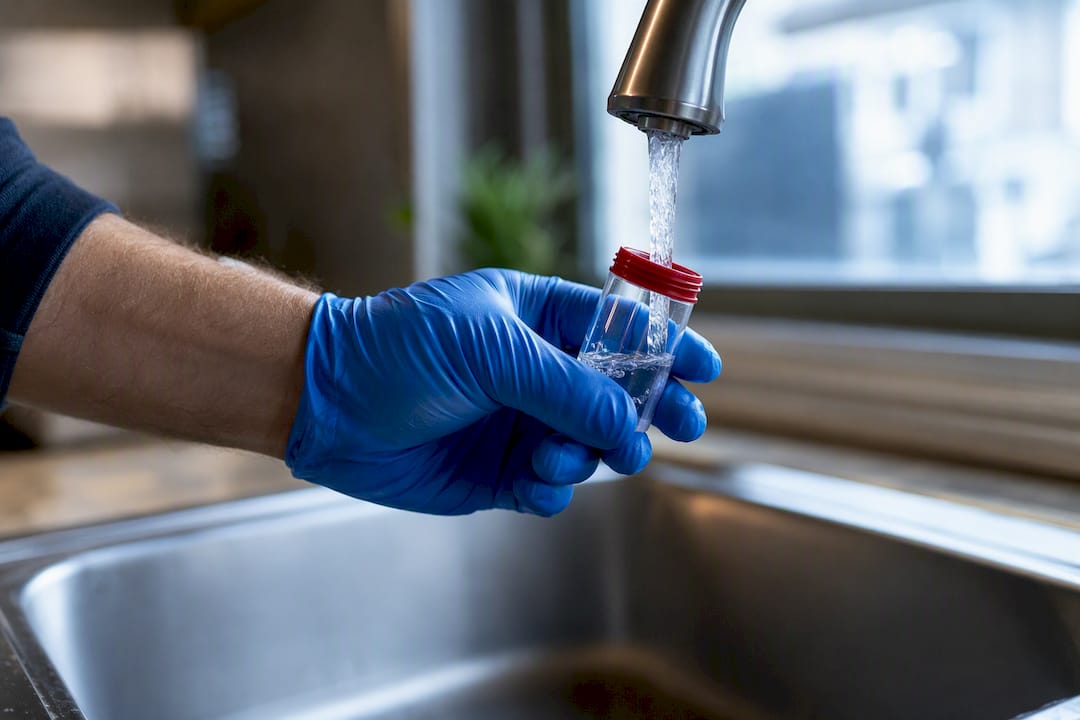
Blue-green stains on your fixtures almost always mean dissolved copper is leaching out of your pipes and fittings, and it can show up alongside lead in the same corrosive water. Treat any fresh staining as a signal to test, not just scrub. Collect a first-draw water sample and get it checked for pH, copper, and lead at a state-certified lab before you buy any equipment.
TL;DR:
- Copper leaching due to low pH water is most common in new plumbing systems, and tends to decrease once protective scale forms inside pipes.
- Testing a first-draw water sample after six or more hours of stagnation is essential for accurate diagnosis of copper and lead leaching, rather than relying on flushed samples.
- Removing stains temporarily with acidic cleaners does not address the underlying cause, which requires correcting water chemistry or replacing corroded fittings.
- System-wide treatment options such as pH neutralizers or orthophosphate coatings are more effective than individual fixture cleaning for stopping stain recurrence.
- Homeowners should confirm treatment success with follow-up lab tests after implementing any water chemistry fix, and call a professional if lab results are near or above EPA thresholds.
Table of Contents
- What Causes Blue-Green Stains in the First Place?
- How Do I Find Out What’s Actually Causing It?
- How to Remove Blue-Green Stains From Fixtures
- How Do You Stop Blue-Green Stains From Coming Back?
- When Should You Call a Plumber Instead of Handling It Yourself?
- Ag-plumbing’s Field Checklist for Staining Calls
- Common Misconceptions About Blue-Green Stains
- Are Blue-Green Stains a Health Risk?
- Preventative Maintenance to Avoid Future Staining
- A Test-First, No-Guesswork Approach to Staining
- Get Your Water and Pipes Checked by Ag-plumbing
- Sources
- FAQ
What Causes Blue-Green Stains in the First Place?
The chemistry behind blue-green stains has a name: cuprosolvency. It describes water aggressive enough to dissolve copper straight out of your pipes and brass fittings, and once that water evaporates on a sink or tub, it leaves behind the telltale blue-green copper corrosion residue. Low pH is the main driver. Soft, acidic water below roughly 6.5 pH strips copper ions from pipe walls far faster than neutral or slightly alkaline water does.
Several factors make cuprosolvency worse:
- Soft water with low alkalinity and little buffering capacity
- High dissolved oxygen or recent chlorination changes from the utility
- Elevated chloride levels, often from softener discharge or road salt runoff
- Water sitting still in pipes overnight or during vacations
- Hot water, which dissolves copper faster than cold
- Brand-new copper plumbing, before protective mineral scale builds up
New copper systems are a known hot spot for this. Research on residential corrosion cases found that cuprosolvency runs highest in newly installed plumbing and tends to ease once a protective scale forms inside the pipe. Less common causes include stray electrical current (electrolysis from poor grounding) and, rarely, microbial activity in stagnant lines. Those cases look similar on the surface but need different fixes than a straightforward acidic-water problem.
How Do I Find Out What’s Actually Causing It?
Diagnosis starts with the water sitting in your pipes right now, not water that’s been running for a minute. A first-draw sample, pulled straight from the tap after the water has sat still for six or more hours, captures the copper that leached during that stagnation. A flushed sample taken after running the tap for a minute or two tells you almost nothing about pipe leaching, since it mostly reflects what’s coming from the main line.
Here’s a simple diagnostic sequence to run before calling anyone:
- Check whether staining shows up at one fixture or several. Isolated staining often points to a single failing fitting; widespread staining points to system-wide water chemistry.
- Compare hot and cold water separately, since hot water dissolves copper faster and often stains first.
- Pull the aerator off the faucet and look for greenish grit or debris, which can be a localized fitting issue rather than a whole-house problem.
- Collect a true first-draw sample using the protocol Texas A&M extension outlines: kitchen tap, 6+ hours of stagnation, no filters bypassed.
- Send that sample to a state-certified lab and request pH, copper, lead, alkalinity, and chloride results.
Compare your copper result against the EPA action level of 1.3 mg/L and the secondary standard of 1.0 mg/L. Anything near or above those numbers means it’s time to act, not just clean.
Pro Tip: Photograph every stain with a coin or ruler next to it before you clean anything. If the color returns in the same spot within a week, that’s strong evidence the source is still active, not a one-time event.
How to Remove Blue-Green Stains From Fixtures
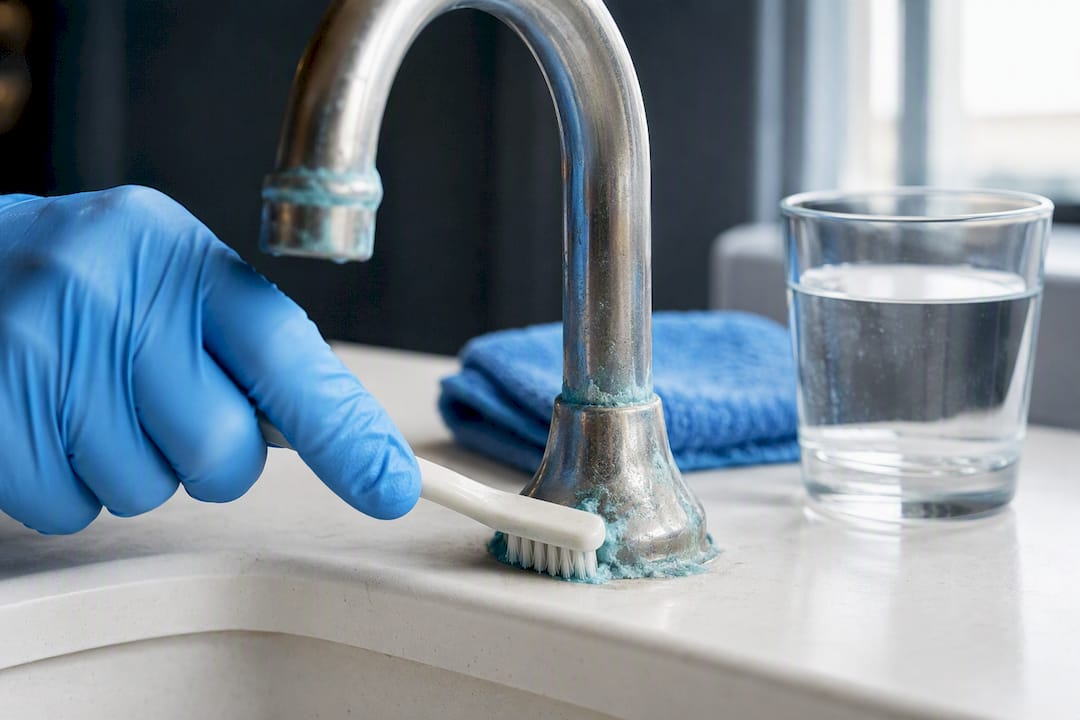
Removing the visible stain and stopping the cause are two different jobs. Cleaning gets your fixtures looking normal again, but if the underlying water chemistry hasn’t changed, the greenish blue stains simply come back. Cleaning methods using vinegar or diluted citric acid work well on deposits, but they’re cosmetic fixes if the pipes keep leaching copper.
Match your cleaning method to the material:
- Porcelain and ceramic: Use a nonabrasive acidic cleaner or a vinegar-and-baking-soda paste. Test a hidden spot first, since some glazes etch under repeated acid exposure.
- Fiberglass or gelcoat tubs and showers: Stick to gentle, non-abrasive cleaners. Scouring pads and gritty powders dull the gelcoat finish permanently and make future staining stick harder.
- Chrome and stainless fixtures: Wipe deposits with white vinegar on a soft cloth or brush, then rinse thoroughly and dry. Left-on vinegar can pit chrome plating over time.
- Hair and fabric: Copper-heavy water can tint light-colored hair or fabric a faint greenish tone. Avoid mixing bleach with acidic cleaners near these stains, since that combination produces harmful fumes.
Pro Tip: Skip anything labeled “heavy-duty” or abrasive on fiberglass. A dulled gelcoat surface actually traps mineral deposits faster than a smooth one, so you end up cleaning more often, not less.
How Do You Stop Blue-Green Stains From Coming Back?
Stopping the stains for good means treating the water, the plumbing, or both. Scrubbing a single faucet rarely solves anything, because cuprosolvency is a system-wide chemistry problem, not a defect in one fixture.
Whole-house options generally fall into two categories:
- pH and alkalinity neutralizers. Calcite or soda ash feed systems raise pH and reduce the water’s ability to dissolve copper. Choosing between them depends on your water’s existing alkalinity and dissolved carbon content.
- Orthophosphate corrosion control. This coats pipe interiors with a protective film, though it typically requires coordination with a water treatment provider and ongoing maintenance to stay effective.
- Point-of-use reverse osmosis. RO under the kitchen sink removes copper and lead from drinking and cooking water, but it does nothing to protect the pipes themselves from corroding.
On the plumbing side, check for corroded fittings, missing or failed dielectric unions where copper meets other metals, and any grounding issue that could be causing stray-current electrolysis. Persistent pinhole leaks or metallic taste that won’t clear after flushing are signs the pipe itself may need replacing, not just the water chemistry.
Whatever you install, retest afterward. Field case reviews of household corrosion fixes found that treatment success has to be confirmed with follow-up lab testing, because a neutralizer that’s undersized or poorly maintained can leave copper levels elevated even after installation.
When Should You Call a Plumber Instead of Handling It Yourself?
Some situations call for a professional the moment you spot them, rather than after weeks of DIY cleaning. Call one if lab results show copper or lead near EPA thresholds, if you notice a metallic taste that persists after flushing, if you’ve found even one pinhole leak, or if staining is spreading across multiple fixtures at once.
When you do call, ask these questions before any work starts:
- Which lab do you use, and is it state-certified for copper and lead analysis?
- Have you handled cuprosolvency cases before, and what treatment did you recommend for similar water chemistry?
- What’s your sample-handling procedure, and can I get a copy of the lab report?
- What’s the full cost estimate, including a written retest schedule after treatment?
A qualified plumber should hand you documented sample results, a specific treatment plan tied to those numbers, and a follow-up retest date, not just a repair invoice.
Ag-plumbing’s Field Checklist for Staining Calls
Before any service visit, inspect the aerator, pull a first-draw sample, photograph the stains, and note whether hot or cold water is worse. Mention any recent plumbing work. We pair targeted repairs with water chemistry treatments rather than guessing, and route samples through a state-certified lab for confirmed results.
Common Misconceptions About Blue-Green Stains
The biggest myth is that blue-green stains are dirt or mold that a stronger cleaner will fix permanently. They’re mineral deposits from dissolved copper, and no amount of scrubbing changes the water chemistry causing them to form. A related myth: that a clean municipal water report means your home is safe. Utility monitoring under the Lead and Copper Rule relies on a 90th-percentile sampling trigger across the system, which can miss homes with new copper plumbing entirely, and it doesn’t cover private wells at all.
Another common assumption is that replacing the stained fixture solves the problem. If the water itself is corrosive, the replacement fixture stains again, often within months. Some homeowners also assume copper staining is purely cosmetic and unrelated to lead risk. In reality, the same acidic, low-pH conditions that dissolve copper from pipes can dissolve lead from old solder joints and brass fittings, which is why testing for both metals together is the standard recommendation, not an extra precaution.
Finally, people often think a whole-house filter pitcher handles the issue. Standard carbon filter pitchers aren’t designed to remove dissolved copper or lead at meaningful rates. Reverse osmosis systems do a far better job for drinking water, but even RO leaves the underlying pipe corrosion untouched.
Are Blue-Green Stains a Health Risk?
Copper at low levels isn’t unusual in tap water, but elevated exposure is a real concern, especially for infants and people with certain liver conditions. The EPA sets a copper action level of 1.3 mg/L specifically because sustained exposure above that threshold is linked to gastrointestinal symptoms in sensitive individuals.
The more serious concern hiding behind blue-green stains is what else might be leaching alongside the copper. The same acidic water conditions that produce visible staining can pull lead out of old solder joints, and lead exposure carries no safe threshold at all, particularly for children and pregnant women. This is the core reason staining should never be treated as a cosmetic annoyance. A stain you can see is often accompanying a contaminant you can’t.
If you notice a metallic taste, digestive upset after drinking tap water, or staining that keeps returning despite cleaning, don’t wait for a scheduled water test cycle from your utility. Pull your own first-draw sample and send it to a certified lab. If your home has lead solder or older service lines, pairing that copper test with a dedicated lead check, and reviewing how to identify lead pipes in your own plumbing, closes a gap that municipal monitoring alone can leave open.
Preventative Maintenance to Avoid Future Staining
Staining tends to return in homes that treat it as a one-time cleanup instead of an ongoing water chemistry issue. A few habits keep it from coming back.
Test your water annually, especially if your home has copper plumbing installed within the last five to ten years, since new systems are the most prone to cuprosolvency before protective pipe scale develops. Run your taps for a few seconds each morning if water sits overnight, and avoid letting fixtures go unused for extended stretches, since stagnation is one of the biggest accelerants of copper leaching.
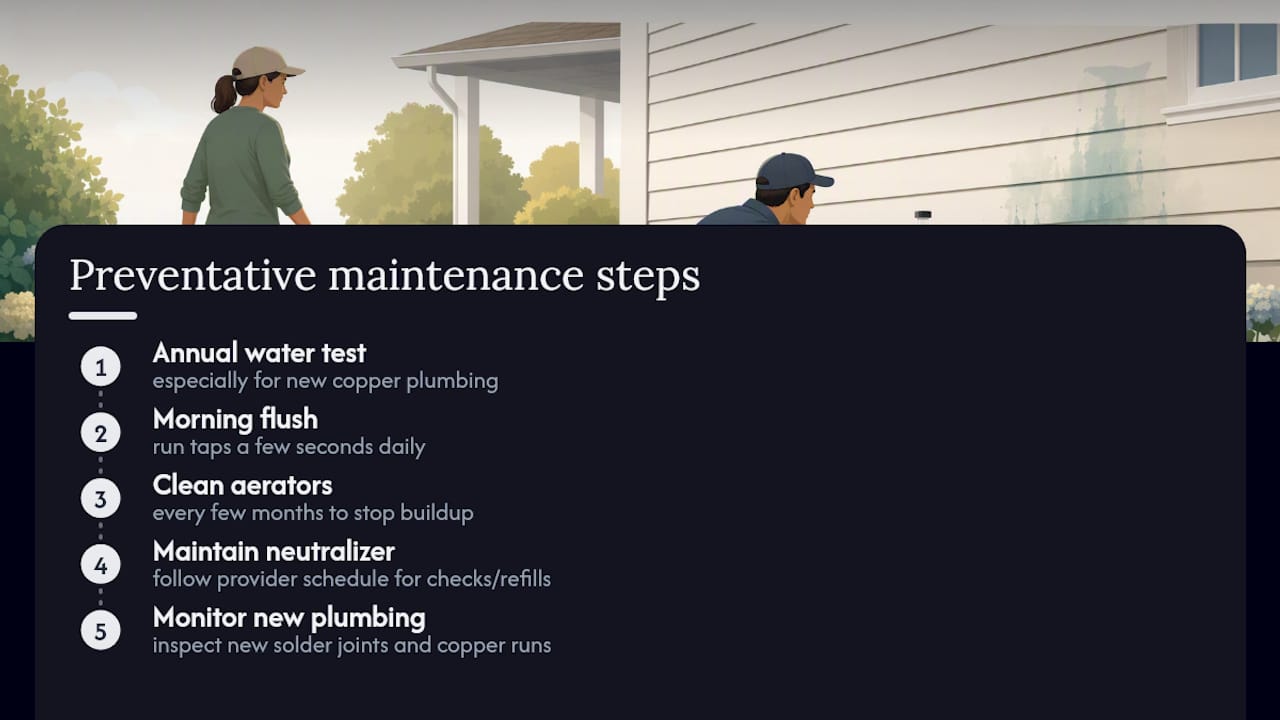
Clean aerators every few months to catch early mineral buildup before it hardens. If you’ve installed a neutralizer or corrosion-control system, follow the maintenance schedule your provider gives you. These systems lose effectiveness without periodic checks and refills. Keep an eye on any recent plumbing work, since new solder joints and fresh copper runs are exactly where corrosion starts first. If you’re weighing pipe materials for a renovation or replacement, understanding what causes pipe corrosion and how to stop it up front saves you from repeating the same staining problem in a different fixture down the line.
A Test-First, No-Guesswork Approach to Staining
Most staining “fixes” fail because homeowners buy a treatment system before they know what’s actually wrong. A neutralizer solves low pH. It does nothing for stray-current electrolysis or a single corroded fitting. Matching the fix to the lab result, not the other way around, is the difference between solving it once and solving it every six months.
Lean on state-certified labs and licensed plumbers for the diagnostic work. Guessing costs more than testing ever does.
— Maayan
Get Your Water and Pipes Checked by Ag-plumbing
Cleaning the stain off your sink doesn’t fix what’s happening inside your walls, and buying a treatment system before testing your water is how homeowners waste money on the wrong fix. Ag-plumbing runs the diagnostic work directly: on-site inspection, coordination with a state-certified lab for your copper and lead results, and a treatment plan built around what your water actually shows, whether that’s a neutralizer, an orthophosphate system, or replacing a corroded fitting.

After installation, we retest to confirm the numbers actually dropped, so you’re not left wondering if the fix worked. If pinhole leaks or corroded fittings are part of the picture, our plumbing repair services cover the physical side of the fix, not just the water chemistry. Serving Pittsburgh, PA and the surrounding area, Ag-plumbing has spent 30 years diagnosing exactly this kind of problem before recommending a solution. Reach out through Ag-plumbing to schedule an on-site inspection and get a real answer instead of a guess.
This article is general information, not a substitute for advice from a qualified doctor. Consult a qualified healthcare professional about your own circumstances before acting on anything here.
Sources
- WQA — Staining and discoloration
- Kansas Department of Health — Lead & Copper Rule page (EPA LCR guidance)
- Minnesota Department of Health — Copper in drinking water guidance
- Mass
- Guidance for residents addressing copper problems in drinking water: Opportunities and challenges (ACS EST Water, 2024)
FAQ
What Causes Blue-Green Water Stains?
Blue-green water stains form when corrosive, low-pH water dissolves copper out of pipes or brass fittings, and that dissolved copper leaves a colored residue as the water evaporates on your fixtures.
What Makes My White Sink and Bathtub Get a Blue-Greenish Stain?
Copper-laced water sitting on porcelain, fiberglass, or acrylic surfaces leaves behind a copper oxide residue as it dries, which is why sinks and tubs show the stain more visibly than colored surfaces.
What Causes Blue and Green Stains in My Shower?
Showerheads and fittings see constant water contact and frequent stagnation between uses, both of which accelerate copper leaching, so shower staining often shows up before other fixtures in the same house.
What Removes Blue-Green Copper Stains?
Nonabrasive acidic cleaners like diluted vinegar or citric acid remove existing copper deposits from porcelain, chrome, and fiberglass, but the stain returns unless the water chemistry causing it gets tested and treated.
Should I Worry if I See Blue-Green Stains Only Occasionally?
Occasional staining still means copper is leaching intermittently, often tied to water sitting still overnight, and it’s worth a first-draw water test even if the stains aren’t constant.
Recommended
- How to clean water lines: Pittsburgh homeowner guide
- Examples of Green Plumbing Solutions for Homeowners
- Why Test for Lead Pipes: A Pittsburgh Homeowner’s Guide
