
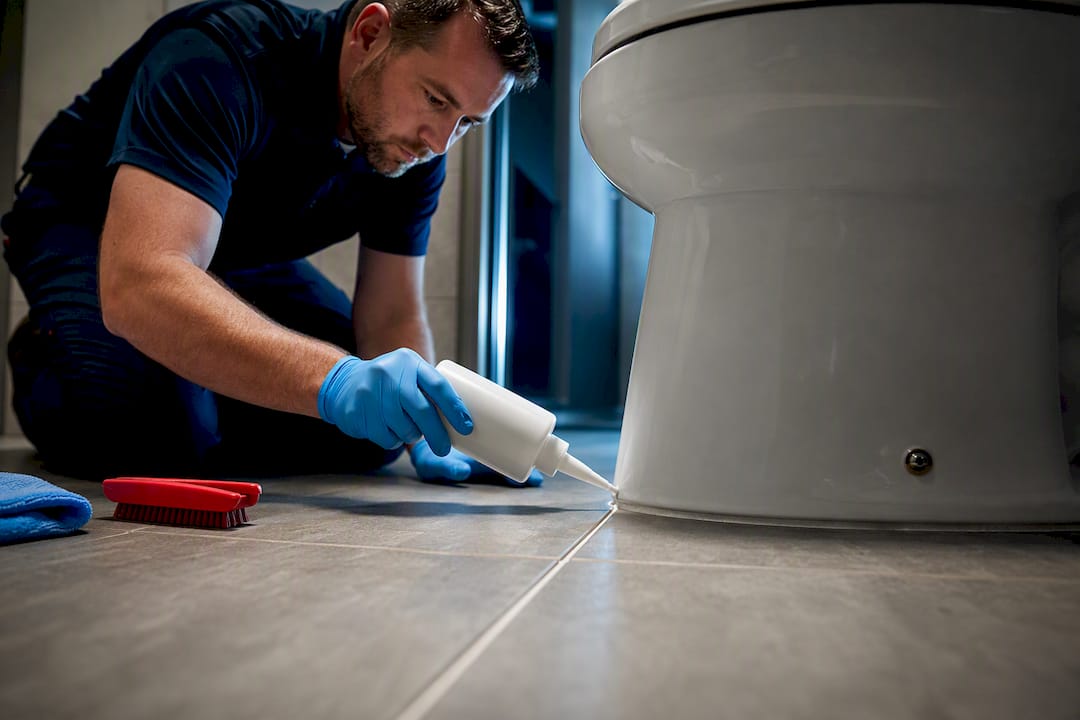
The fastest reliable fix for commercial restroom odor is removing the source using enzymatic cleaners on uric acid and biofilm, hydrating floor drains regularly, and deep-cleaning grout and hidden fixture zones. Air treatment comes second, after the source is gone. Fragrance sprays alone never solve the problem. They just delay the next complaint.
TL;DR:
- Enzymatic cleaners and grout scrubbing targeted at urine buildup significantly reduce restroom odors, especially on grout lines, fixtures, and drain areas.
- Hydrating floor drains regularly prevents sewer gases from escaping, but cracked traps or damaged seals require professional plumbing repairs.
- Surface odors respond quickly to enzyme treatments, but persistent sewer-like smells indicate plumbing failures rather than surface contamination.
- Routine inspections and deep cleaning schedules that focus on problem areas prevent recurring complaints more effectively than relying on air fresheners.
- Odor issues caused by plumbing defects demand professional diagnosis and repair beyond cleaning, especially if odors return within hours or are concentrated near specific fixtures.
Table of Contents
- Quick Checklist: High-Impact Fixes for This Shift
- Where Restroom Odors Actually Come From
- Products and Methods That Remove Odor Instead of Hiding It
- Building a Restroom Odor Control Program That Actually Holds
- When Cleaning Isn’t Enough: Signs You Need a Plumber
- What the Field Study and Practitioners Actually Found
- Health and Safety Standards Tied to Restroom Odor
- Common Mistakes That Keep Odor Coming Back
- Seasonal and Environmental Factors Behind Persistent Odor
- Odor Neutralizers vs. Enzymatic Cleaners: What Actually Works
- What Facility Teams Get Wrong About Odor Control
- When Cleaning Hits Its Limit, Call a Plumber
- Sources
- FAQ
Quick Checklist: High-Impact Fixes for This Shift
If a restroom smells bad right now, work in this order. Skipping steps to spray something floral is how the smell comes back by lunch.
- Apply an enzyme cleaner to grout lines, base of toilets, and urinal floors. Bio-enzymatic formulas break down the uric acid and biofilm that fragrance sprays only cover up, per industry guidance on enzyme cleaners.
- Let it sit. Most enzyme products need 5 to 10 minutes of dwell time on the surface before agitation. Wiping it off early wastes the product.
- Scrub with a stiff grout brush, then rinse. Mopping alone pushes contaminants deeper into porous grout instead of lifting them out.
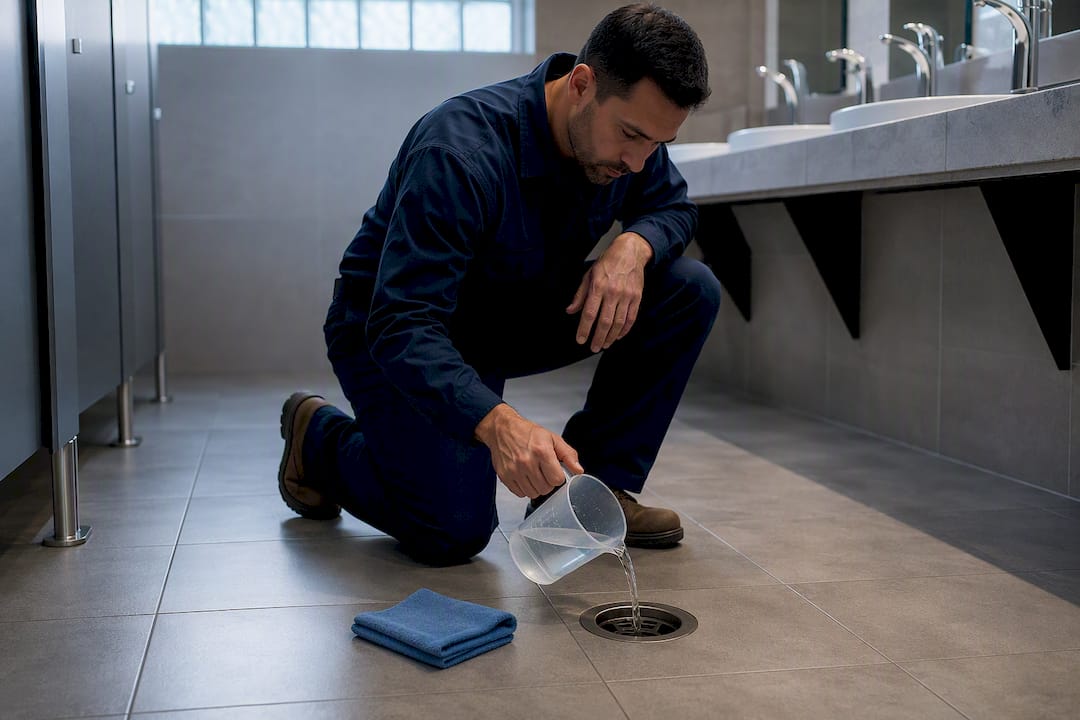
- Pour a gallon of water into every floor drain, especially ones near low-traffic stalls, to rehydrate the P-trap and stop sewer gas from creeping up.
- Swap mop heads, replace worn mats, empty trash, and wipe down soap and paper dispensers. These small items hold odor longer than most staff members expect.
- Only after those steps, use a light air treatment like an odor-neutralizing spray or a carbon-filter unit if the room still needs a boost.
Pro Tip: Keep a dedicated mop head just for restrooms. A mop that also cleans hallways or break rooms spreads bacteria and moisture into grout lines everywhere it goes.
Where Restroom Odors Actually Come From
An 18-month field study on commercial restroom odor found the smell almost always traces back to four sources: uric acid buildup on floors and walls, urine splashes on partitions, urine absorbed into grout lines, and maintenance routines that clean the surface but never touch those reservoirs, according to the case study on public restroom odor control.
Finding the actual source takes a few minutes, not a chemistry degree. Try this:
- Walk the room at nose level near the floor, where most odor pools.
- Lift floor-drain covers and smell directly at the trap.
- Check behind and underneath toilets and urinals, where fixtures block routine mop access.
- Run a hand along grout lines near urinals. Sticky or slightly stained grout is almost always absorbing urine.
Surface odors respond quickly to enzyme treatment and grout scrubbing. Plumbing-origin odors, the sour, sewer-like smell that returns minutes after cleaning, usually point to a dried trap or a compromised seal instead of a dirty surface. That distinction decides whether your team grabs a brush or picks up the phone.
Products and Methods That Remove Odor Instead of Hiding It
Enzyme and bio-enzymatic cleaners work by breaking down organic material, uric acid, biofilm, and residue, rather than covering the smell with fragrance. That mechanism makes them the go-to choice for grout lines, urinal floors, and the base of toilets, where masking sprays simply cannot reach the source.
Drain and P-trap maintenance matters just as much as surface cleaning. A dry trap loses its water seal and lets sewer gas rise straight into the room. Rehydrate low-traffic floor drains daily to weekly depending on foot traffic, and consider an enzyme-based drain product for drains that collect hair, grease, or soap scum. Hydration alone won’t fix a cracked or corroded trap, though; that’s a mechanical problem, not a cleaning one.
Grout needs mechanical agitation, not just liquid contact. A stiff nylon brush combined with periodic enzyme treatment lifts embedded urine that a flat mop simply spreads around, since mopping alone can drive diluted urine deeper into porous grout.
Ventilation deserves a regular look too. Check that exhaust fans actually pull air and that filters aren’t clogged with dust, since even a spotless restroom smells stale without airflow.
- Masking sprays often make things worse. A strong floral scent layered over uric acid reads as “dirty and trying to hide it” to most users.
- Air scrubbers or activated carbon filters help in high-traffic restrooms once the source is under control, not as a substitute for it.
Pro Tip: Match the tool to the source. A grout brush belongs on grout, an enzyme spray belongs on urine residue, and a mop belongs on general floor cleaning. Grabbing whatever’s closest is how odor problems become chronic.
Building a Restroom Odor Control Program That Actually Holds
A one-time deep clean fixes today’s complaint. A written routine stops next month’s. Effective odor removal runs on four repeated procedures: targeted products, source location and elimination, cleaning frequency matched to traffic, and equipment that’s actually clean itself, based on guidance on removing rather than masking odors.
- Daily: enzyme wipe-down of grout and fixture bases, trash removal, dispenser check, quick floor-drain pour.
- Weekly: grout brush agitation, deep mop with enzyme solution, mat rotation, exhaust fan visual check.
- Monthly: fixture-adjacent deep clean (behind and under toilets/urinals), floor-drain trap inspection, filter cleaning on exhaust units.
Stock dilution-controlled dispensing systems so staff aren’t eyeballing chemical ratios, and train teams to respect dwell times instead of wiping product off in thirty seconds.
Track performance with a simple KPI set: a complaint log by location, periodic photo inspections of trouble spots, spot-check odor walks, and a corrective action form when the same stall or drain shows up twice in a month. Teams that log complaint location and frequency catch recurring failures faster than teams relying on memory, a point echoed in operational guidance on commercial odor control. Training should hammer one lesson above all others: match the chemical and tool to the specific source instead of grabbing whatever’s within reach.
When Cleaning Isn’t Enough: Signs You Need a Plumber
Some odors are plumbing problems wearing a cleaning-problem disguise. Watch for these red flags:
- A persistent sewer-like or sour smell that returns within minutes of cleaning, even right after a deep clean.
- Odor concentrated near a specific drain or fixture rather than spread evenly across the room.
- Any hint of a gas-like or methane smell, which warrants immediate professional attention.
- Wet or stained flooring around the base of a toilet or urinal, suggesting a leaking wax ring or seal.
These symptoms typically trace back to a dried P-trap, a failed wax ring, or a sewer line issue rather than dirty grout. Before calling, document the exact fixture or drain location, how long the smell has persisted, whether it returns after cleaning, and any visible moisture. That detail lets a technician diagnose the problem faster instead of starting from scratch.
What the Field Study and Practitioners Actually Found
The 18-month field study behind much of today’s odor-control guidance mapped commercial restroom smell back to four repeatable causes: uric acid on floors and walls, splashes on partitions, urine locked into grout, and cleaning routines that never target those spots. Practitioners echo the same pattern in the field: the worst odor reservoirs sit in the places routine mopping skips entirely, behind toilet bases, under urinals, and inside grout lines that look clean on the surface.
That gap between “looks clean” and “is clean” is where recurring odor complaints live. Crews that add scheduled trap hydration and periodic fixture-adjacent deep cleaning to their routine consistently report fewer repeat complaints than crews relying on daily surface wiping alone.
Health and Safety Standards Tied to Restroom Odor
Restroom odor isn’t purely a comfort issue. The Occupational Safety and Health Administration requires employers to provide sanitary restroom facilities under its general sanitation standard, and a restroom that reeks of sewer gas or ammonia can signal ventilation or plumbing failures that cross into indoor air quality territory.
Strong, persistent sewer odor often means methane or hydrogen sulfide is escaping from a dry trap or damaged line. In low concentrations these gases are unpleasant rather than dangerous, but they’re worth taking seriously since sewer gas exposure in enclosed, poorly ventilated spaces can cause headaches or nausea. Any restroom where the smell is sharp, sulfur-like, or paired with a hissing or gurgling drain deserves a same-day look rather than another round of air freshener.
Green-cleaning frameworks like LEED and Green Seal GS-42 reinforce a simpler standard: proper ventilation and correctly executed cleaning protocols should make heavy fragrance use unnecessary, according to cleaning industry coverage of odor removal. If a facility depends on constant fragrance dispensing to keep a restroom tolerable, that’s usually a sign the underlying source problem was never actually solved.
Common Mistakes That Keep Odor Coming Back
Most recurring odor complaints trace to a handful of repeated habits rather than one big failure.
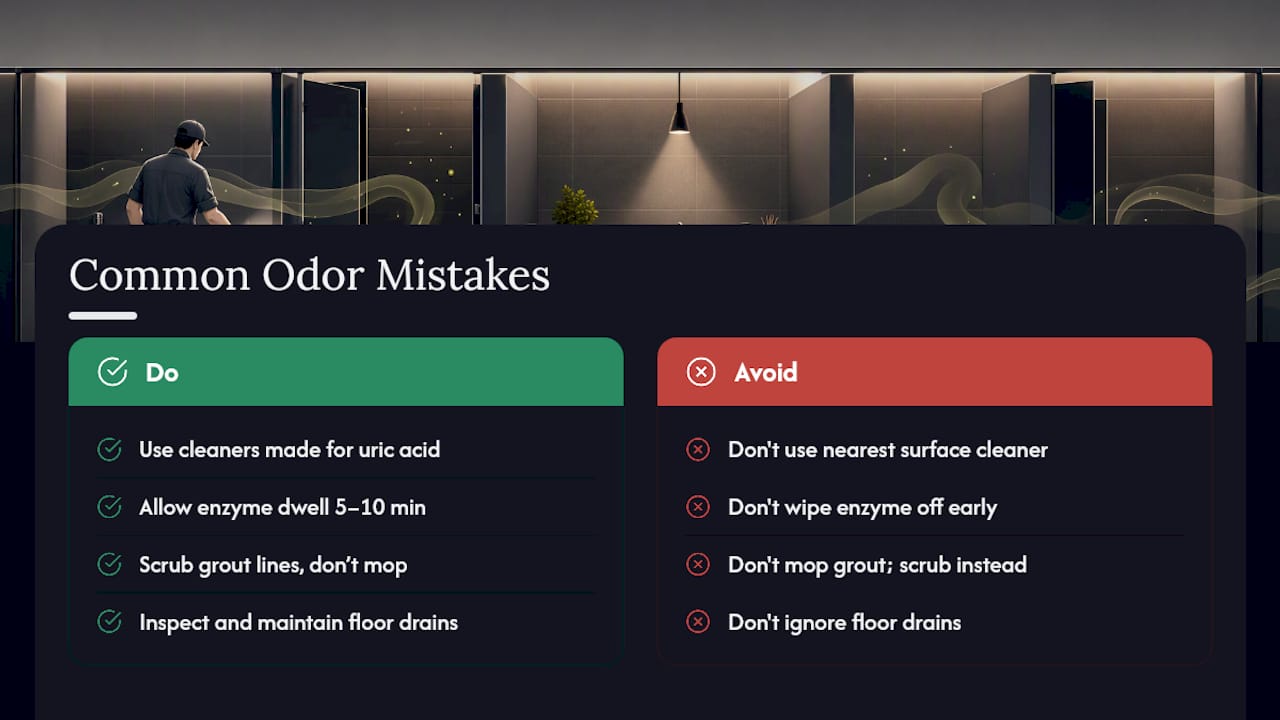
The biggest one: reaching for whatever cleaning product is closest instead of the one built for the job. A general-purpose surface cleaner won’t touch uric acid embedded in grout, no matter how much of it gets used.
Second: wiping enzyme cleaner off too soon. These products need real dwell time, often 5 to 10 minutes, to break down organic residue. Rushing the process wastes the chemical and leaves the odor source intact.
Third: mopping instead of scrubbing grout. A flat mop head spreads diluted urine into porous grout lines rather than lifting it out, which is exactly backward from the intended result.
Fourth: ignoring floor drains until they’re actively smelling. By the time a dry trap announces itself with sewer gas, the fix already requires more than a quick pour of water.
Fifth: treating air freshener as a solution rather than a finishing touch. Fragrance over an unresolved source usually reads to visitors as “dirty and covered up,” which does more reputational damage than an honest unmasked odor would.
Sixth: inconsistent frequency. A deep-clean schedule that gets skipped during busy weeks lets small buildup become embedded buildup, and embedded buildup takes far more labor to reverse.
Seasonal and Environmental Factors Behind Persistent Odor
Odor doesn’t behave the same way year round. Heat and humidity accelerate bacterial growth in uric acid and biofilm, which means summer months often bring stronger, faster-developing smells even with the same cleaning schedule that worked fine in cooler weather.
Winter brings a different problem: closed windows and reduced natural ventilation trap odor indoors instead of letting it dissipate. Heating systems that dry out the air can also make ammonia-like smells more noticeable, since dry air carries certain odor compounds more sharply than humid air.
High-traffic seasons, holiday retail rushes, event venues during peak season, stadiums on game day, compress odor buildup into a shorter window. A restroom that handles daily cleaning fine during a slow month can fall behind fast when foot traffic triples. Facilities in humid climates or buildings without strong exhaust ventilation need tighter cleaning frequency almost year round, not just during obvious peak seasons.
The practical response is adjusting frequency to conditions rather than running one fixed schedule all year. Bump up grout scrubbing and drain hydration during hot, humid stretches and during traffic surges, and double-check exhaust fan performance heading into closed-window winter months.
Odor Neutralizers vs. Enzymatic Cleaners: What Actually Works
Odor neutralizers, the sprays and gel products marketed to “eliminate” smell on contact, mostly work by binding or masking odor molecules in the air. They can make a room smell better for an hour or two. They do nothing to the uric acid sitting in the grout that’s producing the smell in the first place.
Enzyme cleaners work differently and more permanently. They break down the organic compounds causing the odor rather than covering the smell in the air, which is why industry guidance consistently recommends enzyme-based products over fragranced sprays for lasting control.
That doesn’t make neutralizers useless. Air scrubbers, carbon filters, and neutralizing sprays serve a real purpose as a finishing step after source removal, especially in high-traffic restrooms where a lingering trace of odor persists between cleanings. Used as a replacement for source cleaning, though, they create a cycle: spray, smell returns, spray again, smell returns faster. Used as a supplement after enzyme treatment and drain maintenance, they extend the clean feeling between deep-clean cycles.
What Facility Teams Get Wrong About Odor Control
Most odor complaints get treated as a supply problem: buy a stronger spray, order a different air freshener, try a new fragrance. That’s backward. The field study data is clear that four specific physical locations, grout, trap seals, hidden fixture zones, and splash areas, drive nearly all persistent commercial restroom odor. Spraying harder doesn’t touch any of them.
The conventional advice to “clean more often” also misses the point if the cleaning method never changes. A crew that mops the same way five times a day is still mopping urine into grout five times a day. Frequency without technique just repeats the mistake faster.
What actually moves the needle is boring and specific: enzyme contact time, grout agitation, and drain hydration on a fixed schedule. None of that requires new equipment or a bigger budget, just a different priority order. If your program still smells like a problem after switching to enzyme cleaners and hydrating drains, that’s usually the signal the issue moved from cleaning territory into plumbing territory, and no amount of scrubbing fixes a cracked trap or a failed seal.
— Maayan
When Cleaning Hits Its Limit, Call a Plumber
Enzyme cleaners and disciplined scrubbing solve most commercial restroom odor problems. They can’t fix a dried-out trap that’s lost its water seal, a wax ring that’s failed under a toilet, or a partial blockage building up inside a drain line. Those are mechanical failures, and no amount of grout brushing changes that.
That’s where Ag-plumbing fits into a facility’s odor program, not as a replacement for daily cleaning, but as the resource for the plumbing issues cleaning can’t touch. Drain cleaning and hydro-jetting clear the grease, soap scum, and buildup that cause slow drains and returning odor. Trap inspection and fixture repair address the seals and hardware behind persistent sewer smells. Sewer line diagnostics catch the deeper issues that show up as odor no cleaning schedule can fix.
If your team has run the full source-removal routine, enzyme treatment, grout scrubbing, drain hydration, and the smell still comes back within hours, that’s your signal to stop cleaning harder and start diagnosing the plumbing. A service call for trap or drain diagnostics can help prevent months of repeat complaints and wasted cleaning labor. Schedule a plumbing diagnostic to find out whether your odor problem is a cleaning issue or a plumbing one before it gets worse.
Sources
FAQ
What Is the Best Commercial Bathroom Deodorizer?
There’s no spray that beats source removal. The most effective approach pairs an enzyme cleaner on grout and fixture bases with hydrated floor drains, using air treatment only as a finishing step.
What Do Professionals Use to Remove Odors?
Cleaning professionals rely on bio-enzymatic cleaners that break down uric acid and biofilm, combined with mechanical grout agitation and regular floor-drain hydration, rather than fragranced masking sprays.
How Do You Get Rid of Strong Bathroom Odor Fast?
Apply enzyme cleaner to grout and fixture bases, let it sit 5 to 10 minutes, scrub with a stiff brush, rinse, and pour water into nearby floor drains. Add light air treatment only after those steps.
How Do Professionals Remove Urine Smell?
They target the actual residue with an enzyme cleaner that digests uric acid, focusing on grout lines and the base of toilets and urinals, since mopping alone pushes urine deeper into porous surfaces.
Why Does My Restroom Smell Like Sewage Even After Cleaning?
A sewage smell that returns after cleaning usually points to a dried P-trap, a failed wax ring, or a sewer line issue rather than a surface cleaning problem, and it’s worth having a plumber inspect the drain.
Recommended
- Wet Yard Sewage Smell: Diagnose and Stop It Fast
- How to Unclog Your Toilet: Simple DIY Solutions That Work
- Three Week Plan to End Bathroom Drain Flies for Pittsburgh Homeowners
