
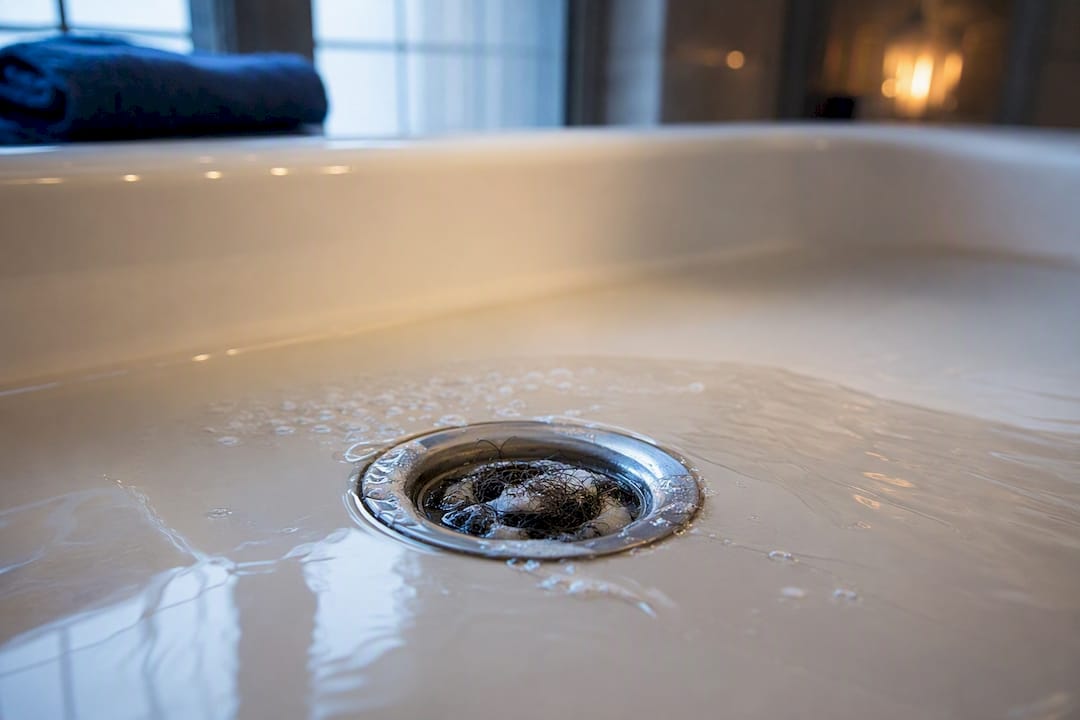
If the same drain keeps backing up no matter how many times you clear it, the pipe itself is the problem, not whatever you just fished out of it. Plungers and store-bought snakes remove the blockage in front of you; they don’t touch the grease film, root intrusion, or bad slope causing it. The durable fix is a camera inspection to see what’s actually happening inside the pipe, followed by hydro-jetting or targeted repair depending on what that camera finds.
TL;DR:
- Recurring clogs usually result from buildup of grease, scale, or structural issues like roots or bellied pipes, not just an isolated blockage.
- Snaking or plunging only creates a temporary channel and does not remove the underlying cause, which causing pipes to clog repeatedly.
- Hydro-jetting cleans the entire pipe wall thoroughly, offering longer-lasting relief compared to snaking or chemical cleaners.
- Signs of main line problems include multiple fixtures draining slowly, gurgling sounds, sewage odors, and backups into floor drains.
- A camera inspection first reveals the exact issue, enabling targeted repair or hydro-jetting for durable, cost-effective solutions.
Table of Contents
- What Causes Recurring Drain Clogs?
- Why DIY Fixes Keep Failing You
- How Do You Know If It’s Time to Call a Plumber?
- How to Prevent Clogged Drains From Coming Back
- What 30 Years of Pittsburgh Drain Calls Have Taught Us
- The Homeowner Checklist Nobody Talks About
- Get Your Drains Fixed for Good With Professional Plumbing Services
- Sources
- FAQ
What Causes Recurring Drain Clogs?
The cause almost always tracks the fixture. A bathroom sink or tub that clogs every few months is usually fighting hair and soap scum, which bind together with leftover shaving cream or toothpaste residue into a rope-like mass that catches everything behind it. A kitchen sink that won’t stay clear is a different animal entirely: grease, food scraps, and coffee grounds coat the pipe wall and narrow the opening a little more each time, and a garbage disposal doesn’t prevent this because it shreds food, it doesn’t dissolve fat.
Fats, oils, and grease harden as they cool and build a lining on the inside of the pipe, according to guidance from the Texas Commission on Environmental Quality. That lining doesn’t disappear when you snake it once. It grows back, trapping the next batch of debris that flows past.
Hard water adds a slower, sneakier version of the same problem. Minerals in the water form scale on pipe interiors over years, and that scale roughens what used to be a smooth surface, according to the USGS. Rough surfaces snag hair and soap the way a rough road snags dirt. This shows up more in older homes running galvanized or cast-iron pipe, and it’s rarely the first thing homeowners suspect.
Then there are the structural culprits, which tend to affect more than one fixture at once:
- Tree roots working into a main sewer line through small cracks or joints
- Bellied or sagging pipe sections where the line has settled and created a low spot that collects standing water and debris
- Corroded or partially collapsed pipe, common in homes over 40 years old
- Improper slope or venting, which the Uniform Plumbing Code treats as a design defect that causes exactly this kind of chronic backup
One clog in one sink points to a local problem. Slow drains in several rooms, especially ones that gurgle when another fixture runs, point somewhere much bigger than a trap.
Why DIY Fixes Keep Failing You
A snake or a plunger does one job: it punches a hole through whatever is blocking the pipe. It does not clean the pipe. Picture a clogged artery treated by pushing a small channel through the blockage instead of removing the plaque. The channel works for a while, then narrows again because the material lining the walls never left.
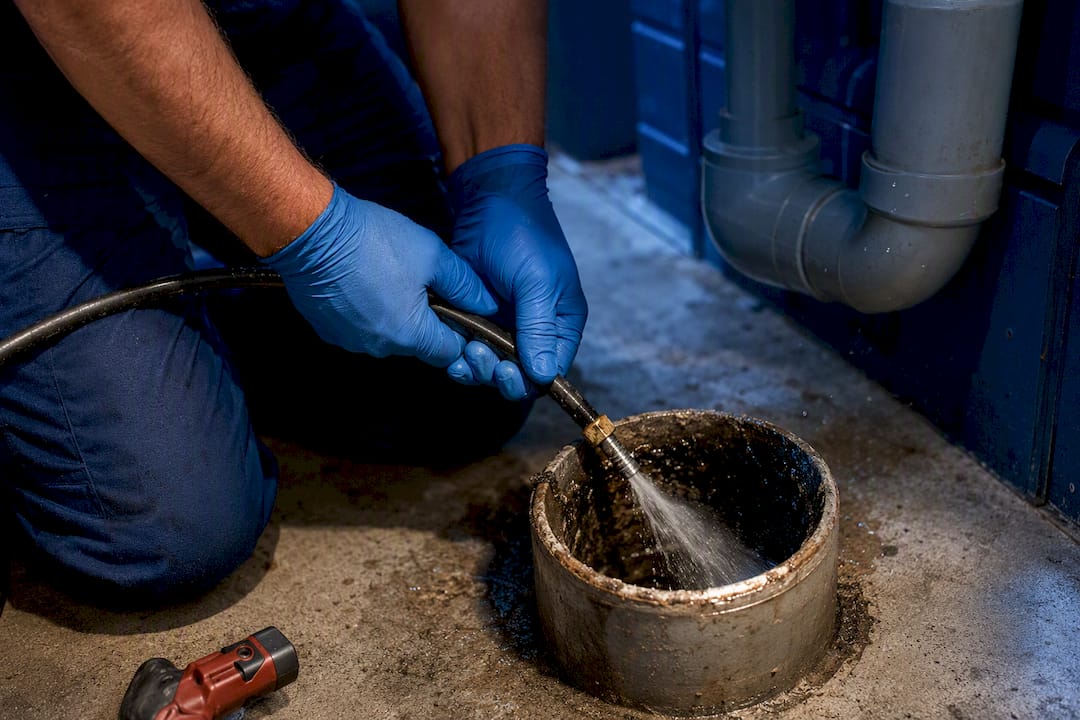
Hydro-jetting works differently. It blasts pressurized water in all directions against the pipe wall, scouring grease, scale, and debris off the entire interior surface rather than just opening a lane through the middle. This method generally provides longer-lasting relief than snaking for recurring clogs, though it isn’t the right tool for every situation.
Chemical drain cleaners split the difference badly. They often clear a minor clog fast, but repeated use accelerates pipe corrosion, particularly in older metal pipe, and rarely removes the deeper buildup causing the recurrence. You end up trading a short-term win for a long-term liability.
Here’s roughly how the three main approaches stack up:
- Snaking or plunging — fast, cheap, fine for a single isolated clog you can trace to something obvious (hair, a dropped object). Not a fix for a drain that clogs every month.
- Chemical cleaners — quick relief, but risky with repeated use and largely useless against grease coatings or root intrusion.
- Hydro-jetting or targeted pipe repair — addresses the actual cause: buildup on the pipe wall, a bellied section, or root damage, rather than the symptom sitting in front of you.
If you’ve snaked the same drain three or more times in a year, that’s not bad luck. That’s a pipe telling you it needs a real look.
Pro Tip: Keep a simple log on your phone every time a drain backs up, noting the date and which fixture. Bring that timeline to your plumber. Patterns that look random to you often point straight to the cause for someone who’s seen it a hundred times.
How Do You Know If It’s Time to Call a Plumber?
A quick test at home tells you more than most people realize. Run water in one fixture for a minute or two while watching a different drain or toilet nearby. If flushing a toilet makes the tub gurgle, or running the kitchen faucet backs up the laundry drain, the problem usually sits in the main sewer line, not in an isolated trap.
Call a plumber rather than reaching for another bottle of drain cleaner when you notice:
- Multiple fixtures draining slowly at the same time
- Gurgling sounds from drains that aren’t even in use
- Sewage odor inside the house or near a floor drain
- Water backing up into a basement floor drain or cleanout
- The same drain clogging again within weeks of clearing it
Once a plumber is on site, a camera inspection is usually the first move. A small waterproof camera travels through the line and shows exactly what’s wrong: root intrusion, a bellied section holding standing water, scale buildup, or a separated joint letting soil into the pipe. That footage decides everything that follows. A line with heavy grease buildup and no structural damage gets hydro-jetted. A line with a crushed section, a bad slope, or serious root damage needs targeted repair, and sometimes replacement of just that section rather than the whole run.
How to Prevent Clogged Drains From Coming Back
Most recurring clogs are preventable with habits that take seconds, not renovations. In the kitchen, wipe greasy pans with a paper towel before they ever touch water, and keep coffee grounds out of the sink entirely. In the bathroom, a $3 mesh drain screen catches hair before it becomes a problem instead of after.
A few periodic habits matter more than people assume:
- Flush drains weekly with hot water to keep grease from settling
- Use an enzyme-based drain treatment occasionally; it digests organic buildup without attacking pipe material
- Pull and clean the P-trap under sinks every few months if you’ve had recurring issues there
- Skip caustic chemical cleaners and powered augers you don’t know how to use safely
The EPA’s WaterSense guidance on water-efficient habits and proper disposal practices supports the same conclusion plumbers reach in the field: what goes down the drain, and how much water moves through the system, directly affects how often it clogs. Simple things like running screens on every drain prevent most of the fixture-level clogs homeowners deal with.
For homes with a documented history of grease buildup or older pipe, scheduled hydro-jetting every one to three years often costs less over time than repeated emergency calls and DIY chemical purchases that never solve the root cause.
Pro Tip: A plunger and a basic hand auger cover 90 percent of what a homeowner should attempt solo. If you’re renting a powered auger from a hardware store, you’re already past the point where a plumber’s camera would’ve saved you money.
What 30 Years of Pittsburgh Drain Calls Have Taught Us
AG Heating, Cooling & Plumbing has spent 30 years working drains across Pittsburgh, and the pattern repeats constantly: a homeowner calls about the same clog for the third time, and the actual cause was never touched the first two visits. Staying current with newer diagnostic tools and cleaning methods is a big part of why that sequence changes outcomes.
The order matters as much as the tools:
- Inspect first. A camera shows the actual condition of the pipe before anyone decides on a fix.
- Clean the whole pipe, not just the clog. Hydro-jetting scours the wall the way snaking never does.
- Repair what’s structurally broken. Root damage, bellied sections, and separated joints need physical correction, not another cleaning cycle.
Skip the inspection step and you’re guessing. Skip the full cleaning and you’re back to square one in a few months. This sequence is why homeowners who follow it stop calling about the same drain, and it’s the same logic behind AG Plumbing’s drain cleaning services and hydro-jetting approach.
The Homeowner Checklist Nobody Talks About
Most advice on recurring clogs jumps straight to “call a plumber,” which is true but unhelpful. What homeowners actually need is a way to sort a $15 fix from a $1,500 one before making that call.
Here’s the judgment this research supports: a single-fixture clog that responds to plunging and stays clear for months is a maintenance issue. A clog that returns within weeks, or one that coincides with gurgling elsewhere in the house, is a structural or main-line issue dressed up as a fixture problem. Conventional advice treats every clog the same way, snake it, maybe add chemicals, repeat as needed. That approach ignores the fact that pipes have a shape and a wall, and both degrade in ways a snake never addresses.
If you take one thing from this, prioritize the fixture test before anything else. Run water somewhere else in the house and watch what happens. That five-minute check tells you more about your actual problem than a whole shelf of drain cleaner ever will.
— Maayan
Get Your Drains Fixed for Good With Professional Plumbing Services
Skip the cycle of chemical cleaners and rental snakes that only push the problem down the line. Experienced plumbers diagnose recurring clogs with camera inspection first, then match the fix to what the pipe actually needs, using hydro-jetting for grease and scale buildup, or targeted repair for root damage or bellied sections, so you’re not paying for the same visit twice.
Before you call, jot down which fixtures are affected, when the problem started, and anything that changed recently (new appliance, recent landscaping, a renovation). That information helps our team narrow down the cause before we even arrive. On the first visit, expect a full assessment of the affected line and a clear explanation of what the camera shows, no guesswork, no upsell on work you don’t need. Start with AG-Plumbing’s drain cleaning services in Pittsburgh or explore hydro-jetting to see what a full pipe cleaning actually involves.
Sources
- Texas Commission on Environmental Quality — Fats, Oils, and Grease (FOG)
- USGS — Hardness of Water
- EPA — WaterSense
- IAPMO ePubs — 2021 Uniform Plumbing Code (UPC)
FAQ
Why Does My Drain Clog So Often?
Recurring clogs almost always mean something inside the pipe wasn’t fixed the first time, whether that’s grease coating the pipe, hair and soap buildup, mineral scale, or a structural issue like root intrusion or a bellied section. Snaking or chemical cleaners open a path through the blockage but leave the underlying cause in place.
Does Pouring Salt Down a Drain Unclog It?
Salt combined with hot water can help break down minor grease buildup in some cases, but it won’t clear hair clogs, remove tree roots, or fix a structural problem. Treat it as a mild maintenance step, not a real fix for a recurring clog.
How Do I Know If My Main Sewer Line Is Clogged?
If running one fixture causes another to gurgle, back up, or drain slowly, the issue is likely in the main line rather than an isolated trap. Multiple slow drains happening at the same time is one of the clearest signs a professional camera inspection is needed.
Can a Drain Blockage Clear Itself?
Some minor blockages, like a small clump of hair partially caught in a trap, can loosen and clear with water flow alone. A blockage caused by grease buildup, scale, or root intrusion will not resolve on its own and typically gets worse until it’s professionally cleaned or repaired.
Recommended
- Drain Clog Prevention Tips for Pittsburgh Homeowners
- Skip Caustic Cleaners: Fix a Laundry Drain Clog Fast, Homeowners
- How to Prevent Clogged Sinks: A Homeowner’s Guide
- Why Drain Cleaning Is Essential for Preventing Blockages
