
Most Pittsburgh sellers typically pay for the actual dye test when their property sits in a sanitary sewer area. If you’re in a combined sewer district, you skip the physical test but still need to file for an Evidence of Compliance Certificate through PWSA. The real financial risk isn’t the test itself. It’s what happens if the property fails and needs sewer repairs, which can run into the thousands.
TL;DR:
- The cost of a dye test in Pittsburgh usually ranges in the lower hundreds, with repair expenses after failure potentially reaching several thousand dollars.
- The dye test itself takes less than an hour, but scheduling and repairs can extend the total timeline for closing, especially if repairs are needed after failure.
- Early application for the certificate and pre-listing testing help prevent delays and allow time for repairs, saving money and reducing last-minute stress.
- Properties in combined sewer districts skip the physical test but still require filing the Evidence of Compliance Certificate before closing.
- A valid dye test certificate from the past three years can often be reused, avoiding redundant testing costs and delays.
Table of Contents
- What Is a Dye Test and Who Needs One in Pittsburgh?
- How the PWSA Certificate Process Works
- How Much Does a Dye Test Cost and How Long Does It Take?
- What Happens if a Property Fails the Dye Test?
- How to Prepare for a Dye Test Without Delaying Closing
- Why So Many Pittsburgh Closings Get Delayed Over This
- Get Your Dye Test and Repairs Handled by One Local Crew
- Where to Find Official Forms and Guidance
- Sources
- FAQ
What Is a Dye Test and Who Needs One in Pittsburgh?
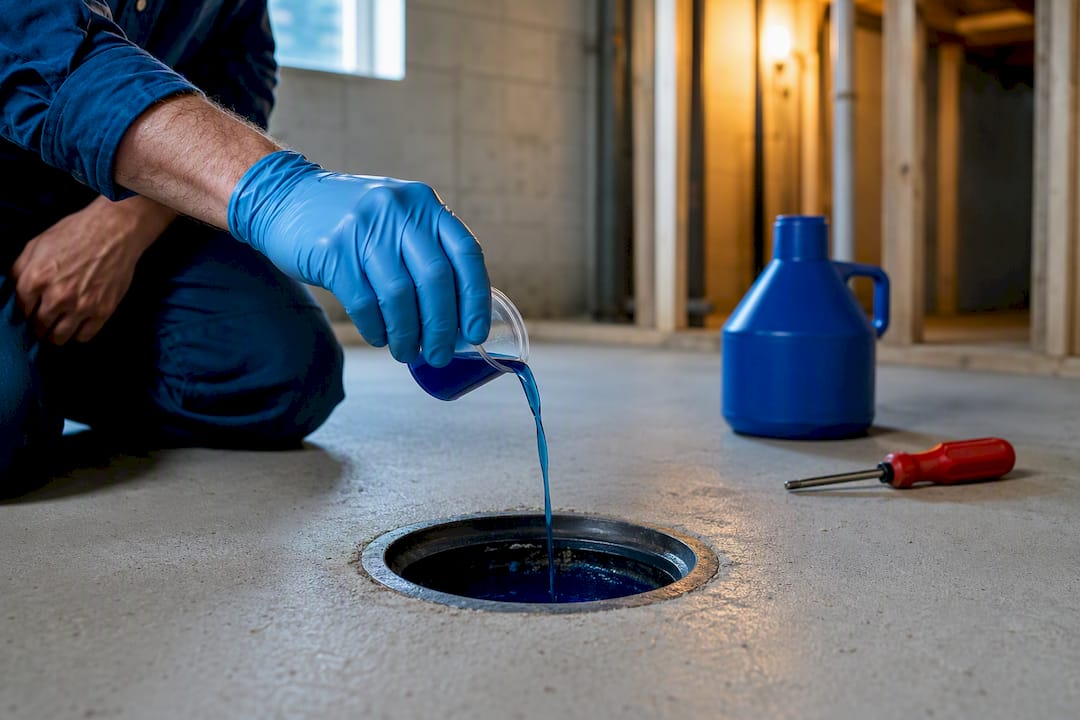
A dye test involves pouring non-staining dye into downspouts and drains while a plumber watches the sanitary sewer connection for color. If dye shows up where it shouldn’t, something on the property is illegally tied into the sanitary system, usually a gutter, sump pump, or yard drain that should be draining to storm sewers instead.
The ordinance behind this exists for a practical reason: stormwater flooding sanitary lines overloads treatment plants and increases the odds of sewage backups and river pollution during heavy rain. PWSA requires the physical test only in areas served by separate sanitary sewers, not combined systems.
Here’s who typically needs one and who’s exempt:
- Properties in designated sanitary sewer areas of the city require the test before a sale closes.
- Properties in combined sewer areas skip the physical test but still need the certificate application filed.
- Condo units with their own separate parcel numbers sometimes need individual certificates, depending on the building’s sewer history.
- Vacant lots with assigned parcel numbers can also fall under the requirement, even with no structure on-site.
How the PWSA Certificate Process Works
Every sale in the city needs an Evidence of Compliance Certificate application filed with PWSA, regardless of whether the physical dye test applies to your address. You submit the request through PWSA’s permitting portal, and a processing fee generally applies to that filing.
PWSA generally replies to certificate applications and to the Dye Testing Results Form within three business days. That turnaround only covers the paperwork side. If a physical test or corrective plumbing work is required, the overall timeline stretches out considerably.
A few things worth building into your closing timeline:
- Apply for the certificate well in advance of your anticipated closing date.
- A passed certificate stays valid for three years from issuance, so a recent prior test may cover you already.
- The City of Pittsburgh also runs a separate tax certification process for property transfers, and that filing often carries its own fee, typically over fifty dollars.
- Boroughs outside the city set their own certificate fees and validity windows, so a property just over the city line may face different rules entirely.
If you’re refinancing rather than selling, lenders sometimes request their own tax and lien letters separately from the PWSA certificate, so check with your loan officer before assuming one document covers both needs.
How Much Does a Dye Test Cost and How Long Does It Take?
A straightforward dye test in Pittsburgh typically costs an amount in the lower hundreds when performed by a licensed plumber. Several factors push that number up or down.
- Number of drains and downspouts. A small rowhouse with two downspouts costs less to test than a larger property with six or seven drainage points.
- Access and travel. Properties with tricky yard access, locked-off basements, or long driveways add time to the visit.
- Municipal witnessing rules. Some boroughs outside the city require a borough inspector to personally witness the test, which can mean scheduling around a government employee’s calendar rather than just your plumber’s.
On the actual visit, a plumber inspects each drain and downspout, drops dye tablets in, flushes with water, and watches the sanitary sewer connection point for color. The whole process usually takes under an hour once the plumber is on-site. Afterward, the plumber documents results, often with photos, and completes the dye testing results form that gets submitted to PWSA.
Timing varies by jurisdiction. Some boroughs want seven to 30 days of advance notice before scheduling, while the city’s own process moves faster once the paperwork is in PWSA’s hands.
What Happens if a Property Fails the Dye Test?
Failing isn’t unusual, and it’s rarely catastrophic on its own. The dye test itself stays cheap. What gets expensive is fixing whatever the dye exposed.
The most common culprits behind a failed test include:
- Downspouts connected directly to the sanitary sewer instead of daylighting to the yard or storm system.
- Yard or driveway drains tied into the sanitary line rather than storm drainage.
- Broken or missing roof vents that mimic a cross connection during testing.
- Damaged sewer laterals that have degraded enough to let stormwater infiltrate.
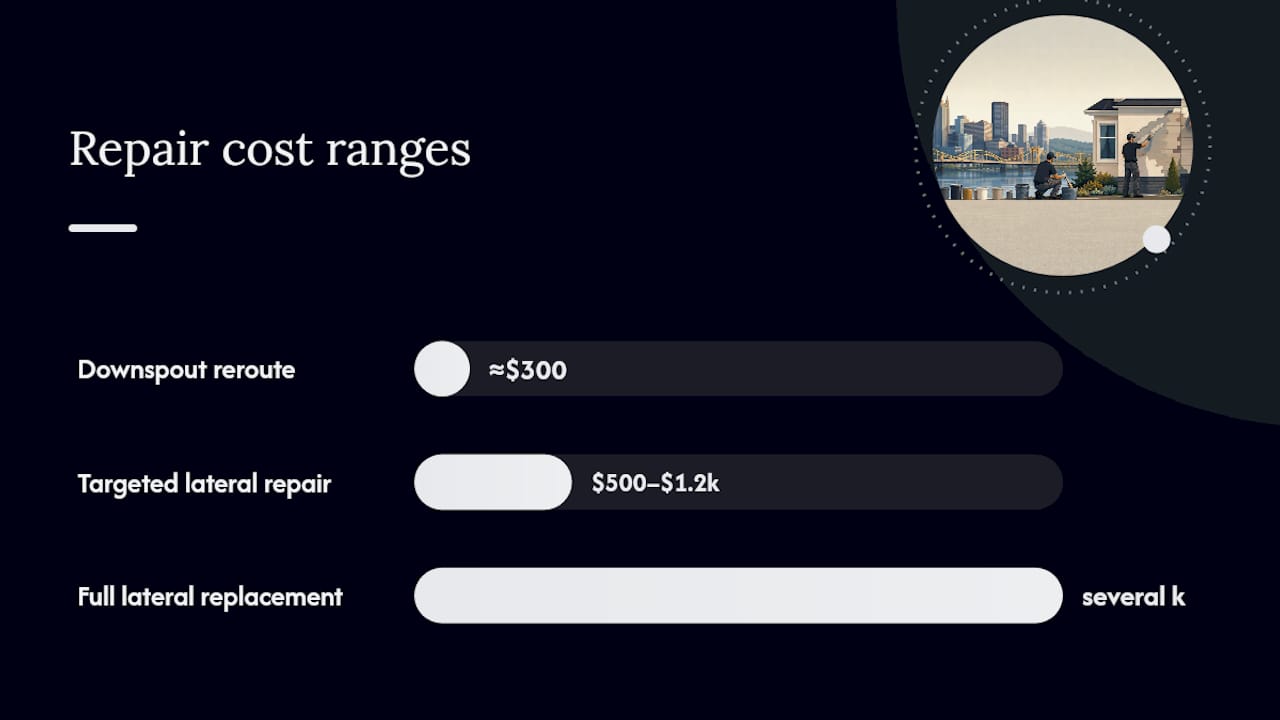
Repair costs span a wide range depending on what’s actually wrong. Rerouting a downspout away from the sanitary line is often a simple, low cost fix, sometimes just a few hundred dollars. A targeted repair on a damaged section of lateral, especially one guided by camera inspection, tends to land in the mid hundreds to low thousands. Full excavation and lateral replacement is where costs climb into several thousand dollars, particularly if the line runs under a driveway or mature landscaping.
Pro Tip: Order the dye test as soon as you list the property, not after you’ve accepted an offer. A failed test discovered early gives you weeks to schedule repairs calmly. A failed test discovered ten days before closing gives you a crisis.
Sellers customarily arrange and pay for any needed repairs before closing, though this is negotiable and sometimes gets split with the buyer or handled through a credit at settlement. Either way, the dye test fee itself is almost never the line item that surprises anyone. The repair estimate is.
How to Prepare for a Dye Test Without Delaying Closing
- Clear your gutters and downspouts before the plumber arrives. Debris can block dye flow and produce a false result.
- Check your outdoor water spigots work, since the plumber needs running water to flush dye through the system properly.
- Confirm your roof vents are intact. A missing or broken vent cap can complicate the reading.
- Locate your parcel number and PWSA account information ahead of time so the application doesn’t stall on missing details.
- Submit your Evidence of Compliance application at least 14 days before closing, and add more buffer if your municipality falls outside city limits with its own 30 day notice window.
- Hire a licensed, Allegheny County-registered plumber who knows the specific municipal form your borough requires, since city and suburban paperwork differ.
- Loop in your real estate agent and title company early so everyone’s tracking the same certificate deadline instead of discovering a gap the week of closing.
Why So Many Pittsburgh Closings Get Delayed Over This
The dye test itself rarely causes closing delays. What causes delays is sellers treating it like a formality they’ll handle “sometime before closing” instead of a scheduled task with a real lead time. We’ve seen listings stall for weeks because nobody cleared the gutters before the plumber showed up, or because a seller assumed a certificate from a sale eight years ago was still valid.
The single highest-value move is applying for the Evidence of Compliance Certificate the moment a property goes on the market, not after an offer lands. That gives you room to schedule corrective plumbing if the test comes back with a problem, instead of negotiating repairs against a closing date that’s already locked in. Experience shows that early testing saves money, while late testing tends to increase costs.
— Maayan
Get Your Dye Test and Repairs Handled by One Local Crew
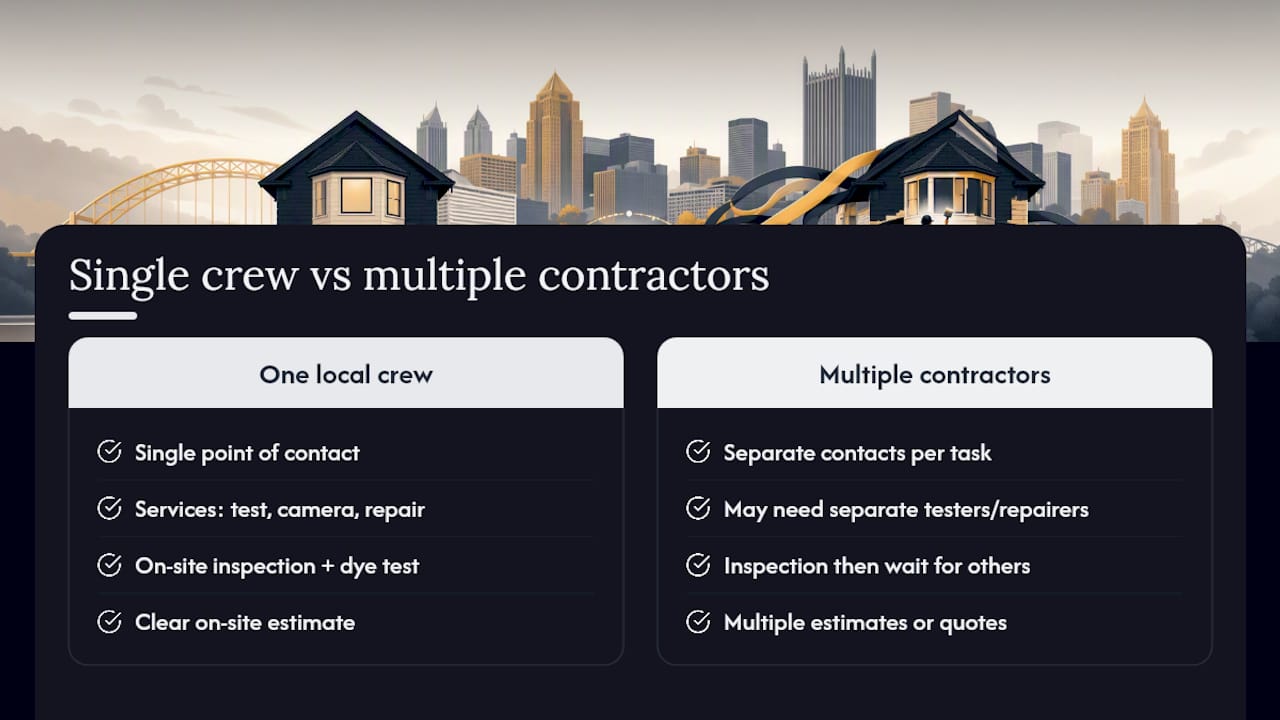
A single local contractor can provide Pittsburgh sellers with a single point of contact for the whole process: testing, camera diagnostics, and repair, instead of juggling separate contractors while your closing date gets closer. When the plumber who runs your dye test can also diagnose and fix any issues found, you avoid delays waiting on a second company’s schedule if problems arise.
When you call, expect a straightforward visit: inspection of your drains and downspouts, a dye test if your property requires one, and a clear estimate if repairs are needed. If the problem turns out to be a damaged lateral rather than a simple downspout fix, our team can walk you through sewer repair options and camera-guided diagnostics before recommending anything, so you’re not paying for excavation when a targeted repair will do. Some plumbers also help handle the municipal paperwork to ensure the form is submitted correctly the first time.
If you’re preparing to list a property or already have a closing date on the calendar, book an inspection with AG Heating, Cooling & Plumbing now, while there’s still time to fix anything the test uncovers.
Where to Find Official Forms and Guidance
Start with PWSA’s own dye testing page for requirements, and use the CityGrows permitting portal to file your Evidence of Compliance application and check for an existing valid certificate.
Sources
- Dye Testing — Pittsburgh Water and Sewer Authority
- Dye Test Certification FAQs — ClearForms/CityGrows (PWSA permitting portal)
- The Pittsburgh dye test, explained — practitioner summary and cost observations
FAQ
How much is a dye test in Pittsburgh?
A standard dye test typically costs a few hundred dollars, plus a $20 PWSA processing fee for the Evidence of Compliance Certificate application. Repair costs, if the property fails, are usually the bigger expense and can range from a few hundred dollars to several thousand.
How long does a dye test take?
The physical test itself usually takes less than an hour once a plumber is on-site. PWSA then replies to the certification application and results form within three business days, though the process takes longer if repairs are required.
Is a dye test required in the city of Pittsburgh?
Only properties in sanitary sewer areas require the physical dye test. Properties in combined sewer areas are exempt from the physical test but still must file an Evidence of Compliance Certificate application with PWSA before the sale closes.
What is a dye test in PA?
A dye test is a procedure where non-staining dye is poured into a property’s downspouts and drains while a licensed plumber checks whether it appears in the sanitary sewer, confirming the property isn’t illegally connecting stormwater to the sanitary system. Requirements and fees vary by municipality across Allegheny County.
What happens if my dye test certificate is already valid?
If you had a passing test within the last three years, PWSA’s portal can often locate and email your existing Evidence of Compliance Certificate, saving you from paying for a redundant test before closing.
Recommended
- Leak detection in Pittsburgh: prevent costly damage
- Pipe relining: Smart, cost-saving fix for Pittsburgh pipes
- Sewer line repair guide for Pittsburgh homeowners
- Cost-saving plumbing tips for Pittsburgh homeowners
