
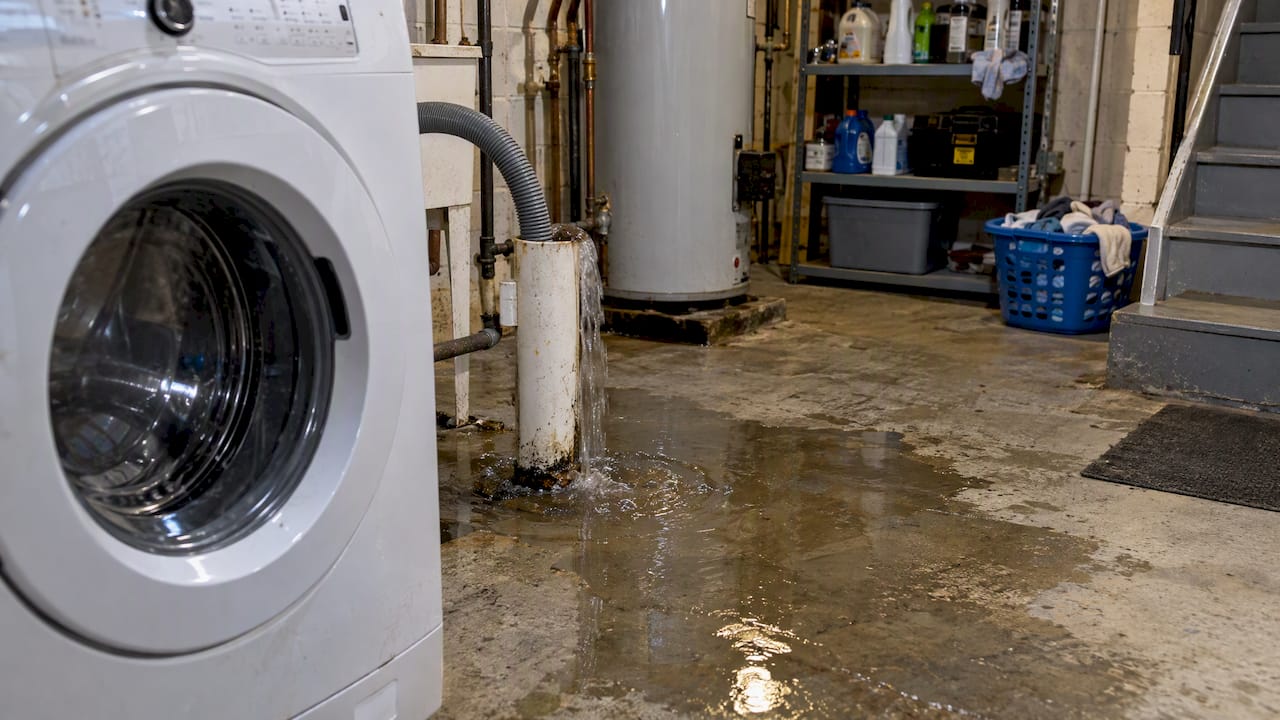
Most washing machine drain overflows come down to a clogged or undersized standpipe, a hose that siphons because it was inserted too far, or a blocked building drain behind the wall. The moment you see water rising, shut off the washer’s water supply and power before anything else. If the water looks contaminated or you cannot stop the flow within a few minutes, stop troubleshooting and call a plumber.
TL;DR:
- Shut both supply valves and cut power first; water with a sewage odor or gray cloudiness needs sanitation, not ordinary cleanup.
- Leave an air gap, insert the hose no more than 4.5 inches, and keep the standpipe at least 30 inches above the floor.
- Pour water into the standpipe without running the washer: quick drainage suggests a clear line, while slow or rising water points to a drain blockage.
- Dry wet areas within 24 to 48 hours to limit mold risk, and call a plumber for recurring backups or sewage from other fixtures.
Table of Contents
- Stop the flooding before you do anything else
- What usually causes a washer drain to overflow
- Safe checks and fixes you can try before calling a plumber
- Signs it’s time to call a plumber instead of DIY
- Maintenance that keeps the drain from backing up again
- Drying out the laundry room and limiting mold risk
- What homeowners usually get wrong
- Get a plumber out before a small backup becomes a big repair
- FAQ
- Sources
Stop the flooding before you do anything else
The first few minutes decide whether this stays a minor cleanup or turns into a drywall and flooring job. Work through these steps in order.
- Find the hot and cold supply valves behind the washer and turn both clockwise until they stop; if you cannot reach them, shut off the house main.
- Unplug the washer or flip its breaker, especially if water is pooling near the outlet or control panel.
- Cancel the cycle and open the lid; if the drum still holds water, running a Drain or Spin cycle only can safely pull some of it out if the standpipe still accepts flow.
- Soak up standing water with towels, a mop, or a wet/dry vacuum, then move rugs, boxes, and anything valuable out of the wet zone.
- Check the water’s color and smell. A sewage odor or gray, cloudy discharge means you are dealing with Category 2 water, which calls for cleaning and sometimes sanitation rather than a simple mop-up.
Pro Tip: Photograph the water line on walls and baseboards before you start cleanup. Insurance adjusters and plumbers both move faster with a timestamped record.
Never step into standing water near an outlet or a plugged-in appliance. If the breaker won’t shut off power to the area or you smell gas along with the flooding, leave the house and call emergency services before touching anything else.
What usually causes a washer drain to overflow
A washer drain backing up almost always traces to one of five patterns. Matching your symptoms to the right one saves a lot of guesswork.
- Standpipe height is wrong: manufacturer guidance generally calls for the standpipe to sit at least 30 inches above the floor; a shorter standpipe lets water back up faster than it can drain.
- The standpipe, trap, or building drain is clogged with lint, soap scum, grease, or in older homes, root intrusion further down the line.
- Sewer or septic backup and venting problems let water return up the pipe instead of flowing away, often showing up as gurgling before the overflow.
- Siphoning from a hose inserted too far or sealed into the drain: the washer keeps pulling water out and back in because there is no air gap, a problem Maytag and Whirlpool both flag as one of the most common installation mistakes.
- An internal leak or failed pump inside the machine itself, which can look like a drain overflow but is actually water escaping before it ever reaches the standpipe.
Safe checks and fixes you can try before calling a plumber
Once the water is off and the area is safe, work through these checks in order. Wear gloves and keep your hands away from any outlet or cord near wet flooring.
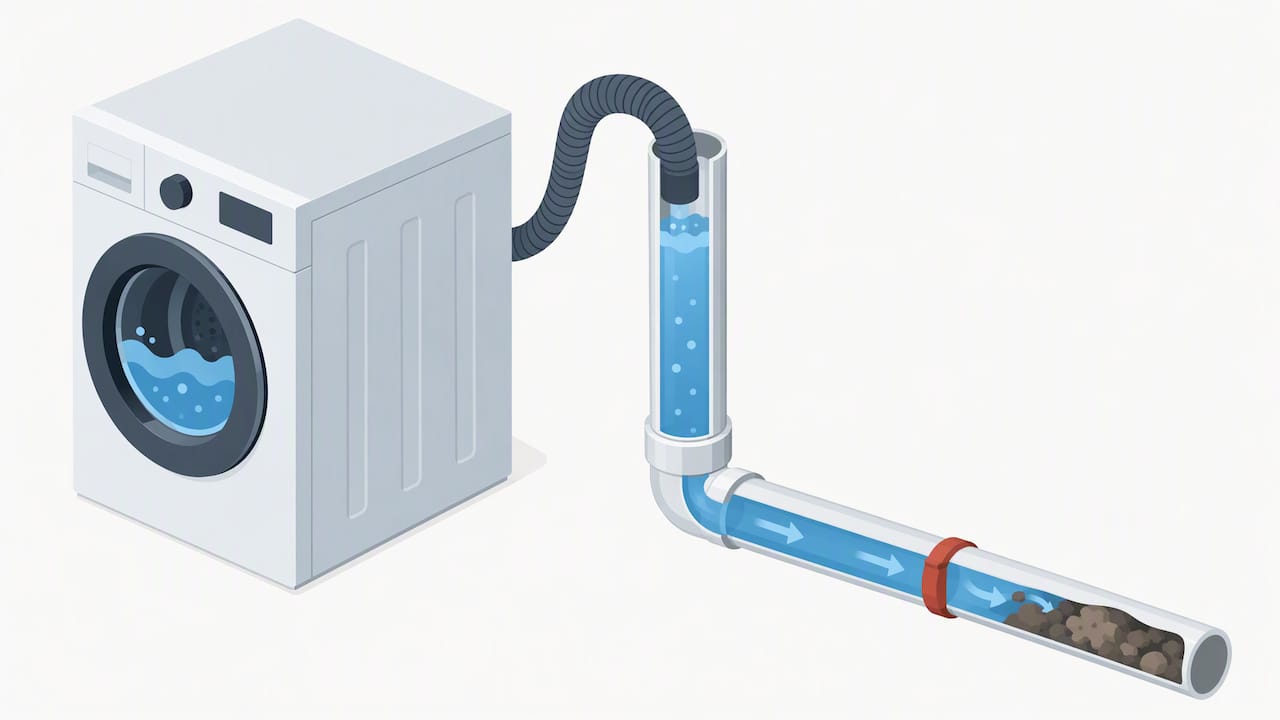
- Inspect the drain hose position. It should form a U-shape with a clear air gap at the top, never taped, glued, or sealed into the standpipe, and inserted no more than about 4.5 inches into the pipe.
- Pull the hose back if it’s in too far. Over-insertion is one of the most common causes of siphoning, and it’s a five-minute fix.
- Clear the standpipe entry with a wet/dry vacuum or a hand auger. If you snake it yourself, feed the auger gently and stop if you hit firm resistance rather than forcing it deeper into the building drain.
- Access the washer’s filter and drain pump on front-load models and clear out lint, coins, and debris; top-load owners should check their manual before opening any internal panel, since access points vary by brand.
- Test the drain by pouring a bucket of water into the standpipe. Water that disappears quickly points to a clear line; water that rises or drains slowly points to a clog further down.
Pro Tip: If you’re already dealing with a slow laundry drain rather than a full overflow, our guide to clearing a laundry drain clog walks through safe methods that skip harsh caustic cleaners.
If the backup returns after you’ve cleared visible debris, if you smell sewage even after cleanup, or if the bucket test still shows standing water, stop troubleshooting. That pattern usually means the problem sits deeper in the house drain, past what a hand auger or filter cleaning can reach.
Signs it’s time to call a plumber instead of DIY
Some situations are worth escalating immediately rather than spending another hour troubleshooting.
- Water keeps rising no matter what you shut off, or it’s spreading into more than one room.
- Sewage is backing up through a floor drain or another fixture at the same time, which points to a blockage in the main line rather than the washer itself.
- Water has been standing more than 24 to 48 hours, the point at which EPA guidance flags a sharp rise in mold risk.
- The same backup keeps happening after you’ve already cleared the hose, filter, and visible standpipe clog.
A plumber’s visit typically starts with a camera inspection to spot root intrusion, a collapsed section, or a buildup that a bucket test can’t reveal. From there, hydro-jetting clears heavy grease and scale buildup that a snake can’t touch, while a sewer repair addresses structural damage like a cracked or collapsed line. When the discharge is Category 2 or has been sitting long enough to raise contamination concerns, a plumber coordinates with a restoration contractor rather than treating it as a simple drain job.
Maintenance that keeps the drain from backing up again
A handful of checks done on a regular schedule prevent most repeat overflows.
- Confirm the standpipe height and hose insertion distance once, right after installation, and recheck them if you ever move or replace the washer.
- Leave a visible air gap around the hose; never tape, glue, or otherwise seal it into the standpipe.
- Run a maintenance cycle monthly and check the lint filter and pump access point for buildup.
- Swap rubber supply hoses for braided stainless steel, and inspect shutoff valves once a year to confirm they still turn freely.
- If slow draining or buildup keeps recurring, that’s the signal to schedule professional drain cleaning or hydro-jetting rather than repeating the same manual clear-out every few months.
Pro Tip: Keep a simple checklist for recurring drain issues taped inside the laundry closet. A pattern of slow drains over a few months is easier to catch early than after the third overflow.
Drying out the laundry room and limiting mold risk
Once the water is off and the mess is contained, the clock starts on drying out the laundry room and limiting mold risk. The EPA recommends drying wet or damp areas within 24 to 48 hours to keep mold from taking hold, and that window applies whether the water came from a burst hose or a backed-up drain.
| Surface | Immediate action | When to remove or replace |
|---|---|---|
| Carpet and padding | Wet/dry vacuum extraction, then fans and a dehumidifier | Padding often needs removal if soaked more than a few hours |
| Wood flooring | Wipe standing water, run fans across the surface | Remove boards if cupping or warping appears |
| Tile and concrete | Wet/dry vacuum, then air circulation | Rarely needs removal, but check subfloor moisture |
| Drywall | Dry the surface and monitor for staining | Cut out and replace if swollen or moldy |
Don’t aim fans into a space where contaminated water is still standing. Dry the area first, then bring in airflow. If any material has been wet for more than 48 hours, or if you can see mold starting, that’s the point where EPA guidance and most restoration standards recommend bringing in a professional rather than continuing to dry it yourself.
What homeowners usually get wrong
The mistake we see most often is a drain hose taped or pushed in too far, which causes the exact siphoning problem it was meant to prevent. The second is ignoring a slow drain for months until it becomes a full overflow. Most of these calls end with a straightforward camera check and a clear, upfront quote rather than a major repair.
— Maayan
Get a plumber out before a small backup becomes a big repair
A washer drain overflow that keeps coming back usually isn’t a washer problem at all. It’s a drain that’s clogged, undersized, or damaged somewhere past the standpipe, and that’s exactly the kind of job our drain cleaning service is built around. We send licensed, certified technicians who diagnose the actual cause instead of guessing at it.

A typical visit includes a camera inspection to see exactly what’s happening inside the line, a clear quote before any work starts, and the right fix for what we find, whether that’s hydro-jetting to clear years of buildup or a sewer repair for a damaged line. We also offer discounts for various customer groups.
- Call us if water is still rising or you can’t get the backup to stop.
- Call us if the same drain has backed up more than once in recent months.
- Call us if water has been standing more than 24 hours and you’re worried about mold.
Reach out through Ag-plumbing to get a technician scheduled and a straight answer on what’s causing the overflow.
FAQ
Why is my washing machine drain pipe full of water?
A standpipe stays full when water can’t clear fast enough, usually because of a clog in the pipe itself, an undersized or too-short standpipe, or a blockage further down in the building drain. Manufacturer guidance recommends a standpipe height of at least 30 inches to avoid this. If clearing the visible clog doesn’t fix it, the blockage is likely deeper in the line.
Why is my washing machine making my sink overflow?
When a washer and a nearby sink share the same drain line, a clog downstream can force water from the washer back up through the sink instead of away through the pipe. This usually points to a blockage in the shared drain rather than a problem with either fixture individually. A plumber can confirm the shared line and clear the obstruction with a snake or hydro-jetting depending on what’s causing it.
Why does my washer keep filling and draining during the spin cycle?
This pattern is often caused by a drain hose inserted too far into the standpipe or sealed against it, which creates a siphon that pulls water back into the drum. Manufacturer troubleshooting recommends pulling the hose back to a proper U-shape with an air gap at the top. It can also happen if a supply valve isn’t fully open, which some washers interpret as a signal to keep cycling.
Why is my floor drain overflowing when I drain my washing machine?
A floor drain backing up during a wash cycle almost always means the shared drain line is blocked somewhere between the washer connection and the main sewer line. This is a house drain issue rather than an appliance issue, since the washer is simply pushing water into a pipe that can’t carry it away fast enough. A camera inspection is the fastest way to find the exact location of the blockage.
How do I know if the problem is the washer or the house drain?
Run the bucket test: pour water directly into the standpipe without running the washer. If it drains slowly or backs up, the problem is in the house drain, not the appliance. If the standpipe drains fine but the washer still overflows, the issue is more likely the hose position, pump, or an internal leak.
Sources
- Mold cleanup in your home (US EPA)
- Continuously fills / fills and drains – Maytag product help
- Cleaning related to fire and water restoration projects (NADCA / restoration guidance)
Recommended
- Skip Caustic Cleaners: Fix a Laundry Drain Clog Fast, Homeowners
- Homeowners: Fix a Dishwasher Drain Backing Up Safely in Under an Hour
- Homeowners: Quick Checklist to Stop Recurring Drain Clogs
- Emergency Plumbing Guide: Quick Solutions for Homeowners
