

If only your hot water smells like rotten eggs, the cause is almost always inside your water heater. Bacteria in the tank, or a reaction between the tank’s anode rod and minerals in the water, produce hydrogen sulfide gas. The smell is a nuisance and rarely a health emergency. Still, one version of that smell is a true emergency, and we cover it first below.
This guide walks you through the diagnosis in about two minutes, explains what each result means, and tells you which fixes are safe to try and which ones belong to a licensed plumber.
TL;DR
- Smell only the hot water? The water heater is the likely source. Smell both hot and cold? Look at the incoming water or the plumbing, not the heater.
- Smell near a drain but not in a glass of water? The drain is the problem, not the water.
- If you smell sulfur and think it could be natural gas, leave the building and call 911 and your gas utility. Do not troubleshoot.
- Lasting fixes usually involve flushing the tank and replacing or changing the anode rod. A 160°F flush can scald, so leave it to a professional.
- Annual flushing keeps the problem from coming back.
Table of Contents
- First, rule out a gas leak
- The two-minute test that finds the source
- Why a water heater makes water smell like sulfur
- Is the smell dangerous?
- What you can safely do yourself
- What a plumber does about it
- How to keep the smell from coming back
- Our perspective on sulfur smell
- When to call AG Plumbing
- FAQ
- Sources
First, rule out a gas leak
Natural gas has no smell of its own. Utilities add an odorant that smells like sulfur or rotten eggs so that leaks are noticeable. If you smell rotten eggs near a gas furnace, a gas water heater, a stove, or the gas meter, treat it as a gas leak until proven otherwise.
Leave the building right away. Do not flip switches, use a lighter, or start a car in the garage. Call 911 from outside. In the Pittsburgh area, Peoples lists a 24-hour gas emergency line at 1-800-400-4271 and asks customers to leave the area and call it along with 911 for any odor of gas.
The rest of this article is for the smell that comes out of the faucet, in the water itself.
The two-minute test that finds the source
Before you change anything, work out where the smell is coming from. Experts at Penn State Extension say to test your water to learn the source, because the treatment for a well-water problem differs a lot from the treatment for a tank problem.
- Run the cold tap for 30 seconds and fill a glass. Carry it away from the sink and smell it.
- Run the hot tap and fill a second glass. Smell it away from the sink as well.
- Compare. Hot only, cold only, both, or neither.
Here is how to read the results.
| What you smell | Most likely source | Next step |
|---|---|---|
| Hot water only | Water heater (bacteria or anode rod reaction) | Flush the tank, check the anode rod |
| Hot and cold | Groundwater (private well) or the home’s main plumbing | Test the water; on public water, call your water provider |
| Neither glass smells, but the sink does | Bacteria in the drain | Clean the drain and trap |
| Smell is stronger near a gas appliance | Possible gas leak | Evacuate and call 911 |
The hot-versus-cold clue is the single most useful one. Pittsburgh Water explains that a smell in both hot and cold water points away from the heater, while a smell only in the hot water points toward it.
Why a water heater makes water smell like sulfur
Two things happen inside the tank, and sometimes both at once.
Sulfur-reducing bacteria
These bacteria feed on sulfur compounds that are naturally present in water and release hydrogen sulfide as a byproduct. A tank that sits warm for long periods suits them well. Pittsburgh Water describes a hot water tank as an incubator for the bacteria when conditions are right. The risk goes up if the thermostat is set low, if the heater has been off for a while (during a vacation, for example), or if sediment has piled up on the tank floor.
The anode rod reaction
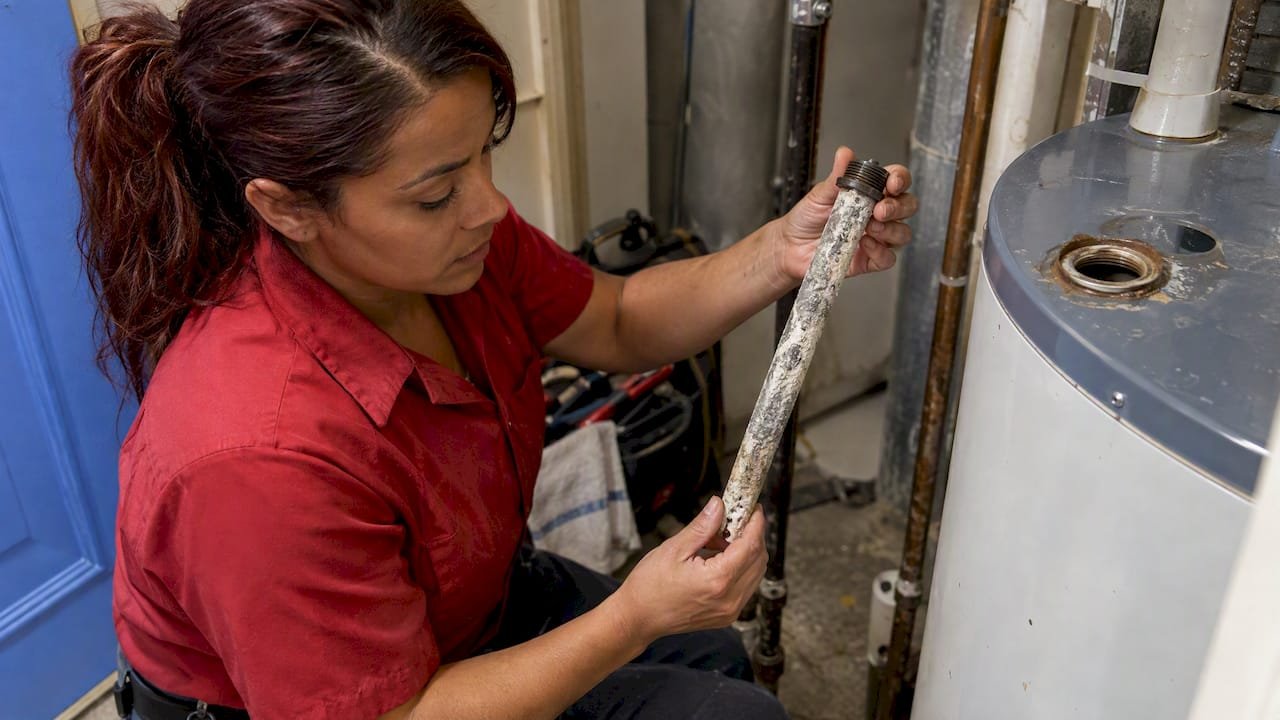
Every tank has a sacrificial anode rod, usually magnesium or aluminum, that corrodes in place of the steel tank. According to the Texas Water Development Board, the foul odor can come from a chemical reaction with that sacrificial anode in the presence of sulfate in the water. It is common when the tank sits unused or the water is warm and sulfate-rich.
What about the city water?
If you are served by the Pittsburgh Water and Sewer Authority, the supply is monitored to meet state and federal standards, and Pittsburgh Water notes that rotten egg odors are frequently a hot water tank issue, not a problem with the municipal supply. Many homes in the surrounding townships and boroughs are on other public systems or private wells. If you have a well, hydrogen sulfide in the groundwater is a real possibility, and the test above will show it when both taps smell.

Is the smell dangerous?
At household levels, usually not. Penn State Extension notes that hydrogen sulfide in household water becomes unpleasant by taste and smell long before it reaches dangerous concentrations, and that people can detect it at roughly 0.5 parts per million.
The gas does have a cost for your home, though. The same source says it is corrosive to iron, steel, copper and brass. A long-running sulfur problem can speed up wear on fixtures, pipes and the tank.
Call a doctor if anyone in the home has headaches, nausea or breathing trouble that seems linked to the smell. And again: if the smell is in the air rather than the water, and you cannot rule out gas, leave and call 911.
What you can safely do yourself
These steps are low risk and help you gather information.
- Check the thermostat. Do not raise it to burn the bacteria off. Higher temperatures raise the scald risk for everyone in the house, children and older adults most of all.
- Run the hot water at a tap for a few minutes if the heater has sat unused. Sometimes stale water in the tank is all it is.
- Smell the drain. If the glass test is clean but the sink smells, pour hot water down the drain and clean the overflow and stopper with a brush. Alabama’s environmental agency says smells at one sink are often bacteria feeding on hair and soap in the drain, and the glass test separates this from a water supply problem.
- Note how long and how strong. Whether it began after a vacation, a new heater, or a plumbing job helps a plumber narrow it down.
We recommend against DIY chemical treatments in the tank. Dosing a tank with bleach or peroxide takes the right amounts, power or gas shut off, thorough flushing afterward, and care with fumes. Getting it wrong can damage the tank lining or leave you with water you should not use.
What a plumber does about it
The fix depends on what the diagnosis shows. This is the usual order of work.
1. Flush and sanitize the tank
Flushing clears sediment, which gives bacteria a place to live. Raising the tank temperature can also kill them. The Minnesota Department of Health describes holding the tank at a high temperature for a period to kill the bacteria, and the temperature involved (around 160°F) poses a severe scalding risk. Nobody should draw hot water during that time, and the tank must be brought back down before use. That is why we handle this step ourselves rather than telling homeowners to do it.
A flush gives fast relief, but it does not change the chemistry that caused the smell. If a reaction with the anode is the cause, the odor can return.
2. Inspect the anode rod
If the smell is in hot water only, the anode is a prime suspect. Options include swapping a magnesium rod for an aluminum-zinc rod or fitting a powered anode. One caution matters here: removing the rod without a replacement exposes the tank to corrosion. The Well Guide warns that simply pulling a magnesium rod shortens tank life and says to use an aluminum-zinc alloy or powered titanium anode instead.
3. Decide: repair or replace
If the tank is old, heavily corroded, or leaking, a new heater may cost less in the long run than repeated fixes. Your plumber should show you the evidence, such as the condition of the rod and the sediment, not just recommend a swap.
4. Treat the water, if the source is the water
When both taps smell, hot-water-tank work will not fix it. That points to a well or whole-house plumbing question. Water testing comes first, and treatment options depend on the concentration found.
How to keep the smell from coming back
Prevention is mostly routine. Pittsburgh Water’s guidance includes flushing and cleaning your water heater yearly, and neglecting maintenance can shorten the unit’s life and may affect warranties.
We have written several guides that go step by step:
- Why flushing your water heater saves Pittsburgh homes money
- Water heater maintenance checklist for Pittsburgh homes
- Common water heater issues Pittsburgh homeowners face
If you leave town for weeks, set the heater to its vacation mode or lower setting per the manufacturer’s instructions, and run all hot taps for a few minutes when you return.
Our perspective on sulfur smell
Most calls we get about this are from homeowners who have already tried one or two fixes. The bleach that was poured in made the smell worse for a week, the heater thermostat was cranked up, or the anode rod was pulled without a plan. The pattern is consistent: the fix that fails is the one that skipped the diagnosis.
After 30 years working in Pittsburgh homes, we start with the glass test, then look at the tank. We explain what we find and what each option involves before any work starts. A smell that appears only in hot water often has a manageable answer. A smell in both taps is a different job, and we tell customers so rather than sell a heater service that will not help.
One more point from experience: sulfur smell is a good reason to look at the rest of the system. Old galvanized or corroded supply lines, a tank past its prime, and drains that need cleaning often turn up in the same visit. A smell is sometimes the first sign something else is aging.
— Maayan
When to call AG Plumbing
Call a licensed plumber if:
- The smell is only in the hot water and has lasted more than a few days.
- A flush has not solved it or it keeps returning.
- Your water heater is old, leaking, or has rusty water coming out of the hot tap.
- You are unsure whether the source is the drain, the heater, or the water supply.
AG Heating, Cooling & Plumbing serves homeowners, property managers and businesses in Pittsburgh and surrounding areas. Our team is licensed and certified, and we are BBB accredited. We offer discounts for seniors, military, new customers and referrals. For heater problems and related pipe work, start with our plumbing repair service. If the smell comes from a drain, our drain cleaning service can clear it, and for older supply lines see our plumbing repiping page.
If you also notice sewer-type smells, slow drains or gurgling, our guide to spotting plumbing problems early lists the signs worth acting on.
FAQ
Why does my hot water smell like rotten eggs but the cold water doesn’t?
The water heater is the likely cause. Bacteria in the tank can produce hydrogen sulfide, and a reaction between the anode rod and sulfate in the water can do the same. Cold water does not pass through the tank, so it stays clean.
Is water with a sulfur smell safe to use?
At typical household concentrations, hydrogen sulfide is mainly a taste and odor problem, and Penn State Extension notes it is unpleasant long before it is dangerous. If the water also looks discolored or anyone has symptoms, contact a doctor and a plumber. If you smell the odor in the air near gas appliances, treat it as a possible gas leak and call 911.
Can I fix the smell by turning up the water heater temperature?
We advise against it. Higher temperatures can kill bacteria, but they raise the risk of serious scalding for everyone in the home. A plumber can flush and sanitize the tank under controlled conditions and then set it back to a safe temperature.
Will removing the anode rod stop the smell?
It may reduce the odor, but it leaves the tank open to corrosion and can shorten its life. The better approach is replacing the rod with an aluminum-zinc or powered anode, chosen for your heater and water.
Does Pittsburgh’s city water cause the sulfur smell?
Usually not. Pittsburgh Water says rotten egg odors are frequently tied to bacteria in hot water tanks instead of the municipal supply. If both hot and cold taps smell, contact your water provider and have a plumber check the home’s plumbing.
Sources
- Peoples: contact and gas emergency line
- Hydrogen Sulfide (Rotten Egg Odor) in Water Wells, Penn State Extension
- Water Quality FAQ, Pittsburgh Water
- Responding to Your Top Water Quality Questions, Pittsburgh Water
- Hydrogen Sulfide in Drinking Water, Texas Water Development Board
- Common Water Quality Complaints, Alabama Department of Environmental Management
- Hydrogen Sulfide and Sulfur Bacteria in Well Water, Minnesota Department of Health
- Well Water Smells Like Sulfur or Rotten Eggs, The Well Guide
Recommended
- Common Water Heater Issues Pittsburgh Homeowners Face
- How to Troubleshoot Water Heater Problems at Home
- Why flushing your water heater saves Pittsburgh homes money
- Water Heater Maintenance Checklist for Pittsburgh Homes
