
TL;DR:
- Most common water heater problems, such as no hot water, leaks, and noise, are preventable with regular maintenance. Timely action on issues like sediment buildup, faulty thermocouples, or leaking fittings can save homeowners significant repair costs. Routine inspections, flushing, and replacing parts like the anode rod extend the heater’s lifespan and ensure efficient operation.
Common water heater issues are diagnosable, often fixable problems including no hot water, leaks, strange noises, and water quality failures that affect gas, electric, tank, and tankless units alike. Pittsburgh homeowners deal with these problems more often than they realize, and catching them early saves real money. Repairs range from a simple reset to a full replacement costing over $2,500. The difference between a $20 fix and a $2,500 replacement is usually how fast you act. This guide walks you through the most frequent water heater problems, what causes them, and exactly what to do next.
1. What are the most common water heater issues?
No hot water is the single most reported water heater problem across all unit types. It affects electric models with failed heating elements, gas models with a dead pilot light, and any unit with a tripped circuit breaker or faulty thermostat. Identifying the cause takes less than 30 minutes in most cases.
The core causes break down like this:
- Pilot light failure (gas units): The pilot light goes out due to a draft, dirty thermocouple, or gas supply interruption.
- Tripped circuit breaker (electric units): A power surge or overload cuts power to the heating element.
- Failed heating element (electric units): The upper or lower element burns out over time.
- Faulty thermostat: The thermostat stops signaling the element or burner to fire.
- High-temperature reset button tripped: A safety cutoff activates when water overheats.
For basic water heater troubleshooting, start with the simplest checks first. Check your circuit breaker panel and reset any tripped breaker. On gas units, relight the pilot light by holding the gas valve knob down for 30–60 seconds while pressing the igniter. Press the high-temperature reset button on electric units and wait about one hour before testing. Diagnostic costs run from $0 for a self-check to $300 for a professional visit, while thermocouple or element replacement costs $20–$500 depending on the part and labor involved.
Pro Tip: If your pilot light keeps going out after relighting, the thermocouple is almost certainly the problem. It is a $20 part and a one-hour repair. Do not ignore it.
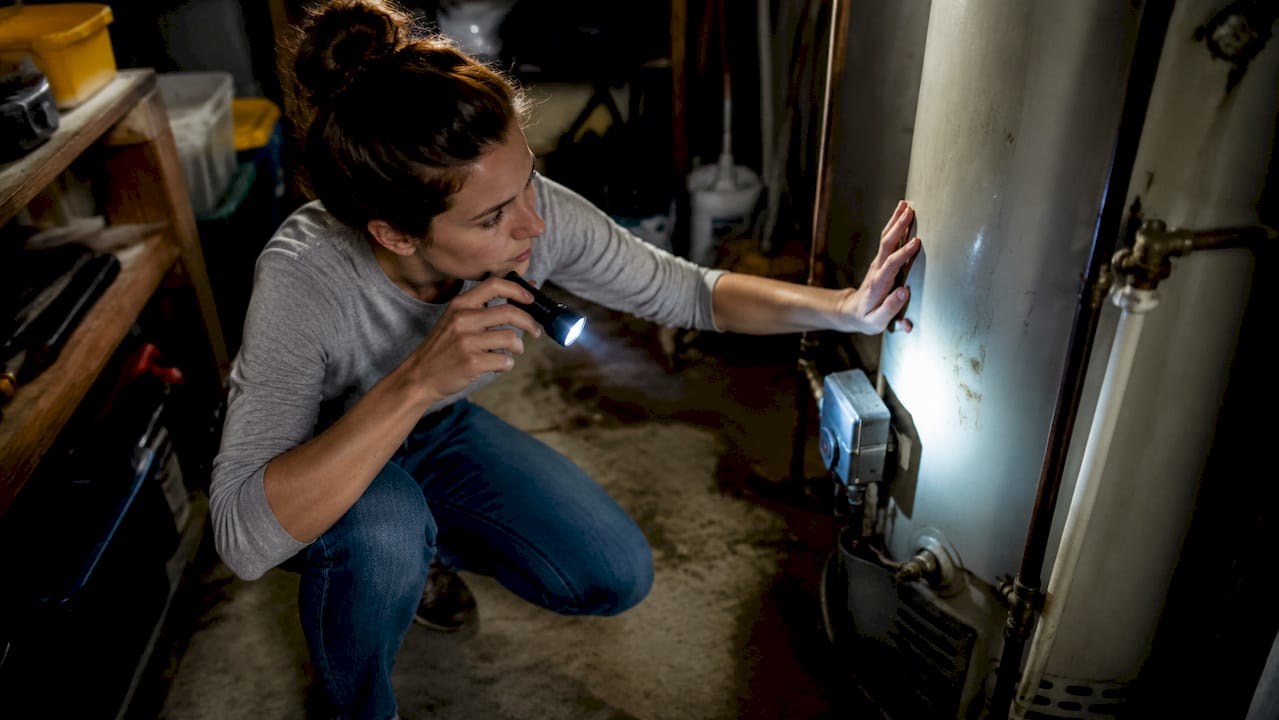
Call a professional when the breaker keeps tripping, the pilot will not stay lit after three attempts, or you smell gas near the unit.
2. How to diagnose insufficient or inconsistent hot water
Running out of hot water fast, or getting only lukewarm water, points to a different set of problems than a complete outage. The most common culprits are sediment buildup at the tank bottom, a broken dip tube, a failing lower heating element, or a thermostat set too low.
- Check the thermostat setting. The U.S. Department of Energy recommends 120°F for most households. If yours is set lower, raise it and test again.
- Inspect for sediment buildup. Hard water deposits collect at the tank bottom over time. Flushing the tank removes this buildup and restores heating efficiency.
- Test the dip tube. A broken dip tube lets cold incoming water mix directly with hot water at the top of the tank. You will notice small white plastic flakes in your faucet aerators as a telltale sign.
- Check the lower heating element. Electric water heaters use two elements. When the lower one fails, the tank heats only the top portion, cutting your usable hot water in half.
- Consider tank size. A 40-gallon tank serving a household of five will run short regardless of the heater’s condition.
Pittsburgh’s water supply carries moderate hardness, which accelerates sediment accumulation compared to softer water regions. Flushing your tank at least once a year removes sediment that reduces efficiency, causes noise, and shortens the unit’s service life. A dip tube replacement costs under $30 in parts. A lower element swap runs $20–$200 including labor.
3. Why is my water heater leaking and what to do about it?
A water heater leak is the problem most homeowners misread. Water on the floor does not always mean the tank is failing. The source of the leak determines whether you need a $15 repair or a full replacement.
| Leak location | Likely cause | Typical action |
|---|---|---|
| Top of tank | Loose inlet/outlet fittings | Tighten or replace fittings |
| Pressure relief valve | Valve releasing excess pressure | Test or replace T&P valve |
| Drain valve | Worn valve seat or loose cap | Replace drain valve |
| Bottom of tank | Internal corrosion | Replace the unit |
| Floor near tank | Condensation or migrating top leak | Dry and observe before acting |
Leaks at the top of the tank can migrate downward along the outside of the unit, making them look like bottom leaks. Dry the area completely, then watch where moisture reappears after the heater fires. This one step prevents unnecessary replacements. Pooling water around the tank base combined with rust-colored water inside the tank almost always signals internal corrosion, which means replacement is the only real fix.
Ignoring small leaks corrodes fittings and damages floors, turning a $50 repair into a $500 restoration job. Act within 48 hours of spotting any moisture.
Pro Tip: Slide a dry paper towel under the unit and check it after the heater completes a heating cycle. If it stays dry, you are likely seeing condensation, not a true leak.
4. What do unusual noises from your water heater indicate?
Strange sounds from a water heater are almost always a sediment problem. Popping, rumbling, and banging noises occur when water trapped beneath a layer of sediment at the tank bottom heats and forces its way through. Crackling sounds in electric units come from mineral deposits forming on the heating elements. A whistling or hissing sound often points to a partially open valve or, in tankless systems, scale buildup restricting water flow.
Sediment buildup causes efficiency loss and creates hot spots on the tank wall that lead to premature failure. The heater works harder and longer to reach the set temperature, which drives up your energy bill. Pittsburgh homes with older plumbing are especially prone to this because mineral deposits accumulate faster in systems with any pipe corrosion upstream.
To confirm sediment buildup, open the drain valve briefly and check for gritty, discolored water. If you see it, a full tank flush is the fix. Connect a garden hose to the drain valve, run it to a floor drain or outside, and flush until the water runs clear. The HVAC maintenance checklist from Upright Construction recommends treating water heater flushing as a seasonal task rather than a once-a-year chore.
Key noise prevention habits:
- Flush the tank every 6–12 months, more often if you have hard water.
- Install a whole-house sediment filter to reduce mineral load.
- Set the thermostat no higher than 130°F to slow scale formation.
- Inspect tankless units annually for scale on the heat exchanger.
5. How to identify and resolve rusty or smelly hot water
Discolored or foul-smelling hot water is a water quality problem with a mechanical cause. Rust-colored water signals internal tank corrosion or a depleted anode rod. A rotten egg smell means bacteria are reacting with the anode rod inside the tank, producing hydrogen sulfide gas.
The anode rod is a sacrificial magnesium or aluminum rod that corrodes in place of the steel tank wall. When it depletes, the tank starts corroding instead. Replace the anode rod immediately if more than 50% of its core wire is exposed or the rod is heavily pitted. A.O. Smith recommends checking the rod every three to five years, but Pittsburgh homes with aggressive water chemistry may need checks every two years.
Steps to address water quality problems:
- Flush the tank fully to remove rust particles and bacterial buildup.
- Inspect and replace the anode rod if it shows heavy corrosion.
- Raise the water temperature to 140°F temporarily to kill bacteria, then return to 120°F. Do not leave it at 140°F long-term if children or elderly people use the hot water.
- Use a chlorine shock treatment through the tank if odor persists after flushing.
- Schedule professional water testing if discoloration continues after these steps, as the issue may be in your supply line rather than the heater.
Rust-colored water that persists after flushing and a new anode rod almost always means the tank wall itself has corroded. At that point, replacement is the only safe option.
Key takeaways
Most common water heater problems, including no hot water, leaks, noise, and poor water quality, are preventable with regular flushing, anode rod checks, and seasonal inspections.
| Point | Details |
|---|---|
| No hot water: check basics first | Reset the breaker or relight the pilot before calling a technician. |
| Flush annually to prevent noise | Sediment buildup causes popping sounds, efficiency loss, and early tank failure. |
| Trace leaks before replacing | Top-of-tank leaks migrate downward; dry the area and observe before deciding. |
| Replace anode rod proactively | Swap it when more than 50% of the core wire is exposed to protect the tank. |
| Act fast on small leaks | Ignoring minor leaks leads to corroded fittings and costly floor damage. |
What 30 years of Pittsburgh water heaters taught me
Most homeowners call me after the problem has been obvious for weeks. The water was lukewarm. There was a faint smell. The heater made a noise every morning. They waited, hoping it would resolve itself. It never does.
The single most effective habit I have seen Pittsburgh homeowners adopt is a short seasonal check rather than one big annual inspection. Seasonal maintenance tasks get done because they are small. Annual inspections get skipped because they feel like a project. Check the anode rod in the spring. Flush the tank before winter. Test the T&P valve in the fall. That is three 20-minute tasks spread across the year, and they will extend your heater’s life by years.
The other mistake I see constantly is treating the anode rod as optional maintenance. It is not. It is the only thing standing between your tank wall and corrosion. A $30 rod replacement every few years is the cheapest insurance you can buy for a $1,500 appliance. If you have never checked yours and your heater is more than four years old, check it this week.
Pittsburgh’s water is not the hardest in Pennsylvania, but it is hard enough to accelerate sediment buildup in any tank-style heater. Homeowners who flush regularly almost never call me with noise complaints. Those who skip it call me every two to three years with a heater that sounds like a coffee percolator. The fix is simple. The cost of ignoring it is not.
— Maayan
Ag-plumbing: water heater repair and maintenance in Pittsburgh
Ag-plumbing has served Pittsburgh homeowners for 30 years, handling everything from pilot light failures to full tank replacements. The team at AG Heating, Cooling & Plumbing offers scheduled maintenance inspections, same-day diagnostics, and emergency repair services across Pittsburgh and the surrounding areas.
Whether your heater is leaking, making noise, or simply not producing enough hot water, Ag-plumbing’s licensed technicians diagnose the problem fast and give you a clear repair-versus-replace recommendation before any work begins. Ag-plumbing also offers plumbing repair services for homeowners dealing with multiple issues at once. Call or schedule online to get your water heater back to full performance.
FAQ
Why is my water heater not producing any hot water?
The most common causes are a tripped circuit breaker, a failed heating element in electric units, or a pilot light outage in gas units. Check the breaker panel and reset button first before calling a technician.
How often should I flush my water heater?
Flush a tank-style water heater once every 6–12 months to remove sediment buildup. Pittsburgh homeowners with hard water should flush closer to every six months.
What does a rotten egg smell from hot water mean?
The odor comes from bacteria reacting with the anode rod inside the tank, producing hydrogen sulfide gas. Flushing the tank and replacing a depleted anode rod resolves the problem in most cases.
When should I replace my water heater instead of repairing it?
Replace the unit when you see pooling water at the base combined with rust-colored water, which signals internal tank corrosion. Full tank replacements typically cost over $2,500, so get a professional diagnosis before deciding.
Can I fix a leaking water heater myself?
Loose fittings and a worn drain valve are DIY-friendly repairs. A failing T&P relief valve or any leak at the tank base requires a licensed plumber, as these involve safety components or potential tank failure.
Recommended
- Water Heaters: What Every Pittsburgh Homeowner Must Know – AG-Plumbing
- How to Troubleshoot Water Heater Problems at Home – AG-Plumbing
- Why flushing your water heater saves Pittsburgh homes money – AG-Plumbing
- Upgrade your water heater and save money in Pittsburgh – AG-Plumbing
