
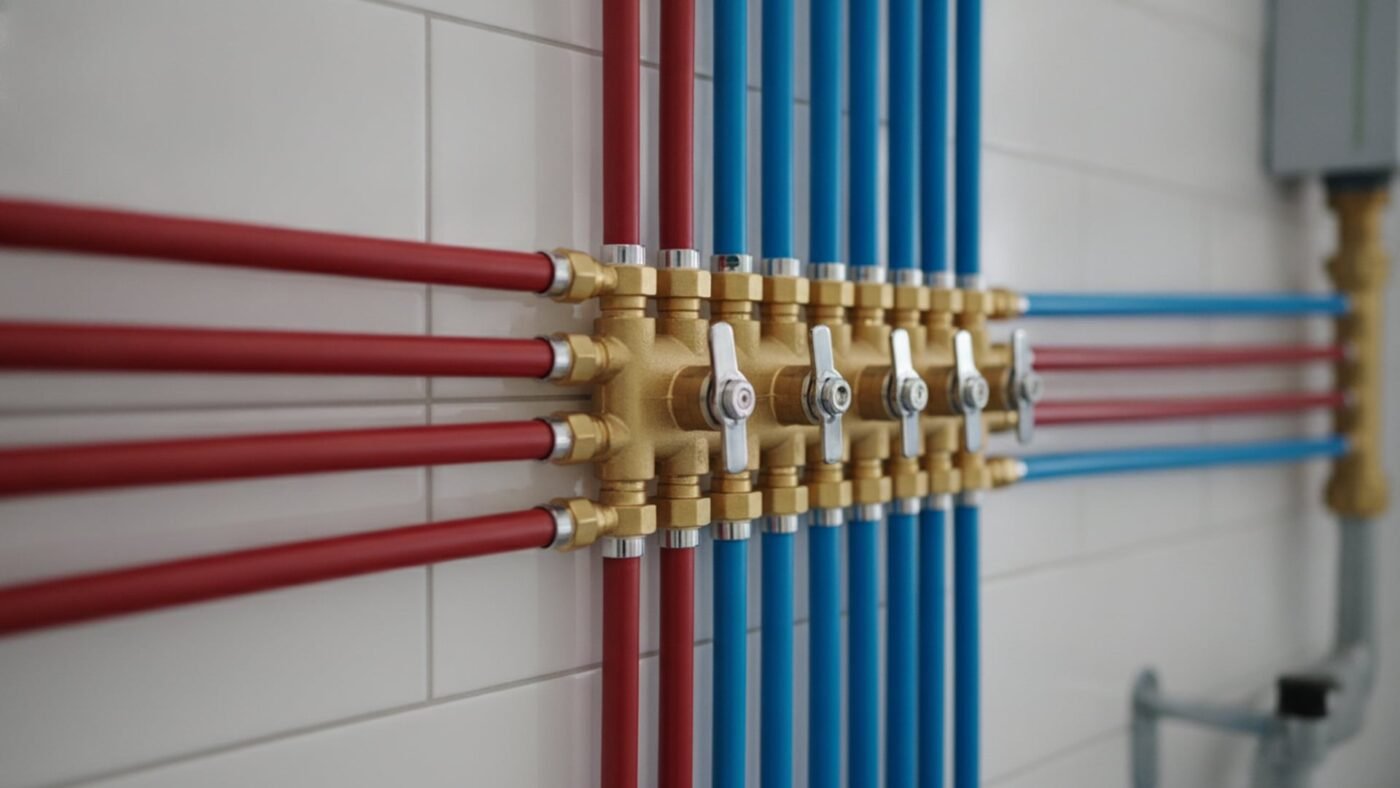
Understanding How Plumbing Manifolds Function
When asking what is a manifold in plumbing, it refers to a central distribution hub that receives water from a primary supply line and directs it to multiple branch lines. In residential systems, this central assembly acts like a circuit breaker box to regulate fluid distribution throughout the structure. [Source: Manifold Supply Plumbing]
When reviewing a proposed manifold, identify the labeled inlets, outlets, valves, and connected lines. The description or plan should make clear which parts of the plumbing arrangement each connection serves without assuming a particular internal layout.
Comparison table
Key Factors for Evaluating Manifold Systems
Start with outlet capacity: the manifold needs enough connections for the intended fixtures, plus any deliberately planned additions. Consider where the unit will sit, whether its valves remain reachable, and how clearly each branch can be identified. The inlet, outlets, valves, and connected piping should also form a compatible assembly rather than a collection of mismatched parts.
Next, evaluate the network layout. Long or awkward branch routes may offset the organizational value of a central system, while a well-positioned manifold can simplify line routing. Material preferences, available wall or cabinet space, and the desired level of individual fixture control also shape the choice. Review the proposed location, connection count, and access requirements against the building’s actual layout before committing to a configuration.
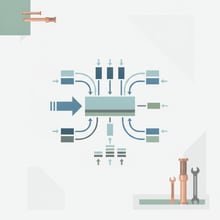
Infographic at a glance
Visual summary of central distribution hubs and PEX line configurations in modern plumbing systems.
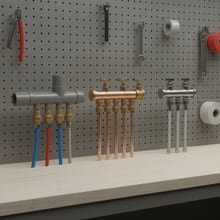
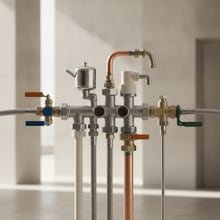
Common Types of Plumbing Manifolds and Configurations
Understanding what a manifold is in plumbing requires examining the proposed layout, port count, and material compatibility rather than assuming every unit operates identically. Identifying incoming service connections and fixture outlets ensures proper alignment with the overall plumbing plan.
Configuration choices can be evaluated by the required connection count, available mounting space, connection method, and intended control arrangement. Product-specific descriptions should identify whether valves are included and how the listed components connect.
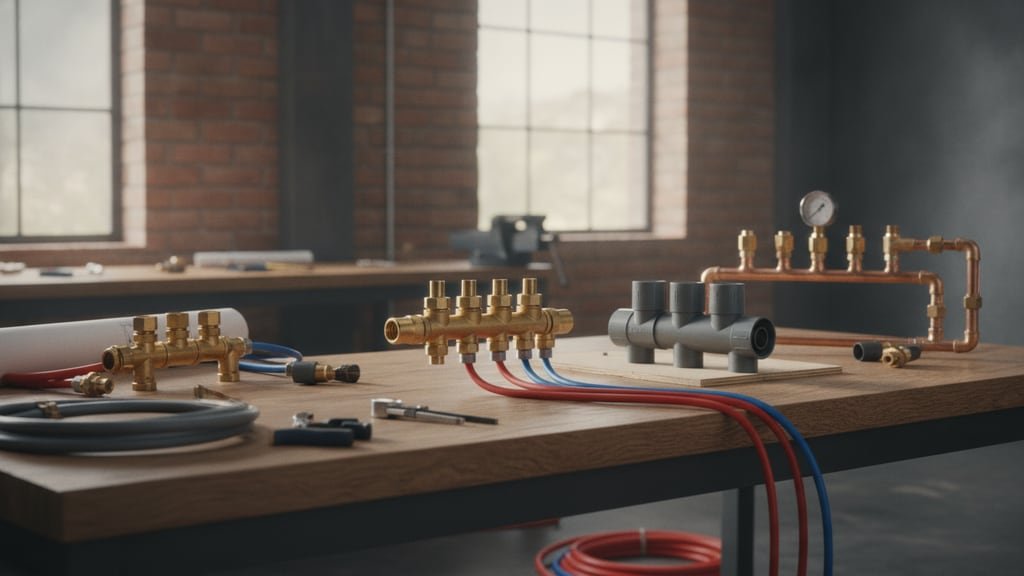
System Limitations and Installation Constraints
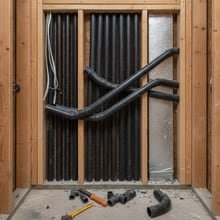
For an installation proposal, evaluate the available service space and possible pipe routes before selecting a layout. The plan should account for where the component and its connections will be located and how they relate to existing plumbing.
Review the specified manifold, tubing, fittings, and connection method together. Count the required connections, identify the proposed routes, and compare the available space with the dimensions and arrangement shown in the project plan.
Selecting and Maintaining Your Plumbing Network
Selection should consider the complete plumbing arrangement rather than the manifold alone. Use clear labels for the proposed connections and retain the product information needed to identify the component, fittings, and connection method.
Base the decision on available space, pipe routes, connection method, outlet count, access, and the practical cost of installation. Compare common manifold types and configurations against those criteria instead of selecting by size alone. For a new layout or substantial retrofit, ask the provider to review the proposed network and provide a clearly scoped installation option before materials are purchased.
FAQ
How does a central water distribution hub affect pressure when multiple fixtures run simultaneously?
Because dedicated lines run directly from the central hub to individual fixtures, opening a faucet in one room rarely causes sudden pressure drops or temperature swings in another . Traditional trunk-and-branch systems split flow along a single shared line, making them vulnerable to demand spikes .
Can an existing residential system be retrofitted with a distribution manifold during a partial renovation?
Retrofitting depends heavily on access to wall cavities and existing pipe layouts. While installing a distribution hub in a new build or full renovation is straightforward, partial remodels require planning how dedicated lines will reach targeted fixtures .
How do individual shut-off valves on a central hub simplify home pipe repairs?
Individual valves on a central hub allow residents or technicians to isolate a single malfunctioning fixture without cutting off water to the entire building . If a sink faucet leaks, turning its designated valve at the hub stops supply to that specific line while kitchen and bathroom fixtures remain operational .
