
TL;DR:
- Properly installed pipe insulation reduces heat loss, prevents pipe freezing, and controls condensation to extend plumbing lifespan and lower energy costs. It works by creating a thermal barrier that slows heat transfer and provides moisture resistance, especially with the right material and fit. Insulating hot and cold water pipes offers measurable savings, with lifespan exceeding 20 years, making it a cost-effective, high-return climate action for homeowners and builders.
Pipe insulation is a protective thermal layer wrapped around pipes that reduces heat loss, prevents freezing, and controls condensation to protect your plumbing system and cut energy costs. The role of pipe insulation goes far beyond wrapping foam around a pipe. It is one of the most cost-effective upgrades a homeowner or builder can make, delivering measurable savings on utility bills while extending the life of the entire plumbing system. The U.S. Department of Energy, the International Energy Agency, and building science researchers all point to pipe insulation as a low-cost, high-return investment that most homeowners still overlook.
How does pipe insulation work to protect your home?
Pipe insulation works by creating a thermal resistance layer between the pipe surface and the surrounding air. Heat naturally moves from warmer areas to cooler ones, and uninsulated hot water pipes lose energy continuously as water travels from your water heater to the tap. Insulation slows that transfer, keeping water hotter longer and reducing the energy your water heater needs to maintain temperature.
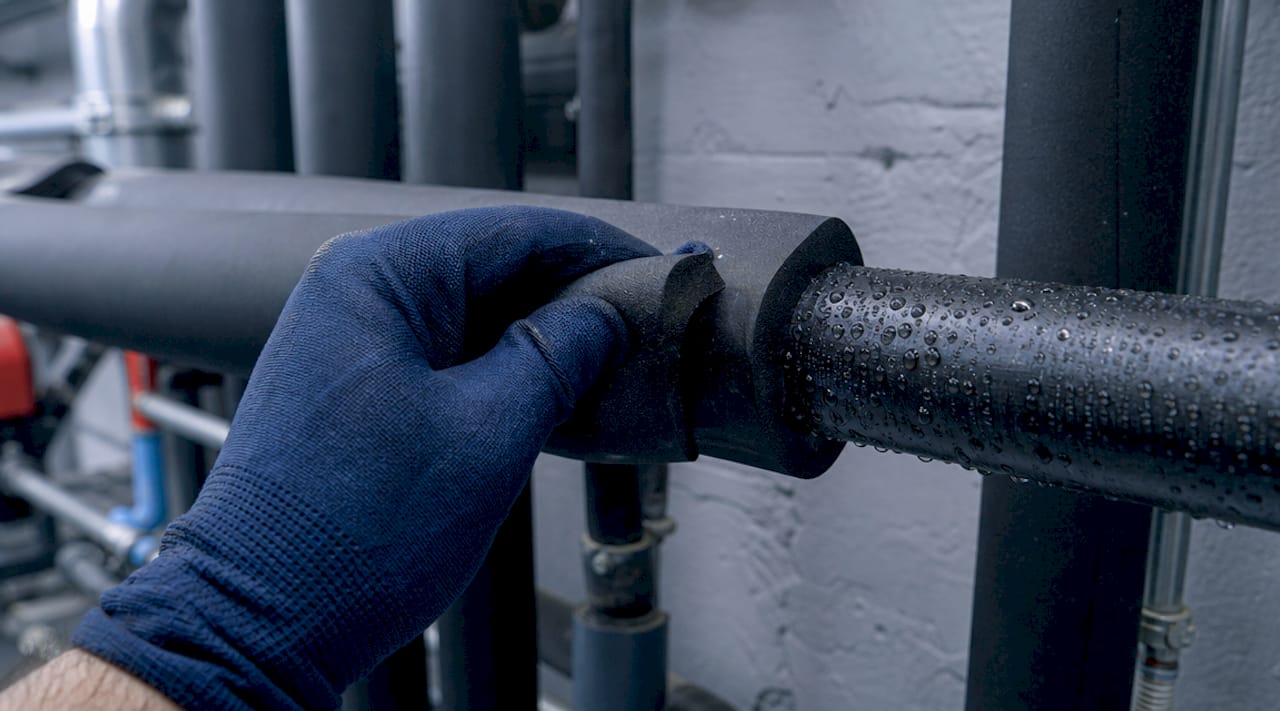
The thickness of the insulation material directly affects how much heat loss is reduced. Energy loss from uninsulated pipes on exposed hot water lines can be cut by 75% to 90% with correct insulation thickness. That figure means a properly insulated pipe run wastes almost none of the energy your water heater produces.
Moisture control is the second major function. Cold water pipes in warm, humid spaces attract condensation on their outer surface, the same way a cold glass sweats on a summer day. Pipe insulation without vapor barriers may transfer moisture into the insulation interior, worsening the problem rather than solving it. Materials like elastomeric rubber foam include a built-in vapor barrier that stops moisture from forming inside the insulation layer itself.
Insulation also delays freezing in cold climates. It does not permanently prevent a pipe from freezing if temperatures drop far enough for long enough, but it buys critical time during a cold snap. For Pittsburgh, PA homeowners dealing with harsh winters, that delay can be the difference between a functioning pipe and a burst one.
Pro Tip: Match the insulation’s inner diameter exactly to the pipe’s outer diameter. Loose-fitting insulation creates air gaps that trap moisture and accelerate mold growth inside the insulation.
What are the primary benefits of pipe insulation for homeowners and builders?
The benefits of pipe insulation are concrete and quantifiable, not theoretical. The U.S. Department of Energy confirms that insulating accessible hot water pipes raises water temperature at the tap by 2°F to 4°F and reduces annual energy costs by 3% to 4%. For a household spending $1,200 per year on water heating, that translates to $36 to $48 in savings annually from a project that costs under $50 in materials.
Here is a summary of the core advantages:
- Energy savings: Less heat loss means your water heater runs less often, directly lowering gas or electric bills.
- Higher tap temperature: Water arrives hotter, so you run the tap less before it reaches your desired temperature.
- Freeze protection: Insulation delays the freezing process, protecting pipes during cold snaps in unheated spaces like basements, crawl spaces, and garages.
- Condensation control: Insulated cold water pipes stay above the dew point of surrounding air, preventing surface moisture that leads to mold and structural water damage.
- Extended plumbing lifespan: Pipes protected from thermal stress and moisture exposure last longer and require fewer repairs.
- Reduced carbon footprint: Less energy consumption means lower greenhouse gas emissions from your home.
“Thermal insulation of piping is a ‘no-regrets’ carbon reduction option.” Pipe insulation applied broadly could save energy equivalent to millions of households annually, making it one of the simplest climate actions available at the residential level.
The importance of insulating pipes becomes especially clear when you consider that most heat loss in a plumbing system happens in the distribution lines, not the water heater itself. Upgrading your water heater while leaving pipes uninsulated is like buying a fuel-efficient car and leaving the windows open. Ag-plumbing’s guide on plumbing energy efficiency explains how pipe upgrades and insulation work together to reduce overall home energy use.
What are the common pipe insulation types and how do you choose?
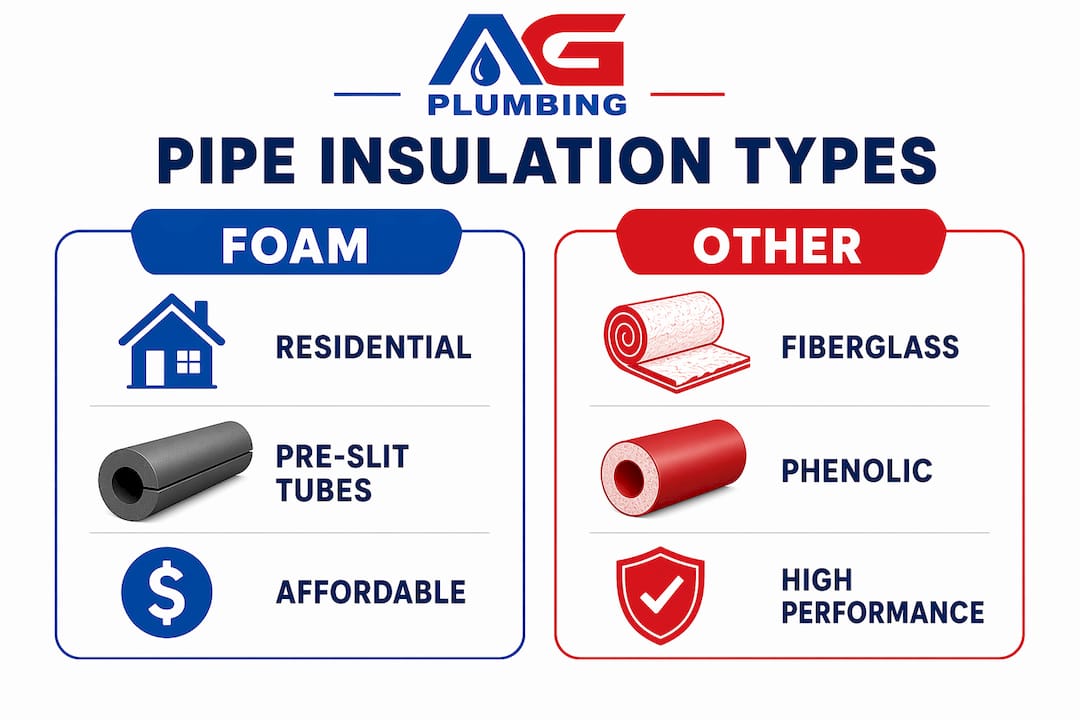
Selecting the right insulation material depends on pipe temperature, location, moisture exposure, and local building codes. The five most common pipe insulation types each serve a different set of conditions.
| Material | Best Use | Key Property | Lifespan |
|---|---|---|---|
| Foam pipe insulation | Residential hot and cold water pipes | Easy to install, pre-slit tubes | 20+ years |
| Elastomeric rubber foam | Cold water pipes, humid spaces | Built-in vapor barrier | 20+ years |
| Fiberglass pipe wrap | High-temperature lines, near flues | Heat-resistant, handles 1,000°F+ | 20+ years |
| Mineral wool | Industrial and high-heat applications | Fire-resistant, excellent thermal performance | 25+ years |
| Phenolic insulation | Commercial and high-performance builds | Highest thermal resistance, fire-safe | 30+ years |
Foam pipe insulation is the go-to choice for most residential projects. It comes in pre-slit tubes sized to standard pipe diameters, making DIY installation straightforward. Elastomeric rubber foam, sold under brands like Armacell’s Armaflex, is the better choice for cold water pipes in basements or crawl spaces where humidity is high. Its closed-cell structure blocks moisture migration that open-cell foam cannot stop.
Fiberglass pipe wrap is the correct choice near gas-fired water heater vents. For gas water heaters, insulation must maintain a safety clearance of at least 6 inches from vent flues, and fiberglass wrap is recommended near heat sources instead of foam, which can melt or ignite. Builders working on new construction in Pennsylvania should verify compliance with the International Energy Conservation Code, which sets minimum insulation requirements for supply and recirculation piping.
Phenolic insulation delivers the highest thermal performance per inch of thickness and is worth the higher cost in commercial builds or homes with long pipe runs. PVC-coated insulation works well for outdoor or exposed pipes where UV exposure and physical damage are concerns.
Pro Tip: When installing insulation near gas appliance vents, always check the manufacturer’s clearance requirements and local code. Using foam within the restricted zone is a fire hazard that no energy savings can justify.
How to properly install and maintain pipe insulation
Correct installation determines whether pipe insulation delivers its full performance or creates new problems. Follow these steps to get it right the first time.
- Measure your pipes. Use a tape measure to find the outer diameter of each pipe. Insulation is sized by inner diameter, which must match the pipe’s outer diameter tightly.
- Start at the water heater. Insulate the first 3 to 6 feet of both the hot water outlet pipe and the cold water inlet pipe connected to your water heater. This stretch loses the most heat and delivers the fastest return.
- Cut insulation to length. Use sharp scissors or a utility knife. Pre-slit foam tubes open along one side and snap onto the pipe without removing fittings.
- Seal all seams. Use purpose-made insulation tape or the self-sealing adhesive strip included on many foam products. Unsealed seams allow air and moisture to enter.
- Secure every foot or two. Proper installation involves securing insulation every foot or two with tape or plastic clamps to prevent sagging or separation over time.
- Avoid compression. Never crush or compress insulation to fit a tight space. Compressed insulation loses its thermal resistance and traps moisture.
- Inspect annually. Check for signs of moisture intrusion, discoloration, or physical damage each year. In cold climates, inspect after every hard freeze season.
For outdoor pipes and those in unheated spaces, Ag-plumbing’s resource on cold climate outdoor plumbing covers additional steps specific to Pittsburgh winters, including when to add heat tape alongside insulation for maximum freeze protection.
Pro Tip: Do not skip the cold water inlet pipe at your water heater. Cold water entering a warm mechanical room picks up heat from the air before it even reaches the heater, and insulating that inlet pipe reduces standby heat gain.
Key takeaways
Pipe insulation for energy efficiency is one of the highest-return, lowest-cost upgrades available to homeowners and builders, cutting heat loss by up to 90% and reducing annual water heating costs by 3% to 4%.
| Point | Details |
|---|---|
| Energy savings are real and measurable | Insulating hot water pipes saves 3% to 4% on annual energy costs per the U.S. Department of Energy. |
| Material selection matters | Match insulation type to pipe temperature and location: foam for general use, elastomeric for humid spaces, fiberglass near flues. |
| Fit determines performance | Insulation inner diameter must match pipe outer diameter exactly to prevent air gaps and moisture problems. |
| Lifespan is long | Foam and PVC insulation last 20+ years; phenolic materials last 30+ years, making installation a one-time investment. |
| Cold water pipes need insulation too | Insulating cold water pipes prevents condensation, mold, and structural water damage in humid or warm spaces. |
Why pipe insulation is the upgrade most homeowners get wrong
I have seen hundreds of homes in Pittsburgh where the water heater was replaced, the fixtures were upgraded, and the pipes were left completely bare. Homeowners spend thousands on a high-efficiency water heater and then lose a significant portion of that efficiency through uninsulated distribution lines running through an unheated basement. The math does not work in their favor.
The part that surprises most people is the cold water side. Everyone understands that hot pipes lose heat. Fewer people realize that proper pipe insulation keeps cold water pipes from sweating, which is the hidden source of mold problems in basements and crawl spaces across the region. I have walked into finished basements where the drywall was damaged not by a leak but by years of condensation dripping off uninsulated cold water pipes above the ceiling.
Builders have a bigger responsibility here than homeowners do. When insulation is installed correctly during construction, it costs almost nothing relative to the total build budget. Retrofitting it later costs three to five times more in labor. The International Energy Conservation Code now mandates minimum pipe insulation in many jurisdictions, but code minimum and best practice are not the same thing. Specifying one additional inch of insulation thickness on long pipe runs in unconditioned spaces is a decision that pays back within two heating seasons.
Pipe insulation is a no-regrets climate action at the building scale. If you are planning a renovation, add pipe insulation to the scope. It is the one upgrade that costs almost nothing, requires no maintenance for decades, and delivers returns from the first month.
— Maayan
Get professional pipe insulation help in Pittsburgh
Ag-plumbing has served Pittsburgh, PA homeowners and builders for 30 years, handling everything from pipe insulation assessments to full plumbing system upgrades.
Whether you need a professional to insulate your water heater lines, assess your basement pipes for moisture risk, or upgrade your entire plumbing system for maximum efficiency, the AG Heating, Cooling & Plumbing team delivers work that meets code and exceeds expectations. Our technicians know Pittsburgh’s climate and the specific challenges that come with cold winters and older housing stock. Visit AG Heating, Cooling & Plumbing to schedule a consultation, or explore our plumbing repair services if you are already dealing with pipe damage or moisture issues.
FAQ
What is the role of pipe insulation in a home?
Pipe insulation reduces heat loss from hot water pipes, prevents cold water pipes from sweating, and delays freezing during cold weather. It protects your plumbing system and lowers water heating energy costs by 3% to 4% annually.
How much energy does pipe insulation actually save?
The U.S. Department of Energy states that insulating accessible hot water pipes raises water temperature at the tap by 2°F to 4°F and cuts annual water heating costs by 3% to 4%. On exposed pipe runs, correct insulation thickness reduces heat loss by 75% to 90%.
What type of pipe insulation is best for cold water pipes?
Elastomeric rubber foam, such as Armacell’s Armaflex, is the best choice for cold water pipes in humid spaces because its closed-cell structure acts as a vapor barrier and prevents condensation from forming inside the insulation.
How long does pipe insulation last?
Foam and PVC-coated pipe insulation typically last 20 or more years. Phenolic insulation can remain effective for 30 or more years, making it a long-term investment with minimal maintenance requirements.
Can I install pipe insulation myself?
Yes. Pre-slit foam tube insulation is designed for DIY installation on standard residential pipes. The critical steps are matching the insulation inner diameter to the pipe outer diameter, sealing all seams with tape, and using fiberglass wrap instead of foam within 6 inches of gas water heater vent flues.
Recommended
- How plumbing improves energy efficiency and cuts costs – AG-Plumbing
- Why Pipe Sizing Matters for Your Pittsburgh Home – AG-Plumbing
- Pipe sweating explained: causes, solutions, and Pittsburgh tips – AG-Plumbing
- Plastic Piping for Pittsburgh Homes: Efficient Plumbing – AG-Plumbing
