
TL;DR:
- Plastic pipes like PEX, CPVC, and PVC are cost-effective, corrosion-resistant, and suitable for Pittsburgh’s climate.
- PEX-A is highly recommended for freeze-thaw conditions due to its flexibility and expansion capabilities.
- Local codes require permits and inspections, making professional installation essential for safety and compliance.
Metal pipes ruled Pittsburgh homes for generations. But more homeowners and property managers are switching to plastic piping options like PEX, CPVC, and PVC, and for good reason. These materials cost less, resist Pittsburgh’s brutal freeze-thaw winters, and meet current local codes. This guide walks you through the main plastic pipe types, how they compare, what local regulations require, and how to get real cost savings on your next plumbing project. By the end, you will know exactly which option fits your home and budget.
Table of Contents
- What is plastic piping and how does it work?
- Types of plastic piping systems used in Pittsburgh homes
- Local plumbing codes and regulations for plastic piping
- Cost, efficiency, and real-world performance of plastic piping
- Our take: What most Pittsburgh homeowners miss about plastic piping
- Need help with plastic piping in Pittsburgh?
- Frequently asked questions
Key Takeaways
| Point | Details |
|---|---|
| Pittsburgh-approved options | PEX, CPVC, and PVC plastic pipes are all approved for residential plumbing in Pittsburgh under county code. |
| Freeze resistance matters | For Pittsburgh’s winter climate, PEX-A stands out for flexibility and freeze resistance. |
| Permits required | Homeowners must obtain permits and pass inspections for plastic piping work in Allegheny County. |
| Cost and efficiency | Plastic piping offers savings and performance advantages over metal for many Pittsburgh plumbing projects. |
What is plastic piping and how does it work?
Plastic piping is exactly what it sounds like: pipe made from polymer materials instead of copper, galvanized steel, or cast iron. In a Pittsburgh home, that distinction matters more than most people realize. Metal pipes corrode over time, especially in older homes with acidic water. Plastic pipes do not rust, and they are far lighter, which simplifies both installation and long-term maintenance.
The three types you will encounter most often in Pittsburgh are PEX, CPVC, and PVC. Each serves a distinct role in your plumbing system, and mixing them up can cause real problems.
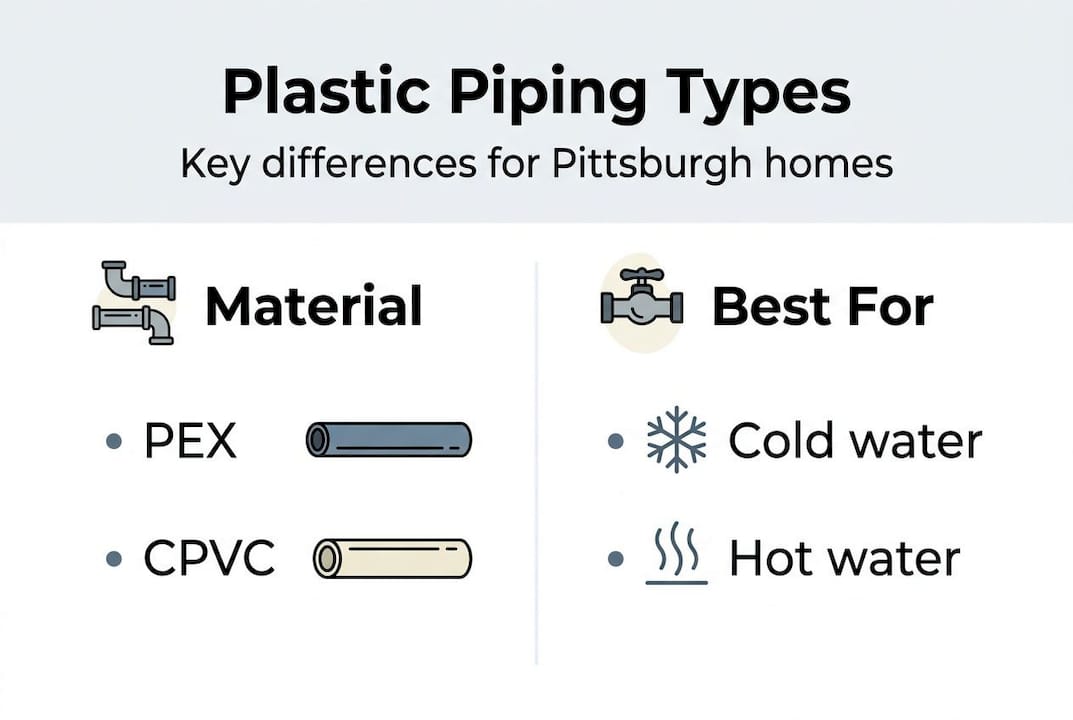
PEX (cross-linked polyethylene) is flexible, color-coded (blue for cold, red for hot), and bends around corners without fittings. Plumbers love it for retrofitting older homes because it threads through walls without major demolition. It handles both hot and cold water supply lines.
CPVC (chlorinated polyvinyl chloride) is rigid and handles higher temperatures than standard PVC. It works well for hot water lines and is approved for interior water supply in most residential applications.
PVC (polyvinyl chloride) is the white pipe you see in drain, waste, and vent systems. It is not rated for hot water supply, but it excels in drainage applications and outdoor irrigation lines.
Here is a quick look at common applications:
- PEX: Hot and cold water supply lines, radiant floor heating, retrofits in older Pittsburgh rowhouses
- CPVC: Hot water distribution, water heater connections, indoor supply in new construction
- PVC: Drain and waste lines, vent stacks, sewer connections, irrigation systems
“Plastic pipes, including PEX, CPVC, and PVC, are widely used in residential plumbing because they resist corrosion, reduce installation time, and lower material costs compared to metal alternatives.”
Understanding choosing plumbing materials the right way from the start prevents costly rework. In Pittsburgh specifically, the age of your home plays a big role. Many properties date back to the early 1900s and still carry original metal pipe, making plastic a practical upgrade. Plastic pipes are permitted under current Pittsburgh and Allegheny County codes, so the path to upgrading is clearer than many homeowners expect.
Types of plastic piping systems used in Pittsburgh homes
With a basic understanding of plastic piping in hand, let’s compare the most common types you will encounter in Pittsburgh homes side by side.
| Pipe type | Durability | Installation difficulty | Relative cost | Best use |
|---|---|---|---|---|
| PEX-A | Very high | Easy (flexible) | Low to moderate | Water supply, retrofits |
| PEX-B | High | Easy | Low | Water supply, general use |
| CPVC | High | Moderate (rigid) | Moderate | Hot water lines |
| PVC | High | Easy to moderate | Low | Drains, vents, irrigation |
Pittsburgh winters are no joke. Temperatures regularly drop below 20°F, and any pipe exposed to freezing conditions risks bursting. That is where PEX-A earns its reputation. PEX-A is recommended for freeze-thaw cycles common in Pittsburgh winters because its molecular structure allows it to expand without cracking when water inside freezes. PEX-B is also freeze-resistant but less flexible, making PEX-A the top pick for unheated spaces like crawlspaces, garages, or exterior walls.
CPVC handles temperatures up to around 200°F, which makes it ideal for hot water distribution. However, it becomes brittle in freezing temperatures and is not a good fit for areas without consistent heat. PVC works great for drain lines, which are not under pressure and are not carrying hot water, but it should never be used for supply lines.
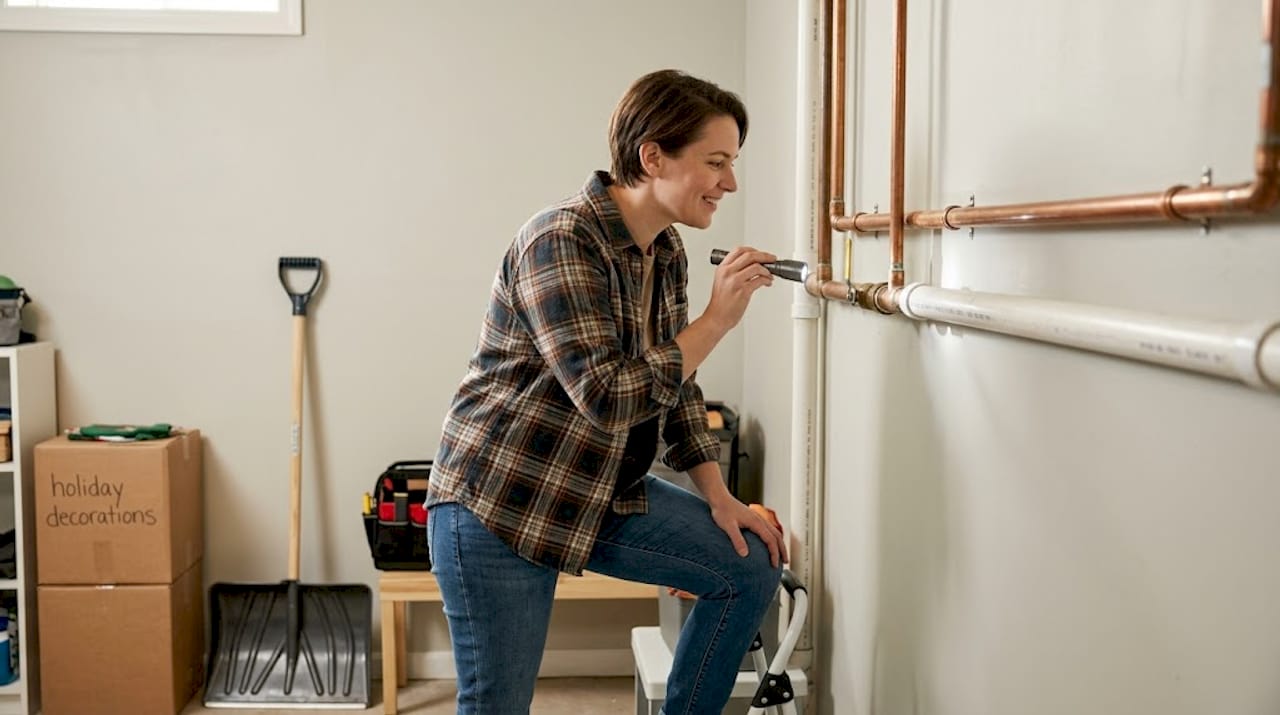
Pro Tip: When replacing pipes in a Pittsburgh home built before 1970, always check whether the existing system used lead solder or galvanized steel. Mixing old metal connections with new plastic fittings requires adapter hardware and careful sealing to prevent leaks at junctions.
For homeowners focused on plumbing for comfort and long-term performance, PEX-A in supply lines paired with PVC in drain lines is the combination most Pittsburgh plumbers recommend. It covers freeze resistance, flexibility for older home layouts, and cost efficiency all at once.
Climate is a big factor here. Homes in hilly Pittsburgh neighborhoods like Mount Washington or Beechview often have exposed crawlspaces that see dramatic temperature swings. Choosing the wrong pipe type in those areas is not just a code issue, it is a burst pipe waiting to happen.
Local plumbing codes and regulations for plastic piping
Once you have chosen the right type of plastic piping, making sure your project lines up with local Pittsburgh regulations is not optional. It is required.
Allegheny County’s Health Department enforces UCC and IPC standards on plastic pipe use in residential and commercial plumbing. The Uniform Construction Code (UCC) and International Plumbing Code (IPC) set baseline rules for materials, installation methods, and system performance. Pittsburgh operates under these standards with local amendments.
Here is what the permit and inspection process looks like for a typical plastic piping project:
- Submit a permit application to the Allegheny County Health Department or the relevant local municipality, depending on your address.
- Include a project scope detailing what pipe types you plan to use, where they will be installed, and what they will connect to.
- Schedule a rough-in inspection before walls are closed. An inspector confirms that pipe sizing, slope for drain lines, and material choices meet code.
- Pass final inspection after the job is complete and fixtures are connected.
- Retain your permits as part of your home’s documentation, especially if you plan to sell.
Skipping any of these steps is a common and costly mistake. Unpermitted plumbing work can void homeowner’s insurance, delay property sales, and require expensive rework.
Here is a quick summary of common compliance issues:
| Common mistake | Code consequence |
|---|---|
| Using PVC for hot water supply | Fails material rating standards |
| No cleanout access on drain lines | Fails IPC drain requirements |
| Incorrect pipe slope (less than 1/4 inch per foot) | Fails drainage code |
| Missing permits | Requires demolition for reinspection |
For inspiration on fixtures and layouts that work within code, check out top plumbing ideas for Pittsburgh homeowners, or review the installing fixtures guide for step-by-step compliance tips.
Cost, efficiency, and real-world performance of plastic piping
With regulations covered, here is the question most Pittsburgh homeowners care about most: does plastic piping actually save money and perform well over time?
The short answer is yes, and the numbers back it up. Copper pipe material alone can cost two to three times more per linear foot than PEX. Add in labor, and the gap widens further because PEX installs faster with fewer fittings. Local plumbers highlight the efficiency and freeze resistance of PEX piping as key reasons Pittsburgh homeowners are choosing it for full repiping projects.
Here are the key financial and performance advantages plastic piping delivers:
- Lower material cost: PEX and PVC run significantly cheaper than copper or galvanized steel per linear foot.
- Reduced labor time: Flexible PEX snakes through walls without the number of fittings rigid pipe requires, cutting installation hours.
- Corrosion immunity: No rust, no mineral buildup from Pittsburgh’s water chemistry, and no pinhole leaks over time.
- Energy efficiency: PEX has lower thermal conductivity than copper, which means hot water stays warmer longer in the pipe before it reaches your faucet.
- Longevity: Quality PEX and CPVC installations routinely last 40 to 50 years with minimal maintenance.
Consider a real scenario: a Pittsburgh homeowner in Squirrel Hill replaces original galvanized steel pipes throughout a 1,800-square-foot home. Using PEX-A for all supply lines and PVC for drain lines, the total project cost runs noticeably lower than the same job done in copper. Over five years, the homeowner also notices reduced water heating costs due to PEX’s better insulating properties.
Pro Tip: Insulate your PEX pipes in unheated spaces even though PEX can handle freezing better than other materials. Foam pipe insulation is inexpensive and adds another layer of protection during Pittsburgh’s harshest months, reducing heat loss and keeping energy bills lower.
For more ways to manage plumbing expenses, the cost-saving plumbing tips resource covers practical strategies, and plumbing repair examples shows what common repairs actually look like in Pittsburgh homes.
Our take: What most Pittsburgh homeowners miss about plastic piping
After 30 years of working in Pittsburgh homes, we have noticed a pattern: homeowners research plastic versus metal pipe costs carefully, but they underestimate two things that matter just as much.
First, Pittsburgh’s older housing stock is a unique case. Row homes and brick colonials built between 1900 and 1960 were not designed with today’s piping systems in mind. Plastic piping, especially flexible PEX, adapts to these layouts far better than rigid alternatives. It is not just cheaper. It is genuinely better suited to the city’s architecture.
Second, the installer’s skill level shapes the outcome more than the pipe material itself. We have seen PEX installations fail because of improper crimp ring placement. We have seen CPVC crack because a plumber overtightened fittings. The material does not perform on its own.
The biggest oversight we see is homeowners skipping the code check entirely. They assume a basic job does not require a permit, close up the walls, and discover the problem only when they sell. Working with professional Pittsburgh plumbers from the start protects your investment and avoids that painful surprise.
Need help with plastic piping in Pittsburgh?
Understanding your options is a great first step. Taking action with the right team behind you is what actually protects your home.
At AG Heating, Cooling & Plumbing, our team has spent 30 years navigating Pittsburgh’s unique plumbing challenges, from aging infrastructure to freezing winters and strict county codes. Whether you need a full repipe, a targeted repair, or a professional code review before a renovation, we handle it with the experience and precision your home deserves. Explore our plumbing repair service to see what we offer, browse essential plumbing services for homeowners, or visit AG Heating, Cooling & Plumbing to connect with our Pittsburgh team today.
Frequently asked questions
Are plastic pipes allowed in Pittsburgh home plumbing?
Yes, plastic pipes are permitted in Pittsburgh under current Health Department and UCC/IPC standards, as long as installation follows applicable codes and passes required inspections.
Which plastic pipe is best for cold Pittsburgh winters?
PEX-A is the top choice because its flexibility allows it to expand under freezing conditions without cracking. Local plumbers recommend PEX-A specifically for Pittsburgh’s freeze-thaw cycles.
Do I need a permit to install plastic piping in my Pittsburgh home?
Yes, permits and inspections are required for most plumbing work in Pittsburgh. Always confirm requirements with the Allegheny County Health Department before starting your project, as plumbing permits and inspections are actively enforced.
How does plastic piping compare in cost to copper pipes?
Plastic piping costs less to purchase and install than copper, with faster installation reducing labor expenses and the elimination of corrosion cutting long-term maintenance costs significantly.
Recommended
- How to Choose Plumbing Materials for Pittsburgh Homes – AG-Plumbing
- How plumbing improves energy efficiency and cuts costs – AG-Plumbing
- Cost-saving plumbing tips for Pittsburgh homeowners – AG-Plumbing
- Top bathroom plumbing ideas for Pittsburgh homeowners – AG-Plumbing
