
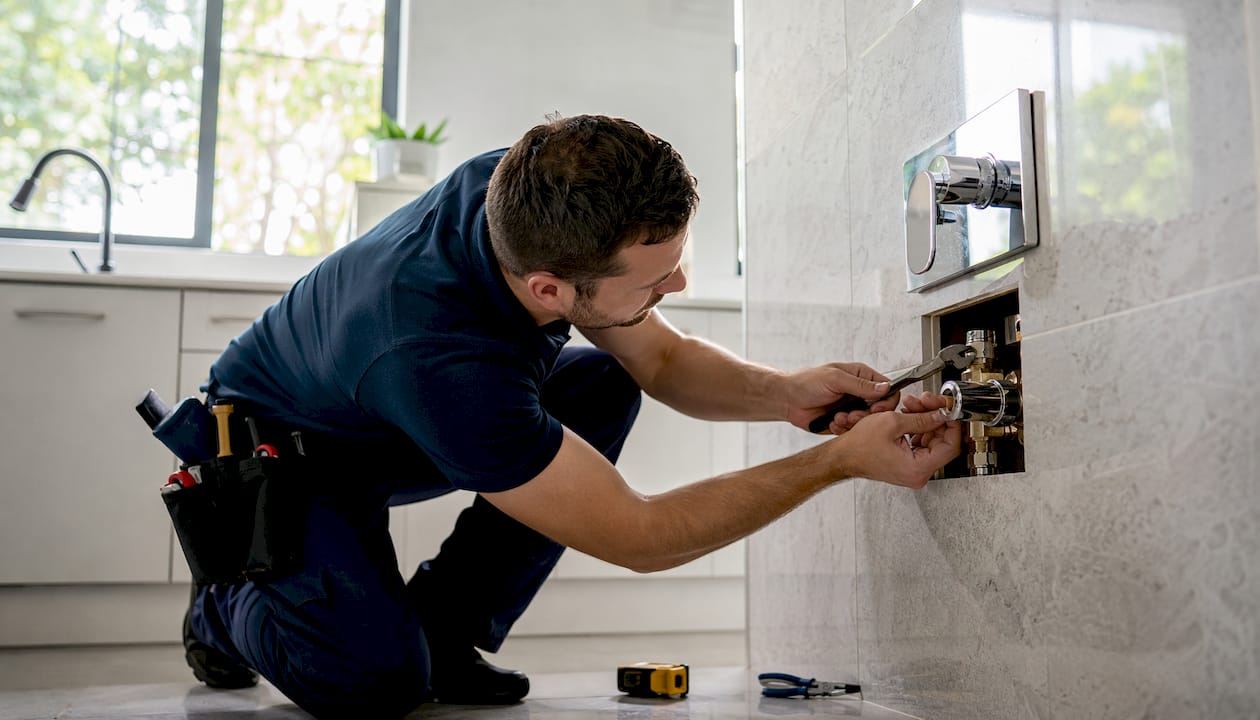
Why pressure balancing valves are a shower safety essential
A pressure balancing valve is a plumbing safety device that keeps your shower water temperature stable by automatically adjusting the ratio of hot to cold water pressure. When someone flushes a toilet or runs a faucet elsewhere in the house, cold water pressure drops suddenly, and without this valve, your shower can spike to a scalding temperature in seconds. The valve reacts in milliseconds to compensate, keeping the temperature consistent.
The safety case is straightforward. Scalding injuries are a real risk, particularly for children, elderly adults, and anyone with limited mobility who cannot jump away from a sudden burst of hot water. Some municipalities now require pressure-balanced valves by building code for exactly this reason.
Key safety benefits at a glance:
- Prevents thermal shock from toilet flushes or other fixture use
- Protects vulnerable household members from scalding burns
- Maintains a stable hot-to-cold pressure ratio throughout the shower
- Responds faster than any person could manually adjust the handle
- Meets building code requirements in many U.S. jurisdictions
Table of Contents
- How these valves actually work inside the wall
- Pressure balancing vs. thermostatic valves: which one fits your home?
- How to choose the right valve for your home
- Signs your pressure balancing valve is failing
- Common problems and how to troubleshoot them
- Maintenance guidelines that extend valve life
- Key Takeaways
- FAQ
How these valves actually work inside the wall
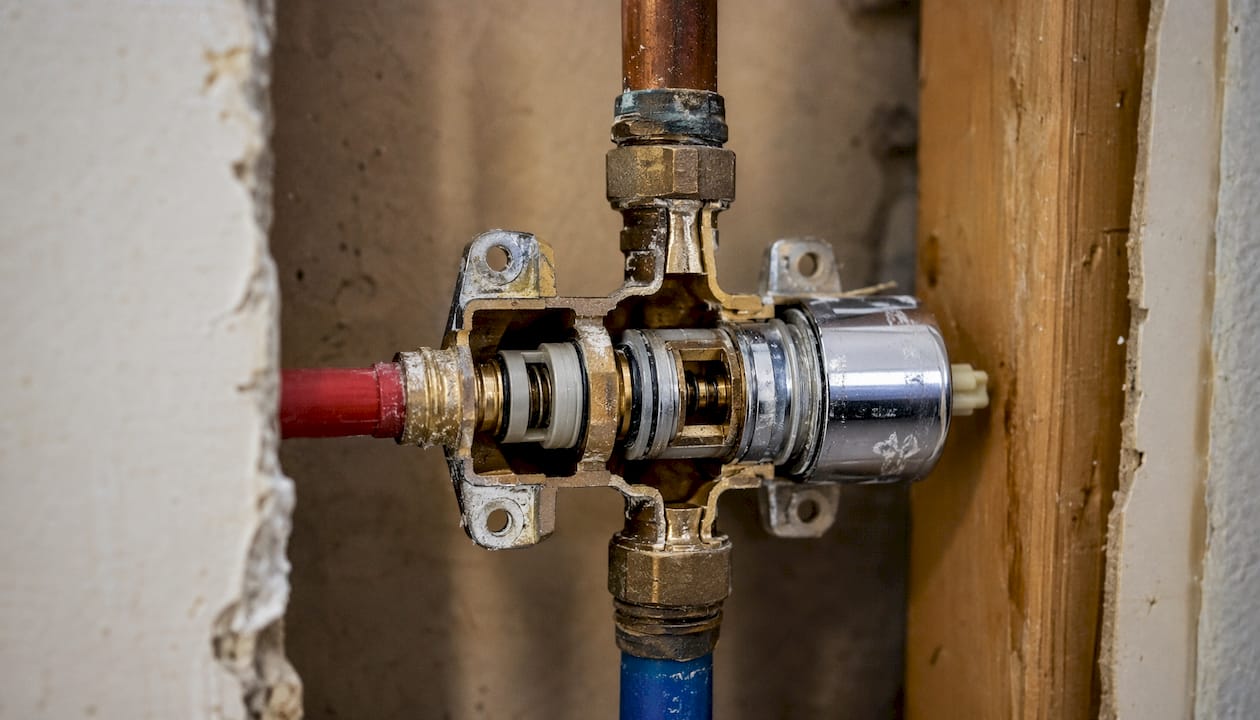
The mechanism is mechanical, not electronic. Inside the valve body sits a sliding spool or diaphragm that moves in response to pressure changes on either the hot or cold supply line. When cold pressure drops, the spool shifts to restrict hot water flow by the same amount, keeping the ratio balanced.
Here is the step-by-step process:
- Cold or hot supply pressure drops due to another fixture activating
- The internal spool or diaphragm detects the pressure imbalance
- The spool slides to reduce flow on the higher-pressure side
- The hot-to-cold ratio stays constant at the showerhead
- Water pressure at the head drops slightly, but temperature holds steady
One important nuance: the valve balances pressure ratios, not temperature directly. If your water heater temperature changes, the delivered shower temperature can still shift because the valve has no temperature sensor. That trade-off is worth knowing before you buy. The slight pressure drop that results from balancing is a minor inconvenience compared to the alternative.
Pro Tip: If you live in a home with older galvanized pipes, pressure fluctuations tend to be more severe. A pressure balancing valve is especially valuable in that scenario.
Pressure balancing vs. thermostatic valves: which one fits your home?
Both valve types prevent scalding, but they work differently and suit different households.
| Feature | Pressure balancing valve | Thermostatic valve |
|---|---|---|
| Mechanism | Balances hot-to-cold pressure ratio | Senses and regulates actual water temperature |
| Scald prevention | Yes, via pressure compensation | Yes, via direct temperature control |
| Response to heater temp changes | No adjustment | Adjusts automatically |
| Controls | Single knob for temp and flow | Dual controls, separate temp and volume |
| Ease of use | Simpler, better for children or limited mobility | More precise but more complex |
| Typical cost | Lower | Higher |
| Maintenance complexity | Lower | Higher, more components |
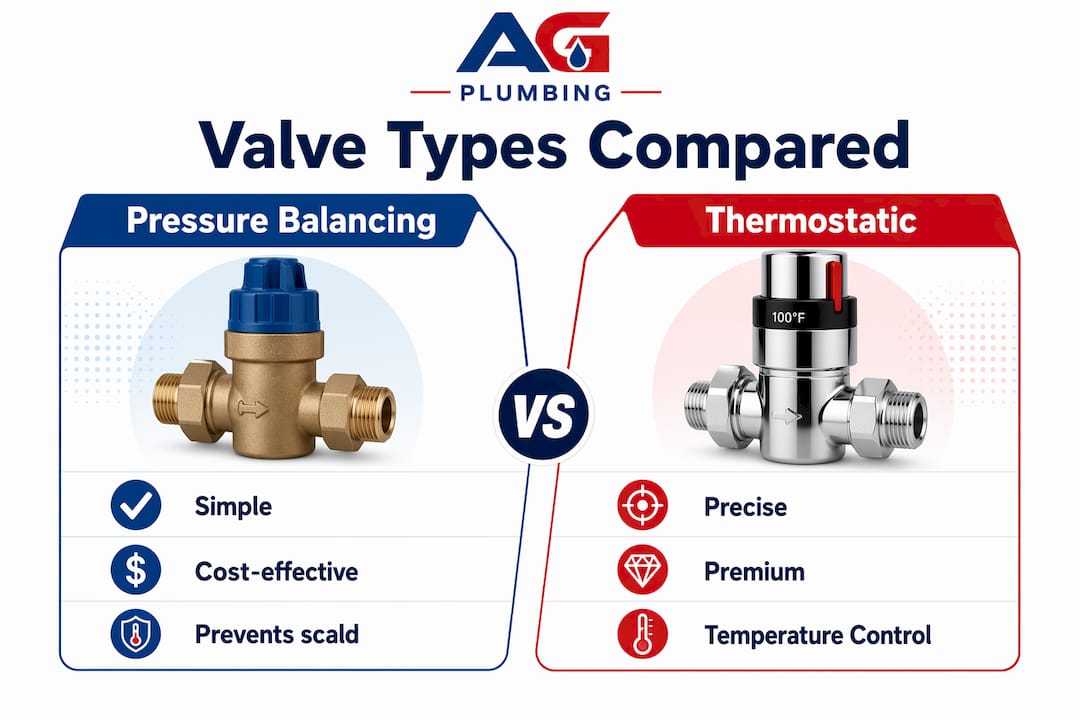
Pressure balancing valves win on simplicity and cost. Thermostatic valves are worth the premium when you want precise temperature repeatability, such as in a spa-style bathroom or a household where someone has a medical condition requiring exact water temperatures. For most American homes, the pressure balancing option covers the safety need without the added expense. If you are planning a bathroom remodel, this comparison is worth revisiting with your plumber before you commit to a valve type.
How to choose the right valve for your home
Picking the right valve comes down to a few practical factors, not just price.
- Household composition: Homes with young children, elderly residents, or anyone with limited mobility benefit most from a pressure balancing valve’s single-knob simplicity.
- Budget: Pressure balancing valves cost less to purchase and install. Thermostatic valves carry a higher upfront price and more complex installation.
- Water quality: Hard water accelerates mineral buildup inside the valve. If your area has hard water, factor in more frequent maintenance or consider a water softener. Mineral buildup and corrosion are the leading causes of premature valve failure.
- Compliance: Check local building codes. Many U.S. jurisdictions require pressure balancing valves in new construction and remodels.
- Space and installation: Pressure balancing valves fit standard rough-in dimensions and are straightforward for a licensed plumber to install.
Pro Tip: Always consult a licensed plumber before purchasing a valve. The valve brand matters less than proper installation. A poorly installed thermostatic valve performs worse than a correctly installed pressure balancing one.
Signs your pressure balancing valve is failing
Valve problems rarely announce themselves clearly, but a few symptoms point directly to the cartridge.
- Temperature swings during the shower with no change in your water heater setting
- A “thunking” noise when you turn the handle, which suggests the spool is sticking
- Hot water appearing in the cold line (cross-connection), a sign of internal seal failure
- Reduced flow that is noticeably worse than before, often caused by mineral deposits blocking the spool
A malfunctioning pressure balancing valve can push hot water into cold supply lines, raising scald risk across the fixture. If temperature fluctuations are isolated to one shower and not the whole house, the cartridge is the likely culprit, and it often carries warranty coverage for parts. You can learn more about related T&P valve safety checks to keep your full plumbing system in order.
Common problems and how to troubleshoot them
Most pressure balancing valve issues trace back to the cartridge. Before calling a plumber, try this quick diagnostic: remove the cartridge and shake it. A rattling sound means the spool is free and functional. Silence suggests mineral seizure, and the cartridge needs cleaning or replacement.
For mineral-clogged cartridges, soaking in a 50/50 vinegar and water solution can dissolve deposits and restore normal function without buying a new part. If the cartridge passes the shake test but temperature swings persist, the issue may be with your water heater thermostat rather than the valve itself, since the valve only responds to pressure, not temperature.
Maintenance guidelines that extend valve life
Valve cartridges can last 10–15 years with regular upkeep, but hard water cuts that lifespan significantly without intervention.
Annual inspection is the baseline. Shut off the water supply, pull the cartridge, and look for discoloration, scale deposits, or worn O-rings. Clean with the vinegar solution if deposits are present. Replace O-rings if they show cracking. Homeowners in hard water areas should inspect twice a year. Understanding water quality impacts on plumbing helps you set a realistic maintenance schedule for your specific conditions.
If the valve has not been serviced in over five years and you are experiencing any of the symptoms listed above, replacement is usually more cost-effective than repeated cleaning. A licensed plumber can swap the cartridge in under an hour in most cases.
Key Takeaways
Pressure balancing valves prevent scalding by maintaining a stable hot-to-cold water pressure ratio, reacting in milliseconds to fluctuations caused by other fixtures.
| Point | Details |
|---|---|
| Core safety function | The valve balances pressure ratios to prevent sudden temperature spikes during toilet flushes or faucet use. |
| Mechanism limitation | It responds to pressure changes only, not temperature, so water heater shifts can still affect shower temperature. |
| Valve comparison | Pressure balancing valves cost less and are simpler to use than thermostatic valves, suiting most households. |
| Failure signs | Temperature swings, thunking noises, and cross-connections signal cartridge failure needing inspection or replacement. |
| Maintenance lifespan | Cartridges last 10–15 years with regular care; hard water areas require more frequent inspection and cleaning. |
FAQ
What is the purpose of a pressure balancing valve?
A pressure balancing valve maintains a consistent hot-to-cold water pressure ratio at your shower, preventing sudden temperature spikes when other fixtures draw water. Its primary purpose is scald prevention, especially for children and elderly users.
How is a pressure balancing valve different from a pressure reducing valve?
A pressure balancing valve stabilizes temperature at a specific fixture by equalizing supply pressures. A pressure reducing valve (PRV) manages overall system pressure throughout the home to protect pipes and equipment. They solve different problems.
Do pressure balancing valves go bad?
Yes. Cartridges typically last 10–15 years but can fail earlier due to mineral buildup in hard water conditions. Symptoms include temperature fluctuations, thunking noises when turning the handle, and reduced water flow.
Can I fix a pressure balancing valve myself?
A basic cartridge shake test and vinegar soak are reasonable DIY steps. For cartridge replacement or persistent temperature problems, a licensed plumber is the safer choice to avoid improper installation that could worsen scald risk.
Recommended
- The Role of Thermostatic Mixing Valves in Home Safety – AG-Plumbing
- Why Install Shutoff Valves: A Homeowner’s Safety Guide – AG-Plumbing
- What Is a T&P Relief Valve? A Homeowner’s Guide – AG-Plumbing
- Smart Plumbing Tips Every Pittsburgh Homeowner Needs – AG-Plumbing
