
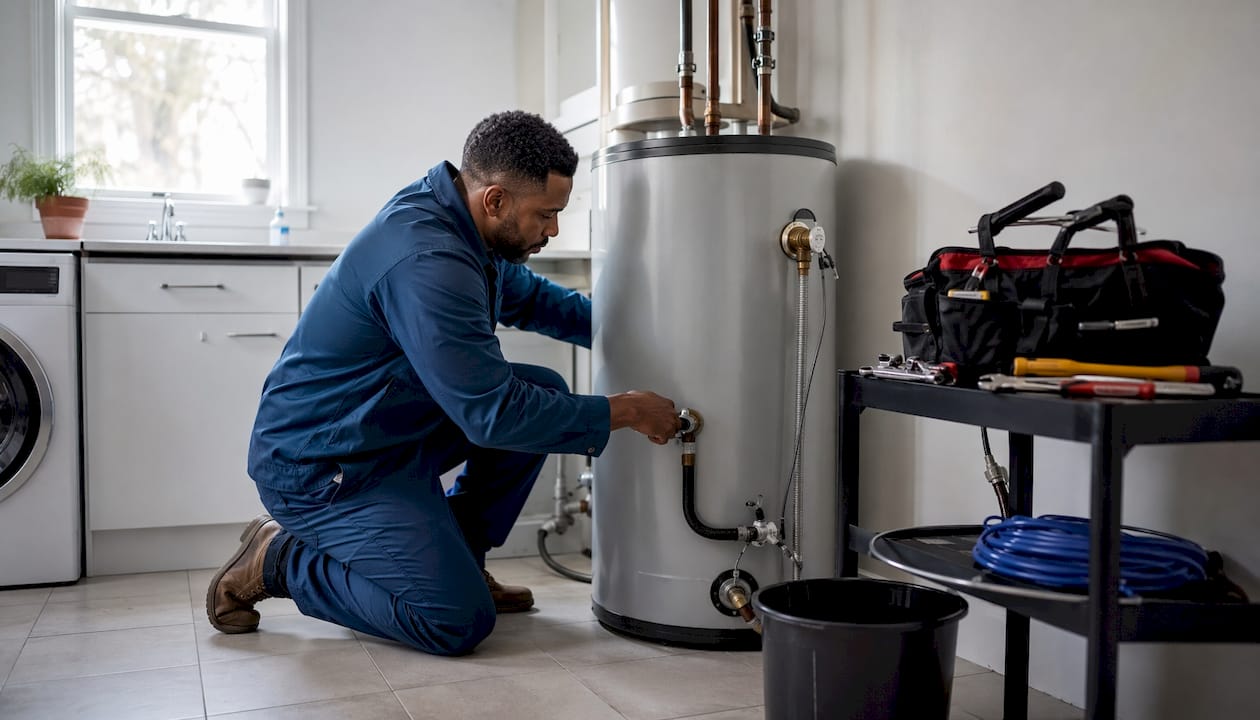
Choosing the right water heater comes down to five main options: electric storage tanks, natural gas units, propane heaters, tankless on-demand systems, and heat pump models. Each one differs in energy source, upfront cost, efficiency, and how well it fits your home’s layout and hot water demand. Water heating accounts for 14%–18% of the average U.S. household’s energy bill, roughly $400–$600 per year, so the decision carries real weight. Here’s a quick orientation before diving in:
- Electric storage tanks: Low upfront cost, simple installation, widely available
- Natural gas: Fast recovery, lower operating cost where gas is cheap
- Propane: Works where gas lines don’t reach
- Tankless: Compact, on-demand, no standby heat loss
- Heat pump: Highest efficiency, best long-term savings
1. Electric water heaters: affordable and simple to install
Electric storage tank water heaters are the most common choice in the southeastern U.S., where gas infrastructure is less prevalent. They use two 4.5 kW heating elements in a master-slave configuration, with the upper element handling peak demand first. Installation is straightforward since no gas line or venting is required, which keeps labor costs down.
On efficiency, electric resistance units convert nearly 100% of input energy into heat at the element level. Their main inefficiency comes from standby heat loss through the tank walls, not combustion waste. A typical 50-gallon electric unit carries an Energy Factor of around 0.90.
Pros and cons:
- ✅ Lower purchase and installation cost than gas
- ✅ No combustion byproducts or venting required
- ✅ Available everywhere electricity is supplied
- ❌ Higher operating cost in regions where electricity rates exceed gas rates
- ❌ Slower recovery than gas units of the same size
Pro Tip: Set your electric water heater to 120°F rather than the factory default of 140°F. You’ll cut standby losses and reduce scalding risk without noticeably affecting hot water availability.
2. Natural gas water heaters: fast recovery and lower running costs
Natural gas water heaters dominate in the western states and northern tier, where gas infrastructure is well established. Nationally, 52% of homes use gas water heaters, compared to 42% with electric. Gas units heat water through a burner at the tank’s base, with combustion gases rising through a center flue, which makes them thermally less efficient at the tank level than electric models but far faster at recovery.
A standard 50-gallon gas storage unit carries an Energy Factor of roughly 0.59, reflecting combustion losses through the flue. Gas tankless units achieve UEFs from 0.82 to 0.97, with condensing models pushing near 0.98.
Efficiency note: Gas storage water heaters have recovery efficiencies around 78%, while electric storage units sit near 100% at the element. The tradeoff is fuel cost: in most U.S. markets, natural gas costs less per BTU than electricity, making gas the cheaper option to run despite lower site efficiency.
Key features:
- Fast recovery rate, ideal for large households
- Lower monthly operating cost in most U.S. regions
- Requires proper venting and gas line access
- Annual maintenance: check the anode rod, flush sediment, inspect the burner
3. Propane water heaters: a practical off-grid solution
Propane water heaters function identically to natural gas units but run on liquefied petroleum gas stored in an on-site tank. They’re the go-to choice for rural homes and properties without access to a municipal gas line. Performance is comparable to natural gas, with similar recovery rates and efficiency ratings.
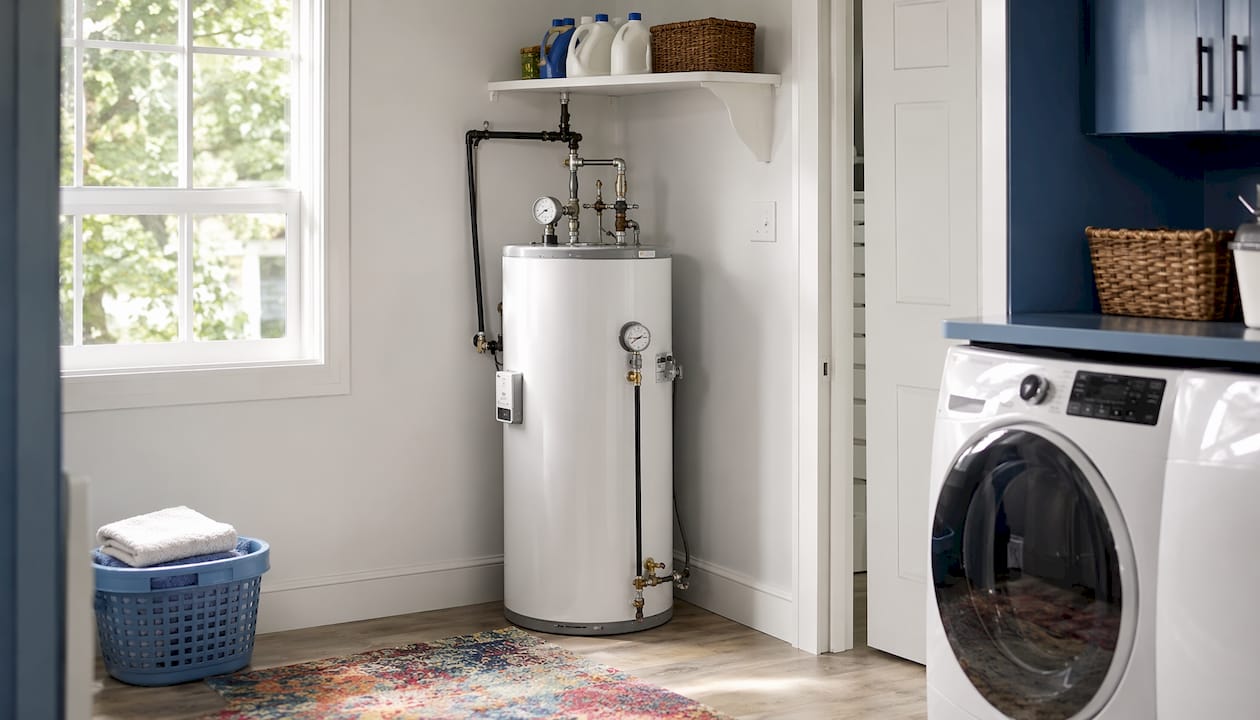
The tradeoff is fuel cost. Propane typically costs more per BTU than natural gas, so operating expenses run higher. Tank delivery logistics also add a layer of planning that piped gas doesn’t require.
Key points:
- ✅ Works anywhere, no gas line needed
- ✅ Same performance profile as natural gas
- ❌ Higher fuel cost per BTU than natural gas
- ❌ Requires on-site propane storage and scheduled delivery
- Venting requirements mirror natural gas units; installation complexity is similar
4. Tankless water heaters: compact, on-demand heating
Tankless water heaters, also called demand-type or instantaneous heaters, heat water only when you open a tap, eliminating standby heat loss entirely. That’s the core efficiency advantage: no tank sitting hot all day. They’re also physically small, freeing up closet or utility room space that a 50-gallon tank would occupy.
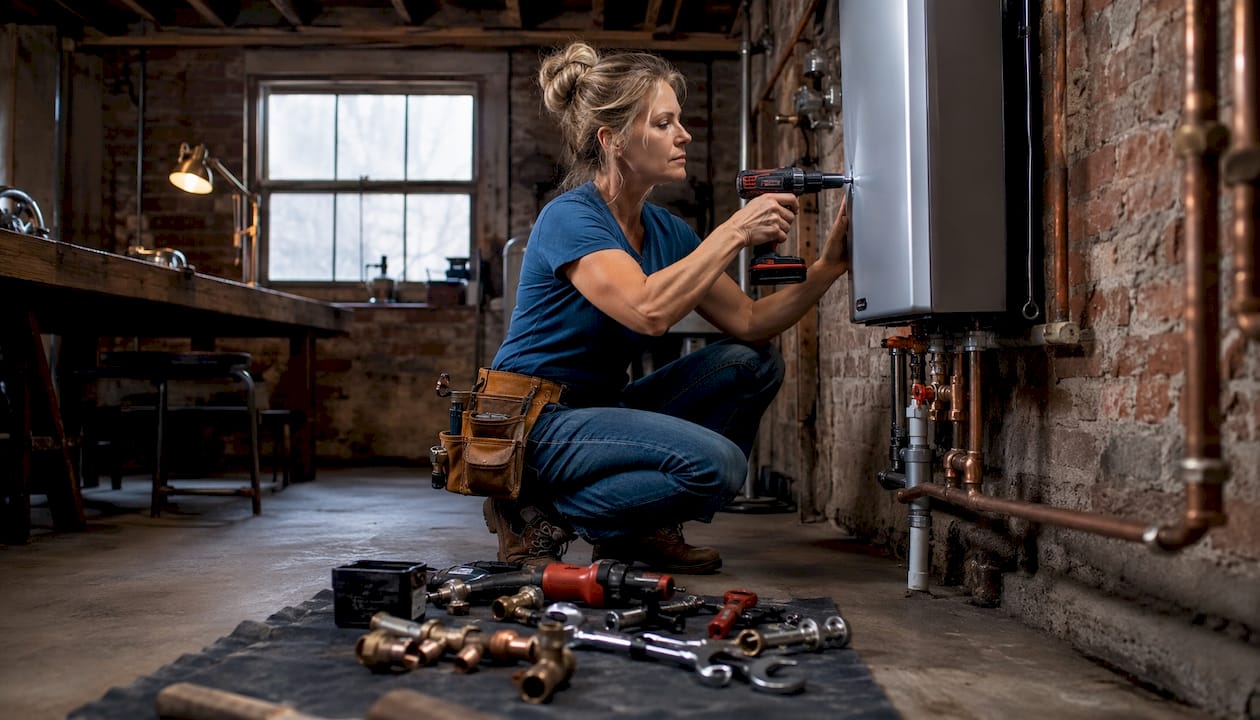
The catch is flow rate. A single gas tankless unit can typically handle two simultaneous showers, but a large household running multiple fixtures at once may need a second unit or a properly sized high-capacity model. Switching from a storage tank to a tankless system often requires gas line upgrades, new venting, or electrical panel work, which adds to the total install cost beyond the unit price. For a deeper look at how these units work, Ag-plumbing’s tankless water heater guide covers the mechanics in plain terms.
Pros and cons:
- ✅ No standby heat loss
- ✅ Space-saving wall-mount design
- ✅ Long lifespan compared to storage tanks
- ❌ Higher upfront and installation cost
- ❌ Flow rate limits under simultaneous heavy use
- ❌ Hard water areas require annual descaling to maintain efficiency
Pro Tip: If you’re drawn to tankless for “endless hot water,” be aware that the convenience can lead to longer showers. Track your utility bills for the first few months to confirm you’re actually saving energy, not just shifting usage.
5. Heat pump water heaters: the most efficient electric option
Heat pump water heaters (HPWHs) don’t generate heat directly. Instead, they pull heat from the surrounding air and transfer it into the water tank, working on the same principle as a refrigerator running in reverse. That process is dramatically more efficient than resistance heating. HPWHs achieve Uniform Energy Factor ratings from 3.3 to 4.1, meaning they deliver 330%–410% efficiency compared to the energy they consume.
Installation requires adequate air space, typically at least 1,000 cubic feet of surrounding air volume, and a location that stays above 40°F year-round. Garages and basements work well in most U.S. climates. Performance does dip in very cold spaces, since the unit has less ambient heat to extract.
Advantages:
- ✅ Lowest operating cost of any electric water heater
- ✅ Qualifies for federal tax credits and ENERGY STAR certification
- ✅ Many models include smart controls for scheduling and mode selection
- ❌ Higher purchase price than standard electric tanks
- ❌ Needs significant air space; not suited for small closets
- ❌ Slightly cools the room it’s installed in, which can be a heating penalty in winter
New federal energy standards effective by 2029 push heat pump and condensing gas models as the benchmark for residential efficiency.
6. How to choose the right water heater for your home
Start with sizing. For storage and heat pump units, the key metric is the First Hour Rating, which measures how many gallons the unit can supply in one hour starting from a full, hot tank. Match that number to your household’s peak hour demand, not just the number of people living there. A family of four that staggers showers needs a different FHR than one where everyone showers in a 45-minute window.
Regional utility rates and climate heavily influence which type makes financial sense. Gas is cheaper to run in most of the Midwest and West; electric heat pumps win in regions with moderate electricity rates and warm basements. Homeowners should also reevaluate hot water needs based on lifestyle changes rather than simply replicating the old unit’s capacity when replacing.
Decision checklist:
- Calculate peak hour demand before choosing tank size or FHR
- Compare local gas and electric rates to project annual operating cost
- Confirm fuel availability (gas line, propane delivery, or electric panel capacity)
- Factor in installation complexity and any required infrastructure upgrades
- Account for maintenance: tankless units need annual descaling; storage tanks need periodic flushing
For Pittsburgh-area homeowners, Ag-plumbing’s water heater efficiency guide breaks down regional utility cost comparisons in detail.
7. Solar water heaters
Solar water heaters use roof-mounted collectors to capture the sun’s energy and transfer it to a storage tank. The Department of Energy notes two main system types: active systems with circulating pumps and controls, and passive systems without. Solar is most effective in the Southwest, where sun exposure is highest, but it’s available throughout the U.S.
Solar systems typically supply more than half the energy needed for water heating, with a backup unit handling the rest. Upfront costs are higher than any other type, and roof orientation and shading matter significantly. In cloudy northern climates, a heat pump backup often outperforms a solar-only system on an annual basis.
8. Condensing water heaters
Condensing water heaters improve on standard gas storage units by capturing heat from flue gases before they’re vented. In a conventional gas heater, those combustion gases exit hot, wasting energy. A condensing unit runs the gases through a secondary heat exchanger, allowing the water vapor in the exhaust to condense and release its latent heat into the water supply.
The result is meaningfully higher efficiency than a standard gas tank, approaching the performance of tankless condensing models. These units are well suited for households that frequently run out of hot water with a conventional gas tank and want to stay on gas rather than switch fuel types. Installation requires a condensate drain line in addition to standard gas and venting connections.
9. Comparative advantages and disadvantages of each type
| Type | Energy source | Efficiency | Upfront cost | Best suited for |
|---|---|---|---|---|
| Electric storage | Electricity | Moderate (EF ~0.90) | Low | Homes without gas; mild climates |
| Natural gas storage | Natural gas | Moderate (EF ~0.59) | Moderate | Homes with gas access; large families |
| Propane | Propane | Similar to gas | Moderate | Rural homes; no gas line available |
| Tankless (gas) | Gas or electric | High (UEF 0.82–0.97) | High | Small to mid-size households; space-limited |
| Heat pump | Electricity | Very high (UEF 3.3–4.1) | High | Warm basements; low electricity rates |
| Solar | Solar + backup | Very high (climate-dependent) | Very high | Southwest U.S.; high sun exposure |
| Condensing gas | Natural gas | High | High | High-use households on gas |
The right choice rarely comes down to one factor alone. A heat pump unit is the most efficient electric option, but it’s useless in a cramped utility closet. A gas tankless heater saves space and cuts standby losses, but the installation bill can surprise homeowners who didn’t budget for a gas line upgrade.
Ready to upgrade your water heater in Pittsburgh?
Ag-plumbing has served Pittsburgh homeowners for 30 years, handling everything from straightforward tank swaps to full tankless conversions with gas line upgrades. If you’re weighing your options or dealing with a unit that’s underperforming, the team at Ag-plumbing can assess your home’s actual peak demand and recommend the right fit. You can also explore common water heater issues Pittsburgh homes run into before your next replacement.
Key Takeaways
Water heating represents 14%–18% of the average U.S. household energy bill, making the choice of heater type one of the highest-impact home efficiency decisions you can make.
| Point | Details |
|---|---|
| Heat pump leads on efficiency | HPWHs achieve UEF ratings of 3.3–4.1, far exceeding any other electric option. |
| Size by First Hour Rating | Match the FHR to your peak hour demand, not just household headcount. |
| Fuel availability shapes the decision | 52% of U.S. homes use gas; propane fills the gap where gas lines don’t reach. |
| Tankless adds installation costs | Switching from storage to tankless often requires gas line or electrical upgrades beyond the unit price. |
| Federal standards are tightening | New efficiency rules effective by 2029 favor heat pump and condensing gas models. |
FAQ
What is the most energy-efficient type of water heater?
Heat pump water heaters are the most efficient electric option, with Uniform Energy Factor ratings of 3.3–4.1. Solar water heaters can match or exceed that in high-sun climates, but require a backup system.
How do I size a storage water heater correctly?
Use the First Hour Rating on the EnergyGuide label and match it to your household’s peak hour demand. Sizing by headcount alone is less accurate than accounting for when hot water use actually peaks in your home.
Are tankless water heaters worth the higher cost?
For smaller households or homes with limited space, yes. Tankless units eliminate standby heat loss and last longer than storage tanks, but installation can require gas line or electrical upgrades that raise the total cost significantly.
What water heater type works best without a natural gas line?
Electric storage tanks, heat pump water heaters, propane units, and solar systems all work without a gas line. Heat pump models offer the best efficiency among electric options; propane is the closest match to gas performance for rural homes.
How often do water heaters need maintenance?
Storage tanks benefit from annual sediment flushing and anode rod inspection every two to three years. Tankless units in hard-water areas need annual descaling of the heat exchanger to prevent efficiency loss.
Recommended
- Water Heaters: What Every Pittsburgh Homeowner Must Know – AG-Plumbing
- Service water heaters: efficiency guide for PA homes – AG-Plumbing
- What Is a Tankless Water Heater? A Homeowner’s Guide – AG-Plumbing
- Common Water Heater Issues Pittsburgh Homeowners Face – AG-Plumbing
