
TL;DR:
- Sealing pipe joints involves selecting the appropriate sealant and properly preparing the threads to prevent leaks.
- Homeowners should match sealant types—PTFE tape, pipe dope, or anaerobic sealants—to their pipe material and pressure requirements, ensuring clean and dry surfaces before application.
Sealing pipe joints is the process of applying sealant materials to threaded pipe connections to fill microscopic gaps and stop water or gas from escaping. Pittsburgh homes rely on copper, galvanized steel, and PVC plumbing systems where a single failed joint can cause water damage, mold, or dangerous gas leaks. The three primary sealants you need to know are PTFE (Teflon) tape, pipe joint compound (commonly called pipe dope), and anaerobic thread sealants. Each works differently, and choosing the wrong one for your pipe size or line type is the most common reason DIY repairs fail. This guide walks you through the right choice and the right technique.
What types of sealants work best for pipe joints?
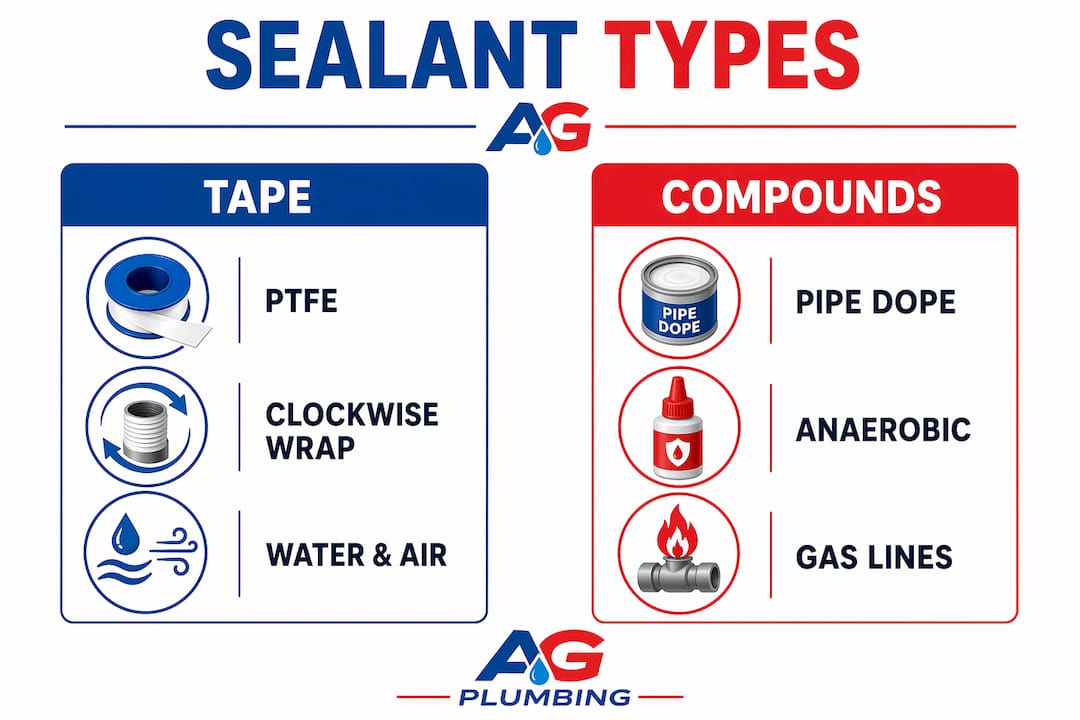
The best sealant for pipe joints depends on pipe diameter, pressure rating, and whether the line carries water, air, or gas. Getting this choice right before you start saves you from tearing apart a joint twice.
PTFE tape
PTFE tape, sold under the Teflon brand name, is the go-to option for most household repairs. PTFE tape is standard for pipes under 1 inch in diameter, covering roughly 70 to 80% of small-diameter residential water and air lines. It is clean, dry, and leaves no residue inside the pipe. The tradeoff is that it offers no anti-seize benefit, meaning future disassembly can be harder on older fittings.
Pipe joint compound (pipe dope)
Pipe dope is a paste-form sealant that fills thread gaps more aggressively than tape. Pipe dope is recommended for larger pipes, high-pressure lines, and gas-rated systems where tape alone may not hold. It also eases future disassembly because it never fully hardens. If you have a 1.5-inch gas supply line in your Pittsburgh basement, pipe dope is the correct call.
Anaerobic thread sealants
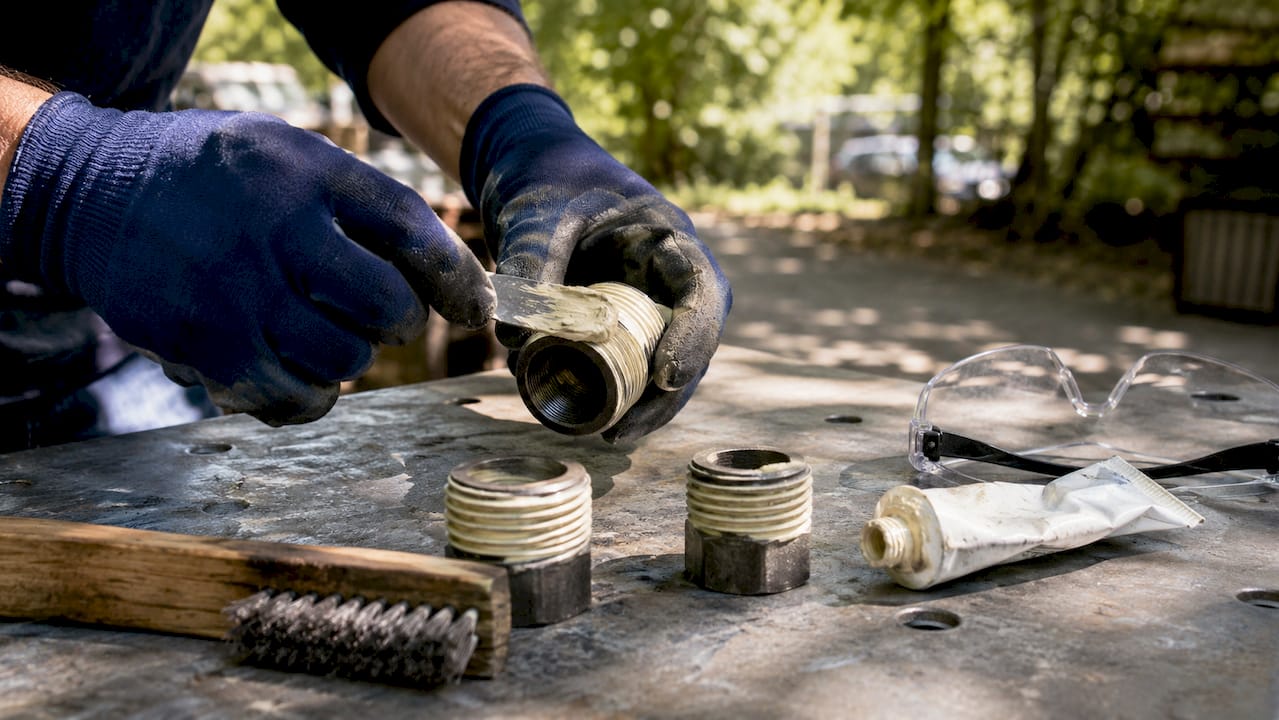
Anaerobic sealants like Loctite 577 cure through a chemical reaction that occurs in the absence of air and in the presence of metal ions. They reach functional cure in 3 to 5 hours and full strength at 24 hours, providing a 100% gap-filling seal that resists vibration. These products represent a real advancement over tape and dope because they eliminate tape shredding and pipe dope shrinking over time. They are the right choice for critical gas lines or any joint subject to mechanical vibration.
| Sealant type | Best for | Key advantage | Key limitation |
|---|---|---|---|
| PTFE tape | Water and air lines under 1 inch | Clean, dry, easy to apply | No anti-seize; can unravel if wrapped wrong |
| Pipe joint compound | Gas lines, large or high-pressure pipes | Strong seal, eases disassembly | Messier; requires drying time |
| Anaerobic sealant | Critical joints, vibration-prone systems | Full gap fill, vibration resistant | Requires clean metal surface; longer cure |
One detail most homeowners miss: NPT tapered threads seal with sealants, but NPS straight threads rely on O-rings and gaskets. Applying tape or dope to straight threads gives you false confidence without actually stopping a leak. Check your thread type before you open any sealant.
How to prepare and apply sealant for leak-free connections
Proper surface preparation matters more than sealant brand. Surface cleanliness is critical because residual machining oils and old sealant residue prevent proper curing and adhesion, especially with anaerobic products. Skipping this step is the single fastest way to create a joint that leaks under pressure.
Follow these steps for any pipe joint sealing technique:
- Clean both male and female threads using a wire brush and an appropriate solvent such as acetone or isopropyl alcohol. Remove all old tape, dope, or corrosion completely.
- Dry the threads thoroughly before applying any sealant. Moisture interferes with anaerobic curing and causes tape to slip.
- Leave the first 1 to 2 threads bare. Excess sealant on the first thread can break off and clog valves or filtration devices downstream. This is a step many DIYers skip, and it causes problems months later.
- Apply your chosen sealant using the technique specific to its type (see table below).
- Assemble the joint promptly after applying anaerobic sealant, since air exposure begins degrading it immediately.
- Tighten to snug plus one or two wrench turns. Overtightening is the most common error because lubricating sealants make joints feel looser than they are, leading to cracked fittings or stripped threads.
- Allow full cure time before pressurizing the line. For anaerobic sealants, wait at least 24 hours.
| Sealant type | Application method | Wraps or coverage | Assembly timing |
|---|---|---|---|
| PTFE tape | Wrap clockwise 3 to 5 times | 3 to 5 wraps standard; 2 to 3 for pro-grade tape | Immediately after wrapping |
| Pipe joint compound | Thin, even coat with brush or finger | Cover all exposed threads except first 1 to 2 | Assemble within a few minutes |
| Anaerobic sealant | Apply starting from second or third thread | Light bead around full circumference | Assemble within 5 minutes |
Pro Tip: When wrapping PTFE tape, always wrap in the clockwise direction as you look at the male thread end. Wrapping counterclockwise causes the tape to unravel the moment you thread the fitting on, leaving you with zero seal.
For PTFE tape specifically, pull the tape taut as you wrap so it seats into the thread grooves. A loose wrap bunches up and creates gaps instead of filling them. After wrapping, press the tape firmly into the threads with your thumb before assembly.
Common mistakes that cause pipe joint leaks
Most pipe joint failures trace back to a short list of repeatable errors. Knowing them in advance saves you from a second repair job.
- Wrapping tape counterclockwise. This unravels the tape during assembly and leaves threads exposed. Always wrap in the direction the fitting tightens.
- Skipping thread cleaning. Old pipe dope, rust, or oil on threads prevents any sealant from bonding correctly. A five-minute cleaning step prevents hours of rework.
- Overtightening fittings. Sealants lubricate threads, which makes joints feel like they need more torque. Snug plus one to two turns is the correct standard. More than that cracks plastic fittings and strips steel threads.
- Combining anaerobic sealant with tape or dope. Mixing these products blocks the metal-to-metal contact anaerobic sealants need to cure. Choose one method and use it alone.
- Applying too much sealant. Excess material squeezes into the pipe bore and can break off later, fouling valves, strainers, or appliances downstream.
- Ignoring thread type. Applying any thread sealant to NPS straight threads does nothing useful. Straight threads need a gasket or O-ring, not tape.
Pro Tip: After assembly and pressurization, spray the joint with a dedicated leak detection spray or apply a thin coat of soapy water. Bubbles confirm a leak before it becomes a water damage claim. This takes 30 seconds and catches problems immediately.
If a joint leaks after your first attempt, disassemble it completely, clean both threads back to bare metal, and start fresh. Applying more tape over an existing failed seal never works. The common plumbing repair issues that Ag-plumbing sees most often in Pittsburgh homes come from exactly this kind of layered patchwork repair.
Choosing the right sealant for Pittsburgh homes
Pittsburgh homes present a specific mix of plumbing materials that affects which sealant you should reach for. Older homes in neighborhoods like Squirrel Hill or Lawrenceville often have galvanized steel or copper supply lines, while newer construction leans on PVC or CPVC. The best plumbing pipes for Pittsburgh homes vary by age and renovation history, so knowing what you have matters before buying sealant.
Here is how to match sealant to your situation:
- Copper water lines under 1 inch: PTFE tape works well. Copper’s smooth threads accept tape cleanly, and most household water pressure stays well within tape’s rated range.
- Galvanized steel lines: Pipe dope is the stronger choice. Galvanized threads are coarser and benefit from dope’s gap-filling paste consistency. Use a gas-rated formula if the line carries natural gas.
- PVC or CPVC lines: PTFE tape is the standard. Avoid pipe dope formulas that contain petroleum solvents, since some can degrade plastic fittings over time. Check the label for plastic compatibility.
- Gas supply lines of any material: Use a gas-rated pipe dope or a professional-grade anaerobic sealant. This is not the place to improvise with standard white PTFE tape, which is not rated for gas service in most codes.
- High-pressure or vibration-prone joints: Anaerobic sealants are the correct choice. Their vibration resistance and full gap-fill outperform tape and dope under mechanical stress.
Pittsburgh’s water pressure typically runs between 60 and 80 PSI in residential areas. That range is within PTFE tape’s capability for water lines, but gas lines and any joint near the main shutoff valve deserve the added security of pipe dope or an anaerobic product. When the line carries gas or the joint is in a hard-to-reach location, calling a licensed plumber is the smarter move. The cost of a professional repair is far lower than the cost of a gas leak or water damage claim.
Key takeaways
Sealing pipe joints correctly requires matching the right sealant to your pipe material and line type, then applying it to clean, properly prepped threads.
| Point | Details |
|---|---|
| Match sealant to pipe type | Use PTFE tape for small water lines, pipe dope for gas and large pipes, anaerobic for critical joints. |
| Clean threads before every application | Remove all old sealant, oil, and corrosion before applying any new product. |
| Leave first 1 to 2 threads bare | Sealant on the first thread can break off and clog downstream valves or filters. |
| Tighten snug plus one to two turns | Overtightening cracks fittings and strips threads regardless of sealant type. |
| Never mix anaerobic sealant with tape | Combining products blocks the metal contact anaerobic sealants need to cure properly. |
What 30 years of Pittsburgh plumbing work taught me about sealants
Most homeowners treat sealant selection as an afterthought. They grab whatever is on the shelf at the hardware store and assume the brand name does the work. In my experience, the sealant itself is rarely the problem. Preparation is almost always where jobs go wrong.
I have seen beautifully applied Loctite 577 fail because someone wiped the threads with a greasy rag before applying it. I have also seen basic PTFE tape hold for 20 years on a copper water line because the homeowner took two minutes to clean the threads and wrap carefully. The product matters less than the process.
The one habit I recommend to every Pittsburgh homeowner is keeping both PTFE tape and a gas-rated pipe dope in your toolkit. Tape handles 80% of what you will encounter. Dope covers the rest. You do not need anaerobic sealants for routine DIY work, but if you are touching a gas line, call a professional. The stakes are too high for experimentation, and Pittsburgh’s older housing stock often has surprises inside the walls that change the job entirely.
Patience during cure time is the other discipline most people skip. Pressurizing a line before an anaerobic sealant reaches full strength at 24 hours is how you create a leak that looks like a success for the first hour and then fails overnight.
— Maayan
Ag-plumbing handles Pittsburgh pipe repairs when DIY isn’t enough
Some pipe joint problems go beyond what tape and dope can fix. Corroded fittings, damaged threads, gas line connections, and leaks inside walls all require professional tools and licensed expertise. Ag-plumbing has served Pittsburgh homeowners for 30 years, handling everything from routine joint repairs to full system diagnostics. The team at AG Heating, Cooling & Plumbing knows the specific pipe materials and pressure conditions common to Pittsburgh neighborhoods, which means faster diagnosis and repairs that hold. For urgent leaks or any gas line work, contact Ag-plumbing’s plumbing repair services for same-day response across the Pittsburgh area.
FAQ
What is the best sealant for pipe joints at home?
PTFE tape is the best starting point for most household water and air lines under 1 inch in diameter. For gas lines or larger pipes, use a gas-rated pipe joint compound.
How do you apply PTFE tape correctly?
Wrap PTFE tape clockwise around the male threads 3 to 5 times, pulling it taut so it seats into the grooves. Always leave the first 1 to 2 threads bare to prevent debris from entering the pipe.
Can you use both tape and pipe dope together?
Combining PTFE tape with anaerobic sealants blocks the metal contact those products need to cure, which causes seal failure. Stick to one sealant type per joint.
How do you know if a pipe joint seal is leaking?
Apply soapy water or a leak detection spray to the joint after pressurizing the line. Bubbles indicate escaping gas or water and confirm the seal needs to be redone.
When should you call a plumber instead of sealing it yourself?
Call a licensed plumber for any gas line connection, joints inside walls or ceilings, or any fitting with visibly damaged or corroded threads. These situations carry risks that go beyond standard DIY pipe joint sealing.
Recommended
- How to Fix Noisy Pipes: A Practical Home Guide – AG-Plumbing
- How to Identify When Plumbing Repair Is Necessary – AG-Plumbing
- Cost-saving plumbing tips for Pittsburgh homeowners – AG-Plumbing
- What Is Pipe Corrosion and How to Stop It – AG-Plumbing
