

TL;DR:
- Water shutoff valves are essential for preventing flooding by controlling water flow in homes and fixtures. Pittsburgh homeowners should locate, test, and label their main and fixture shutoffs to act quickly during emergencies and billing disputes. The city’s assistance programs and legal protections help residents maintain water access, especially during unpaid bills or landlord misconduct.
Water shutoff valves are mechanical devices that stop water flow to a home or fixture, and understanding their role is the first line of defense against flooding, costly repairs, and legal disputes. In Pittsburgh, PA, the role of water shutoffs extends beyond simple plumbing mechanics. It touches utility billing, tenant rights, and emergency preparedness in ways most homeowners and renters never anticipate until a crisis hits. Pittsburgh Water and Sewer Authority, Pennsylvania tenant law, and programs like the Customer Assistance Program all connect directly to how and when water gets shut off at your property.
What is the role of water shutoffs in your home?
Water shutoff valves are the control points of your home’s plumbing system. Every residential property has at least one main shutoff valve, typically located near the water meter, in the basement, or along the foundation wall. Turning this valve stops water pressure from entering the home entirely. Beyond the main valve, fixture-level shutoffs sit beneath sinks, behind toilets, and behind appliances like washing machines, giving you targeted control without cutting off the whole house.

The mechanics are straightforward but often misunderstood. Turning off the main shutoff halts water pressure but does not drain the pipes. Residual water remains in every line, which means a burst pipe still requires cleanup even after the valve is closed. This is why fixture-level shutoffs are often the smarter choice for localized leaks. Shutting off only the valve under a leaking sink keeps the rest of your home’s water running while you address the problem.
The importance of water shutoffs becomes obvious the moment a pipe bursts or an appliance line fails. A homeowner who knows where the main valve is can stop thousands of gallons from flooding their basement in under a minute. One who doesn’t can face structural damage, mold, and insurance claims that take months to resolve.
- Main shutoff valve: Controls all water entering the home; located near the meter or foundation
- Fixture shutoffs: Under sinks, behind toilets, and at appliances; allow localized control
- Street-level shutoff: Controlled by Pittsburgh Water and Sewer Authority; used for billing enforcement or major repairs
- Emergency shutoff: Any valve used to stop water flow during a leak, burst pipe, or appliance failure
Pro Tip: Label your main shutoff valve with a tag or colored tape so every adult in your household can find it in under 30 seconds during an emergency.
How Pittsburgh Water billing affects shutoff risk
Pittsburgh Water and Sewer Authority can shut off service to any account with unpaid balances, and that risk is more manageable than most customers realize. Pittsburgh Water expanded its Customer Assistance Program in 2026 to include income-based discounts, with over 9,000 customers enrolled. Households earning at or below 50% of the Federal Poverty Level qualify for free first 1,000 gallons monthly and a 70% discount on remaining usage. That kind of protection directly reduces the financial pressure that leads to shutoffs.
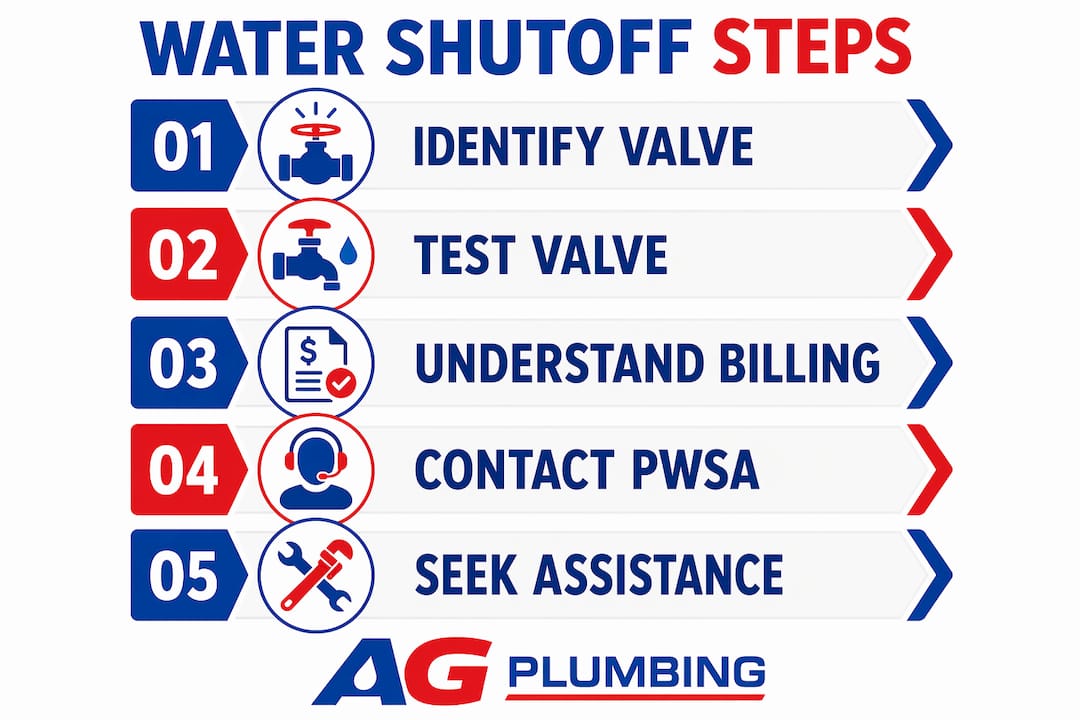
The water shutoff safety measures built into Pittsburgh Water’s billing process also include leak credits. If a hidden leak spikes your bill, Pittsburgh Water’s leak credit program can reduce the charge to average consumption levels once you submit proof of repair and enroll in leak alerts. This matters because unexpectedly high bills are one of the most common reasons customers fall behind on payments and face disconnection.
If you receive a shutoff notice, the most effective response is immediate contact with the utility. The recommended steps, drawn from a 2026 advocate call script, are:
- Call Pittsburgh Water as soon as you receive the notice, before the shutoff date
- Ask the representative to confirm the exact shutoff date and account balance
- Request a temporary hold on disconnection while you explore payment options
- Ask specifically about the Customer Assistance Program and hardship screening
- Document the call: write down the date, time, representative’s name, and any hold confirmation number
- Follow up in writing by email or mail to create a paper trail
Early action is most effective because utilities have more flexibility to offer holds and payment arrangements before disconnection occurs than after. Waiting until service is already off significantly narrows your options.
The broader picture here is that water shutoffs endanger health and housing stability, particularly for children and older adults. The National Consumer Law Center frames water access as a public health issue, not just a billing enforcement mechanism. Pittsburgh Water’s expanding assistance programs reflect that same shift in thinking.
What are your legal rights if a landlord shuts off your water?
Pennsylvania law draws a clear line between lawful utility shutoffs by Pittsburgh Water and unlawful disconnections by landlords. A landlord who shuts off water to pressure a tenant into leaving is committing what Pennsylvania courts recognize as self-help eviction, and it is illegal under Pa. statute 68 Pa. C.S. § 250.501. The law prohibits landlords from using utility shutoffs as eviction tactics, regardless of whether rent is owed.
The distinction matters in practice. Pittsburgh Water shutting off service for nonpayment is a lawful utility action, and the remedy is contacting the utility and enrolling in assistance programs. A landlord cutting water to a tenant-occupied unit without a court order is an illegal act that exposes the landlord to civil liability and potential criminal charges.
Tenants who experience landlord-initiated water shutoffs should document everything immediately: photograph the shutoff, note the date and time, and contact Neighborhood Legal Services or the Allegheny County Bar Association Lawyer Referral Service the same day.
If you are a tenant in Pittsburgh facing this situation, the recommended steps are:
- Document the shutoff: Photograph the meter, valve, or any written notice from the landlord
- Contact Neighborhood Legal Services: They provide free legal aid to low-income tenants in Allegheny County
- File a complaint: Report the shutoff to the City of Pittsburgh’s Bureau of Building Inspection
- Seek emergency relief: Courts can issue emergency orders restoring utility service within 24 to 48 hours in documented self-help eviction cases
Landlords risk civil damages when they use water shutoffs as eviction pressure. Tenants who move out under these conditions may also have claims for constructive eviction, which can include compensation for relocation costs and emotional distress.
Practical steps to manage and prevent water shutoffs
Preventing a water shutoff, whether from a plumbing emergency or a billing dispute, comes down to preparation and fast response. The plumbing maintenance tips most relevant to Pittsburgh homes focus on valve condition, leak detection, and utility account management.
Start with your shutoff valves. Valves that haven’t been turned in years can seize or fail when you need them most. Test your main shutoff valve twice a year by turning it fully off and back on. If it’s stiff, corroded, or leaking around the stem, replace it before an emergency forces the issue.
Pro Tip: If your home was built before 1980, your main shutoff valve may be a gate valve rather than a ball valve. Gate valves are slower to operate and more prone to failure. A licensed plumber can replace it with a quarter-turn ball valve in under an hour.
Here is a direct comparison of the two most common residential shutoff valve types:
| Feature | Ball valve | Gate valve |
|---|---|---|
| Operation | Quarter-turn, fast | Multi-turn, slow |
| Reliability | High; less prone to failure | Lower; prone to corrosion and seizing |
| Best for | Main shutoff and fixture shutoffs | Older homes; being phased out |
| Recommended action | Standard choice for new installs | Replace if found in main shutoff position |
Beyond valve maintenance, the steps that most directly reduce shutoff risk are:
- Enroll in Pittsburgh Water’s leak alert notifications to catch unusual usage spikes before they become large bills
- Check under sinks and around appliances monthly for slow drips that compound into arrears
- Keep a copy of your Pittsburgh Water account number and the customer service number in your phone contacts
- Review your water bill each month; a sudden spike almost always signals a leak, not increased usage
- Schedule a plumbing maintenance check annually to inspect valves, supply lines, and connections throughout the home
Key takeaways
Water shutoff valves, Pittsburgh Water’s assistance programs, and Pennsylvania tenant law together form the three pillars every Pittsburgh homeowner and renter needs to understand to protect their water access and property.
| Point | Details |
|---|---|
| Know your shutoff valves | Locate and test your main and fixture shutoffs twice a year to confirm they work. |
| Act immediately on shutoff notices | Call Pittsburgh Water before the shutoff date to request holds and access assistance programs. |
| Leverage Pittsburgh Water programs | Over 9,000 customers are enrolled in assistance programs offering discounts and leak credits. |
| Landlord shutoffs are illegal | Pennsylvania law prohibits utility disconnections as eviction tactics; document and seek legal aid fast. |
| Valve type determines reliability | Replace gate valves with ball valves for faster, more dependable emergency shutoff control. |
Why shutoff knowledge is the most underrated home skill in Pittsburgh
I have worked with Pittsburgh homeowners for years, and the pattern is consistent: the people who avoid the worst water damage and the most stressful utility disputes are the ones who spent 10 minutes learning their plumbing before a crisis, not during one. Knowing where your main shutoff valve is sounds basic. But in a burst pipe situation at 2 a.m., that knowledge is worth more than any insurance policy.
What surprises me most is how few tenants know that Pittsburgh Water’s Customer Assistance Program exists, let alone that it was expanded in 2026 to cover more households with deeper discounts. That program is the difference between a shutoff notice becoming a disconnection and it becoming a resolved billing issue. The utility wants customers enrolled. The friction is awareness, not eligibility.
The legal side is equally underappreciated. I have seen tenants leave perfectly good apartments because a landlord cut the water and they didn’t know they had a legal remedy available within 24 hours. Pennsylvania’s self-help eviction prohibition is strong. Neighborhood Legal Services is accessible. The tools exist. The gap is education.
My honest recommendation: treat shutoff valve knowledge and utility program awareness as part of basic home literacy, the same way you’d know where your circuit breaker is. For Pittsburgh residents specifically, the combination of Pittsburgh Water’s proactive programs and Pennsylvania’s tenant protections means you have more options than you think. Use them.
— Maayan
How Ag-plumbing helps Pittsburgh residents stay ahead of shutoff issues
Ag-plumbing has served Pittsburgh homeowners and tenants for 30 years, handling everything from emergency shutoff valve failures to full plumbing system inspections. When a burst pipe or failing valve puts your home at risk, the Ag-plumbing team responds fast, stops the damage, and replaces aging components before the next emergency. For residents managing billing concerns or preparing for Pittsburgh’s winter pipe stress, a proactive inspection from Ag-plumbing can identify corroded valves, hidden leaks, and supply line vulnerabilities before they become shutoff events. Explore Pittsburgh plumbing repair services or visit Ag-plumbing’s full service page to schedule an assessment with a licensed Pittsburgh plumber today.
FAQ
What does a water shutoff valve actually do?
A water shutoff valve stops the flow of water to a home, fixture, or appliance by closing the internal passage when turned. Main shutoff valves control all water entering the home, while fixture-level shutoffs provide localized control for individual sinks, toilets, or appliances.
How do I stop a Pittsburgh Water shutoff for unpaid bills?
Call Pittsburgh Water immediately after receiving a shutoff notice, request a temporary hold, and ask about the Customer Assistance Program. Early contact gives you the most options, including payment arrangements and hardship screening before disconnection occurs.
Can my landlord in Pittsburgh shut off my water to make me leave?
No. Pennsylvania law under 68 Pa. C.S. § 250.501 prohibits landlords from using utility shutoffs as eviction tactics. Tenants facing this situation should document the shutoff and contact Neighborhood Legal Services in Allegheny County immediately.
What is Pittsburgh Water’s Customer Assistance Program?
Pittsburgh Water’s Customer Assistance Program offers income-based discounts, including free first 1,000 gallons monthly and 70% off for households at or below 50% of the Federal Poverty Level. The program enrolled over 9,000 customers following its 2026 expansion.
How often should I test my home’s shutoff valves?
Test your main shutoff valve and key fixture shutoffs at least twice a year. Valves that go unused for extended periods can seize or leak at the stem, making them unreliable in an actual emergency.
Recommended
- Smart Plumbing Tips Every Pittsburgh Homeowner Needs – AG-Plumbing
- Cost-saving plumbing tips for Pittsburgh homeowners – AG-Plumbing
- Main Water Line Replacement Guide for Pittsburgh Homeowners – AG-Plumbing
- Advantages of updated plumbing for Pittsburgh homeowners – AG-Plumbing
