

Stop using every sink, toilet, tub, and washing machine in the house right now. A backed-up basement floor drain is often the first visible sign of a main sewer blockage, and standing water there can carry raw sewage. If sewage is present, more than one fixture is backing up, or water keeps rising, call a licensed plumber immediately and stay out of the affected area until help arrives.
TL;DR:
- Most basement floor drain backups are caused by a main sewer line clog, root intrusion, or municipal surcharge during heavy rain events.
- Signs include multiple fixtures backing up simultaneously, gurgling sounds, foul odors with no water backup, and water stains around plumbing areas.
- During a backup, immediately stop water use, restrict access, and protect yourself with gloves and masks before considering DIY attempts.
- Homeowners should prioritize calling a licensed plumber if sewage is present, water keeps rising, or the same issue recurs frequently.
- Regular inspections, installing a backwater valve, and disconnecting roof downspouts from sewer lines can significantly reduce future backup risks.
Table of Contents
- How Your Basement Floor Drain Connects to the Sewer System
- Common Causes of Basement Floor Drain Backups and How to Spot Each One
- Immediate Steps to Limit Damage and Protect Your Health
- Safe DIY Fixes and When to Stop Trying Them
- When to Call a Licensed Plumber for a Sewer Backup
- Preventing Basement Floor Drain Backups From Happening Again
- Why Homeowners in Pittsburgh Trust AG Plumbing With Sewer Backups
- Checking and Clearing the Floor Drain Trap Without Sewage Exposure
- Warning Signs Beyond the Floor Drain Itself
- How Rainstorms and Weather Raise Your Backup Risk
- How to Temporarily Seal the Drain While You Wait for Help
- Municipal Sewer Surcharge or Your Own Plumbing: How to Tell the Difference
- The Real Priority Isn’t the Clog. It’s the Response Time.
- Get Help Fast From AG Plumbing
- Where to Learn More About Sewage Backup Cleanup and Prevention
- Sources
- FAQ
How Your Basement Floor Drain Connects to the Sewer System
Your basement floor drain sits at the lowest point in the house, which is exactly why it’s usually the first place trouble shows up. Every fixture in the home, from the upstairs shower to the kitchen sink, drains downhill toward the main line, and the floor drain often ties in close to where that main line exits the house. When something blocks the pipe downstream, water has nowhere to go but back up through the lowest opening it can find.
A P-trap under the drain holds a small reservoir of water that blocks sewer gas from drifting into your basement. That’s why a dry trap causes odor without any actual backup: no water in the trap, no seal, and the smell of the sewer main comes straight through. A true backup is different. That means water or waste is pushing up rather than just gas leaking past a dry seal.
Two very different problems can produce similar symptoms:
- A local trap clog affects only the floor drain itself and usually clears with basic tools.
- A main sewer line blockage affects the floor drain plus other fixtures, and it demands professional equipment.
Common Causes of Basement Floor Drain Backups and How to Spot Each One
Figuring out the cause tells you whether this is a five-minute fix or a call-a-professional situation. Here’s how to read the signs:
- Main sewer line clog. Toilets gurgle, tubs drain slowly, and the floor drain backs up worse whenever you run the washing machine or dishwasher. Multiple fixtures acting up at once is the biggest tell.
- Tree-root intrusion or aging pipe. Homes built before the 1970s often have clay or cast-iron sewer laterals that crack over time, and roots exploit those cracks looking for moisture. Recurring backups every few months, especially after heavy watering season, point here.
- Municipal sewer surcharge. During heavy rain, combined sewer systems (which carry both stormwater and sewage) can overload, pushing water back into homes through the lowest fixture. This tends to hit an entire street or neighborhood at once, not just your house.
- Dry or blocked trap. No backup at all, just a sewer smell. Pouring a bucket of water down the drain usually solves it.
- Washing-machine surge or secondary-line clog. A laundry line that ties into the same branch as the floor drain can overwhelm a partially clogged pipe during the spin cycle.
- Septic system failure. If you’re on a septic system rather than municipal sewer, a floor drain backup often signals the tank or drain field is failing and needs a septic service call, not a plumber’s snake.
Pro Tip: If your neighbors are also dealing with backups the same week you are, especially after a storm, it’s very likely a municipal issue rather than something wrong with your own pipes.
Immediate Steps to Limit Damage and Protect Your Health
Move fast, but move in the right order. Here’s the sequence that actually reduces harm:
- Stop all water use. Every gallon you send down a drain adds pressure to whatever is already blocked and can push more contaminated water into your basement.
- Restrict access. Keep kids and pets away from the area. Raw sewage carries pathogens that don’t need much contact to cause illness.
- Suit up before you get close. Rubber boots, waterproof gloves, and an N95 mask are the minimum if you have to enter the space at all.
- Cut power to anything near standing water. If outlets, cords, or appliances sit close to the flooded area, shut off the breaker for that section before doing anything else.
- Document everything. Photos and short videos of the water level, affected items, and the drain itself matter later, both for a municipal report and for an insurance claim.
- Clear out valuables first, then tackle standing water. A wet-vac rated for liquids or a small sump pump can handle shallow water, but stop the moment you’re unsure what’s actually in that water.
A University of Maryland pilot study found harmful bacteria in 34 of 40 homes tested after sewage backups, including some antibiotic-resistant strains that persisted for months in certain cases. That’s not a reason to panic, but it is a reason to treat any sewage contact as a real health exposure rather than just an inconvenient mess.
Safe DIY Fixes and When to Stop Trying Them
Not every backup needs a truck rolling up. If only your floor drain is acting up and every other fixture drains normally, you’re likely looking at a local, isolated clog.
- Run the bucket test. Pour five gallons of water down a nearby sink. If the floor drain gurgles or backs up in response, the problem is downstream, in the shared line, not local to the drain itself.
- Try a wet-vac first. Pull standing water and debris out of the drain opening before attempting anything else.
- Use a manual hand snake for shallow clogs. Feed it a few feet in, twist gently, and pull out whatever’s caught.
- Skip the chemical drain cleaners. They rarely reach a clog deep enough to matter in a floor drain, and the caustic residue makes the water more hazardous for whoever handles it next, including a plumber.
- A baking soda and vinegar flush can loosen light grease buildup, but it won’t touch a root intrusion or a genuine main-line block.
Pro Tip: Confirm success with a full five-gallon bucket flush, not just a slow trickle. If the water drains fast and doesn’t come back up, you cleared it. If it’s still slow or backs up at all, stop and call a plumber before you make the clog worse with a longer snake.
When to Call a Licensed Plumber for a Sewer Backup
Some signals mean the DIY window has already closed. Call a professional immediately if you see any of these:
- Sewage, rather than clean water, is present in the backup.
- More than one fixture is affected at the same time.
- Water keeps rising even after you’ve stopped all water use in the house.
- The same drain has backed up more than once in recent months.
Professional diagnosis usually starts with locating the main-line cleanout, then running a camera inspection to see exactly what’s blocking the pipe and where. That single step saves homeowners from paying for repeat snaking that never addresses a cracked joint or root intrusion sitting a few feet further down the line.
From there, the fix depends on what the camera finds:
| Problem found | Typical repair |
|---|---|
| Grease or debris clog | Motorized cable or hydro jetting |
| Root intrusion | Root cutting, followed by jetting |
| Cracked or offset pipe | Trenchless relining or section replacement |
| Surcharge-prone location | Backwater valve installation |
Cost and timeline hinge on a few factors: how deep the clog sits, whether the pipe itself is damaged, and whether the fix requires a permit, which backwater valve installation often does. A same-day clog clearing looks nothing like a multi-day trenchless relining job, and a plumber should walk you through which one you’re facing before any work starts.
Preventing Basement Floor Drain Backups From Happening Again
Most backups aren’t a one-time fluke. They’re the result of a system that’s been sending small warning signs for months. A short maintenance routine catches most of them before they become an emergency:
- Schedule annual drain inspections and cleaning, especially if your home has clay or cast-iron sewer lines older than 40 years.
- Keep the floor drain trap filled if it’s rarely used. A cup of water every month or two keeps sewer gas from creeping in.
- Install a backwater valve if you’re in a surcharge-prone area. This requires coordination with your local sewer authority and usually a permit, since it affects how the municipal system interacts with your home.
- Add or upgrade a sump pump with battery backup. A pump that dies the moment the power goes out during a storm defeats its own purpose.
- Disconnect downspouts from the sanitary sewer if your home was built with that old connection style. Redirecting roof runoff to a splash block or dry well takes real load off the sewer line during heavy rain.
- Watch for tree roots near your sewer lateral. If you’ve had root intrusion once, it’s worth a camera check every year or two rather than waiting for the next backup.
If a camera inspection shows a pipe cracked or infiltrated by roots in multiple spots, trenchless lining is usually more cost-effective long term than paying for repeated emergency cleanings. Our guide on sump pump function and battery backup covers the hardware side of this in more depth, and for readers who want a broader technical breakdown of how basement plumbing systems fit together, this homeowner’s guide is a solid companion read.
Why Homeowners in Pittsburgh Trust AG Plumbing With Sewer Backups
AG Heating, Cooling & Plumbing has spent 30 years handling plumbing emergencies across Pittsburgh, PA and the surrounding area, and basement floor drain backups are among the calls our crews see most often. We’ve walked homeowners through everything from a simple dry trap to a collapsed clay lateral that needed full replacement.
Beyond emergency dispatch, we publish detailed homeowner guides on basement plumbing covering sewer backups, sanitary drainage, and the early warning signs of a failing sewer line, because a homeowner who knows what to watch for catches problems before they turn into a flooded basement. That combination of field experience and plain-language guidance is what keeps people calling us back for maintenance instead of waiting for the next emergency.
Checking and Clearing the Floor Drain Trap Without Sewage Exposure
Before you touch anything, put on rubber gloves and, if there’s any odor at all, an N95 mask. The trap sits directly under the drain grate, and lifting that grate is where most accidental splashes happen.
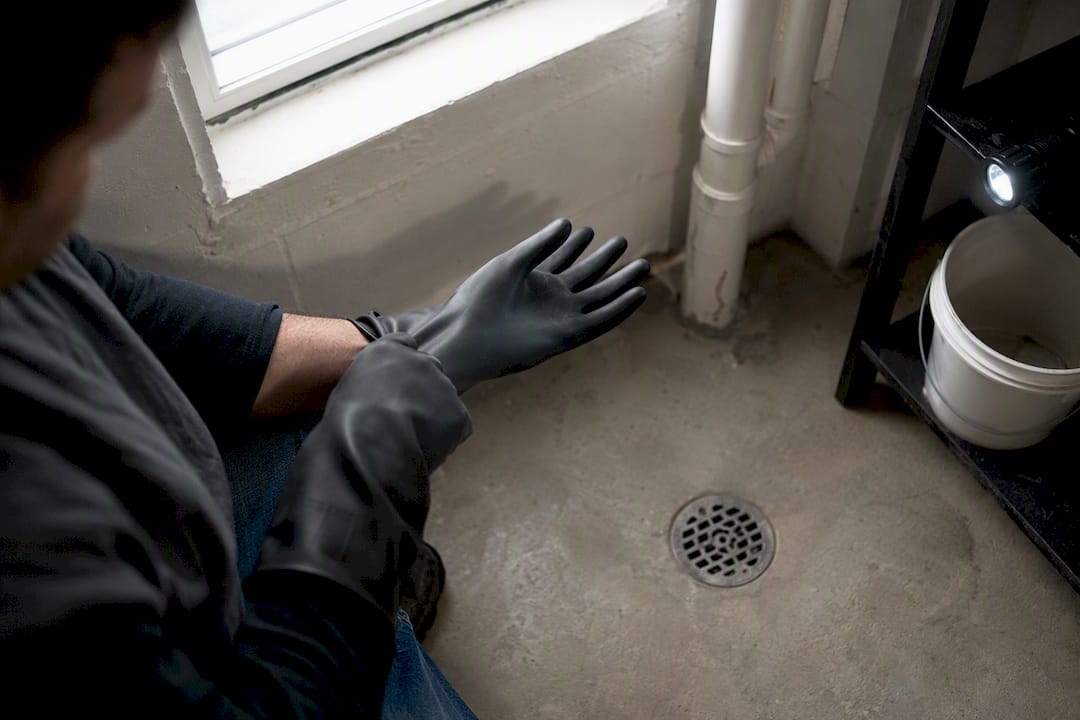
Start by removing the grate slowly and setting it aside rather than yanking it up. If you see standing water at a normal level with no debris, the trap is intact and the smell you’re noticing is likely coming from evaporation, not a clog. If the trap looks dry, that confirms the smell without a backup, and refilling it with a bucket of water solves the odor issue immediately.
If there’s blockage visible right at the trap, use a wet-vac to pull out debris before reaching in with any tool. Never use your bare hand to clear standing water or clogged material from a floor drain trap, even if it looks clean. Bacteria don’t announce themselves visually, and the University of Maryland’s research on sewage-exposed homes found contamination persisting in spaces that looked completely dry and clean to the eye.
Once you’ve cleared visible debris, run the bucket test described earlier to confirm water flows freely again. If it doesn’t, or if you smell sewage rather than a musty odor, stop. That’s a sign the problem sits further down the line than the trap itself, and further poking around risks pushing contaminated water back up rather than clearing it.
Warning Signs Beyond the Floor Drain Itself
A floor drain backup rarely happens in isolation. Your home usually gives you smaller warnings first, and catching them early can mean the difference between a $200 drain cleaning and a $5,000 sewer repair.
Slow drains throughout the house, not just in the basement, are one of the earliest tells. If your upstairs bathroom sink or tub takes noticeably longer to empty than it used to, and it’s happening at the same time your basement floor drain smells off, that’s usually the main line trying to tell you something.
Gurgling sounds from toilets or drains when you run a different fixture is another early signal. That gurgle is trapped air escaping past a partial blockage, and it typically shows up before an actual backup does.
A sewage smell without visible water is worth taking seriously even on its own. It could be a simple dry trap, but it can also mean sewer gas is escaping past a partially blocked vent stack or a cracked pipe joint somewhere in the system.
Watch also for water stains or damp patches around basement floor drains or along the base of walls near plumbing runs. These often show up days before an actual visible backup, as small amounts of water seep out under pressure before the blockage gets bad enough to push water up through the drain opening.
How Rainstorms and Weather Raise Your Backup Risk
Heavy rain is one of the most common triggers for basement floor drain backups, especially in cities with combined sewer systems that carry stormwater and sewage in the same pipes. When a storm dumps more water into that system than it can handle, the excess has to go somewhere, and it often surges back up through the lowest drain connected to the network: your basement floor drain.
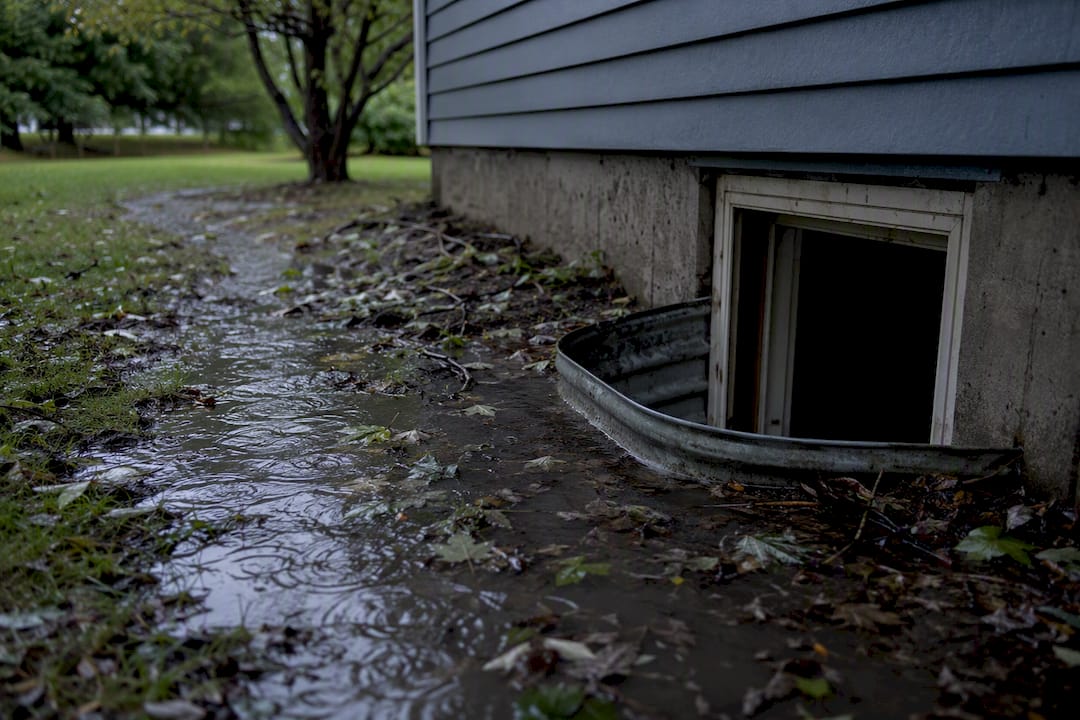
This is different from a private plumbing clog in one key way: it usually hits an entire block or neighborhood at the same time, not just one house. If you notice backups during or right after heavy rain and hear from neighbors dealing with the same thing, that’s a strong sign the trigger is municipal, not something specific to your pipes.
A few steps before storm season reduce your exposure. Test your sump pump before the rainy months hit, including the battery backup if you have one, since power outages during major storms are common. Clear gutters and downspouts so roof runoff isn’t adding extra volume to a system that’s already stressed during heavy rain. If your downspouts still connect to the sanitary sewer rather than draining to the yard, disconnecting them removes a meaningful amount of water from the system during a storm.
If your area sees recurring surcharge-driven backups, a backwater valve is the most direct fix, since it physically blocks municipal sewage from pushing back into your home during a surge, though installation requires permitting and coordination with your local sewer authority.
How to Temporarily Seal the Drain While You Wait for Help
If a plumber can’t get to you within the hour and water keeps threatening to rise, a temporary seal buys you time without making the underlying problem worse.
The simplest option is a mechanical test plug or expandable drain plug, sold at most hardware stores, which you insert into the drain opening and expand with a wing nut to create a seal against backflow. If you don’t have one on hand, a inflatable drain bladder works the same way and is worth keeping in a basement emergency kit if you’ve had backup issues before.
In a genuine pinch, a heavy-duty sandbag or a bag filled with kitty litter placed directly over the drain opening, weighted down with something heavy like a brick or a full bucket, can slow backflow enough to limit the mess until help arrives. This isn’t a permanent fix and won’t hold against serious pressure, but it buys time.
Whatever you use, don’t seal the drain completely if water is actively backing up elsewhere in the house with nowhere to go. A sealed floor drain during an active backup can just push the water to find another exit point, like a different fixture or a crack in the foundation. Sealing works best as a preventive step before a predicted storm or while you’re actively waiting on a scheduled plumber visit, not as a fix during an active flood.
Municipal Sewer Surcharge or Your Own Plumbing: How to Tell the Difference
This distinction changes who’s responsible for the fix and how urgently you need a plumber versus a call to your local sewer authority. Three quick checks usually settle it.
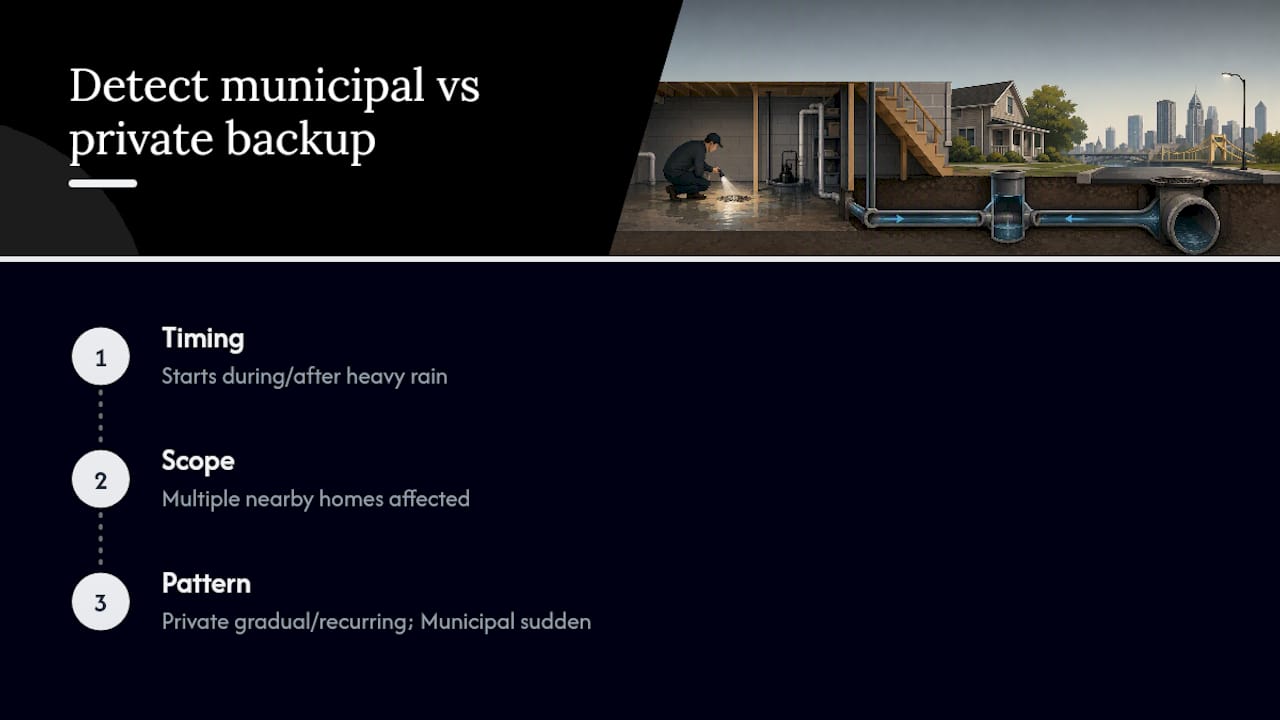
First, timing. If the backup started during or right after a heavy rainstorm, and especially if it happened alongside a citywide or neighborhood-wide weather event, municipal surcharge is the likely cause. A private plumbing clog doesn’t care about the weather; it happens regardless of rain.
Second, scope. Call a neighbor or check local social media groups. If multiple households on your street are dealing with backups at the same time, the problem sits in the shared municipal line, not your private plumbing.
Third, pattern. A private sewer line problem, like a root intrusion or a collapsed section of pipe, tends to produce backups that gradually worsen over weeks or months and happen regardless of weather. A municipal surcharge issue tends to appear suddenly during a storm and then resolve once the system catches up, sometimes within hours.
If you land on municipal surcharge, contact your local sewer authority to report it and ask about known issues in your area. If the pattern points to your own plumbing, especially if it’s been recurring, that’s your cue to schedule a camera inspection rather than keep snaking a symptom instead of the actual cause.
The Real Priority Isn’t the Clog. It’s the Response Time.
Most advice on basement floor drain backups spends too much time on causes and not enough on the first ten minutes. That’s backward. Whether the culprit turns out to be a root-choked lateral or a municipal surcharge, the actions that actually protect your health and your foundation are the same: stop water use, keep people away from contaminated water, and get a professional assessment fast if sewage is involved.
Where I think conventional advice falls short is treating DIY snaking as a first resort rather than a narrow exception. A bucket test and a hand snake genuinely solve isolated trap clogs, but plenty of homeowners spend days fighting a main-line blockage with tools that were never built for it, delaying the camera inspection that would have found the real problem in twenty minutes. Aging pipe infrastructure and root intrusion don’t respond to persistence.
If I had to boil this down to one priority, it’s this: treat the first backup as data, not a nuisance to clear and forget. A single incident with a clear weather trigger is one thing. A repeat backup, even a minor one, is your sewer line telling you something structural is developing, and it’s worth paying attention to before it becomes an emergency.
— Maayan
Get Help Fast From AG Plumbing
A backed-up floor drain doesn’t wait for business hours, and neither do we. AG Plumbing is the direct alternative to spending a weekend fighting a main-line clog with hardware-store tools: our crews bring camera inspection and hydro jetting equipment to your Pittsburgh basement the same day, so you get an actual diagnosis instead of a guess.
We handle the full range of what a backup situation calls for, from emergency drain clearing and camera-guided sewer repair to backwater valve installation and sump pump upgrades with battery backup for homes that keep flooding during storms. When you call, have your address, a rough sense of when the backup started, and whether more than one fixture is affected. That’s enough for us to dispatch the right equipment on the first visit. Reach us by phone or book online through AG Plumbing’s Pittsburgh service page to get a crew scheduled.
Where to Learn More About Sewage Backup Cleanup and Prevention
For deeper reading beyond this guide, a few sources are worth bookmarking:
- Delaware Public Health’s sewage backup guidance for immediate safety steps.
- Connecticut DPH’s sewage backup fact sheet for cleanup and disposal specifics.
- University of Maryland’s bacteria research on health risk after backups.
- Mass for backwater valve permitting basics.
Sources
- Sewage backup: what to do (Delaware Public Health)
- Sewage backup fact sheet (CT Department of Public Health)
- Study finds dangerous bacteria in homes plagued by sewage backups (University of Maryland)
- Mass
FAQ
Why Is Water Coming Up Through My Basement Floor Drain?
Your floor drain sits at the lowest point connected to the main sewer line, so any blockage downstream, whether from tree roots, debris, or a municipal surcharge during heavy rain, pushes water back up through that opening first.
Why Does a Basement Floor Drain Back Up in the First Place?
The most common causes are a main sewer line clog, root intrusion in aging pipes, municipal sewer surcharge during storms, or a septic system failure if you’re not on municipal sewer. A dry or blocked trap can cause odor without an actual backup.
My Basement Floor Drain Is Backed Up. What Should I Do?
Stop all water use in the house immediately, keep people and pets away from the area, and put on rubber gloves and a mask before getting close. Call a licensed plumber right away if sewage is present, multiple fixtures are affected, or water keeps rising.
Does Insurance Cover Sewage Backup in a Basement?
Standard homeowners insurance policies typically exclude sewage backup damage unless you’ve added a specific sewer backup endorsement or rider, so check your policy details or call your insurer before assuming coverage. Documentation with photos and videos taken immediately after the incident strengthens any claim you do file.
Recommended
- Basement Plumbing Tips for Pittsburgh Homeowners
- Drain Clog Prevention Tips for Pittsburgh Homeowners
- Why sewer backup occurs: causes, risks & prevention
- How to snake a drain: DIY guide for Pittsburgh homeowners
