
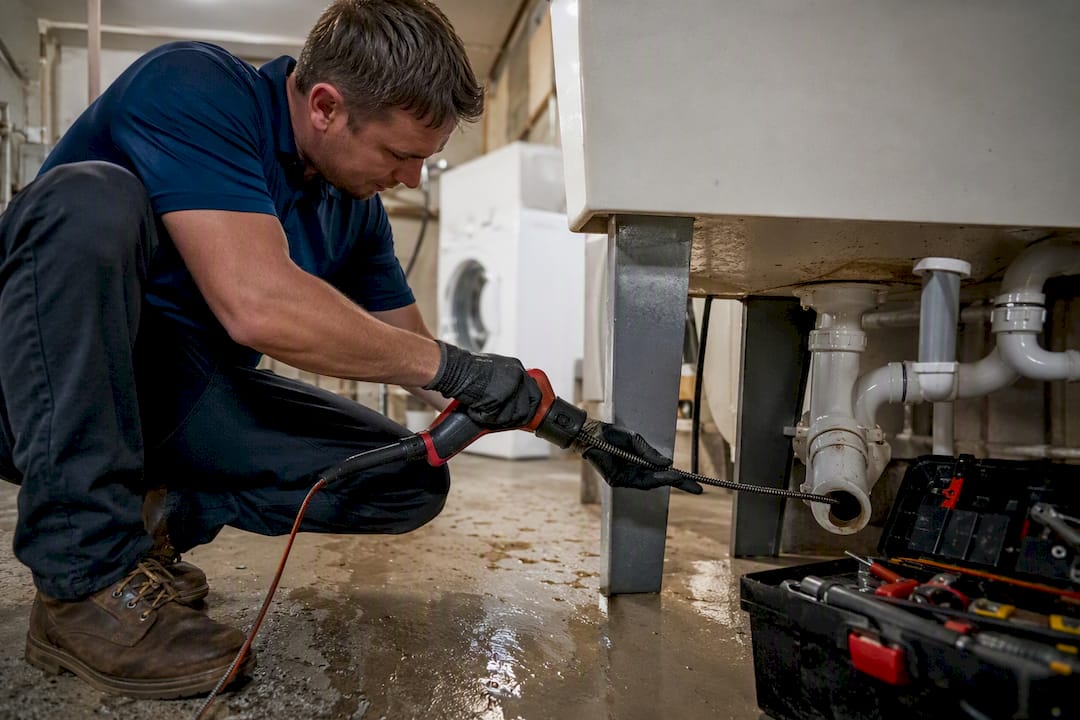
Stop the washer, unplug it, and check whether water is backing up from the standpipe. Most laundry drain clogs are lint-and-soap plugs you can pull out or snake in one visit. If more than one drain in the house is backing up or you smell sewage, skip the DIY steps and call a plumber.
TL;DR:
- Most laundry drain blockages are caused by lint and soap buildup that can typically be cleared with a hand auger or hot water flush, avoiding caustic chemicals.
- Differentiating whether the clog is inside the machine or in the house drain requires checking the tub drainage, listening to the pump, and observing standpipe behavior during cycles.
- Regular maintenance such as cleaning pump filters every one to three months and using a lint trap on the discharge hose can prevent recurring clogs and damage.
- Persistent or recurring clogs that reappear after DIY attempts may indicate deeper issues, including structural problems or mainline blockages requiring professional camera inspections or hydrojetting.
- Calling a plumber is advised if multiple fixtures back up simultaneously, the clog recurs quickly, or if there are sewage smells or leaks, as these signs suggest mainline or venting problems beyond simple lint buildup.
Table of Contents
- Safety Checklist Before You Touch the Drain
- Is the Clog in Your Washer or the House Drain?
- How to Clear a Clogged Standpipe or Laundry Floor Drain
- Cleaning the Washer’s Pump Filter and Drain Hose
- Preventing Future Laundry Drain Clogs
- When Should You Call a Plumber Instead?
- What 30 Years of Service Calls Taught Us About Laundry Drains
- Get a Professional Drain Cleaning From Ag-plumbing
- Sources
- FAQ
Safety Checklist Before You Touch the Drain
A laundry drain clog usually isn’t dangerous, but the setup around it can be. Standing water near a running washer, a snake catching on a live pump, or a splash of hot water from a backed-up standpipe can all turn a ten-minute job into a bad afternoon. Take two minutes to set up first.
Cut the power at the outlet, not just the washer’s control panel, and shut off the water supply valves behind the machine. Lay towels around the base of the washer and set a bucket under the discharge hose before you disconnect anything.
Gather these before you start:
- Rubber gloves and a flashlight
- A bucket and a few old towels
- A plunger (for floor drains, not the washer itself)
- A manual drum auger, ideally a 25-foot cable
- Adjustable pliers for hose clamps
- A kettle of hot (not boiling) water
- A wet/dry vacuum, if you have one, for standing water
Pro Tip: Skip the jug of caustic drain cleaner sitting under your sink. Lint and soap scum form a dense, felt-like mat that chemical cleaners barely touch, and the caustic residue can damage rubber hoses and pump seals inside your washer.
Is the Clog in Your Washer or the House Drain?
Before you grab a wrench, figure out which side of the wall the problem lives on. A clog inside the washer needs a completely different fix than one in the standpipe or floor drain, and snaking a machine-side clog can actually make things worse.
- Check if the tub drains at all. If water sits in the tub after a full cycle, the blockage is likely inside the machine, in the pump filter, a kinked hose, or a failing drain pump.
- Listen during the drain cycle. A humming or whirring pump that never actually moves water usually points to a clogged filter or jammed impeller, not a house-side clog.
- Watch the standpipe during drain-and-spin. Pull the discharge hose out and aim it into a bucket, then run a short cycle. If water shoots out fine but backs up when reattached to the standpipe, the clog is downstream in your plumbing.
- Look for puddles that only appear during drain cycles. Water pooling around a floor drain or utility sink specifically when the washer empties is a strong sign of a standpipe or drain-line clog rather than a machine problem.
- Check for error codes. Many machines display a drain-related fault code when the pump senses resistance, which usually means look inside the machine first.
How to Clear a Clogged Standpipe or Laundry Floor Drain
This is the fix for the most common laundry drain problem: a lint-and-soap plug sitting in the standpipe, floor drain, or the horizontal run just past it. Here’s how to clear it and confirm it’s actually gone.
- Prep the area. With the washer unplugged and water off, disconnect the discharge hose and set it in a bucket. Lay towels around the standpipe or floor drain grate.
- Pull the grate and clear visible lint by hand. Standpipes and floor drains often have a removable strainer. Lift it out and pull any lint you can reach with gloved fingers; this alone clears a surprising number of shallow clogs.
- Feed a hand auger into the drain. Use a manual drum auger with a quarter-inch cable, feeding it slowly until you feel resistance at the P-trap. Rotate the handle as you push, then rotate while withdrawing to drag the lint mat out with the cable instead of just punching a hole through it. Expect to pull out a wet, gray, felt-like wad. If the cable stalls before the trap, look for a cleanout access point nearby and try feeding it from there instead.
- Flush with hot water. Once the cable comes back clean, pour several kettles of hot (not boiling) water down the drain to rinse residual soap film and loosen anything left behind. An enzyme-based cleaner afterward can help break down organic buildup, but skip caustic drain cleaners entirely; they’re largely useless against lint and can degrade PVC fittings over time.
- Reattach the hose correctly. Slide the discharge hose back into the standpipe, but leave a few inches of air gap. Pushing it in too far can create a siphon effect that pulls water out of the trap and causes backups on its own, separate from any lint clog.
- Test and verify. Run a full wash-and-drain cycle and watch the standpipe or floor drain the entire time. No backup, no gurgling, no slow drainage means you’re clear. If water rises even slightly, the clog isn’t fully gone or there’s a secondary blockage further down the line.
Cleaning the Washer’s Pump Filter and Drain Hose
If your tests point to the machine itself, most washers have a small pump filter designed exactly for this. Locating it is the hard part.
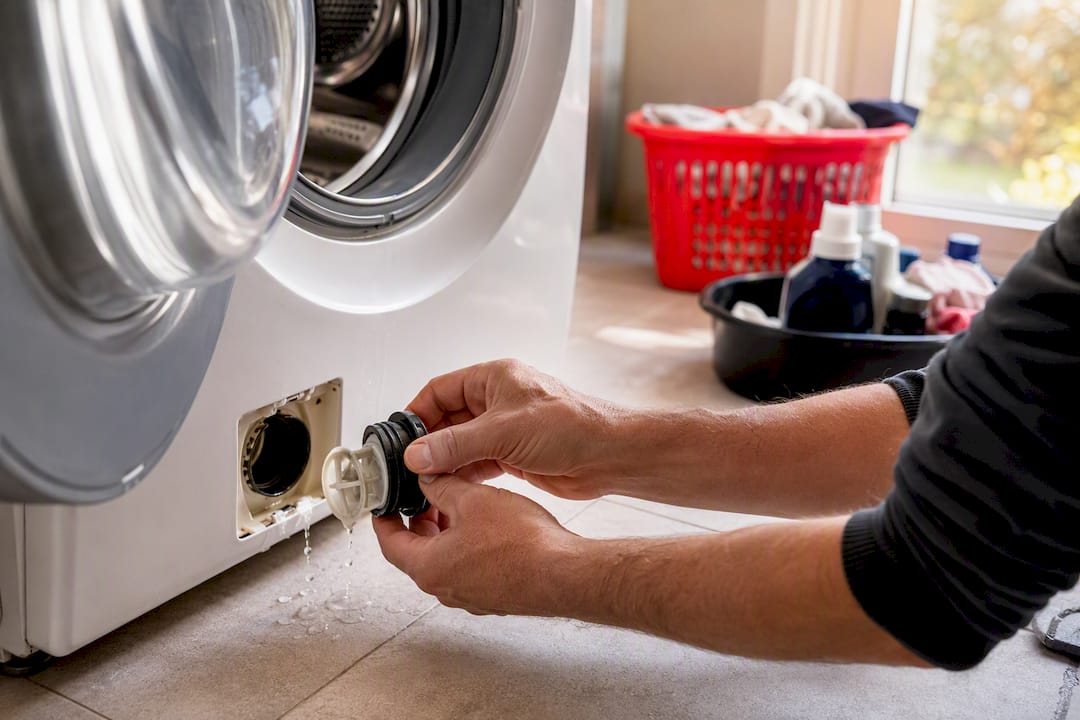
On front-load machines, it’s typically behind a small panel at the bottom front of the cabinet. Top-load machines vary a lot. Some have an accessible filter behind a kick panel, and others have the filter buried near the pump with no easy access, which is one reason top-load pump clogs sometimes require a technician.
Before opening anything, lay towels down and keep a shallow pan or catch basin under the filter housing; there’s almost always residual water sitting behind it.
- Unscrew or unlatch the filter cap slowly, letting trapped water drain into your pan first.
- Pull the filter out and check for lint, coins, hair ties, bra underwires, and the occasional sock.
- Rinse the filter under running water, then reseat it and tighten the cap fully; a loose filter cap is a common cause of small leaks after this repair.
- Inspect the drain hose for kinks, especially where it bends behind the machine, and straighten or replace it if it’s been crushed.
Pro Tip: If the pump filter is clean, the hose isn’t kinked, and the pump still hums without moving water, the impeller inside the pump housing is probably jammed or damaged. At that point, you’re looking at a pump repair or replacement, which is a technician job, not a weekend one.
Preventing Future Laundry Drain Clogs
A little routine maintenance does more work than any one-time fix. The habits below take a few minutes a month and address almost every cause of laundry drain clog trouble before it starts.
- Install a mesh lint trap on the discharge hose and rinse it out every couple of loads.
- Use the correct detergent type and amount; HE detergent in an HE machine prevents the excess suds that contribute to soap-scum buildup.
- Check pockets before every load, and use a mesh bag for items with buttons, zippers, or small parts.
- Shake out heavy or visibly dirty loads (rugs, work clothes, pet bedding) outside before washing.
- Clean the pump filter every one to three months; regular filter cleaning prevents most drain pump failures before they start.
- Run a hot-water or tub-clean cycle monthly to flush residual soap film from the drum and hoses.
| Maintenance task | How often | Why it matters |
|---|---|---|
| Clean pump filter | Every 1–3 months | Prevents lint mats before they reach the standpipe |
| Rinse discharge lint trap | Every few loads | Catches fibers before they enter the house drain |
| Hot-water or tub-clean cycle | Monthly | Breaks down soap-scum film in the drum and hose |
| Inspect drain hose for kinks/wear | Quarterly | Catches restrictions before they cause a full clog |
| Replace drain hose | Every 5 years or at first crack | Old rubber hoses crack and restrict flow over time |
More prevention specifics, including detergent guidance by machine type, are in Ag-plumbing’s drain clog prevention guide for homeowners.
When Should You Call a Plumber Instead?
Some laundry drain clogs are beyond a hand auger and a kettle of hot water, and pushing through with the wrong tool can turn a lint clog into a cracked pipe. Watch for these signs:
- More than one drain backs up at the same time (kitchen sink, floor drain, or a toilet gurgling when the washer drains)
- The clog comes back within a few weeks of snaking it yourself
- You hear gurgling from vent stacks or other fixtures during the drain cycle
- Water is leaking from a joint or fitting, not just backing up
- You notice a sewage smell, which often signals a venting or mainline problem rather than a simple lint plug
Before you call, jot down what you tried, when the backups happen, and which fixtures are affected. A plumber can then bring a power auger, run a camera inspection to confirm the exact blockage location, or use hydrojetting for buildup a hand auger can’t fully clear. More detail on warning signs is in Ag-plumbing’s guide to signs your drains need professional cleaning.
What 30 Years of Service Calls Taught Us About Laundry Drains
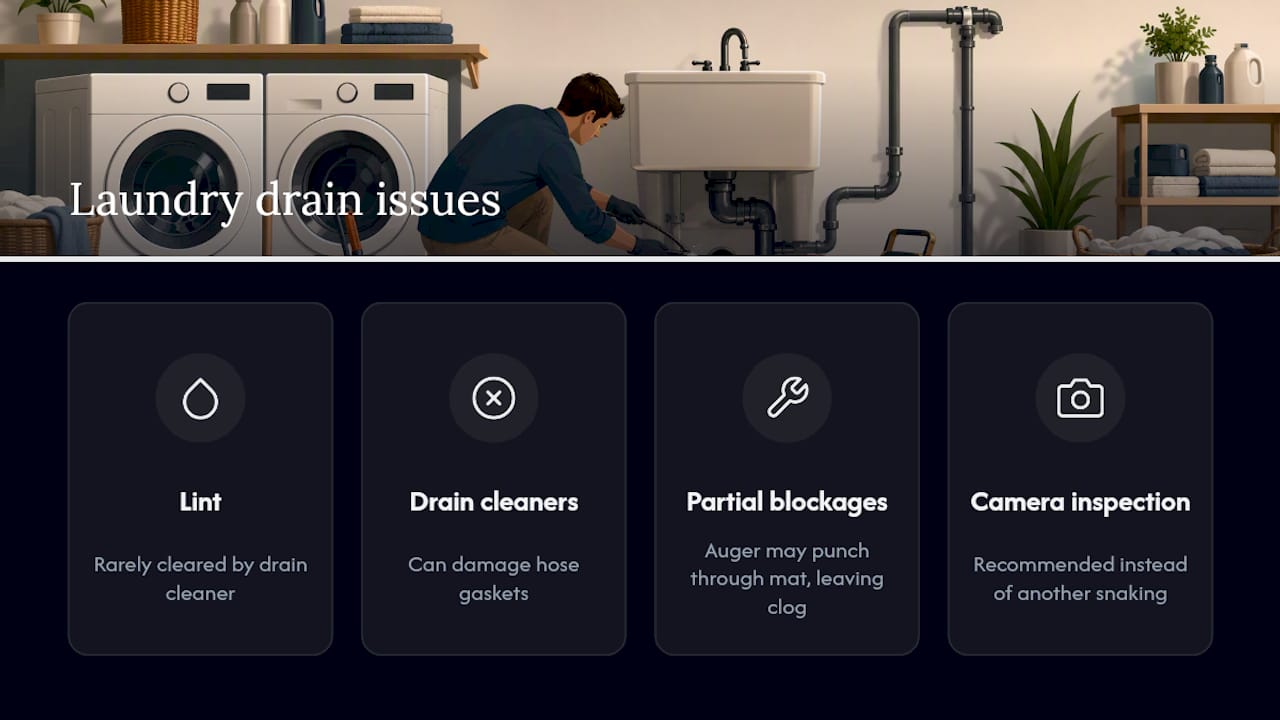
The technicians at AG Heating, Cooling & Plumbing see the same mistake over and over: homeowners pour a bottle of drain cleaner down a laundry standpipe before ever pulling the discharge hose to look. It rarely works on lint, and it sometimes damages the hose gaskets in the process.
The other pattern worth knowing: a lot of “recurring” clogs aren’t recurring at all. They’re the same partial blockage that never got fully pulled out the first time, because the auger punched through the mat instead of dragging it out. That’s usually the moment we recommend a camera inspection, not another round of snaking; it settles whether you’re dealing with lint or something structural further down the line.
— Maayan
Get a Professional Drain Cleaning From Ag-plumbing
If you’ve snaked the standpipe, cleaned the pump filter, and the clog keeps coming back, that’s usually a sign the problem sits deeper in the line than a hand auger can reach. Ag-plumbing handles the jobs DIY tools can’t finish: camera inspections that pinpoint the exact blockage, hydrojetting for stubborn lint and scale buildup, and pump repair or replacement when the washer itself is the culprit.

A typical visit starts with a quick walkthrough of what you’ve already tried, a camera look if the clog is recurring, and a clear explanation of the fix before any work begins. No guessing, no upsell on parts you don’t need. If your laundry drain keeps backing up after a weekend of DIY effort, request a drain cleaning service from Ag-plumbing and get it settled properly the first time.
Sources
- What Causes Washing Machine Drain Pump Blockages?
- Washing Machine Drain Clogged: Causes & Fixes
- Why is my washing machine not draining?
FAQ
How Do You Unclog a Laundry Drain Pipe?
Pull the strainer or grate and clear visible lint by hand, then feed a quarter-inch hand auger into the drain until you feel the lint mat and pull it out while rotating the cable. Follow with a hot-water flush to rinse remaining soap film.
What Can You Pour Down a Washing Machine Drain to Unclog It?
Hot (not boiling) water clears most soap-scum residue, and an enzyme-based cleaner can help break down organic buildup afterward. Avoid caustic drain cleaners; they don’t dissolve lint effectively and can damage hoses and pipe fittings.
How Do You Unclog a Clogged Laundry Floor Drain?
Remove the drain grate, clear surface lint by hand, then snake the drain with a 25-foot hand auger to pull out the lint mat rather than just piercing it. If the clog returns quickly or affects other fixtures, that points to a deeper blockage that needs professional attention.
How Do You Unblock a Laundry Drain?
Start by confirming whether the washer itself is draining into the standpipe; if water reaches the pipe fine but backs up, snake the standpipe and flush with hot water. If the tub never empties, check the washer’s pump filter first before touching the house drain.
Why Does My Laundry Drain Keep Clogging After I’ve Cleared It?
Repeat clogs usually mean the auger pierced the lint mat instead of pulling it out, or a lint trap isn’t installed on the discharge hose. If cleaning the filter and snaking properly doesn’t stop the pattern, a camera inspection can rule out a mainline or venting issue.
Recommended
- Step by step drain cleaning guide for PA homeowners
- Drain Clog Prevention Tips for Pittsburgh Homeowners
- Clearing Roots From Drains: A Cost-Aware Homeowner Guide
- Drain Snaking Explained: Solving Pittsburgh Clogs Fast
