

TL;DR:
- Pittsburgh homes often have cast iron stacks that corrode over time, requiring inspection and potential replacement.
- Proper ventilation and correct pipe sizing are essential to prevent sewer gases, odors, and drainage issues.
- Early detection of symptoms like gurgling or odors can prevent costly repairs and ensure code compliance.
Most Pittsburgh homeowners never think about their plumbing stack until something goes wrong. A slow drain, a gurgling toilet, or a strange sewage smell can all trace back to this single vertical pipe running through your walls. In older Pittsburgh homes, many of these stacks are decades old, made from cast iron, and quietly corroding behind the drywall. Whether you’re planning a bathroom renovation, dealing with a drainage problem, or preparing for a home inspection, understanding your plumbing stack is one of the most practical things you can do. This guide breaks it all down in plain language.
Table of Contents
- What is a plumbing stack and how does it work?
- Materials, codes, and Pittsburgh-specific requirements
- Common issues and warning signs with plumbing stacks
- Types of plumbing stacks and configuration nuances
- Our perspective: What most guides miss about plumbing stacks
- How we help Pittsburgh homes with plumbing stack challenges
- Frequently asked questions
Key Takeaways
| Point | Details |
|---|---|
| Essential for drainage | A plumbing stack is vital for proper waste removal and preventing drain issues in your home. |
| Inspection and permits required | Pittsburgh homeowners must follow strict permit and inspection rules when repairing or replacing stacks. |
| Material matters | PVC and cast iron are the main materials, each with their own lifespan and benefits. |
| Know the warning signs | Slow drains, odors, and gurgling noises should raise concern about your plumbing stack. |
| Proactive maintenance is key | Regular checks and prompt repairs help avoid costly plumbing emergencies and keep your home compliant. |
What is a plumbing stack and how does it work?
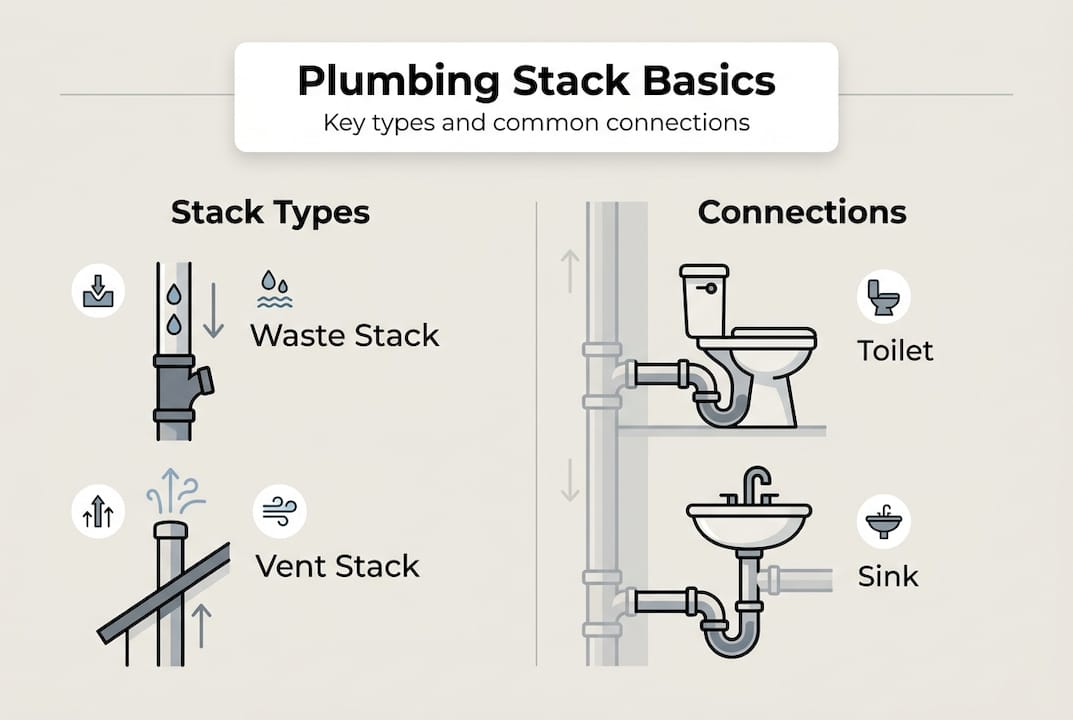
Your plumbing stack is the main vertical pipe that connects every drain in your home to the sewer line below and the open air above. Think of it as the spine of your drainage system. Every sink, toilet, tub, and appliance that drains water ties into this pipe, either directly or through branch lines.
The stack serves two distinct jobs:
- Waste removal: Carries wastewater and solids from all floors down to the main sewer or septic line using gravity.
- Venting: Allows air to enter the drainage system so that water flows freely and sewer gases escape safely through the roof.
Without proper venting, you’d hear gurgling constantly and smell sewage throughout your home. The vent portion of the stack extends above your roof line, open to the atmosphere. This is what keeps the system balanced.
The mechanics are straightforward but precise. Gravity pulls waste downward while atmospheric pressure at 14.7 psi keeps water moving smoothly. When a blockage creates vacuum exceeding 1 inch of water column, it can siphon the water right out of your drain traps. Those traps are the curved pipes under sinks that hold a small amount of water, blocking sewer gas from entering your home. Once that water seal is gone, the gas comes in.
A dry trap is not just an inconvenience. It’s a direct path for hydrogen sulfide and methane gases to enter your living space, both of which are harmful in concentrated amounts.
Understanding the plumbing service types that involve stack work helps you have smarter conversations with your plumber. Stack repairs often overlap with drain cleaning, repiping, and vent work, so knowing the distinction saves time and money.
The stack pipe itself can be made from several materials, each with different performance characteristics. Reviewing stack pipe materials gives you a solid foundation before choosing what goes into your home. Material choice affects cost, longevity, and whether your repair will pass a local inspection.
Materials, codes, and Pittsburgh-specific requirements
Now that you know why stacks are crucial, let’s explore what they’re made of and what’s required to repair or replace one in Pittsburgh.
The two most common stack materials you’ll encounter in Pittsburgh are cast iron and PVC (polyvinyl chloride). Each has real trade-offs.

| Material | Typical lifespan | Pros | Cons |
|---|---|---|---|
| Cast iron | 50 to 100 years | Quiet, durable, fire-rated | Heavy, corrodes over time, costly to repair |
| PVC | 30 to 40+ years | Lightweight, affordable, corrosion-resistant | Noisier, not always code-approved for all applications |
| ABS plastic | 25 to 40 years | Easy to install, lightweight | Less common, not always locally accepted |
Older Pittsburgh homes, especially those built before 1970, almost always have cast iron stacks. These pipes can last a long time, but they corrode from the inside out. You won’t see the damage until it causes a problem.
When it comes to permits, Pittsburgh and Allegheny County have clear requirements. Plumbing renovations require permits through the Health Department, and older homes with corroded cast iron stacks often need full PVC replacement during remodels to pass inspection. Skipping the permit is a risk that can delay a home sale or create liability.
Stack diameter also matters. Most residential stacks run 3 to 4 inches in diameter. Toilets require a minimum 3-inch connection. Undersized stacks restrict flow and cause recurring clogs. Reviewing drain and vent standards helps clarify what sizing is appropriate for your setup.
Fresh air vents are another Pittsburgh-specific consideration. Some older homes use an air admittance valve (AAV) instead of a traditional roof vent. These are code-approved in many cases but not universally accepted. Always verify with your local inspector before assuming an AAV will pass.
Here’s what to keep in mind before starting any stack-related project:
- Pull a permit through the Allegheny County Health Department before work begins
- Confirm your plumber is licensed in Pennsylvania
- Ask about plumbing material choices before committing to a specific pipe type
- Review plumbing repair examples to understand what a typical stack job involves
Pro Tip: If you’re remodeling a bathroom in an older Pittsburgh home, budget for a stack inspection and possible PVC conversion. Discovering corroded cast iron mid-project is far more expensive than catching it early.
Common issues and warning signs with plumbing stacks
Understanding the requirements helps, but catching problems early can save you major headaches.
Stack problems often get misdiagnosed as simple drain clogs. The difference matters because the fix is completely different. Here’s a quick comparison:
| Symptom | Likely stack issue | Likely localized clog |
|---|---|---|
| Multiple slow drains at once | Yes | Rarely |
| Gurgling after flushing toilet | Yes | No |
| Sewage odor throughout home | Yes | No |
| One sink draining slowly | No | Yes |
| Water backing up into tub | Yes | Sometimes |
The most common stack problems Pittsburgh homeowners face include:
- Roof vent clogs: Leaves, bird nests, and ice in winter block the vent opening. This is the most frequent issue and often the easiest to fix.
- Internal blockages: Grease, scale, and debris accumulate inside the stack over decades, narrowing the pipe.
- Corrosion: Cast iron stacks develop rust and pitting that eventually leads to leaks or full pipe failure.
- Improper slope: Branch lines that don’t maintain the correct pitch cause waste to sit and build up.
The warning signs are clear once you know what to look for. Gurgling, slow multi-fixture drains, odors, and trap siphoning are the four signals that point directly to a stack problem rather than a simple clog.
Never ignore gurgling sounds coming from your toilet when you run a sink. That sound means air is being pulled through the trap, which is exactly what happens when your vent is blocked.
For common plumbing problem fixes that go beyond the stack, it helps to understand how your full drainage system connects. A good plumbing maintenance checklist keeps stack health on your radar year-round. If you’re not sure where to start, plumbing troubleshooting steps walk you through diagnosing problems before calling a professional.
Pro Tip: Every fall, check your roof vent opening for debris before winter sets in. A mesh cap costs about $10 and can prevent a service call that costs 50 times more.
Types of plumbing stacks and configuration nuances
Stack designs vary. Let’s break down the main types you’ll encounter and what that means for your renovation.
Two terms confuse homeowners and even some contractors: stack vent and vent stack. They sound identical but serve different purposes.
- Stack vent: This is the upper extension of the waste pipe itself. It continues above the highest drain connection and exits through the roof. It carries both waste below and air above.
- Vent stack: This is a completely separate pipe that carries only air. It runs vertically and connects to the drain system at the bottom but never carries waste. Its job is purely pressure management.
As noted in vent stack vs. stack vent research, codes require a minimum 3-inch vent termination above the roof and a 1/4-inch per foot slope on all horizontal drain lines. These aren’t suggestions. They’re the baseline for a system that actually works.
Single-stack systems, where one pipe handles both waste and venting, are common in older Pittsburgh row homes and multifamily buildings. They work well in low-rise construction but have real limits in taller buildings. For optimized sanitary stack design in mid-rise buildings, separate vent stacks are strongly recommended to prevent pressure fluctuations.
Why this matters for your renovation:
- If you’re adding a bathroom on a new floor, you may need a separate vent stack, not just a branch line
- Misidentifying your stack type can lead to code violations during inspection
- Resale inspections in Pittsburgh increasingly flag improper venting configurations
- Older single-stack systems may need reconfiguration if you’re adding significant fixture load
For homeowners working with a licensed contractor, understanding these distinctions helps you ask the right questions. The plumbing services Pittsburgh professionals in your area should be able to identify your stack type and explain what your renovation requires before any work begins.
Key stat: Codes require a minimum 3-inch diameter at the vent termination and 1/4-inch per foot slope on horizontal runs. Both are non-negotiable for a passing inspection.
Our perspective: What most guides miss about plumbing stacks
After 30 years working in Pittsburgh homes, we’ve seen a consistent pattern. Homeowners and even some contractors treat the plumbing stack as background infrastructure, something to work around rather than assess proactively. Most online guides either oversimplify stacks to the point of uselessness or bury the practical details in technical language that doesn’t help anyone make a real decision.
Here’s what we’ve actually learned: the stack is almost always the first thing that causes a renovation to stall. You open a wall, find corroded cast iron, and suddenly the project scope doubles. This isn’t bad luck. It’s predictable in any Pittsburgh home built before 1975.
The smarter move is to treat a stack assessment as part of every major plumbing project from the start. Ask your plumber to check vent health and code compliance during any drain work, not after a problem surfaces. It costs almost nothing to inspect and can save thousands.
If you’re hiring a Pittsburgh plumber, make stack assessment part of your conversation before work begins. A plumber who skips this step isn’t giving you the full picture.
How we help Pittsburgh homes with plumbing stack challenges
When plumbing stack concerns arise, expert help can make all the difference. Here’s how you can get started.
At AG Heating, Cooling & Plumbing, we’ve spent 30 years helping Pittsburgh homeowners navigate exactly these situations. Stack problems don’t always announce themselves loudly, but our team knows the warning signs and how to address them before they become costly emergencies.
Whether you need a full stack replacement, a vent inspection before a renovation, or urgent plumbing repair services after a failure, we handle it all with permits, inspections, and local code compliance built into every job. Our team is familiar with typical repair issues specific to Pittsburgh’s older housing stock. Reach out to the trusted local plumbing team Pittsburgh homeowners have relied on for three decades.
Frequently asked questions
How can I tell if my plumbing stack is failing?
Listen for gurgling drains, notice unexplained sewage odors, and watch for slow multi-fixture drains across your home. These three signs together almost always point to a stack issue rather than a simple clog.
Does replacing a plumbing stack require a permit in Pittsburgh?
Yes. Plumbing renovations require permits through the Allegheny County Health Department, and a licensed inspector must confirm the work meets local code before the job is considered complete.
What kind of plumbing stack material lasts the longest?
Cast iron stacks in older homes can last 50 to 100 years, while modern PVC stacks last 30 to 40 years or more with far better corrosion resistance. Your best choice depends on your home’s age and existing system.
What’s the difference between a stack vent and vent stack?
A stack vent vs. vent stack comes down to function: the stack vent is the waste pipe’s upward extension through the roof, while the vent stack is a separate air-only pipe. Both manage pressure and prevent sewer gas from entering your home.
How do I prevent clogs in my plumbing stack?
Check your roof vent opening each fall for debris, install a mesh cap over the opening, and schedule annual plumbing maintenance to catch buildup before it becomes a blockage. These simple steps keep the system running properly year-round.
Recommended
- Low-flow plumbing explained: save water and cut costs – AG-Plumbing
- Clear Sewer Line Blockages: 2026 Homeowner’s Guide – AG-Plumbing
- What Is Plumbing and Why It Matters for Homeowners – AG-Plumbing
- Emergency Plumbing Guide: Quick Solutions for Homeowners – AG-Plumbing
