
TL;DR:
- Homeowners in Pittsburgh need permits for new or modified plumbing fixtures, but like-for-like replacements are exempt.
- Proper tools, safety gear, and inspection of old pipes are crucial for successful fixture replacements.
- When issues arise beyond simple swaps, consulting a licensed plumber helps prevent costly future problems.
Replacing a faucet or toilet yourself can save you $150 to $400 in labor costs, but Pittsburgh homeowners face a specific hurdle before picking up a wrench: local permit rules. Like-for-like replacements are often exempt, but new or modified installations require a permit from Allegheny County. Get that wrong, and you risk failed inspections or voided home insurance. This guide walks you through every step, from checking permit requirements to testing for leaks, so you can finish the job with confidence and keep your home’s plumbing up to code.
Table of Contents
- Check permits and prerequisites in Pittsburgh
- Tools, materials, and safety essentials
- Step-by-step instructions for faucet and toilet installation
- Troubleshooting, edge cases, and expert upgrades
- Why fixture installs are easier—and riskier—in Pittsburgh homes
- Get help from trusted Pittsburgh plumbers
- Frequently asked questions
Key Takeaways
| Point | Details |
|---|---|
| Check permit rules first | Always review Allegheny County plumbing permit requirements before starting your project. |
| Use proper tools | Assemble essential tools and materials to streamline your installation and avoid mistakes. |
| Follow step-by-step | Carefully follow each step for faucet and toilet installations to prevent leaks and future issues. |
| Solve edge cases smartly | Prepare for troubleshooting older pipes, uneven floors, and special Pittsburgh challenges with expert upgrades. |
| Upgrade for savings | Water-saving fixtures are smart for Pittsburgh; they lower bills and pay off over time. |
Check permits and prerequisites in Pittsburgh
Before you touch a single shutoff valve, you need to know whether your project requires a permit. Pittsburgh falls under Allegheny County’s plumbing jurisdiction, and the rules are straightforward once you understand them. Homeowners can apply for permits through the Citizen Access Portal online, and like-for-like replacements, swapping a toilet for a toilet in the same location, are typically exempt from permit requirements.
Here is a quick breakdown of what usually requires a permit versus what does not:
- Needs a permit: Adding a new fixture where none existed, moving a fixture to a new location, modifying existing drain or supply lines
- Usually exempt: Replacing a faucet in the same sink, swapping a toilet without moving the flange, installing a new showerhead on existing plumbing
Pro Tip: When in doubt, call Allegheny County’s Health Department directly. A five-minute call can save you from a costly code violation later.
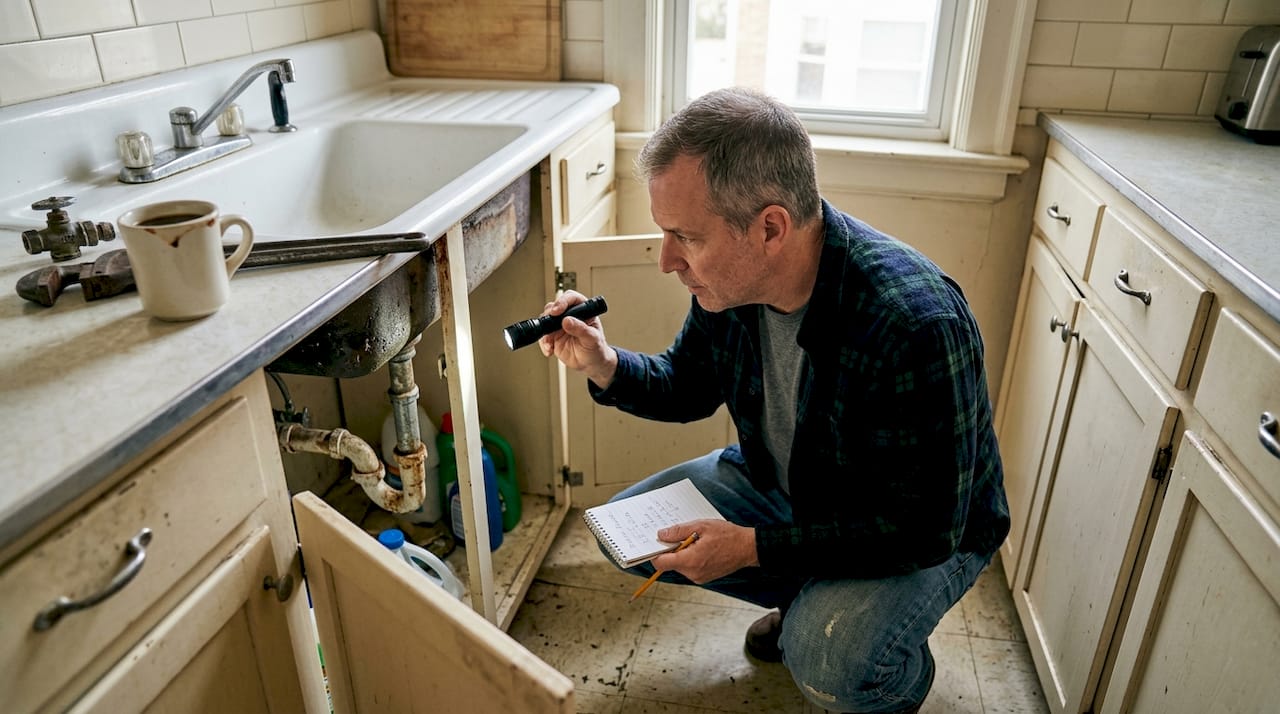
Pittsburgh’s housing stock is older than most American cities. Many homes were built before 1950, which means you may encounter galvanized steel pipes, cast iron drains, or outdated shutoff valves the moment you open a wall or cabinet. These are not automatic dealbreakers, but they do raise the stakes. If you discover corroded pipes or non-functional shutoffs during your project, the scope can expand quickly.
| Project type | Permit required? | DIY-friendly? |
|---|---|---|
| Faucet replacement (same location) | No | Yes |
| Toilet replacement (same location) | No | Yes |
| New fixture installation | Yes | Possible, with permit |
| Moving existing fixture | Yes | Caution advised |
| Modifying drain or vent lines | Yes | Hire a pro |
For a broader look at what Pittsburgh homeowners typically tackle, browse common repairs in Pittsburgh to see where DIY ends and professional help begins. If your project involves moving pipes or adding venting, the services for Pittsburgh homes page is a good resource for understanding what licensed plumbers handle.
Tools, materials, and safety essentials
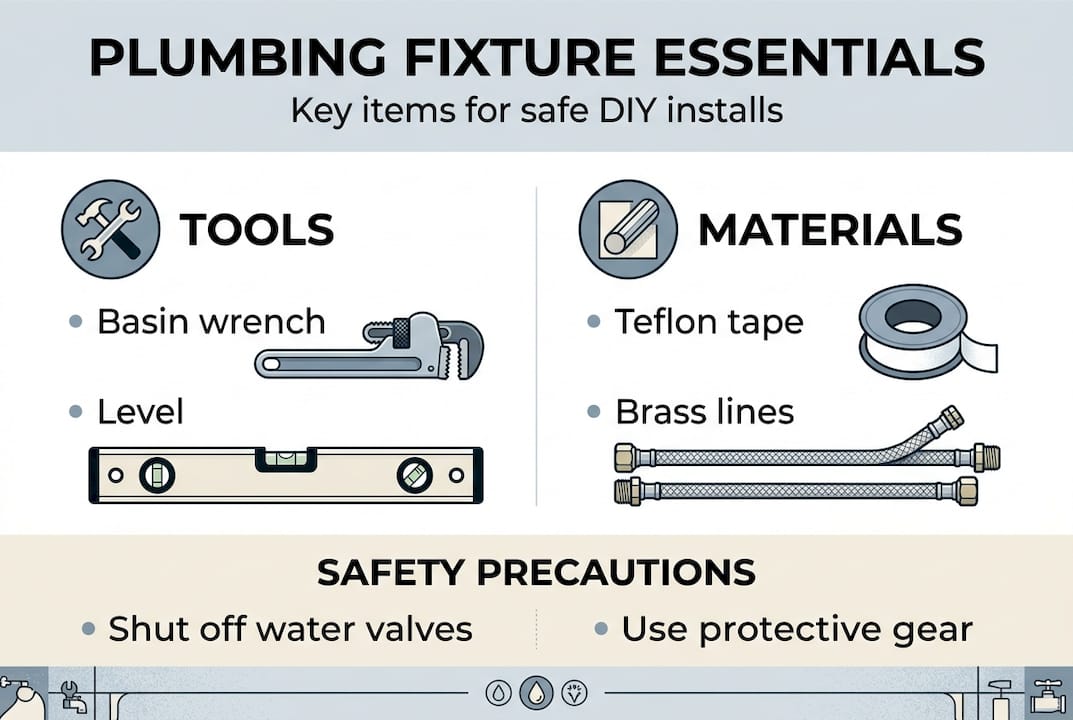
Having the right tools before you start is not just about convenience. It is the difference between a two-hour job and a full-day ordeal. A faucet install requires a basin wrench and adjustable wrench, while a toilet install calls for a wrench, level, and hacksaw, plus Teflon tape for all threaded connections.
Essential tools checklist:
- Basin wrench (critical for reaching faucet mounting nuts in tight spaces)
- Adjustable wrench
- Channel-lock pliers
- Hacksaw or pipe cutter
- Level (especially important for toilet installs)
- Bucket and towels for residual water
- Teflon tape (also called plumber’s tape)
- Utility knife
- Flashlight or headlamp
Safety gear:
- Safety glasses (old pipes can flake and spray)
- Rubber gloves
- Knee pads for toilet work
Pittsburgh’s water has moderate hardness, which means mineral buildup is a real factor. When choosing plumbing materials, opt for brass or stainless steel supply lines over plastic braided hoses for longer service life. Brass fittings resist corrosion better in hard water conditions.
Pro Tip: Before buying a faucet, measure your sink’s hole configuration. Single-hole, centerset (3-hole, 4-inch spread), and widespread (3-hole, 8-inch spread) are the three most common setups in Pittsburgh homes. Buying the wrong one means a return trip to the hardware store.
Corroded pipes are common in older Pittsburgh homes, so inspect your shutoff valves before starting. If the valve is stuck or the stem is visibly corroded, replace it before you install the new fixture. A shutoff that fails mid-install can turn a simple swap into a flooded bathroom.
| Material | Best for | Pittsburgh suitability |
|---|---|---|
| Brass supply lines | Faucets, toilets | Excellent |
| Stainless braided hose | Toilets, under-sink | Very good |
| PVC plastic hose | Budget installs | Fair (shorter lifespan) |
| Wax ring (standard) | Most toilet installs | Good |
| Waxless seal | Uneven floors | Better for older homes |
Step-by-step instructions for faucet and toilet installation
With your tools ready and permits confirmed, you can move into the actual install. Follow these steps carefully and do not skip the testing phase at the end.
Faucet installation:
- Turn off the hot and cold supply valves under the sink. Turn on the faucet to release pressure and drain remaining water.
- Disconnect the supply lines from the old faucet using your adjustable wrench.
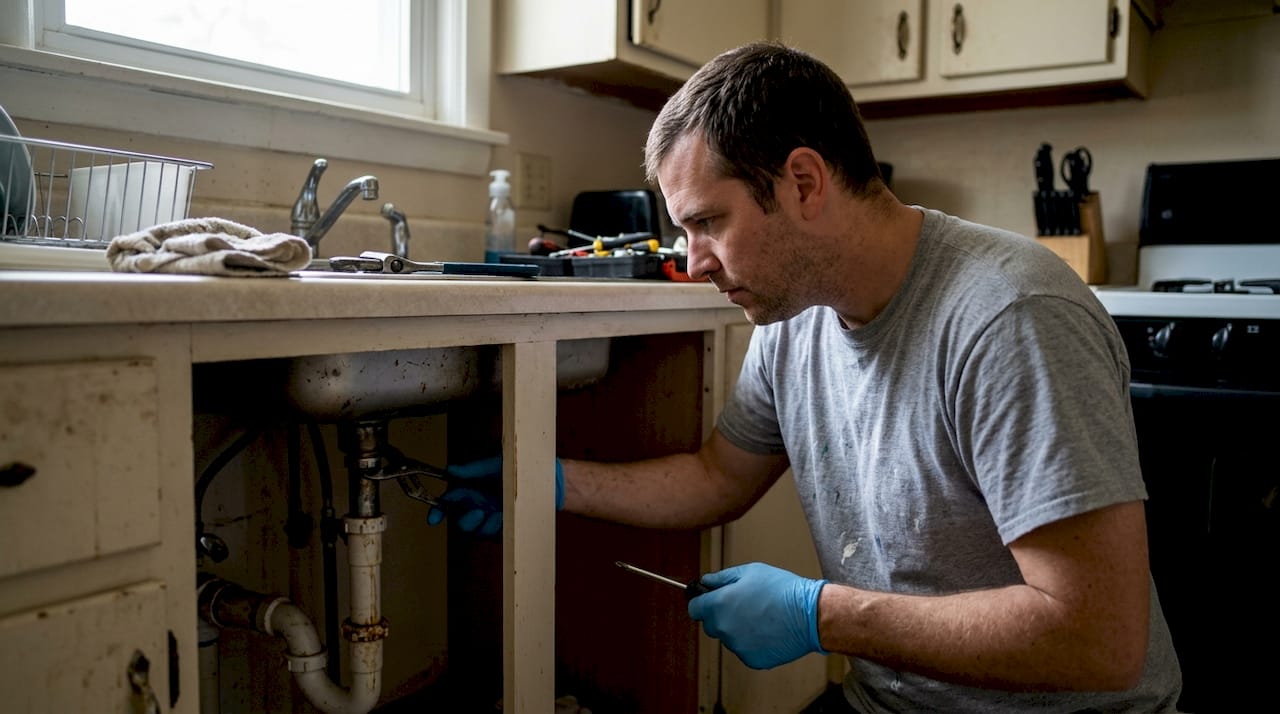
- Remove the mounting nuts holding the old faucet in place. A basin wrench is essential here if the space is tight.
- Clean the sink surface where the old faucet sat. Remove old putty or gasket residue.
- Apply plumber’s putty or the included gasket to the base of the new faucet, then drop it into the mounting holes.
- Secure the mounting hardware from below. Do not overtighten or you risk cracking the sink.
- Wrap Teflon tape clockwise around all threaded supply line fittings before connecting.
- Reconnect supply lines, turn on the water slowly, and check every connection for drips.
Pro Tip: Run the water for 60 seconds and then dry all connections with a paper towel. Press the towel against each joint. Even a slow drip will show up immediately.
Toilet installation:
- Shut off the water supply at the wall valve. Flush to empty the tank, then sponge out remaining water.
- Disconnect the supply line and remove the tank bolts if replacing the full unit.
- Check the rough-in measurement from the wall to the center of the floor drain. Most Pittsburgh homes use a 12-inch rough-in.
- Inspect the flange. If it is cracked or sits too low, address it before setting the new toilet.
- Install a new wax ring or waxless seal on the flange, not on the toilet.
- Lower the toilet bowl straight down onto the flange bolts. Press firmly and evenly to compress the seal.
- Use a level to confirm the bowl is not rocking. Shim with composite shims if needed.
- Tighten the nuts evenly, alternating sides. Caulk the base, leaving a small gap at the back for leak detection.
For ideas on upgrading your bathroom layout alongside this install, check out bathroom plumbing ideas tailored to Pittsburgh homes.
Always turn off the main water supply if your shutoff valves are corroded or unreliable. A failed valve mid-install can cause serious water damage in minutes.
Troubleshooting, edge cases, and expert upgrades
Even a well-planned install can hit a snag. Here are the most common issues Pittsburgh homeowners run into and how to fix them.
Common problems and solutions:
- Low flange: Use a flange extender to bring it flush with the finished floor before setting the wax ring.
- High flange: Switch to a thin-profile wax ring to avoid over-compressing the seal.
- Corroded shutoff valves: Replace corroded shutoffs with quarter-turn ball valves. They are more reliable and easier to operate in emergencies.
- Toilet rocking on uneven floor: Use composite (plastic) shims rather than wood, which can rot and compress over time.
- Stripped faucet mounting nuts: Use a strap wrench instead of pliers to avoid further damage.
Pro Tip: If your toilet rocks even after shimming, the subfloor may be soft or rotted. Press down firmly around the base before committing to the install. A soft floor is a sign of long-term water damage that needs attention first.
On the upgrade side, water-saving fixtures reduce bills noticeably in Pittsburgh’s hard water areas. A WaterSense-labeled toilet uses 1.28 gallons per flush versus 3.5 gallons in older models. That is a meaningful reduction on your annual water bill.
| Seal type | Best use case | Pros | Cons |
|---|---|---|---|
| Standard wax ring | Level floors, standard flange | Reliable, cheap | Not reusable |
| Waxless seal | Uneven floors, older homes | Adjustable, reusable | Costs more |
| Wax ring with horn | Low flanges | Better reach | Can over-compress |
For a deeper look at efficiency gains, the low-flow fixture benefits page breaks down the numbers. You can also find broader plumbing efficiency tips that pair well with a fixture upgrade.
Why fixture installs are easier—and riskier—in Pittsburgh homes
After 30 years working in Pittsburgh, we have a clear view of what makes local DIY plumbing both accessible and tricky. Allegheny County’s permit policy is genuinely homeowner-friendly. Like-for-like replacements are straightforward, and the online portal makes compliance easy. That is a real advantage compared to some other jurisdictions.
But Pittsburgh’s aging housing stock introduces risks that newer homes simply do not have. Galvanized pipes, cast iron drains, and outdated venting configurations are common. Permits and inspections are required for modifications, and moving fixtures without addressing venting codes is a mistake we see homeowners make repeatedly. The fix costs far more than the original install.
Our honest take: DIY fixture replacement is a smart move for most Pittsburgh homeowners. But treat every install as a diagnostic opportunity. When you open that cabinet or pull that toilet, look at what is around it. Catching a corroded pipe or a failing flange early is worth more than the install itself. And if you find something that looks beyond a simple swap, knowing when to call a professional plumber is the smartest skill a DIYer can have.
Get help from trusted Pittsburgh plumbers
Sometimes a project reveals more than you bargained for, and that is completely normal in Pittsburgh’s older homes. When your install uncovers corroded pipes, a damaged flange, or a venting issue, having a trusted local team ready makes all the difference.
At AG Heating, Cooling & Plumbing, we have spent 30 years helping Pittsburgh homeowners handle everything from straightforward local plumbing repair to full fixture upgrades. If you want to stay ahead of problems, our maintenance checklist is a great starting point. And if you are unsure what type of service you need, the essential plumbing services guide breaks it all down clearly.
Frequently asked questions
Do I need a permit to replace a faucet or toilet in Pittsburgh?
You typically do not need a permit for like-for-like replacements if no plumbing is moved, but check with Allegheny County for any exceptions specific to your project.
What tools are needed to install a faucet or toilet?
A basin wrench and adjustable wrench cover most faucet install needs; for toilets, add a level, hacksaw, and Teflon tape for all threaded connections.
How can I check for leaks after installing fixtures?
Turn on the water supply slowly and run water through the fixture; then press a dry paper towel against every connection and the base for dampness or drips.
What should I do if my home has old, corroded pipes?
Replace corroded shutoffs with quarter-turn ball valves right away, and consult a licensed plumber if you suspect widespread pipe corrosion behind walls or under floors.
Are water-saving fixtures worth it for Pittsburgh homes?
Yes, water-saving fixtures lower bills meaningfully in hard water areas like Pittsburgh and are a smart upgrade whenever you are already replacing a toilet or faucet.
Recommended
- Top bathroom plumbing ideas for Pittsburgh homeowners – AG-Plumbing
- How to Choose Plumbing Materials for Pittsburgh Homes – AG-Plumbing
- Examples of plumbing repairs Pittsburgh homeowners need – AG-Plumbing
- Maximize bathroom comfort: role of plumbing in Pittsburgh 2026 – AG-Plumbing
- Bathroom renovation plumbing tips for GTA homeowners | Proper Plumbing GTA Blog
