
TL;DR:
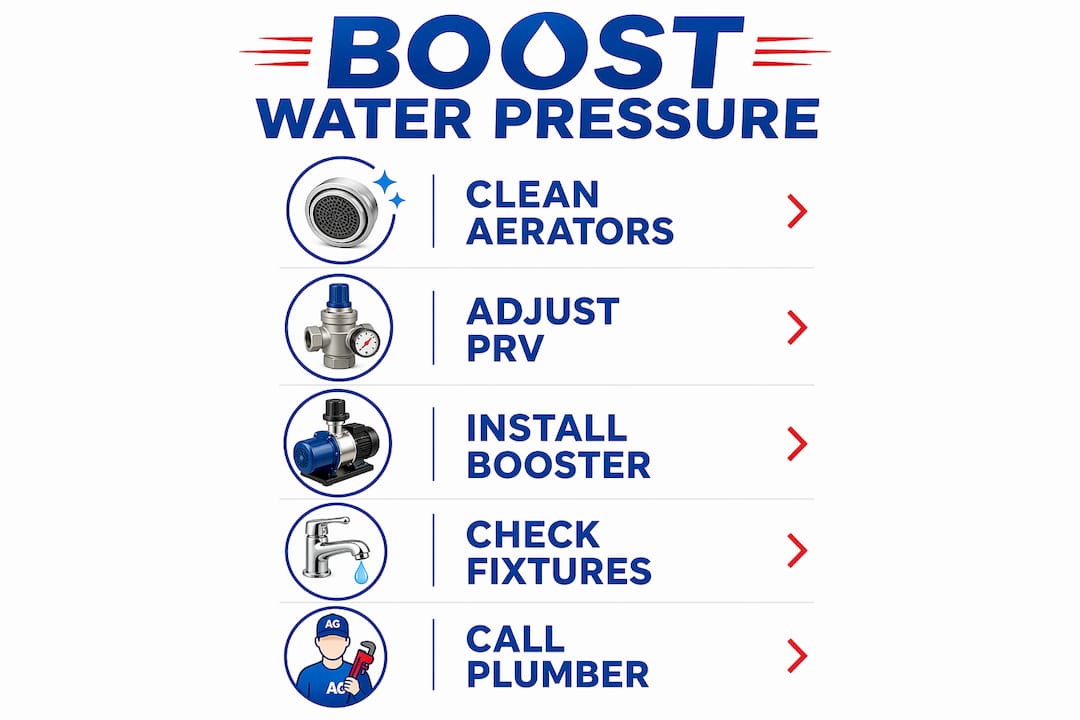
- Low water pressure below 40 PSI can be fixed by cleaning aerators, adjusting the pressure-reducing valve, or installing a booster pump. The most common cause is mineral buildup in aerators, which can be resolved with vinegar cleaning, costing only a few dollars. More severe issues like corroded pipes or failed valves require professional repair, often involving costly repiping or booster pump installation.
Low water pressure is defined as any residential supply reading below 40 PSI, and the fix usually starts with three steps: cleaning clogged aerators, adjusting your pressure-reducing valve (PRV), or installing a booster pump. The standard residential target sits at 60 PSI, and most homes can reach it without major work. Knowing how to increase water pressure means identifying which of these causes applies to your home first, then applying the right solution. Common culprits include mineral-clogged aerators, a misadjusted PRV, partially closed shutoff valves, and low municipal supply pressure.
How to increase water pressure by cleaning aerators and fixtures
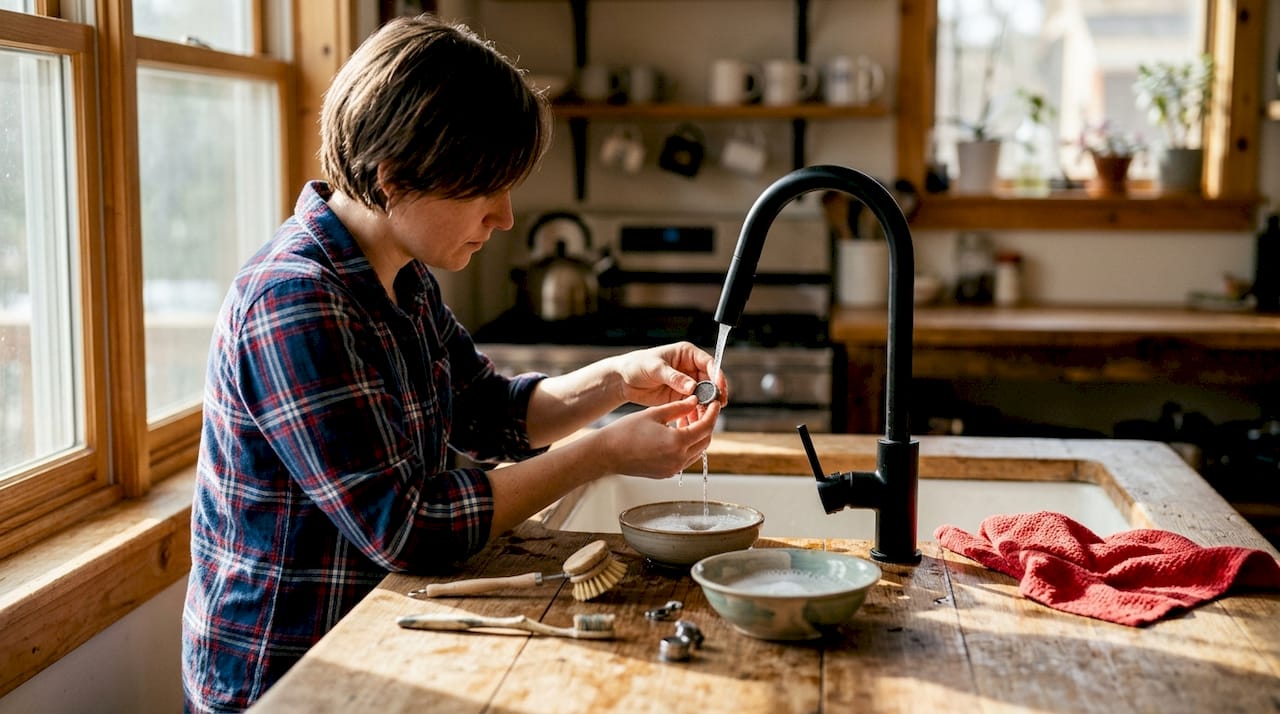
Clogged aerators are the most overlooked cause of low water pressure at a single faucet or showerhead. An aerator is the small mesh screen screwed onto the tip of your faucet. Mineral deposits from hard water accumulate in that mesh over time, cutting flow significantly. Cleaning mineral deposits with a vinegar soak resolves low water pressure in up to 70% of cases.
Step-by-step aerator cleaning
- Unscrew the aerator by hand or with pliers wrapped in a cloth to avoid scratching.
- Disassemble the parts and rinse them under running water to remove loose debris.
- Soak all parts in white vinegar for 30 minutes to dissolve mineral buildup.
- Scrub with an old toothbrush to clear any remaining deposits from the mesh screen.
- Reassemble and reattach the aerator, then run the faucet to test flow.
If the aerator is cracked or the mesh is torn, replace it. Aerator replacement restores full water flow in about 90% of single-fixture low-pressure cases, and a new aerator costs just $3–$5. That makes it the most cost-effective first step before any other repair. The same vinegar soak method works on showerheads. Remove the showerhead, submerge it in a bag of vinegar overnight, and reattach it in the morning.
Pro Tip: Clean your aerators every six months. Homes with hard water, like many in the Pittsburgh, PA area, accumulate mineral deposits faster than the national average.
How do you adjust a pressure-reducing valve to fix low pressure?
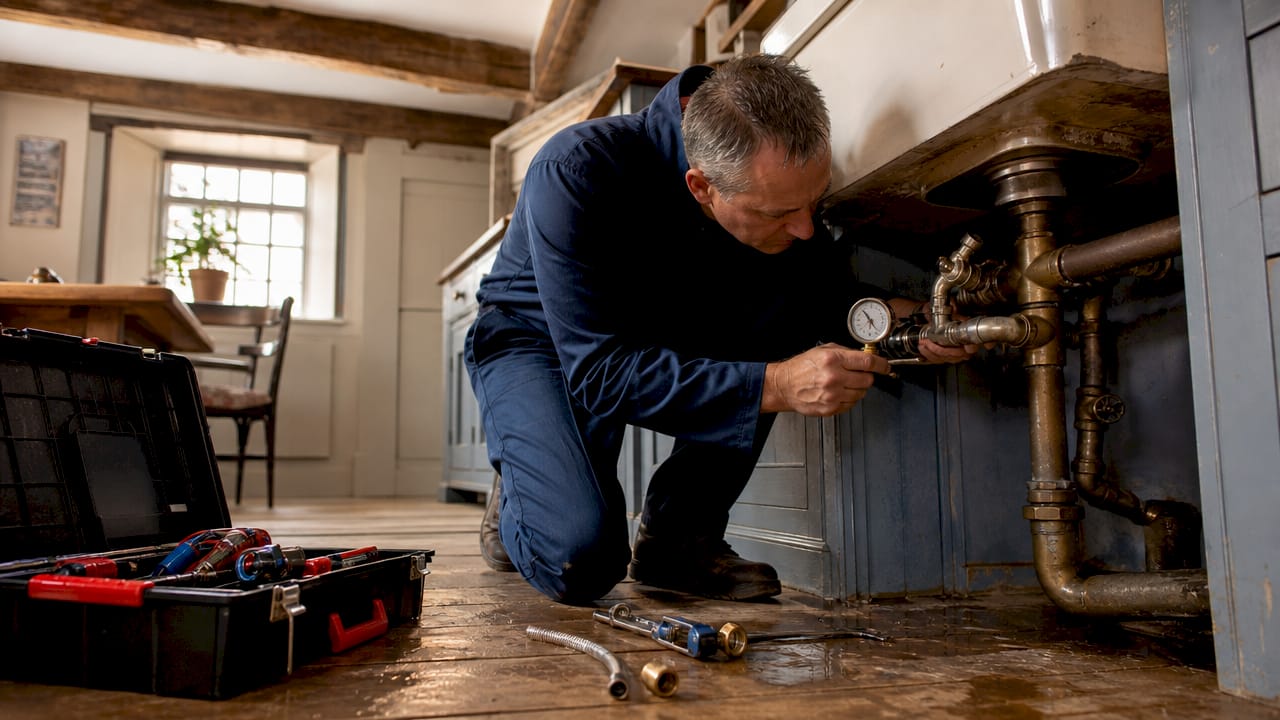
A pressure-reducing valve (PRV) is a bell-shaped brass fitting installed on the main water line, typically near where the supply pipe enters your home or close to the water meter. Its job is to step down the high pressure from the municipal main to a safe level for your pipes. When a PRV is set too low or begins to fail, every fixture in the house loses pressure at once.
Adjusting your PRV safely
- Locate the PRV on the main supply line, usually in the basement or utility room near the meter.
- Attach a water pressure gauge to an outdoor hose bib to get a baseline reading before adjusting.
- Loosen the locknut on top of the PRV with a wrench.
- Turn the adjustment screw clockwise in small increments to raise pressure. Check the gauge after each quarter turn.
- Stop at 60 PSI and retighten the locknut once you reach the target.
Pressure above 80 PSI risks pipe stress, joint leaks, and appliance damage. Never push past that threshold. If turning the screw produces no change, or if pressure fluctuates wildly, the PRV has likely failed internally. PRV replacement costs run $200–$450 depending on the valve size and labor. That is a job for a licensed plumber, since the main supply must be shut off and the valve soldered or threaded into place.
Pro Tip: Test pressure both upstream and downstream of the PRV. High street pressure with low downstream pressure confirms a failing valve, not a municipal supply problem.
When should you install a water pressure booster pump?
A booster pump is the right solution when the municipal supply itself delivers low pressure, or when a multi-story home cannot push adequate flow to upper floors. No amount of aerator cleaning or PRV adjustment fixes a supply problem at the street. A booster pump installs on the main line and mechanically increases pressure throughout the entire house.
A booster pump raises pressure by approximately 30–35 PSI, which is enough to bring a 25 PSI supply up to the 60 PSI residential standard. Installation costs $1,800 or more as of mid-2026, including the pump unit, labor, and required fittings. That price reflects the complexity of the work: the pump must be wired to a power source, plumbed into the main line, and fitted with a pressure relief valve per plumbing code.
What to expect from a booster pump system
- Consistent whole-house pressure regardless of how many fixtures run simultaneously
- Adjustable output via a built-in pressure switch, allowing fine-tuning to 60 PSI
- Pressure relief valve required by code to prevent over-pressurization
- Expected lifespan of 10–15 years with annual maintenance checks
- Best fit for multi-floor homes, homes on dead-end water mains, and buildings with aging supply infrastructure
| Scenario | Booster pump needed? | Estimated cost |
|---|---|---|
| Single fixture low pressure | No | $3–$5 aerator fix |
| PRV misadjusted | No | $0 DIY or $200–$450 replacement |
| Low municipal supply pressure | Yes | $1,800+ installed |
| Multi-floor home, upper floor weak flow | Yes | $1,800+ installed |
Pro Tip: Ask your plumber to install a whole-home pressure gauge alongside the booster pump. It lets you monitor output and catch pressure drops before they become problems.
Troubleshooting common causes of low water pressure
Low pressure across every fixture at once points to a systemic issue, not a single clogged aerator. The most common whole-house culprits are:
- Partially closed main shutoff valve. The gate valve near your meter may be only 80% open after a repair. Fully opening it can restore pressure instantly.
- Corroded or galvanized steel pipes. Galvanized pipes corrode internally over decades, narrowing the flow path until only a full repipe fixes the problem. Repipe costs run $5,000–$10,000.
- Failed internal gate valve. Corroded gate valves may spin freely at the handle while the internal disc has broken off, blocking flow. A plumber must replace these with modern ball valves.
- Active leaks in the supply line. A hidden leak bleeds pressure before water reaches your fixtures. Check your water meter for leaks by shutting off all fixtures and watching the meter dial.
- Faulty PRV. Measuring pressure upstream and downstream of the PRV confirms whether the valve is the source of the drop.
One common mistake homeowners make is treating hydro-jetting as a permanent fix. Hydro-jetting provides only temporary relief for mineral buildup and does nothing for corroded or galvanized piping. If your pipes are galvanized steel and more than 40 years old, jetting buys months, not years.
Renters in high-rise apartments face a different challenge. High-rise low pressure is often systemic, caused by failing building pumps or corroded risers. Individual unit fixes like aerator cleaning help at the fixture level, but building-wide pressure requires coordination with property management. Document your pressure readings with a gauge and submit them in writing to management. That creates a paper trail and often accelerates repairs.
Pro Tip: Call a licensed plumber when pressure is low at every fixture, when the PRV adjustment produces no change, or when you find pipe corrosion during inspection. DIY fixes work for aerators and PRV adjustments. Pipe replacement and booster pump installation require a professional.
Key Takeaways
Increasing home water pressure requires matching the right fix to the right cause, starting with the cheapest and simplest option before moving to pump installation or repiping.
| Point | Details |
|---|---|
| Start with aerators | Clean or replace aerators first. They fix 90% of single-fixture pressure problems for $3–$5. |
| Target 60 PSI | Adjust your PRV to reach 60 PSI. Never exceed 80 PSI or you risk pipe and appliance damage. |
| Booster pumps for supply issues | Install a booster pump when municipal pressure is too low. Expect to spend $1,800 or more. |
| Diagnose before you fix | Test pressure upstream and downstream of the PRV to confirm whether the valve or the supply is the problem. |
| Know when to call a pro | Corroded pipes, failed gate valves, and booster pump installation all require a licensed plumber. |
What I’ve learned after years of watching homeowners fight low pressure
The most common mistake I see is homeowners skipping straight to expensive fixes. A booster pump is a real solution, but I have watched people spend $1,800 on one when a $4 aerator and a PRV adjustment would have done the job. The diagnostic step is not optional. Grab a $15 pressure gauge, screw it onto a hose bib, and get a real number before you call anyone.
The second thing I have learned is that older Pittsburgh homes have a specific problem: galvanized steel pipes that look fine from the outside but are nearly closed on the inside. No pump, no valve adjustment, and no amount of cleaning fixes that. The only real answer is repiping, and the sooner a homeowner accepts that, the less money they waste on temporary patches.
For renters, especially those in older apartment buildings, the honest truth is that your options are limited. Clean your aerators and showerhead. Beyond that, the pressure problem lives in the building’s infrastructure, and you need management involved. Low-flow fixtures designed for efficiency can maintain a decent spray even at lower system pressure, which is worth knowing if you are waiting on a building repair.
The cost-benefit case for a booster pump is real when the situation calls for it. A home where every shower feels weak, where the dishwasher takes forever, and where upper-floor faucets barely trickle is a quality-of-life problem every single day. At that point, $1,800 is a reasonable investment. Just make sure a licensed plumber installs it with the correct pressure relief valve. An over-pressurized system causes far more damage than low pressure ever did.
— Maayan
Ag-plumbing can restore your home’s water pressure
Low water pressure in a Pittsburgh home rarely fixes itself. Ag-plumbing has 30 years of experience diagnosing and repairing exactly these problems, from PRV adjustments and aerator replacements to full booster pump installations and pipe repairs.
The Ag-plumbing team handles the full range of plumbing repair services Pittsburgh homeowners need, including pressure diagnostics, valve replacement, and booster pump installation. If you are dealing with weak flow at every fixture or a shower that barely runs, a professional inspection identifies the root cause fast. Contact Ag-plumbing to schedule a pressure evaluation and get a clear answer on what your home actually needs.
FAQ
What is a normal water pressure for a house?
The standard residential target is 60 PSI. Pressure below 40 PSI is considered low, and anything above 80 PSI risks pipe and appliance damage.
How do I increase shower water pressure in an apartment?
Start by removing and cleaning the showerhead in a vinegar soak overnight. If pressure remains weak, the issue is likely building-wide and requires coordination with your property management.
How much does it cost to fix low water pressure?
Costs range from $3–$5 for an aerator replacement to $200–$450 for a PRV replacement, up to $1,800 or more for a booster pump installation as of 2026.
Can a partially closed valve cause low water pressure?
Yes. A main shutoff or gate valve that is only partially open restricts flow to the entire house. Fully opening the valve often restores pressure immediately at no cost.
When should I call a plumber for low water pressure?
Call a licensed plumber when pressure is low at every fixture, when PRV adjustment produces no change, or when you suspect corroded pipes or a failed internal valve.
Recommended
- Why Check Water Pressure: A Homeowner’s Guide – AG-Plumbing
- Plumbing upgrades that save Pittsburgh homes money – AG-Plumbing
- How Hydro Jetting Improves Water Flow in Your Pipes – AG-Plumbing
- Why Hydro Jetting Is Ideal for Commercial Plumbing Systems – AG-Plumbing
