
TL;DR:
- A dual flush toilet offers two flushing options to save water without sacrificing performance. It uses a canister valve system and specific calibration to deliver different water volumes for liquids and solids. Proper maintenance and correct installation ensure reliable savings and reduce common issues like ghost flushing and weak flushes.
A dual flush toilet is a water-efficient fixture that gives you two flush options: a light flush for liquid waste and a full flush for solid waste. This two-button system is the industry-standard term for what many homeowners call a “water-saving toilet,” and it cuts household water use without sacrificing flushing power. The EPA WaterSense program certifies these fixtures, and qualifying models must meet a 1.28 gallons per flush weighted average or less. That standard matters because toilets are the single largest water user inside most American homes.
What is a dual flush toilet and how does it differ from standard models?
A dual flush toilet replaces the single-flush mechanism found in most older American bathrooms with a two-option system calibrated for different types of waste. Standard toilets use a fixed 1.6-gallon flush for every use, regardless of what is being flushed. A dual flush system, by contrast, uses 0.8–1.1 gallons for liquid waste and 1.28–1.6 gallons for solid waste. That gap adds up fast in a household that flushes a toilet dozens of times each day.
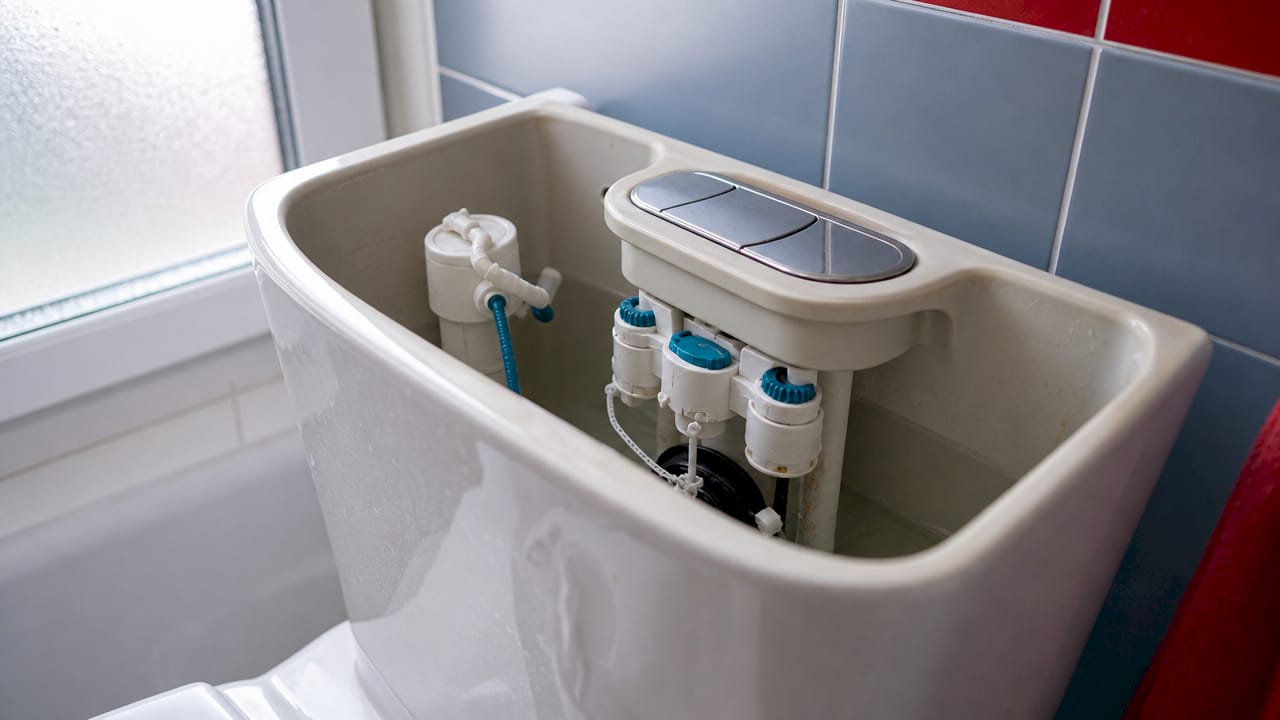
The internal design is also different. Traditional toilets use a rubber flapper valve that lifts to release water. Dual flush models use a canister valve system that opens from the center outward, allowing water to flow around the entire valve rather than through a single opening. This design delivers a more consistent flush at lower volumes. It also means the flushing technique and button placement look different from what most American homeowners are used to.
How does a dual flush toilet work?
The mechanism behind a dual flush toilet is straightforward once you understand its three core components: the flush buttons, the canister valve, and the fill valve.
- Flush buttons or levers: Most models feature two buttons on top of the tank. The smaller button triggers the half flush (liquid waste). The larger button triggers the full flush (solid waste). Some European-style models use a single lever pushed in two directions.
- Canister valve: This replaces the traditional flapper. When you press a button, a lift rod raises the canister, releasing water from the tank into the bowl. The canister drops back into place once the flush is complete, sealing the tank so it can refill.
- Fill valve and refill tube: After each flush, the fill valve refills the tank to a preset water level. Proper refill tube placement and fill valve calibration are critical. If the water level is too low, the flush loses power. If it is too high, water drains into the overflow tube and wastes water continuously.
The flush volume is controlled by adjustable dials on the flush mechanism itself. These dials let a plumber or a careful homeowner set the exact volume for each button. Getting this calibration right is what separates a well-performing dual flush toilet from one that leaves homeowners pressing the button twice.
Pro Tip: Hold the flush button down for a full two seconds before releasing it. Releasing too early is the most common reason a dual flush toilet feels weak, and it costs you nothing to fix.
What are the main benefits of dual flush toilets?
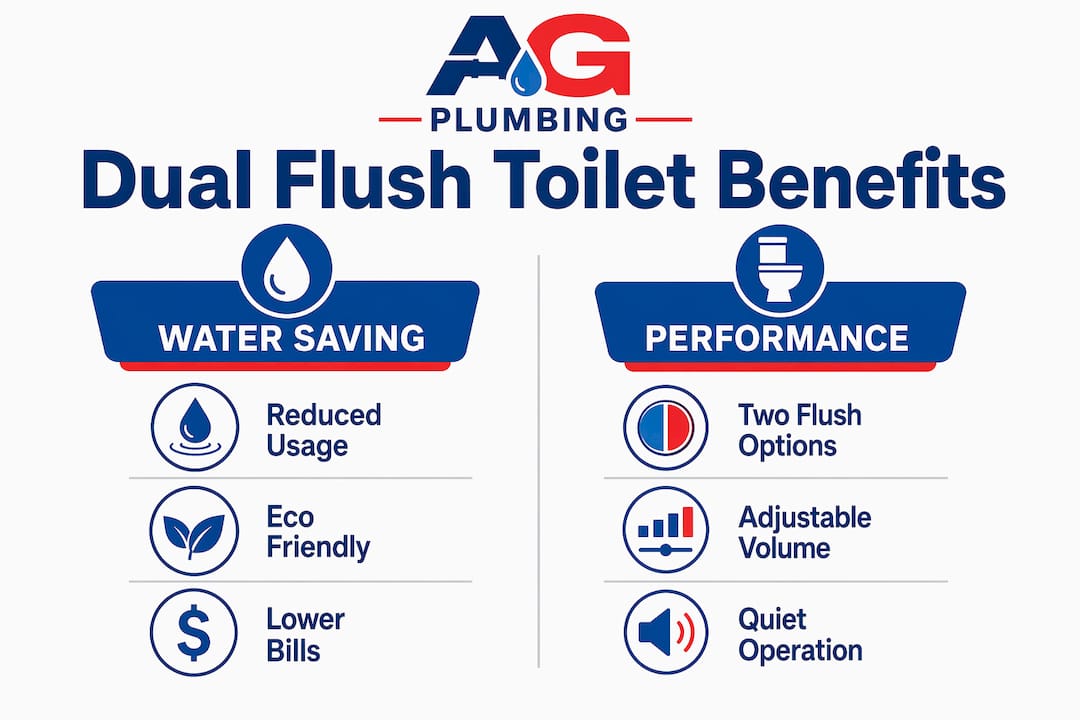
The water savings from a dual flush system are real and measurable. A family of four using WaterSense-certified fixtures saves around 13,000 gallons of water per year. That translates to roughly $170 in annual water bill savings. Over a decade, those savings cover the cost of the toilet and then some.
The financial case is also clear at the point of purchase. Dual flush toilets typically cost $50–$150 more than comparable single-flush models. The payback period runs 1–7 years depending on local water rates. Homeowners in cities with high water costs recover that premium much faster.
Beyond the household budget, the environmental case is strong. Reducing toilet water use lowers the demand on municipal water treatment systems. For homeowners interested in green plumbing solutions, a dual flush toilet is one of the highest-impact single upgrades available. The role of dual flush toilets in water conservation is recognized by the EPA, the American Water Works Association, and most municipal water utilities across the country.
Key dual flush toilet advantages at a glance:
- Lower water bills through reduced per-flush volume
- EPA WaterSense certification available on qualifying models
- Reduced environmental impact from lower water consumption
- Eligible for rebates in many municipalities that incentivize water-efficient fixtures
- Longer-term cost recovery through consistent monthly savings
What are common maintenance issues and how do you fix them?
Dual flush toilets are more mechanically complex than single-flush models. That complexity creates specific failure points that homeowners should know before buying.
Ghost flushing
Ghost flushing is the sound of water running in the tank when no one has pressed a button. Degraded flush valve seals are the primary cause, not the fill valve as many homeowners assume. Water slowly leaks from the tank into the bowl, and the fill valve runs to compensate. Replacing the worn seal fixes this in most cases without replacing the entire valve assembly.
Weak flushes
A weak flush almost always traces back to calibration or water level. Improper fill valve setup prevents the tank from reaching the correct water level needed for a full siphon action. Check the water level line marked inside the tank and adjust the fill valve accordingly.
Stuck buttons and clogged rim jets
Hard water deposits cause mineral buildup inside the tank and along the rim jets under the toilet bowl’s rim. Stuck buttons are a direct result of mineral accumulation around the button mechanism. Clogged rim jets reduce the water flow into the bowl, weakening every flush. Regular cleaning with a descaling solution prevents both problems.
User error
Choosing the half flush for solid waste is the most common source of clogging complaints. The fix is simple: label the buttons clearly or educate everyone in the household on which button does what. This is especially relevant in rental properties where new tenants may not be familiar with the system.
| Problem | Likely Cause | Fix |
|---|---|---|
| Ghost flushing | Degraded flush valve seal | Replace the seal |
| Weak flush | Low water level or miscalibration | Adjust fill valve and calibration dial |
| Stuck buttons | Mineral buildup from hard water | Clean with descaling solution |
| Clogged rim jets | Hard water deposits | Regular rim jet cleaning |
| Clogging | Half flush used for solid waste | User education on button function |
Pro Tip: Clean the rim jets every three months using a small brush and white vinegar. This single habit prevents most of the performance issues homeowners blame on the toilet itself.
For a broader look at diagnosing toilet problems, the common plumbing repair guide from Ag-plumbing covers the most frequent issues Pittsburgh homeowners encounter. Proper toilet cleaning habits also extend the life of the valve components significantly.
How do you choose and install a dual flush toilet?
Selecting the right dual flush toilet comes down to four factors: budget, water pressure, bowl shape, and rough-in distance.
- Set your budget. Reliable models are available under $200. Spending more gets you quieter fill valves, softer-close seats, and better-quality seals. The higher-end components tend to last longer and require less maintenance.
- Check your water pressure. Dual flush toilets perform best with standard residential water pressure. Very low pressure can cause weak flushes regardless of calibration. If your home has known pressure issues, address those first.
- Measure the rough-in distance. This is the distance from the wall to the center of the drain pipe. Most American toilets use a 12-inch rough-in. Buying a toilet with the wrong rough-in measurement means it will not fit without additional plumbing work.
- Choose the right bowl shape. Round bowls fit smaller bathrooms. Elongated bowls are more comfortable for most adults. Measure your available floor space before deciding.
- Decide on professional installation. Installing a dual flush toilet is a manageable DIY project for homeowners comfortable with basic plumbing. However, improper installation of the fill valve or flush mechanism leads directly to the calibration and ghost flushing problems described above. The toilet installation guide from Ag-plumbing walks through the full process step by step. When in doubt, a licensed plumber completes the job in under an hour and guarantees the calibration is correct from day one.
Key Takeaways
A dual flush toilet is the most impactful single plumbing upgrade a homeowner can make for water efficiency, saving thousands of gallons annually when properly installed and used.
| Point | Details |
|---|---|
| Two flush volumes | Use 0.8–1.1 gallons for liquid waste and 1.28–1.6 gallons for solid waste. |
| EPA WaterSense savings | Certified models save a family of four around 13,000 gallons and $170 per year. |
| Canister valve design | Replaces the traditional flapper for more consistent flushing at lower water volumes. |
| Ghost flushing fix | Replace degraded flush valve seals first before assuming the fill valve is the problem. |
| Installation matters | Correct calibration at installation prevents most performance complaints. |
Why dual flush toilets are worth it, even when they frustrate you
I have seen homeowners rip out a dual flush toilet after six months and go back to a standard model. Every single time, the reason was a maintenance issue that could have been fixed in 20 minutes. Ghost flushing from a worn seal. Weak flushes from a miscalibrated fill valve. Buttons stuck with mineral scale. None of those are design flaws. They are maintenance gaps.
The performance argument against dual flush toilets falls apart when you look at the data. WaterSense-certified models meet strict flushing performance requirements despite using less water. The technology works. What fails is the assumption that a toilet requires zero attention after installation.
The misconception I hear most often is that a dual flush toilet will clog more than a standard model. That is almost always a user behavior issue, not a mechanical one. Choosing the wrong flush button for the type of waste causes the vast majority of clogging complaints. Solve the behavior, and the clogging stops.
My honest recommendation: buy a WaterSense-certified dual flush model, have a plumber set the calibration correctly on day one, and clean the rim jets quarterly. Do those three things and you will have a toilet that saves water, saves money, and causes you no grief for years.
— Maayan
Ag-plumbing can handle your dual flush toilet installation
Ag-plumbing has served Pittsburgh homeowners for 30 years, and dual flush toilet installation is one of the most common upgrade requests the team handles. Getting the fill valve calibrated correctly and the flush mechanism set to the right volumes from the start prevents every performance issue covered in this article.
Whether you are installing a new dual flush toilet or troubleshooting one that is already in place, the Ag-plumbing team provides professional plumbing services across Pittsburgh and the surrounding areas. For existing toilet problems, the plumbing repair service covers everything from ghost flushing to stuck buttons and seal replacement. Reach out to schedule a visit and get the job done right the first time.
FAQ
What is a dual flush toilet?
A dual flush toilet is a water-efficient fixture with two flush options: a half flush for liquid waste and a full flush for solid waste. It uses a canister valve system instead of a traditional flapper to deliver different water volumes per flush.
How much water does a dual flush toilet save?
WaterSense-certified dual flush toilets save a family of four around 13,000 gallons of water per year, which equals roughly $170 in annual water bill savings compared to older standard toilets.
Why does my dual flush toilet keep running?
A continuously running dual flush toilet is almost always caused by a degraded flush valve seal, not the fill valve. Replacing the seal is a low-cost fix that resolves ghost flushing in most cases.
Are dual flush toilets harder to maintain?
Dual flush toilets require more attention than single-flush models, particularly in hard water areas where mineral buildup clogs rim jets and sticks buttons. Quarterly cleaning with a descaling solution prevents most issues.
How much does a dual flush toilet cost?
Reliable dual flush models are available under $200, and they typically cost $50–$150 more than comparable single-flush toilets. The payback period ranges from 1–7 years depending on local water rates.
Recommended
- Toilet Installation Guide for Homeowners: 2026 Edition – AG-Plumbing
- How to Fix a Running Toilet: a DIY Guide – AG-Plumbing
- Low-flow plumbing explained: save water and cut costs – AG-Plumbing
- Why flushing your water heater saves Pittsburgh homes money – AG-Plumbing
