
TL;DR:
- Water hammer causes loud banging sounds and pressure spikes up to ten times normal in plumbing systems. It results from hydraulic shocks when water flow is abruptly stopped, stressing pipes and fittings. Proper diagnosis and solutions like arrestors and pressure reduction prevent costly damage.
Water hammer is defined as a hydraulic shockwave that travels through your pipes when moving water is suddenly stopped or forced to change direction. The result is a loud bang or series of bangs that you can hear and sometimes feel through your walls. Pressure spikes can reach 5–10 times normal operating pressure, jumping from a typical 60 PSI to 180 PSI or higher in a fraction of a second. That kind of force does not just make noise. It stresses joints, loosens fittings, and can eventually cause leaks that cost thousands of dollars to repair.
What is water hammer, exactly?
Water hammer, known in engineering as hydraulic shock, happens when a column of water moving through a pipe has nowhere to go. Think of it like a car hitting a wall at speed. The kinetic energy in the moving water has to go somewhere, and it transfers into the pipe walls as a pressure wave. The technical term “hydraulic shock” appears in plumbing codes and engineering literature, but most homeowners know it by the banging sound it makes.
The phenomenon is not new, but it has gotten worse in modern homes. Solenoid valves in washing machines and dishwashers close in 30–50 milliseconds, far faster than any manual faucet you could turn off by hand. That speed is the primary driver of increased water hammer events in homes built or renovated in the last two decades. The faster the shutoff, the more violent the pressure wave.
What causes water hammer in home plumbing systems?
Several conditions create or worsen hydraulic shock in residential plumbing. Understanding the causes helps you identify which one applies to your home.
- Quick-closing appliance valves. Washing machines, dishwashers, and ice makers all use solenoid valves that snap shut almost instantly. This is the most common trigger in modern homes.
- High static water pressure. Normal residential pressure runs 40–60 PSI. When pressure climbs above 80 PSI, the energy in each water column is much greater, making every valve closure more violent.
- Waterlogged air chambers. Older homes often have vertical pipe sections called air chambers installed near fixtures. These act as cushions, but they fill with water over time and lose their ability to absorb shockwaves.
- Closed-loop plumbing systems. Homes with backflow preventers or pressure-reducing valves create closed-loop systems that trap pressure waves inside the pipes. The wave has no path back to the water main, so it bounces and amplifies.
- Loose or unsupported pipes. Pipes that are not properly strapped to framing move when a pressure wave hits them, creating the banging sound against joists or walls.
High system pressure is the multiplier that makes every other cause worse. If your home runs above 80 PSI, even a slow valve closure can generate a damaging shockwave.
What are the effects and risks of water hammer on home plumbing?
Water hammer is more than an annoyance. It is a warning of mechanical stress that risks costly plumbing damage if ignored. Each shockwave puts strain on pipe joints, solder connections, and fittings. Over time, that repeated stress causes fatigue, the same way bending a metal wire back and forth eventually snaps it.
The financial stakes are real. Water damage claims average over $12,000 per incident, and water-related issues account for roughly 24% of all homeowner insurance claims. A failed pipe joint behind a wall can go undetected for weeks, causing mold and structural damage far beyond the original plumbing repair.
Different pipe materials respond differently to hydraulic shock:
- Copper pipe is rigid and transmits shockwaves efficiently, making the banging loud and the stress on joints high.
- Galvanized steel pipe is also rigid but corrodes over time, making joints weaker and more vulnerable to pressure fatigue.
- PEX tubing is flexible and absorbs some of the shockwave energy, making it the most forgiving material for homes with water hammer issues.
The noise itself is a diagnostic signal, not just a nuisance. A sharp, loud bang that happens exactly when an appliance shuts off points directly to hydraulic shock. Catching it early and addressing it before a joint fails is always cheaper than dealing with water damage after the fact.
How can homeowners diagnose and confirm water hammer?
Pinpointing hydraulic shock requires paying attention to timing and sound. Not every pipe noise is water hammer, and misdiagnosing it leads to wasted money on the wrong fix.
- Listen for timing. Water hammer produces a sharp bang that coincides exactly with valve closure. If the noise happens when your washing machine finishes filling or your dishwasher starts a cycle, that is a strong indicator.
- Distinguish it from thermal expansion. Thermal expansion creates softer tapping or clicking sounds that occur as pipes heat up or cool down, not in response to a valve shutting off. If the noise happens minutes after you run hot water, thermal expansion is the more likely cause.
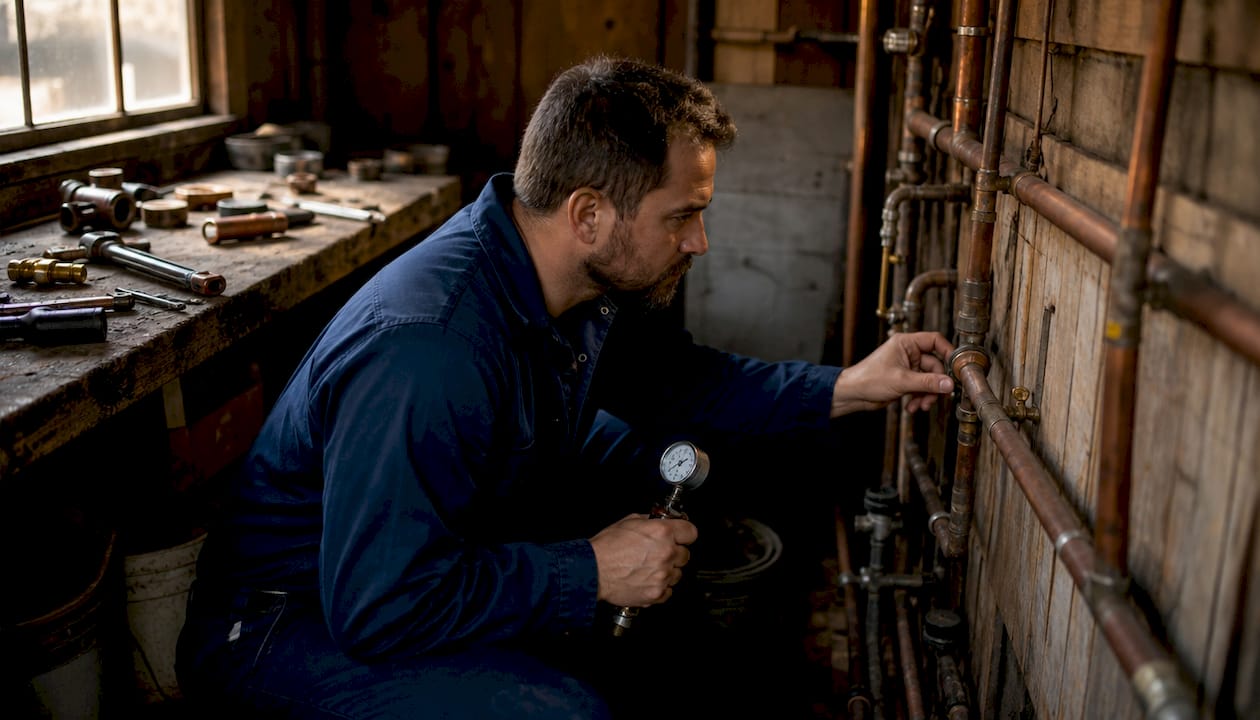
- Measure your static water pressure. Buy a simple pressure gauge at any hardware store and attach it to an outdoor hose bib. Testing your water pressure is the critical first diagnostic step before installing any fix. If pressure reads above 80 PSI, that is both a cause and a complicating factor.
- Check pipe supports. Walk your basement or crawlspace and look for pipes that move when you tap them. Unsupported pipes amplify the noise even when the shockwave itself is mild.
- Note which fixtures trigger the noise. Washing machines and dishwashers are the most common culprits. If the bang happens only with one appliance, the fix is localized.
Pro Tip: Record a short video on your phone the next time the banging happens. Hearing the timing and intensity helps a plumber diagnose the problem faster and more accurately, often saving you a diagnostic service call.
What are the most effective solutions to fix and prevent water hammer?
The right fix depends on what is causing the problem. A single solution rarely covers every scenario, so matching the remedy to the cause matters.
| Solution | Best for | Key detail |
|---|---|---|
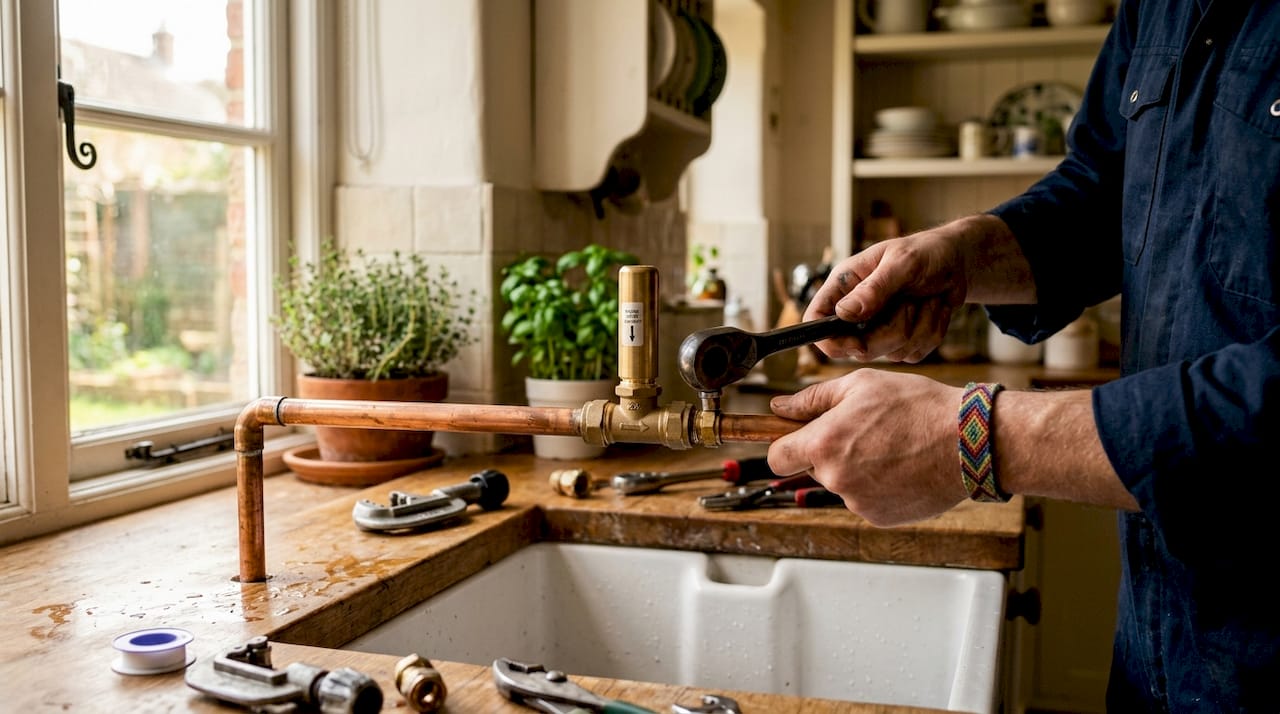
| Water hammer arrestor | Quick-closing valves | Must be installed within six pipe diameters of the valve per IRC 2024 P2903.5 |
| Pressure reducing valve (PRV) | System pressure above 80 PSI | Brings pressure into the 40–60 PSI safe range |
| Air chamber recharge | Waterlogged older air chambers | Drain the system for 30–60 minutes to restore the air pocket |
| Slow-close valves | Appliance supply lines | Replaces solenoid valves with slower-closing alternatives |
| Pipe strapping | Loose, unsupported pipes | Secures pipes to framing to reduce movement and noise |
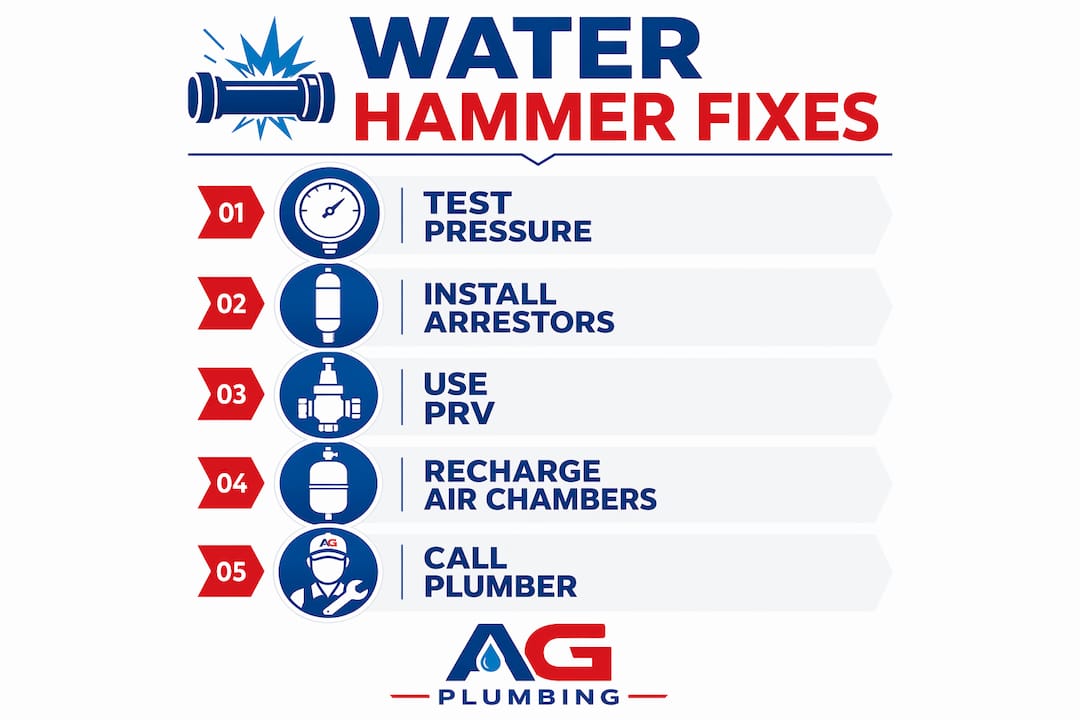
Water hammer arrestors must meet the ASSE 1010 standard and be placed within six pipe diameters of the quick-closing valve to work correctly. Placement matters as much as installation. Arrestors placed too far from the valve fail to protect pipes effectively, a mistake that is common and often goes unnoticed until damage appears.
Old vertical air chambers are no longer code-compliant as a standalone solution under IRC 2024. They can be recharged by shutting off the main supply and draining the system for 30–60 minutes to restore air cushioning, but a proper ASSE 1010 arrestor should replace them for long-term reliability.
If your home runs above 80 PSI, a pressure reducing valve is the most important first step. No arrestor performs well under excessive system pressure. Bringing pressure into the 40–60 PSI range reduces the energy behind every shockwave before you address individual valve locations.
Pro Tip: Install arrestors on both the hot and cold supply lines to washing machines. Most homeowners only address the cold side, but the hot water line carries the same risk.
When should a homeowner call a professional plumber?
Some water hammer fixes are genuinely DIY-friendly. Recharging an air chamber or strapping a loose pipe takes basic tools and an hour of time. But several situations call for a licensed plumber.
- Pressure above 80 PSI. Installing or adjusting a pressure reducing valve requires proper sizing and calibration. An incorrectly set PRV can create new problems, including pressure that is too low for normal fixture use.
- Visible water damage. If you see staining, soft drywall, or mold near pipes, a joint may have already failed. That requires immediate professional assessment, not a DIY arrestor installation.
- Banging in walls you cannot access. Pipes inside finished walls need a professional to locate and address without causing unnecessary damage to your home.
- Closed-loop system complications. If your home has a backflow preventer or thermal expansion tank, the pressure surge dynamics in closed-loop systems are more complex and require a plumber who understands the full system.
- Repeated arrestor failure. If you have already installed arrestors and the banging continues, the root cause may be systemic pressure or pipe design issues that need professional diagnosis.
Delaying professional help when damage signs are present is the most expensive mistake homeowners make. A $200 service call today is far less than a $12,000 water damage claim next month. If you are unsure, the emergency plumbing guide from Ag-plumbing covers when to act immediately versus when you can wait for a scheduled appointment.
Key takeaways
Water hammer is a hydraulic shockwave that causes pressure spikes up to 10 times normal operating levels, and fixing it requires matching the right solution to the specific cause in your home.
| Point | Details |
|---|---|
| Measure pressure first | Test static water pressure before installing any fix; above 80 PSI requires a PRV. |
| Arrestor placement is critical | Install within six pipe diameters of the quick-closing valve per IRC 2024 P2903.5. |
| Old air chambers need replacement | Waterlogged air chambers are not code-compliant; replace with ASSE 1010 arrestors. |
| PEX is most forgiving | Flexible PEX tubing absorbs shockwave energy better than copper or galvanized steel. |
| Delayed repair costs more | Water damage claims average over $12,000; early intervention is always cheaper. |
What 30 years of plumbing calls taught me about water hammer
The homeowners who call me after serious water damage almost always say the same thing: “It had been banging for months, but I thought it was normal.” Water hammer is not normal. It is your pipes telling you something is wrong, and the longer you wait, the more expensive the conversation gets.
The most common oversight I see is skipping the pressure test. Homeowners buy an arrestor, install it near the washing machine, and the banging continues because the real problem is 95 PSI coming in from the street. The arrestor is not failing. It is just fighting a battle it cannot win without a PRV doing the heavy lifting first.
I have also seen the opposite mistake: homeowners who install a PRV and drop pressure so low that their shower becomes a trickle. Proper sizing matters. A PRV set to 55 PSI on a home with a large family and multiple bathrooms needs to be sized for flow rate, not just pressure. That is a calculation, not a guess.
My honest advice is this: if the banging started recently and you can trace it to one appliance, try the DIY steps first. Measure pressure, recharge the air chamber, add an arrestor in the right location. But if the noise is throughout the house, if you have older copper or galvanized pipes, or if you see any sign of moisture where there should not be any, call a plumber before you start experimenting. The cost of a professional diagnosis is almost always less than the cost of a wrong fix followed by a leak.
— Maayan
Ag-plumbing’s water hammer diagnostic and repair services
Ag-plumbing has served Pittsburgh, PA homeowners for 30 years, and water hammer is one of the most common calls the team handles. The diagnostic process starts with a full pressure reading and system assessment before any parts are recommended or installed.
Every repair follows current IRC 2024 standards, including proper ASSE 1010 arrestor placement and PRV sizing when system pressure is elevated. If your pipes have been banging for a while, there may already be joint stress or early leak points that need attention before they become water damage. The team at Ag-plumbing’s plumbing repair services covers everything from a single arrestor installation to full pressure system corrections. For a broader look at what Ag-plumbing offers Pittsburgh homeowners, visit AG Heating, Cooling & Plumbing.
FAQ
What is the water hammer definition in simple terms?
Water hammer is a loud banging noise caused by a hydraulic shockwave in your pipes when water flow is suddenly stopped. The pressure spike can reach 5–10 times your normal water pressure in milliseconds.
Is water hammer dangerous to my plumbing?
Yes. Repeated shockwaves fatigue pipe joints and fittings over time, and water damage from a failed joint averages over $12,000 per insurance claim.
What causes water hammer in a washing machine?
Washing machines use solenoid valves that close in 30–50 milliseconds, creating an instant pressure surge. Installing a water hammer arrestor on the supply lines near the machine is the standard fix.
How do I know if I have water hammer or something else?
Water hammer produces a sharp bang that happens exactly when a valve closes or an appliance shuts off. Softer tapping or clicking that occurs with temperature changes points to thermal expansion instead.
Can I fix water hammer myself?
Many cases are DIY-friendly, including recharging air chambers, strapping loose pipes, and installing ASSE 1010 arrestors. If system pressure exceeds 80 PSI or you see signs of water damage, a licensed plumber should handle the repair.
Recommended
- Common Plumbing Repair Issues and How to Fix Them – AG-Plumbing
- Why Prevent Water Leaks: A Pittsburgh Homeowner’s Guide – AG-Plumbing
- How to Increase Water Pressure at Home in 2026 – AG-Plumbing
- Emergency Plumbing Guide: Quick Solutions for Homeowners – AG-Plumbing
