
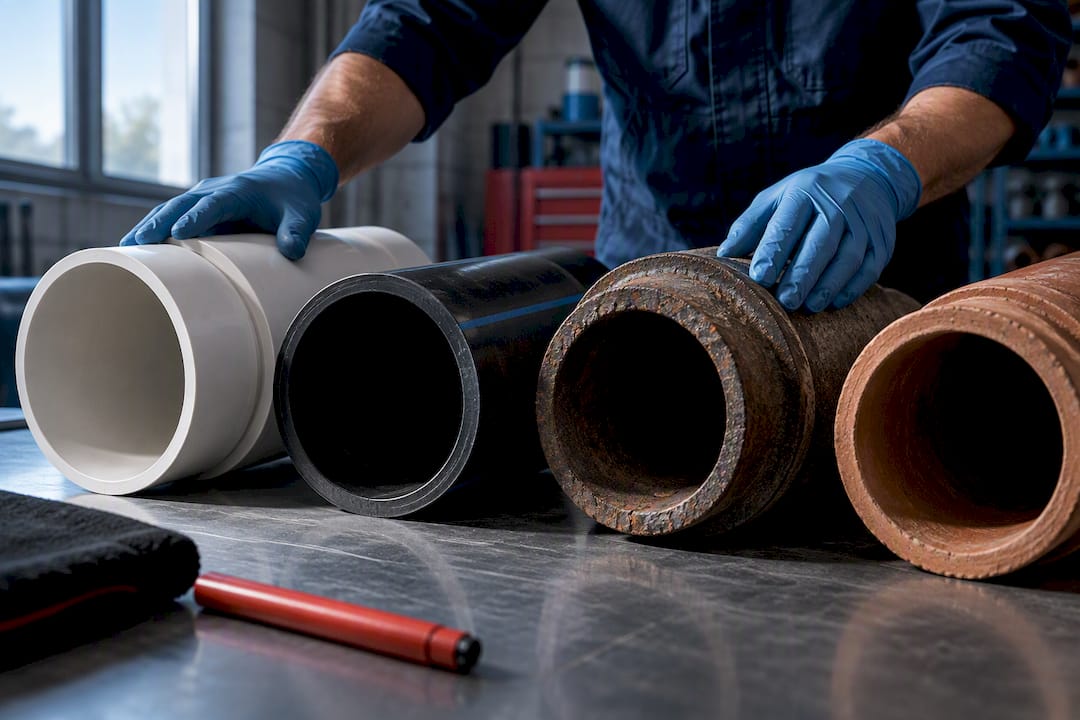
Most residential sewer lines last somewhere between 50 and 100 years, but that range hides a lot. PVC and HDPE can push past 100 years under good conditions, while old Orangeburg pipe can fail in 30. If your home is older than 50 years or showing warning signs, the next move is a camera inspection, not a guess based on the calendar.
TL;DR:
- PVC and HDPE pipes can last over 100 years under good conditions, making them the most durable options for modern installations.
- Older materials like Orangeburg typically fail within 30 to 50 years due to physical softening and structural deterioration.
- Soil type, ground movement, and root activity can significantly shorten a pipe’s lifespan, regardless of its age or material.
- Regular inspections every 5 to 10 years, combined with preventative maintenance like hydro-jetting and root trimming, help extend pipe longevity.
- Insurance rarely covers gradual failure causes, so homeowners should plan for inspections and possible repairs based on material and soil conditions.
Table of Contents
- Sewer Line Lifespan by Pipe Material
- What Affects Sewer Line Longevity
- Warning Signs Your Sewer Line Is Failing
- How Often to Inspect and Maintain a Sewer Line
- Repair and Replacement Options When a Line Fails
- Does Homeowners Insurance Cover Sewer Line Replacement?
- What 30 Years of Sewer Repairs Have Taught Us
- Get a Straight Answer on Your Sewer Line’s Condition
- Sources
- FAQ
Sewer Line Lifespan by Pipe Material
Age tells you almost nothing on its own. What matters is what’s actually in the ground and how it was installed. Here’s how the common materials stack up.
Schedule 40 PVC and HDPE sit at the top of the range, with manufacturers and industry sources commonly citing 75 to 100+ years of service life under favorable soil and installation conditions. These are the materials most plumbers install today for exactly that reason.
Cast iron carries an official rating of 75 to 100 years, but that number rarely survives contact with reality. Soil acidity and internal scale buildup mean cast iron often performs closer to 50 to 75 years before corrosion eats through the pipe wall.
Vitrified clay pipe typically runs 50 to 75 years. The clay body itself resists a lot, but the joints between sections are the weak link. That’s where roots find their way in and where sections separate as soil shifts. If your home has clay lines, it’s worth understanding how clay sewer pipe lifespan plays out on a section-by-section basis.
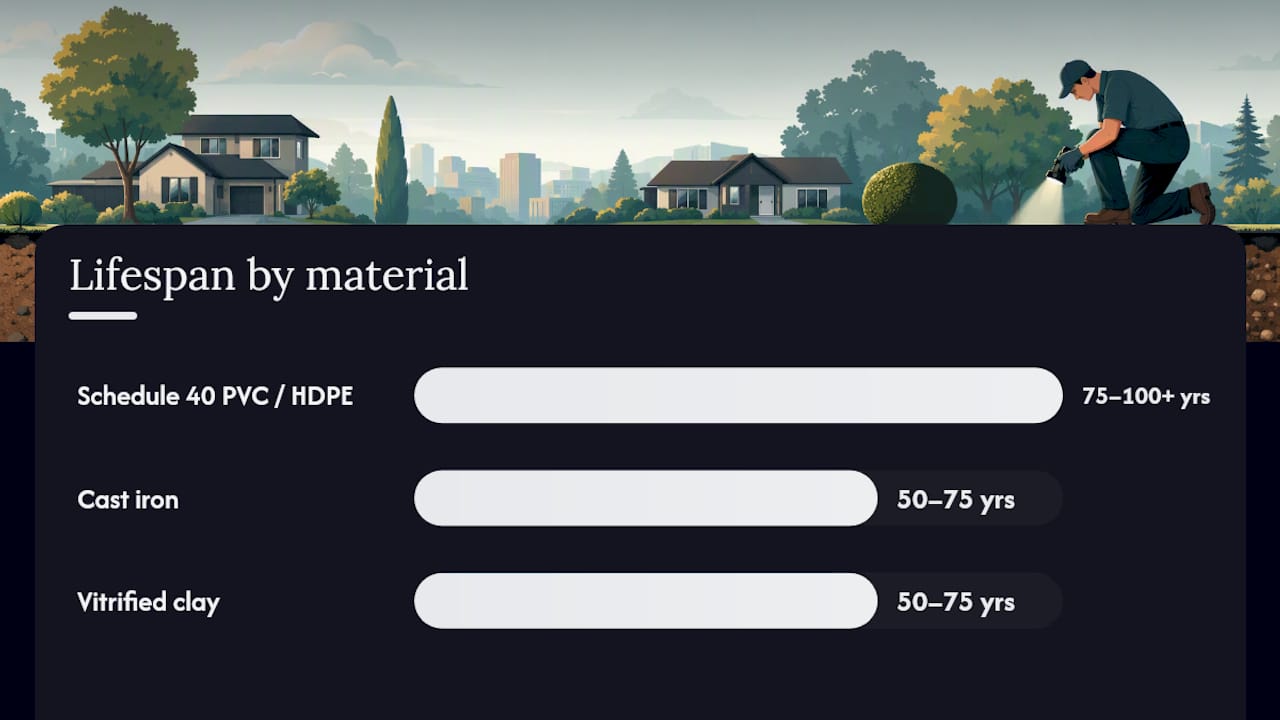
Orangeburg pipe, made from wood pulp and pitch, is the material to worry about most. It commonly fails within 30 to 50 years, sometimes sooner, because the material physically softens and loses its round shape under soil pressure.
ABS pipe falls in the middle, generally 50 to 80-plus years depending on how well it was installed. CIPP (cured-in-place pipe) relining, used to rehabilitate an existing line without digging it up, is commonly engineered for a 50-year design life when the host pipe and installation are sound.
| Material | Typical lifespan | Weak point |
|---|---|---|
| Schedule 40 PVC / HDPE | 75–100+ years | Rare; installation errors |
| Cast iron | 50–75 years (rated to 100) | Internal corrosion |
| Vitrified clay | 50–75 years | Joint separation, roots |
| ABS | 50–80+ years | Installation quality |
| CIPP relining | ~50 years | Host pipe condition |
| Orangeburg | 30–50 years or less | Structural softening |
What Affects Sewer Line Longevity
Two identical pipes installed the same year can have wildly different lifespans depending on what’s around them. Engineering literature backs this up directly: soil type, ground movement, and root activity often predict remaining service life more reliably than age alone.
- Acidic or highly moist soil accelerates corrosion in metal pipes and can soften older materials faster than average.
- Tree roots, especially aggressive species planted near the sewer route, exploit joints and hairline cracks until they force their way inside.
- Freeze-thaw cycles and shifting ground create bellies (sags) in the line and pull joints apart over time.
- Installation quality matters as much as material: poor slope, shallow cover, or bad bedding can shorten a 100-year pipe’s life by decades.
- Heavy vehicles, construction equipment, or aggressive landscaping above the line add external loads the original design never accounted for.
Warning Signs Your Sewer Line Is Failing
A failing sewer line rarely announces itself with one obvious symptom. It shows up as a pattern.
- Slow drains in multiple fixtures at once. One slow sink is a clog. Slow drainage in the tub, toilet, and kitchen sink together points toward the main line.
- Persistent sewer odor in the basement or yard, especially near where the line runs to the street.
- Wet patches, unusually lush grass, or small sinkholes along the sewer line’s path.
- Gurgling toilets or water that bubbles up in one fixture when you run another.
- Camera findings during inspection, including bellies, root intrusion at joints, and cracked or offset pipe sections. For a fuller rundown of what to watch for around the house, see these sewer line warning signs.
How Often to Inspect and Maintain a Sewer Line
A camera inspection is still the gold standard for diagnosing sewer line condition, because it shows exactly what’s happening inside the pipe instead of guessing from surface symptoms. As a baseline, plan on an inspection every 5 to 10 years, and sooner if your home is older or already showing symptoms.
Maintenance between inspections is where most homeowners either extend their pipe’s life or shorten it without realizing it.
- Schedule routine cleanings rather than waiting for a backup to force the issue.
- Use hydro-jetting to clear roots and grease buildup; it’s one of the more effective tools for delaying invasive repairs when used on a regular schedule.
- Cut roots at the source when they’re identified, rather than only treating symptoms downstream.
- Avoid flushing fats, oils, and grease, which harden inside the pipe and narrow the flow path over years, not days.
Pro Tip: If a camera inspection shows early root intrusion at a joint but no structural damage yet, targeted root cutting plus a hydro-jetting schedule can often buy you years before any lining or excavation is needed.
Repair and Replacement Options When a Line Fails
Once an inspection confirms a problem, the fix depends on how much of the line is affected and how it was built in the first place.
Open-trench replacement takes out the failing section (or the whole line) and replaces it with modern PVC or HDPE rated for 100-plus years. It’s the most disruptive option, since it involves digging up your yard, but a single-run residential job often wraps up in one to three days.
CIPP relining installs a resin-saturated liner inside the existing pipe and cures it in place, adding roughly 50 years of life with minimal digging. Most jobs finish in a day, plus curing time. It’s a strong fit when the host pipe’s shape is still sound. You can walk through what a project actually looks like in this guide to understanding the sewer repair process.
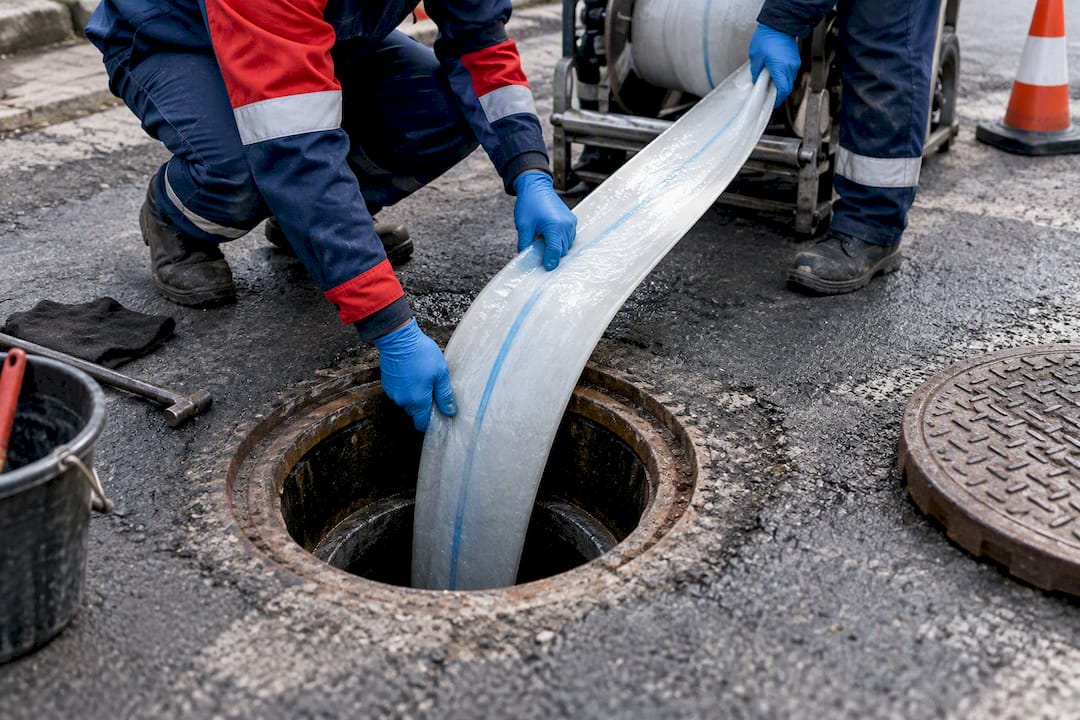
Pipe bursting pulls a new HDPE or PVC pipe through the old one, breaking the old pipe apart as it goes. It gives you a fully new line with a long lifespan, without the trench length of open excavation.
Spot repair fixes an isolated defect, like one cracked joint, without touching the rest of the line. It’s the cheapest fix, but it won’t help if the pipe has systemic problems elsewhere.
- Cost drivers include trenching depth, total pipe length, and how much landscaping or hardscape needs restoration afterward.
- Local labor rates and site access (how far the line runs, how deep it sits) swing the estimate significantly.
Because those variables shift so much from house to house, an on-site estimate is really the only way to get a number you can trust.
Does Homeowners Insurance Cover Sewer Line Replacement?
Standard homeowners policies generally exclude gradual wear and tear, root intrusion, and corrosion, which covers most of the reasons sewer lines actually fail. Coverage tends to kick in only for sudden, accidental events, like a vehicle striking the line or a sinkhole opening without warning, so read your policy’s exact wording before assuming you’re protected.
- Ask your agent about service-line or buried-utility endorsements, which often carry limits in the $10,000 to $20,000 range.
- Sewer backup coverage is a separate add-on that protects against interior damage from a backed-up line.
- Get bids from multiple contractors before committing, and ask each one about financing or payment plan options.
What 30 Years of Sewer Repairs Have Taught Us
Manufacturer ratings are a starting point, not a promise. We’ve pulled up cast iron lines older than their supposed lifespan that were still holding fine, and we’ve found plastic pipe installed just a decade ago already failing because of poor slope or bad bedding. That’s why we push camera inspection first and the least invasive fix that actually solves the problem, whether that’s targeted repair, relining, or full replacement.
— Maayan
Get a Straight Answer on Your Sewer Line’s Condition
A reputable plumbing service gives homeowners a real answer instead of a guess: a camera inspection shows exactly what’s happening underground before any repair costs are incurred. Services typically include hydro-jetting for root and grease buildup, trenchless relining when the pipe body is still sound, and full open-trench replacement when it is not.
Booking a service typically includes an on-site assessment, a written estimate, and a realistic timeline before any digging starts, plus restoration once the work is done. Whether you’re dealing with a slow drain that won’t quit or a full sewer line replacement, start with our sewer repair page or schedule a visit to get a firm answer on where your line actually stands.
Sources
- ASCE engineering article on sewer pipe deterioration
- Bens
- Does homeowners insurance cover sewer line replacement? – GEICO
FAQ
How Often Should Sewer Lines Be Replaced?
Sewer lines don’t follow a fixed replacement schedule; they’re replaced when inspection shows structural failure, not on a calendar. Most last 50 to 100 years depending on material, but a camera inspection every 5 to 10 years is the reliable way to catch problems before they become emergencies.
What Is the Average Cost to Repair a Sewer Line?
Costs vary widely based on trenching depth, pipe length, and site access, so there’s no single number that applies to every home. The most accurate way to get a figure is an on-site estimate, since local labor rates and restoration needs change the total significantly.
Will Insurance Pay for Sewer Line Replacement?
Standard homeowners insurance typically excludes gradual wear and tear, corrosion, and root intrusion, which causes most sewer failures. Coverage usually applies only to sudden accidental damage, though endorsements for service lines or sewer backup can fill that gap.
How Long Does It Take to Replace a Residential Sewer Line?
Open-trench replacement for a single-run residential job typically takes one to three days. Trenchless options like CIPP relining often finish in a day plus curing time, since they avoid digging up the yard entirely.
Recommended
- How Long Do Clay Sewer Pipes Really Last?
- Sewer Line Warning Signs Every Homeowner Should Know
- Before You Dig, Homeowners: Spot Collapsed Sewer Lines, Skip Excavation
