
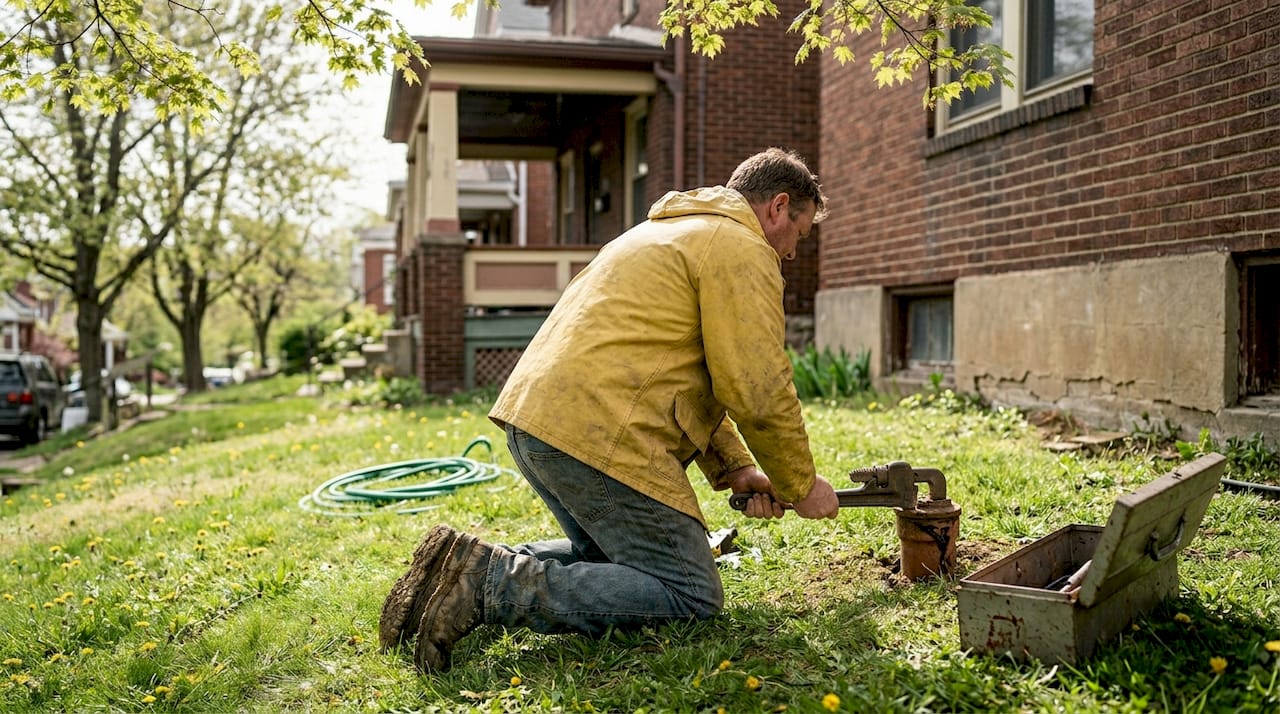
Most Pittsburgh homeowners believe the city handles all sewer problems, but that’s a costly misconception. You’re actually responsible for the entire sewer line running from your house to the public main, and neglecting this hidden system can lead to thousands in emergency repairs. This guide explains exactly what a sewer line is, clarifies your legal responsibilities under Pittsburgh Water and Sewer Authority rules, and shows you how to spot problems early. You’ll learn inspection best practices, typical repair costs in our area, and proven prevention strategies to protect your property and wallet.
Table of Contents
- What Is A Sewer Line And How Does It Work?
- Who Is Responsible For Sewer Lines In Pittsburgh?
- Signs Of Sewer Line Problems And Inspection Best Practices
- Costs And Repair Options For Pittsburgh Sewer Lines
- Expert Sewer Line Plumbing Services In Pittsburgh
- Frequently Asked Questions
Key takeaways
| Point | Details |
|---|---|
| Sewer line definition | Underground pipe carrying wastewater from your home to the city main, typically 4-6 inches wide and buried 2-6 feet deep |
| Pittsburgh homeowner responsibility | You own and must maintain the entire private lateral from your house to the public connection point |
| Inspection frequency | Professional camera scopes every 2-3 years cost $200-$500 and catch problems before they escalate |
| Repair cost ranges | Expect $200-$500 for inspections, $6,000-$13,000 for trenchless lining, $5,000-$20,000+ for full replacement |
| Prevention saves money | Regular maintenance, root barriers, and avoiding grease disposal prevent 80% of common sewer failures |
What is a sewer line and how does it work?
A sewer line, also known as a sewer lateral, is the underground pipe that carries wastewater from internal plumbing to the municipal sewer main, 4-6 inches in diameter, buried 2-6 feet deep, made from materials like clay or PVC. Every time you flush a toilet, run a dishwasher, or drain a sink, gravity pulls that wastewater through your home’s drain pipes into this larger lateral pipe. The sewer line slopes gradually downward toward the street, using natural gravity flow to move waste efficiently without pumps in most Pittsburgh neighborhoods.
Pittsburgh homes built before 1970 typically have clay tile or cast iron sewer lines, while newer construction uses PVC or ABS plastic pipes. Clay pipes were the standard for decades because they resisted chemical corrosion, but tree roots easily penetrate the joints between sections. Cast iron lasts 50-75 years before rust and corrosion create holes and blockages. Modern PVC pipes offer 100-year lifespans with seamless joints that resist root intrusion, making them the preferred replacement material today.
The burial depth matters more than most homeowners realize. Pipes buried less than 2 feet risk damage from surface traffic and freezing, while those deeper than 6 feet become exponentially more expensive to repair. Pittsburgh’s frost line sits around 30-36 inches, so proper installation keeps sewer lines below this depth to prevent winter freezing and cracking. The pipe diameter also affects performance: 4-inch lines handle typical household waste, while larger homes or those with multiple bathrooms often upgrade to 6-inch laterals for better flow capacity.
Understanding your sewer line’s material and age helps you anticipate maintenance needs:
- Clay tile pipes (pre-1970) need inspection every 2-3 years due to root vulnerability
- Cast iron lines (1950-1980) require monitoring for corrosion after 40 years
- PVC pipes (1980-present) rarely fail but can shift if ground settles
- Orangeburg fiber pipes (1940-1970) deteriorate rapidly and need immediate replacement
Who is responsible for sewer lines in Pittsburgh?
In Pittsburgh, property owners are fully responsible for the private sewer lateral from the house to the public sewer main; PWSA maintains only the main and wye connection. The wye is the Y-shaped junction where your private line connects to the city’s public infrastructure, typically located under the street or at your property line. Everything on your side of that connection point falls entirely under your financial and legal responsibility, including inspection, maintenance, repair, and replacement costs.
This division of responsibility catches many new homeowners off guard during their first sewer backup. PWSA crews will respond to main line blockages affecting multiple properties, but they won’t touch problems isolated to your lateral. You’ll need to hire a licensed plumber for sewer repair and cover all associated costs yourself, which can reach $20,000 for complex repairs under driveways or streets.
Pittsburgh enforces strict regulations about illegal stormwater connections that many homeowners unknowingly violate. Older properties sometimes have downspouts, sump pumps, or foundation drains illegally tied into sewer laterals instead of proper stormwater systems. These connections overload the combined sewer system during heavy rains, contributing to overflow events that dump untreated sewage into local rivers. PWSA now requires dye testing during all property sales to detect these illegal connections, and sellers must disconnect them before closing.
Compliance isn’t optional, and the consequences extend beyond fines:
- Failed dye tests delay or kill real estate transactions entirely
- PWSA can place liens on properties with unresolved violations
- Illegal connections increase your risk of basement backups during storms
- Disconnection projects cost $2,000-$8,000 depending on complexity
Some Pittsburgh homeowners purchase optional sewer line insurance through PWSA or private carriers to offset repair costs. These policies typically cost $5-$10 monthly and cover repairs up to $10,000, though they exclude pre-existing conditions and require regular maintenance documentation. Read the fine print carefully, as many policies won’t pay for full replacements or repairs caused by neglect.
Signs of sewer line problems and inspection best practices
Homeowners should inspect sewer lines every 2-3 years with camera scopes costing $200-$500; watch for slow drains, odors, wet spots, backups. Professional video inspections send a waterproof camera through your entire lateral, revealing cracks, root intrusion, bellied sections, and blockages before they cause catastrophic failures. The technician provides a recorded video and written report pinpointing problems by distance from the cleanout, giving you concrete evidence for repair planning and insurance claims.
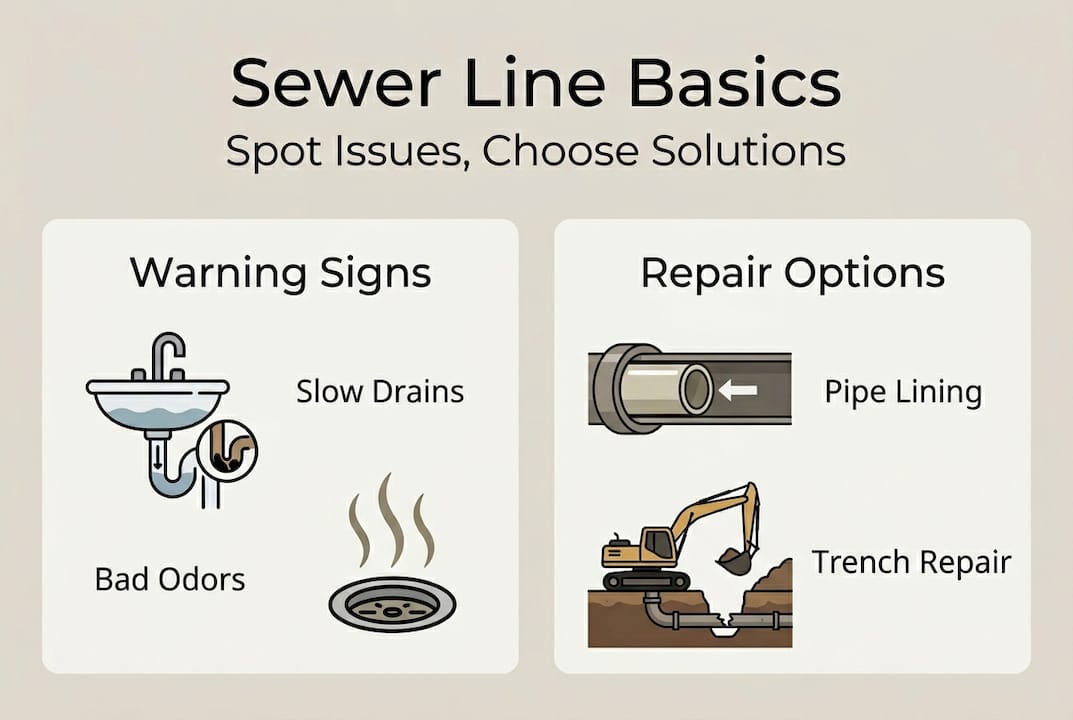
Your sewer line sends clear warning signals when trouble develops. Multiple slow-draining fixtures throughout your home indicate a main line problem rather than isolated clogs. Gurgling sounds from toilets when you run washing machines or showers suggest air trapped by partial blockages. Sewage odors in your basement or yard point to cracks or breaks allowing gases to escape. Unexplained wet spots or extra-green grass patches in your yard often mark where wastewater leaks underground.
Pro Tip: If you experience sewage backing up through basement floor drains or toilets, shut off water immediately and call emergency sewer repair services. Raw sewage creates serious health hazards and causes structural damage within hours, so never wait until morning to address active backups.
Early video inspections help you choose between targeted repairs and full replacement. A lateral with one cracked section from ground settling might only need a $1,500 spot repair, while a line with roots throughout every joint requires complete replacement. Knowing the full scope prevents contractors from upselling unnecessary work or underestimating the project complexity. Request the inspection video file for your records, as it documents your line’s condition for future reference and potential buyer disclosure.
Hydro-jetting complements camera inspections by using high-pressure water streams to clear roots, grease buildup, and mineral deposits. This preventive maintenance extends your sewer line’s lifespan by removing debris before it causes structural damage. Pittsburgh homes with mature trees should consider annual hydro-jetting to prevent sewer line blockages from aggressive root systems. The service costs $300-$600 but often prevents $10,000+ emergency repairs down the road.
Schedule inspections strategically:
- Before purchasing any Pittsburgh home, especially pre-1980 construction
- Every 2-3 years for routine monitoring and early problem detection
- Immediately after noticing any warning signs or unusual drainage issues
- Before major landscaping projects that could damage buried lines
- After severe storms or flooding events that stress underground infrastructure
Costs and repair options for Pittsburgh sewer lines
Pittsburgh sewer repair costs range widely: scopes $200-500; trenchless lining $6,000-$13,000; spot repair $7,000-$12,000; full replacement $5,000-$20,000+, higher if under street or driveway. These figures reflect typical residential projects in 2026, but your actual costs depend heavily on pipe depth, material type, accessibility, and whether excavation requires street cuts or driveway removal. A straightforward replacement in an open yard costs far less than digging under a concrete driveway or navigating through a finished basement.
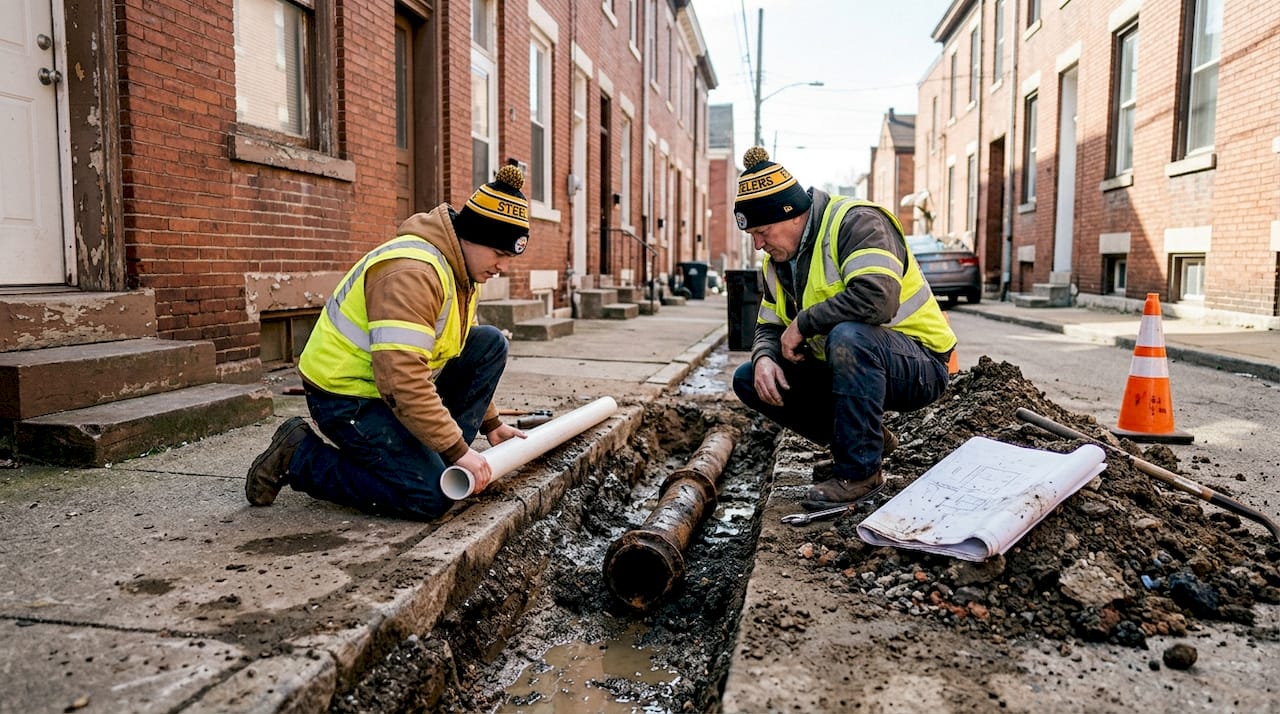
Traditional trench excavation remains the most affordable option when access allows. Contractors dig a trench along the entire lateral path, remove the old pipe, and install new PVC in a single day for most residential properties. This method works well for yards without mature landscaping, but it destroys driveways, sidewalks, and gardens in its path. Factor in $3,000-$8,000 additional costs to restore hardscaping and landscaping after the plumbing work finishes.
Trenchless repair methods minimize surface disruption by accessing the pipe through small entry and exit points. Pipe bursting splits the old line while simultaneously pulling new pipe through the same path, requiring only two small excavations instead of a full trench. Cured-in-place pipe lining inserts an epoxy-saturated sleeve that hardens inside the existing pipe, creating a new pipe within the old one. These approaches cost 20-40% more than traditional excavation but preserve expensive landscaping and hardscaping.
| Repair Method | Cost Range | Best For | Limitations |
|---|---|---|---|
| Camera inspection | $200-$500 | Diagnosis and planning | Reveals problems but doesn’t fix them |
| Hydro-jetting | $300-$600 | Clearing roots and buildup | Temporary solution for structural damage |
| Spot repair | $1,500-$3,000 | Single crack or joint failure | Only works for isolated damage |
| Trenchless lining | $6,000-$13,000 | Avoiding surface disruption | Can’t fix collapsed or severely offset pipes |
| Pipe bursting | $8,000-$15,000 | Replacing without trenching | Needs clear path and stable soil |
| Full excavation | $5,000-$20,000+ | Complete replacement needed | Destroys surface features |
Several factors push costs toward the higher end of these ranges. Pipes buried deeper than 6 feet require more excavation labor and shoring to prevent trench collapse. Laterals running under streets need PWSA permits, traffic control, and street restoration, adding $5,000-$10,000 to baseline costs. Winter projects cost 15-25% more due to frozen ground and weather delays. Homes on hillsides or with poor soil stability need additional engineering and reinforcement.
Pro Tip: PWSA offers optional sewer line insurance programs that cover repair costs up to $10,000 for about $60 annually. Enroll before problems develop, as pre-existing conditions aren’t covered, and maintain documentation of regular inspections to ensure claim approval.
Professional assessment prevents costly mistakes. A skilled plumber evaluates your specific situation and recommends the most cost-effective solution based on damage extent, pipe condition, and site constraints. Some contractors push expensive full replacements when targeted repairs would suffice, while others underestimate project scope and hit you with change orders mid-project. Get written estimates from three licensed contractors, verify their sewer repair expertise, and check references from recent Pittsburgh projects.
Investing in proper repairs now prevents cascading problems later. A small crack left unaddressed allows roots to invade and eventually collapses the entire section. Temporary patches might last a year or two but ultimately fail, forcing you to pay for the same repair twice. Quality materials and workmanship cost more upfront but deliver decades of trouble-free service, while cut-rate repairs often fail within months.
Expert sewer line plumbing services in Pittsburgh
Protecting your home from sewer line failures requires experienced professionals who understand Pittsburgh’s unique infrastructure challenges and PWSA regulations. Our team has spent three decades diagnosing and repairing sewer lines throughout the Pittsburgh area, from historic neighborhoods with century-old clay pipes to newer developments with modern PVC systems.
We provide comprehensive camera inspections that reveal your lateral’s exact condition, followed by honest recommendations tailored to your specific situation and budget. Our Pittsburgh plumbing services include everything from routine maintenance and hydro-jetting to complex sewer repair and full lateral replacement. We handle permit applications, coordinate with PWSA when necessary, and restore your property to its original condition after completing repairs. Whether you need preventive hydro jetting to clear roots or emergency backup response, our licensed technicians deliver solutions that last. Contact us today to schedule an inspection and protect your home from costly sewer surprises.
Frequently asked questions
What is the typical lifespan of a sewer line in Pittsburgh?
Clay tile sewer lines common in pre-1970 Pittsburgh homes last 50-60 years before root damage and joint separation require replacement. Cast iron pipes installed between 1950-1980 typically survive 50-75 years until corrosion creates holes and blockages. Modern PVC laterals installed since 1980 can last 100+ years with minimal maintenance, making them the best long-term investment. Orangeburg fiber pipes used briefly in the 1940s-1970s deteriorate within 30-50 years and should be replaced immediately when discovered. Your lateral’s actual lifespan depends on soil conditions, tree proximity, installation quality, and maintenance history.
How often should I have my Pittsburgh sewer line inspected?
Inspect every 2-3 years via camera scope; older homes should consider annual hydro-jetting to prevent root damage. Properties with mature trees need more frequent monitoring because roots aggressively seek water sources and penetrate pipe joints within months. Schedule inspections immediately if you notice slow drains, sewage odors, or wet yard spots rather than waiting for your regular interval. First-time homebuyers should always inspect before closing, as sellers rarely disclose sewer problems unless legally required by failed dye tests.
What are the signs of sewer line damage I should watch for?
Multiple slow-draining fixtures throughout your home indicate main line problems rather than isolated clogs. Gurgling sounds from toilets when running other water fixtures suggest air trapped by partial blockages. Sewage odors in basements or yards point to cracks allowing gases to escape underground. Unexplained wet spots or extra-green grass patches often mark where wastewater leaks fertilize the soil. Sewage backing up through basement floor drains or toilets signals complete blockages requiring immediate professional attention to prevent health hazards and structural damage.
Can sewer line problems affect my property value or home sale in Pittsburgh?
PWSA requires dye tests at sales to detect illegal stormwater ties; sewer issues can delay or reduce home sale value. Failed dye tests force sellers to disconnect illegal connections before closing, costing $2,000-$8,000 and delaying transactions by weeks. Buyers increasingly request sewer inspections during due diligence, and discovered problems often trigger price negotiations or repair demands. Undisclosed sewer failures can lead to post-sale lawsuits if buyers experience problems shortly after purchase. Proactive inspection and repair before listing protects your sale price and prevents deal-killing surprises during negotiations.
What repair methods are available for broken sewer lines in Pittsburgh?
Spot repairs fix isolated cracks or joint failures for $1,500-$3,000 by excavating only the damaged section. Trenchless cured-in-place lining creates a new pipe inside the old one for $6,000-$13,000, preserving landscaping but requiring structurally sound existing pipes. Pipe bursting replaces the entire lateral while minimizing surface disruption for $8,000-$15,000 by pulling new pipe through the old path. Traditional excavation and replacement costs $5,000-$20,000+ depending on depth and surface restoration needs. Professional camera inspection determines which method suits your specific damage pattern, soil conditions, and budget constraints.
Recommended
- What is a sewer cleanout? Pittsburgh homeowner guide 2026 – AG-Plumbing
- Reliable Sewer Repair Services in Pittsburgh, PA
- Clear Sewer Line Blockages: 2026 Homeowner’s Guide – AG-Plumbing
- What do professional plumbers do in Pittsburgh? 2026 – AG-Plumbing
