
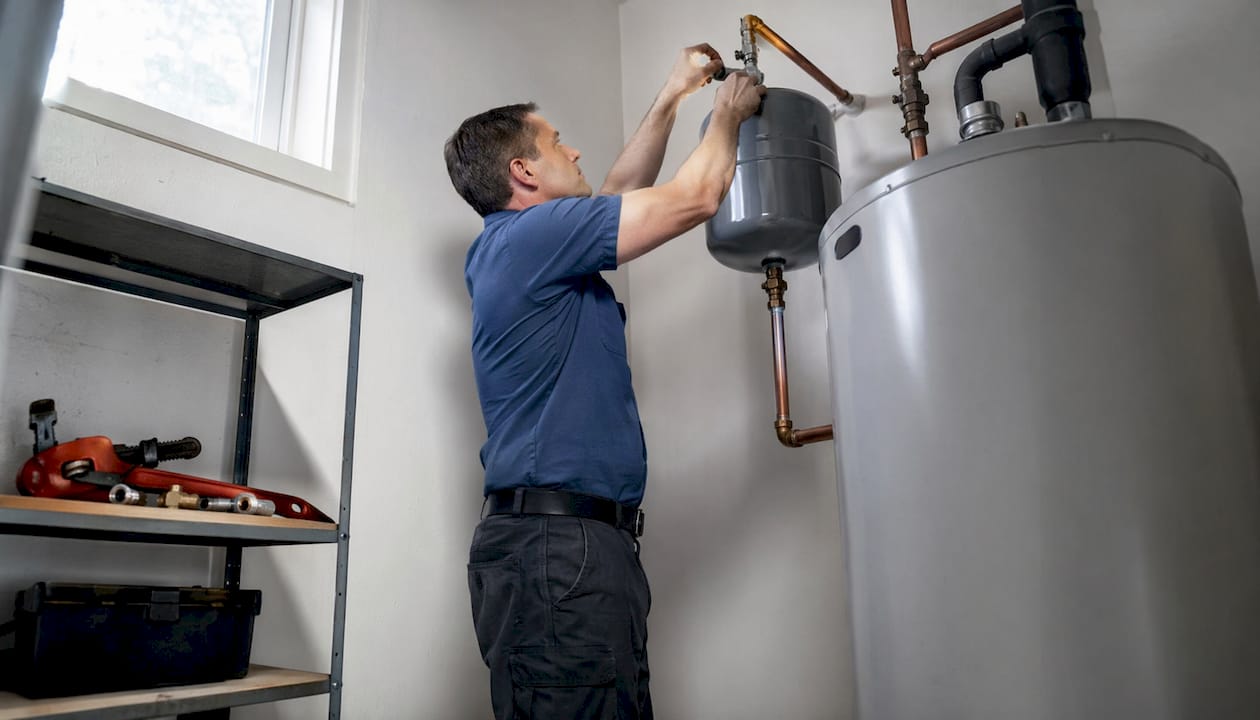
An expansion tank is a safety device that absorbs the extra water volume created every time your water heater runs, protecting your pipes, valves, and appliances from pressure damage. Without one, a closed plumbing system has nowhere to send that expanding water, and pressure spikes with every heating cycle. The role of expansion tanks is straightforward: give the water somewhere safe to go.
What does an expansion tank actually do for your plumbing?
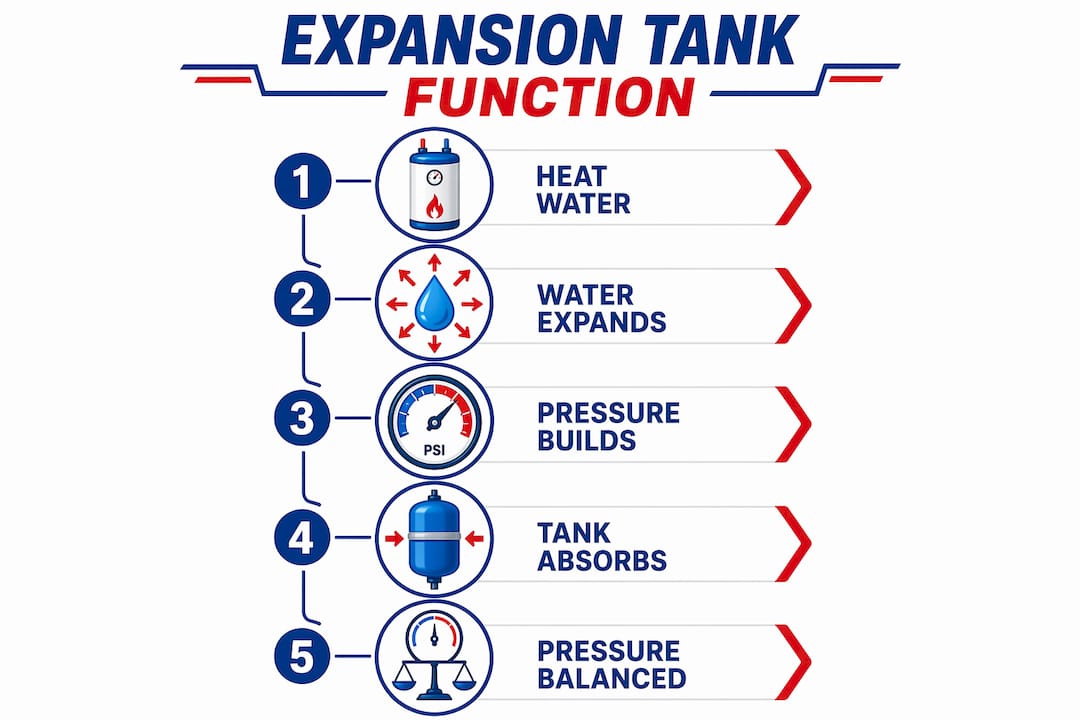
Water expands when heated. A typical residential water heater can push extra volume into your pipes during a single heating cycle. In an open system, that water can push back toward the municipal supply. In a closed system with a backflow preventer or pressure-reducing valve (PRV), it has nowhere to go.
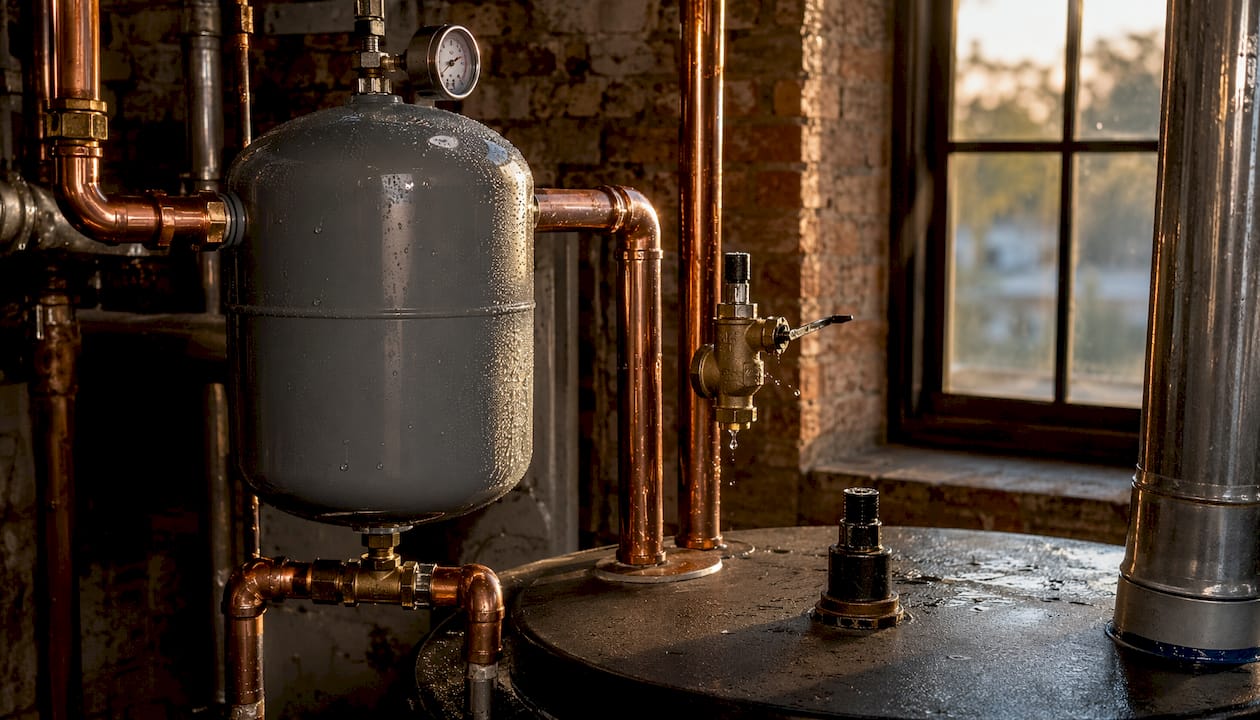
That is where the expansion tank steps in. It absorbs excess water volume from thermal expansion, preventing dangerous pressure spikes that can damage pipes, fittings, and appliances. Think of it as a pressure shock absorber sitting quietly on your cold water line.
Key functions at a glance:
- Absorbs expanded water volume during each heating cycle
- Prevents pressure spikes in closed plumbing systems
- Protects pipes, valves, seals, and appliance inlets from chronic overpressure
- Reduces wear on the water heater’s temperature and pressure (T&P) relief valve
- Required by plumbing codes whenever a PRV or backflow preventer is present
How expansion tanks work inside your water heating system
The tank itself is divided into two chambers by a rubber diaphragm or bladder. One side connects to your cold water line and fills with water. The other side holds pressurized air. When your water heater fires up and water expands, the diaphragm flexes against that air cushion, compressing it and making room for the extra volume. When the system cools or you open a faucet, the compressed air pushes the stored water back into the supply line.
The air pre-charge is the part most homeowners never think about. It must match your home’s static water pressure before installation. A tank left at the factory pre-charge of 40 psi on a system running 70 psi static supply will be nearly useless, compressed almost solid before it can absorb anything.
- Install the tank on the cold water supply line, between the water heater and the backflow device
- Support the tank physically so it does not stress the pipe connection
- Set the air pre-charge to match measured static supply pressure
- A PRV set between 40–60 psi allows standard-sized tanks to work efficiently
Pro Tip: Use a standard tire gauge to check the air pressure in your expansion tank once a year. The Schrader valve on the tank works exactly like the one on a car tire.
What happens when your home has no expansion tank?
Pressure has to go somewhere. Without an expansion tank, every heating cycle pushes your system beyond its design range, and the damage accumulates quietly until something gives.
- Pressure spikes stress pipe joints, faucet cartridges, washing machine valves, and dishwasher solenoids
- The T&P relief valve activates repeatedly, which it was never designed to do as a routine pressure-control device
- Repeated relief valve activation degrades the valve seat, eventually causing it to leak continuously or fail to open in a real emergency
- Some manufacturers void warranties when thermal expansion damage occurs without an expansion tank installed
- In gas water heaters, extreme overpressure can collapse the internal flue, creating a carbon monoxide hazard
Water hammer, that loud banging when a valve shuts fast, is another symptom. A failed or waterlogged expansion tank loses its air cushion, so sudden pressure spikes have nothing to absorb them. The bang you hear is the shockwave traveling through your pipes.
Pro Tip: If your T&P relief valve drips after every heating cycle, do not just replace the valve. Check the expansion tank first. A dripping T&P valve is often the first visible sign that the expansion tank has failed.
How to choose the right size expansion tank for your home
Most homes need a tank in the 2–5 gallon range, but the right size depends on three specific factors: your water heater’s capacity, your system’s operating pressure, and the temperature rise from cold inlet to thermostat setting. Getting this wrong matters. An undersized tank fills up fast and offers little protection. An oversized tank costs more and may never reach equilibrium pressure.
- Water heater capacity: Larger tanks produce more expanded volume per cycle
- Static supply pressure: Higher pressure compresses the air cushion more, reducing usable tank volume
- Temperature rise: The greater the temperature difference between incoming cold water and the thermostat setting, the more water expands
- Air pre-charge: Must be set to match actual static supply pressure, not left at the factory default
Pro Tip: Have a licensed plumber measure your static supply pressure before purchasing a tank. Guessing the pre-charge is the single most common installation mistake, and it renders an otherwise correct tank nearly useless.
Undersized tanks fail prematurely because they cycle through their full compression range with every heating cycle. Oversized tanks are less of a problem mechanically, but they can create water pressure issues if the pre-charge is set incorrectly.
What Ag-plumbing’s 30 years of experience teaches about expansion tanks
Ag-plumbing has served Pittsburgh, PA and the surrounding areas for three decades, and expansion tank calls follow a predictable pattern: a homeowner notices dripping from the water heater, assumes the heater is failing, and calls for a replacement. Half the time, the water heater is fine. The expansion tank is the problem.
The International Plumbing Code and Uniform Plumbing Code both require a thermal expansion device whenever a PRV or backflow preventer creates a closed system. That is not a suggestion. Inspectors verify the tank’s location, connection, and pre-charge at both rough and final inspection.
Common installation mistakes Ag-plumbing sees in the field:
- Tank installed after the isolation point instead of between the heater and the service entry
- No physical support, leaving the tank hanging from the pipe connection and causing stress leaks
- Factory pre-charge left unchanged regardless of actual supply pressure
- Tank not rated for potable water service
Annual maintenance is simple but skipped constantly. Check the air pressure with a tire gauge. If the tank feels completely heavy and solid when you tap it, the bladder has failed and water has filled the entire tank. That tank cannot be repaired or recharged. Replace it. A functioning tank should feel lighter on the air side and produce a hollow sound when tapped near the top.
Pro Tip: Schedule an annual plumbing inspection that includes an expansion tank pressure check. Catching a waterlogged tank early costs far less than diagnosing water heater problems after the damage is done.
What are the different types of expansion tanks?
Two main types serve residential plumbing systems, and they are not interchangeable.
Bladder-type tanks use a replaceable rubber bladder sealed inside the tank shell. The bladder separates the water and air chambers completely, which prevents air from dissolving into the water over time. This design is the current standard for domestic hot water systems and must conform to drinking water regulations for potable water contact.
Diaphragm-type tanks use a fixed rubber diaphragm bonded to the tank wall rather than a free-floating bladder. The diaphragm flexes but cannot be removed or replaced independently. Both types use a Schrader valve for pressure checks and air adjustment.
A third category worth knowing: steel compression tanks (also called plain steel tanks) are older technology with no internal separator. Air and water are in direct contact, which allows air to dissolve into the water over time, eventually leaving the tank waterlogged. These are rarely installed in new residential systems but still appear in older homes and some hydronic heating setups.
For plumbing safety in residential systems, bladder or diaphragm tanks are the correct choice. They maintain the air charge reliably and meet potable water code requirements.
Get expert expansion tank service in Pittsburgh
Ag-plumbing’s team has handled expansion tank installations, inspections, and replacements across Pittsburgh for 30 years. Whether your T&P valve is dripping, your pipes are banging, or you are installing a new water heater and need the full system done right, Ag-plumbing brings the code knowledge and hands-on experience to get it right the first time. Visit ag-plumbing.com or explore plumbing repair services to schedule a visit.
Key Takeaways
An expansion tank is a code-required safety device that absorbs thermal expansion pressure in closed plumbing systems, protecting water heaters, pipes, and valves from chronic overpressure damage.
| Point | Details |
|---|---|
| Thermal expansion is unavoidable | A 40-gallon heater can push nearly half a gallon of extra volume into pipes per heating cycle. |
| Closed systems require a tank | Any system with a backflow preventer or PRV traps expanding water, making a tank mandatory by code. |
| Air pre-charge must match supply pressure | A mismatched pre-charge renders the tank nearly useless, regardless of its size. |
| Most homes need a 2–5 gallon tank | Exact size depends on heater capacity, supply pressure, and temperature rise. |
| Annual pressure checks prevent failures | A waterlogged tank cannot be repaired; replace it when the bladder fails. |
FAQ
What is the purpose of an expansion tank in a plumbing system?
An expansion tank absorbs the extra water volume created when a water heater heats water in a closed system, preventing dangerous pressure spikes that can damage pipes, valves, and the water heater itself.
What happens if you don’t install an expansion tank?
Without an expansion tank, pressure builds with every heating cycle, causing the T&P relief valve to activate repeatedly, accelerating wear on plumbing components, and potentially voiding your water heater’s warranty.
Will a water heater leak without an expansion tank?
Yes. Chronic overpressure forces the T&P relief valve to drip or discharge, and can stress pipe joints and fittings to the point of leaking. A waterlogged expansion tank produces the same symptoms as having no tank at all.
How do I know if my expansion tank has failed?
Tap the tank near the top. A solid, heavy feel with no hollow sound means the bladder has failed and water has filled the entire tank. Dripping from the T&P valve and loud water hammer banging are the two most common symptoms.
Are expansion tanks different from water hammer arresters?
Yes. Expansion tanks handle slow pressure buildup from thermal expansion, while water hammer arresters absorb sudden pressure spikes from fast-closing valves like washing machine inlets. Both may be needed on the same installation.
Recommended
- Heating, Cooling & Plumbing Services Pittsburgh, PA
- What Is a T&P Relief Valve? A Homeowner’s Guide – AG-Plumbing
- The Role of Thermostatic Mixing Valves in Home Safety – AG-Plumbing
- Maximize bathroom comfort: role of plumbing in Pittsburgh 2026 – AG-Plumbing
