

TL;DR:
- A P-trap is a curved pipe section installed beneath household drains that prevents sewer gases from entering. It maintains a water seal that blocks harmful gases and pests, and must comply with specific size and venting regulations to remain effective. Regular maintenance, including replenishing unused traps and checking for venting issues, ensures proper function and health protection.
A P-trap is a curved pipe section installed beneath every drain in your home that holds a small amount of water to block sewer gases from entering your living space. The role of p-traps goes far beyond simple drainage. These components have been the standardized drain sealing method since the 1800s, blocking dangerous gases like methane, hydrogen sulfide, and ammonia. Without a functioning P-trap, those gases travel freely through your drain pipes and into your home. Understanding how they work, what codes require, and how to maintain them protects both your health and your plumbing investment.
How do P-traps work to block sewer gases and pests?
The P-trap works by holding a standing pool of water inside its curved section at all times. That water creates a physical seal between your living space and the sewer system below. Gases cannot pass through liquid, so the water barrier stops methane and hydrogen sulfide from rising through your drain and into the room.
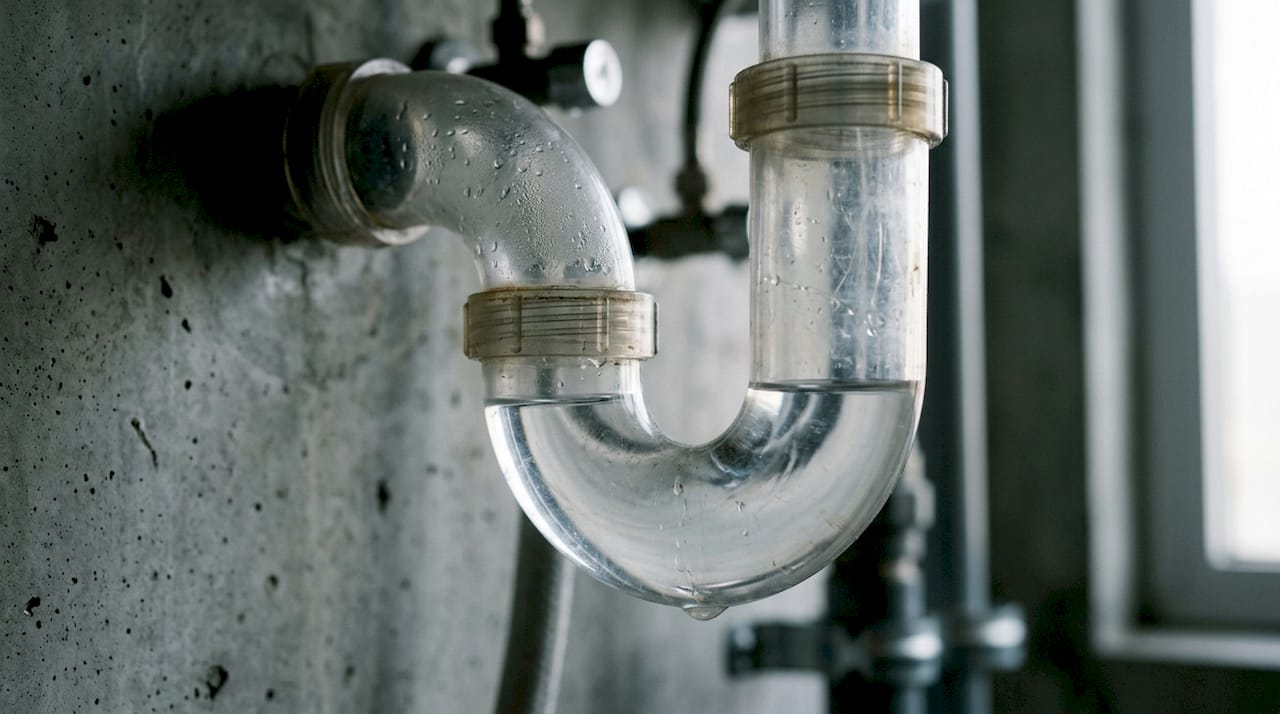
The shape of the trap makes this possible. Water flows in from the fixture above, passes through the curve, and exits through the drain arm toward the wall. The low point of the curve always retains water after each use. That retained water is the seal.
The water barrier also blocks pest entry. An open drain without a trap seal gives cockroaches, mosquitoes, and even rodents direct access to your home through the sewer system. The water plug removes that pathway entirely.
The full P-trap assembly includes several connected parts:
- Tailpiece: the straight pipe dropping from the drain basket to the trap inlet
- Trap curve: the U-shaped section that holds the water seal
- Drain arm: the horizontal pipe connecting the trap outlet to the wall drain
- Slip-nut fittings: the threaded connectors that hold each section together without glue
Pro Tip: Never glue or cement a P-trap. The slip-nut compression fittings are designed to stay removable so you can clear clogs and inspect the trap without cutting pipe.
Why do plumbing codes require a P-trap at every fixture?
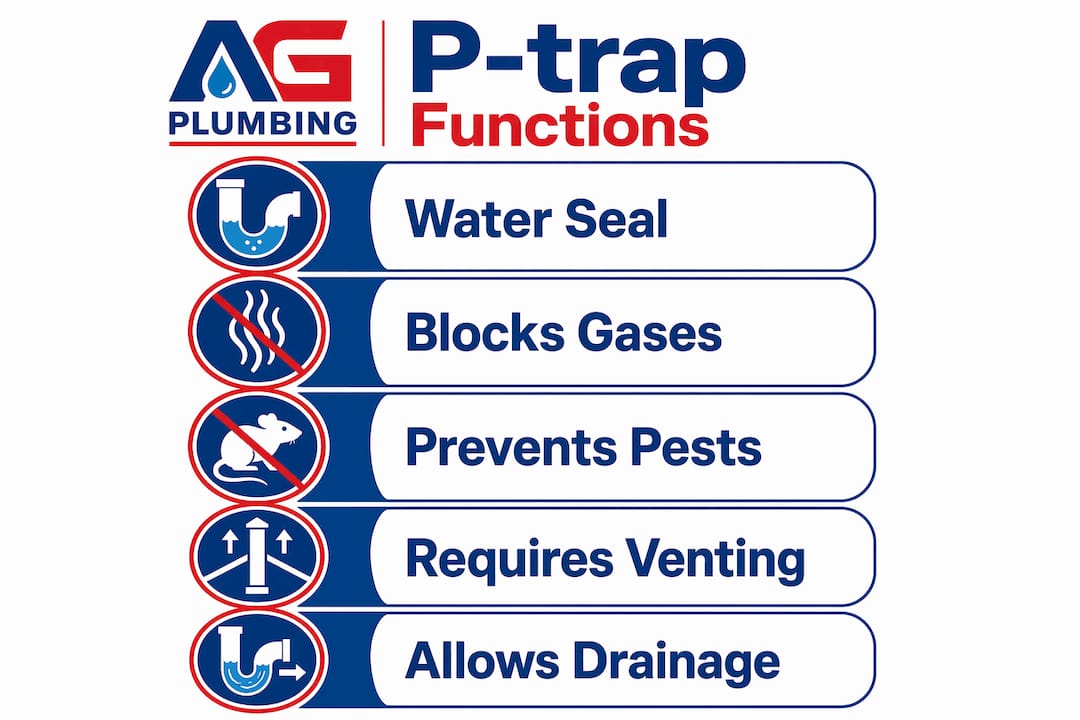
The 2021 and 2024 International Residential Code (IRC) require every plumbing fixture to have an approved trap that maintains a continuous water seal. This is not optional. Every sink, tub, shower, and floor drain in a residential building must have trap protection.
The IRC sets specific measurements that define a compliant trap installation:
| Requirement | IRC Standard |
|---|---|
| Minimum trap seal depth | 2 inches |
| Maximum trap seal depth | 4 inches |
| Maximum vertical drop from fixture outlet | 24 inches |
| Trap seal protection method | Approved venting per IRC Chapter 31 |
These numbers exist for engineering reasons, not bureaucracy. A seal shallower than 2 inches evaporates too quickly and fails to block gas reliably. A seal deeper than 4 inches can create sluggish drainage and increase siphonage risk. A trap positioned more than 24 inches below the fixture outlet regularly loses its water seal through siphonage, even when correctly assembled.
“Every trapped fixture needs trap seal protection by venting. The vent system, compliant with IRC Chapter 31, prevents negative pressures from siphoning the water seal out of the trap during drainage.”
— IRC 2021, as summarized by Jaspector
Failing a home inspection because of a missing or non-compliant trap is a real outcome. Beyond inspections, a non-compliant trap exposes occupants to sewer gas, which carries genuine health risks at sustained exposure levels.
What common P-trap problems should homeowners watch for?
P-traps fail in predictable ways. Knowing the signs early saves you from a sewer odor problem that gets misdiagnosed as a mold issue or a dead animal in the walls.
-
Evaporation of the water seal. In hot or dry indoor conditions, trap water can evaporate completely in under one week. In standard conditions, evaporation takes 2–3 weeks. Floor drains in basements, laundry rooms, and seasonal spaces are the most common victims. The fix is simple: pour water down the drain.
-
Siphonage from poor venting. When a drain discharges a large volume of water quickly, it creates negative pressure in the pipe. Without a proper vent, that pressure pulls the water seal out of the trap. You will hear a gurgling sound from nearby drains when this happens. Gurgling is the sound of air being pulled through the trap water.
-
Clogging and wicking. Hair, soap scum, and debris build up inside the trap curve. A partial clog can wick water out of the seal through capillary action, slowly draining the barrier even when no water is running. A slow drain combined with a faint sewer smell is a strong indicator of this problem.
-
Leaking slip-nut fittings. Over-tightening the plastic nuts with pliers cracks the fitting or deforms the washer. The result is a slow drip under the sink that goes unnoticed until cabinet damage appears. Hand-tight is always the correct torque for these fittings.
-
Double trapping. Installing two P-traps in series on the same fixture is prohibited by IRC 2024. Double traps create trapped air pockets that cause sluggish drainage and siphoning. If a previous owner added extra plumbing, check for this mistake.
Pro Tip: If you smell sewer gas but your trap looks intact, run water in every drain in the house, including floor drains and basement sinks. One dry trap anywhere in the system can spread odor through connected spaces.
Maintenance tips to keep your P-traps working effectively
Consistent, simple maintenance keeps P-traps functioning for years without professional intervention. Most of these tasks take under five minutes.
-
Replenish unused drains monthly. Pour about a quart of water into any drain that sees infrequent use, including basement floor drains, guest bathroom sinks, and utility sinks. This restores the water seal before evaporation creates a problem. For long-term vacant spaces, a small amount of mineral oil poured on top of the water slows evaporation significantly.
-
Hand-tighten only. When reassembling a P-trap after cleaning, tighten the slip-nut fittings by hand until snug. Then test for leaks by running water and checking each joint. If a joint drips, add a quarter turn by hand. Reaching for pliers is the most common DIY mistake with trap fittings.
-
Clean the trap curve twice a year. Unscrew the slip-nuts, remove the trap curve, and rinse it under running water. Use a bottle brush to clear any buildup inside the curve. This prevents the wicking problem described earlier and keeps drainage fast.
-
Check alignment after any under-sink work. The entire assembly, including the tailpiece, trap curve, and drain arm, must align without stress on any fitting. A misaligned trap puts constant tension on the slip-nuts, which causes slow leaks over time. If a fitting looks angled or forced, reposition the drain arm before tightening.
-
Know when to call a professional. Persistent sewer odor after replenishing all traps points to a venting problem, a cracked pipe, or a failed wax ring. These are not DIY repairs. Gurgling that continues after clearing a clog also signals a venting issue that requires a licensed plumber to diagnose. You can find practical guidance on common plumbing repair issues to help you decide when to call for help.
-
Consider waterless trap seal devices for problem floor drains. Modern waterless trap inserts use a flexible membrane or oil-sealed valve to block gases without relying on standing water. These work well in spaces where water replenishment is impractical, such as rarely visited mechanical rooms.
For Pittsburgh homeowners, the dry winter heating season accelerates evaporation in interior drains. Checking floor drains in november and march each year covers the two highest-risk periods.
Key Takeaways
P-traps are the single most critical barrier between your home’s air and the sewer system, and their effectiveness depends entirely on maintaining a continuous water seal.
| Point | Details |
|---|---|
| Water seal is the core function | The curved pipe holds standing water that physically blocks sewer gases and pests. |
| IRC codes set strict measurements | Trap seals must be 2–4 inches deep with a maximum 24-inch vertical drop from the fixture. |
| Evaporation is the top failure cause | In hot or dry conditions, trap water disappears in under one week; replenish monthly. |
| Hand-tighten all slip-nut fittings | Tools crack plastic fittings and cause leaks; finger-tight plus a quarter turn is enough. |
| Venting is required to protect the seal | Without proper venting per IRC Chapter 31, negative pressure siphons the water seal out. |
Why P-traps and venting are always a team, not a solo act
I have seen homeowners replace a P-trap three times in a year because the sewer smell kept coming back. Every time, the trap was fine. The real problem was a missing or blocked vent stack. A P-trap without adequate venting is like a locked door with no frame. The lock works, but the door swings open the moment pressure hits it.
The most common misconception I run into is that a P-trap handles everything on its own. It does not. The vent system protects the trap seal from the pressure swings that happen every time a toilet flushes or a washing machine drains. Without that pressure relief, the water seal gets pulled out of the trap, and the gas barrier disappears.
Another thing homeowners miss is that the smell is not always coming from the nearest drain. Sewer gas travels. A dry floor drain in the basement can make the kitchen smell bad. Always check every drain in the house, not just the one closest to the odor.
My honest advice: treat your P-traps as part of a system. Check the venting, check the alignment, and keep unused drains wet. A well-maintained plumbing trap system is one of the cheapest forms of home maintenance you can do. Ignoring it is one of the most expensive mistakes.
— Maayan
Professional P-trap and drain services in Pittsburgh, PA
Ag-plumbing has served Pittsburgh homeowners for 30 years, and P-trap failures are among the most misdiagnosed plumbing problems we see. Sewer odors get blamed on everything except the actual source.
If you have replenished your traps, checked your fittings, and the smell persists, the problem is likely in your venting or deeper in the drain line. Ag-plumbing’s licensed plumbers diagnose and repair trap failures, venting issues, and drain problems across Pittsburgh and the surrounding areas. Schedule an inspection through our Pittsburgh plumbing services page, or learn more about specific plumbing repair options for trap leaks, clogs, and venting corrections. Getting a professional set of eyes on the system costs far less than the water damage or health issues that follow a slow, undetected failure.
FAQ
What is a P-trap in plumbing?
A P-trap is a curved pipe section installed beneath a drain that holds standing water to create a seal against sewer gases. It is a required component under IRC 2021 and 2024 codes for every residential plumbing fixture.
How long does a P-trap water seal last before evaporating?
In hot or dry indoor conditions, the water seal can evaporate completely in under one week. In standard conditions, evaporation takes approximately 2–3 weeks, making monthly replenishment the safest practice for unused drains.
Why does my drain smell even though the P-trap looks fine?
A visually intact trap can still fail if the vent system is blocked or missing, allowing negative pressure to siphon the water seal out during drainage. Persistent odor after refilling the trap points to a venting problem that requires professional diagnosis.
Can I install two P-traps on the same fixture?
No. IRC 2024 prohibits double trapping because two traps in series create trapped air pockets that cause sluggish drainage and siphoning. One properly installed trap per fixture is the correct and code-compliant approach.
How do I fix a dry P-trap?
Pour approximately one quart of water directly into the drain to restore the water seal. For long-term protection in rarely used drains, add a small amount of mineral oil on top of the water to slow evaporation between uses.
Recommended
- What Is Plumbing and Why It Matters for Homeowners – AG-Plumbing
- Heating, Cooling & Plumbing Services Pittsburgh, PA
- What is a plumbing trap? Homeowner’s guide to clean drains – AG-Plumbing
