
TL;DR:
- A faucet aerator is a small device that mixes air into water flow to reduce splashing, conserve water, and filter sediment. It improves water efficiency, filters debris, and enhances flow quality by creating the perception of higher pressure without increasing actual pressure. Regular cleaning and correct size matching are essential for optimal performance and water savings.
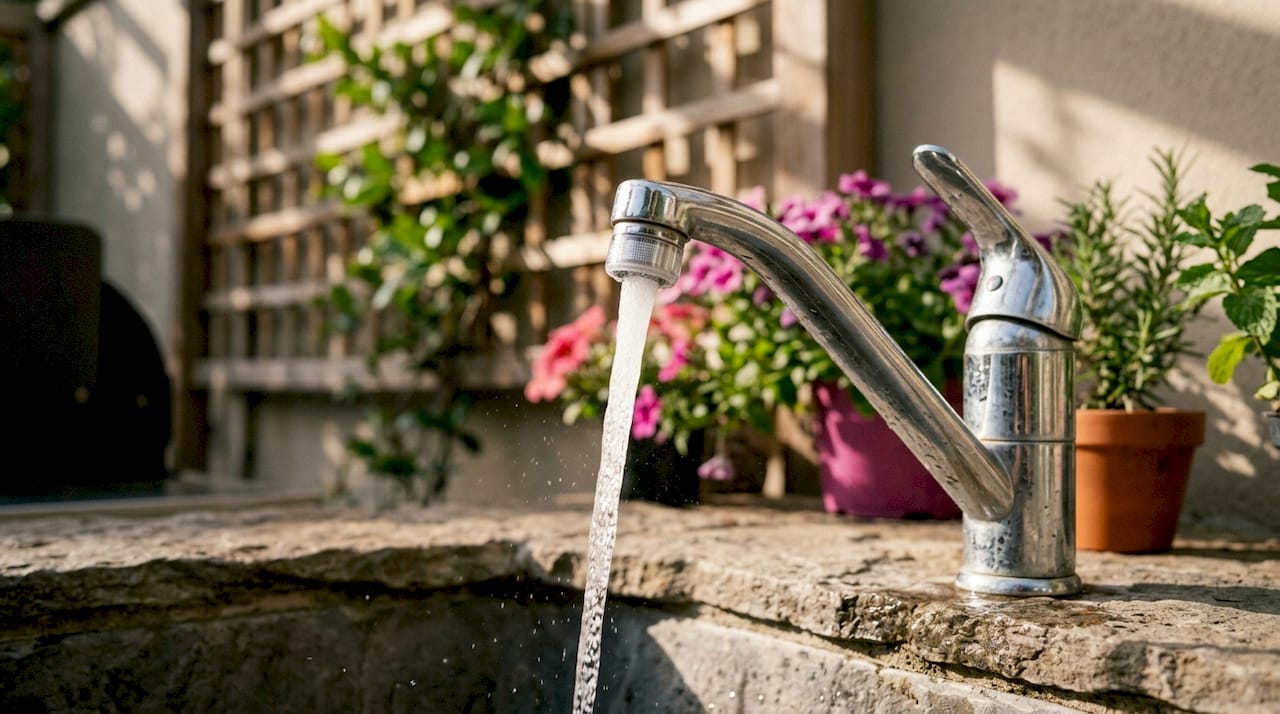
A faucet aerator is a small screen device threaded onto the tip of a faucet spout that mixes air into the water stream to reduce splashing, cut water use, and filter sediment. Most homeowners walk past one every morning without knowing it exists. Yet this quarter-sized component, formally called a flow restrictor in some plumbing contexts, does more work per dollar than almost any other fixture in your home. EPA WaterSense certified aerators alone can save approximately 700 gallons per year per household sink faucet. That number adds up fast across a kitchen and two bathrooms.
What is a faucet aerator and how does it work?
A faucet aerator controls water flow through a set of calibrated holes and a fine mesh screen. Water enters the aerator under pressure, passes through the screen, and mixes with air drawn in from the sides of the housing. The result is a soft, full-looking stream that feels strong but uses far less water than an open faucet would.
The physics behind this is the Bernoulli principle. As water accelerates through the aerator’s narrow openings, pressure drops slightly at the sides. That pressure drop pulls surrounding air into the stream. The mixed air-and-water flow creates the sensation of higher pressure even though the actual water volume is lower. This is why aerators are often misunderstood as pressure boosters. They do not increase water pressure. They create the perception of it.
The mesh screen serves a second purpose beyond flow control. It catches rust, sediment, and mineral deposits before they reach your glass or your pot. Think of it as the last line of defense between your pipes and your drinking water. Standard faucets without aerators flow at roughly 12 liters per minute. Aerated faucets reduce that to 5–6 liters per minute without any noticeable drop in usability.
Here is what happens inside the aerator from the moment you turn on the tap:
- Water enters the aerator body under line pressure.
- The flow restrictor plate narrows the stream and controls volume.
- Air is drawn in through side vents using the Venturi effect.
- The mesh screen blends the air and water into a uniform stream.
- The mixed stream exits as a soft, splash-free flow.
Understanding this sequence helps you diagnose problems. If your stream is uneven or weak, the screen is likely clogged. If it sprays sideways, the aerator housing may be cracked or misthreaded.
What are the key benefits of faucet aerators for homeowners?
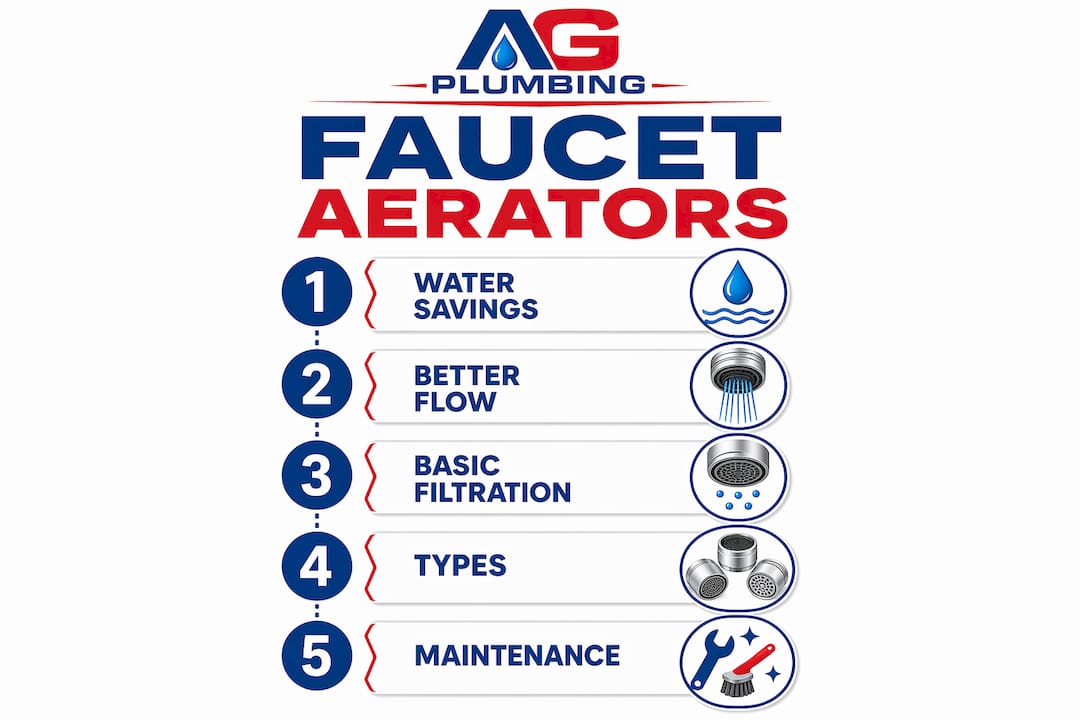
Faucet aerators deliver three concrete benefits: water savings, better flow quality, and basic filtration. Each one has a direct impact on your utility bill, your daily comfort, and your plumbing fixtures.
Water and energy savings are the most measurable benefit. Installing an aerator can reduce water consumption by 20% to 50%, saving hundreds of gallons annually and lowering utility costs. Because less water flows, your water heater also works less to deliver hot water. That cuts your energy bill alongside your water bill.
The practical benefits go beyond the numbers:
- Splash reduction: The aerated stream hits the sink basin softly, keeping water in the sink instead of on your shirt.
- Steady, even flow: Air mixing eliminates the turbulent, uneven streams common in older faucets.
- Sediment filtration: The screen catches debris and mineral deposits that would otherwise coat your fixtures or end up in your food.
- Fixture protection: Cleaner water reaching your sink basin means less mineral staining and longer fixture life.
- Environmental impact: Lower water use reduces the energy needed to treat and pump municipal water, cutting your household’s carbon footprint.
Pro Tip: If your water bill spiked without an obvious cause, check your aerators first. A clogged aerator can cause people to run the tap longer to rinse dishes or fill pots, quietly driving up consumption.
EPA WaterSense labeled aerators reduce faucet flow by 30% or more without noticeable performance loss. That certification is the fastest way to confirm you are buying a unit that delivers real savings, not just marketing claims.
What types of faucet aerators are available?
Aerators come in several standard sizes and two thread orientations. Buying the wrong one means a wasted trip to the hardware store. Faucet aerators must match thread type; mismatched aerators simply will not seal.
The three most common sizes are:
- Regular: 15/16-inch diameter, the most common size for standard kitchen faucets
- Junior: 13/16-inch diameter, common on bathroom faucets
- Compact: 3/4-inch diameter, used on smaller or specialty faucets
Thread orientation is either male (threads on the outside of the faucet tip) or female (threads on the inside). You need the opposite on the aerator to create a proper seal. A male faucet tip takes a female aerator, and vice versa.
Beyond size and thread, aerators split into two styles: visible and hidden. Visible aerators screw onto the outside of the faucet tip and are easy to remove by hand or with pliers. Hidden aerators, also called cache aerators, sit recessed inside the faucet body. They require a specialized removal key, which typically comes with the faucet. Cache aerators come in fixed key sizes ranging from M16.5 to M24. Using the wrong key strips the aerator and can damage the faucet housing.
| Type | Thread | Best for | Flow rate |
|---|---|---|---|
| Regular visible | Male or female | Kitchen faucets | 1.5–2.2 GPM |
| Junior visible | Male or female | Bathroom faucets | 0.5–1.5 GPM |
| Cache (hidden) | Requires key | Designer faucets | Varies by model |
| WaterSense certified | Male or female | Any faucet | 1.5 GPM or less |
Pro Tip: Bring your old aerator to the hardware store. Matching size and thread by eye is unreliable. The physical aerator in hand takes the guesswork out of the purchase entirely.
How to install, clean, and maintain faucet aerators
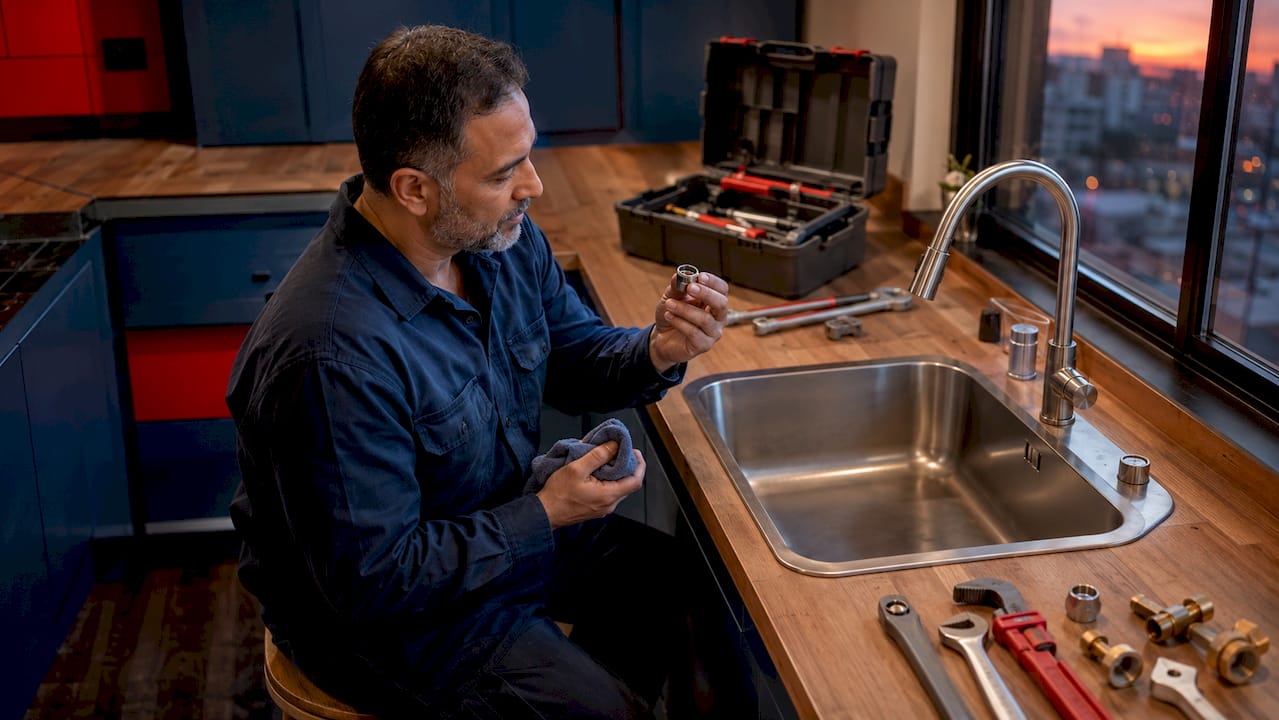
Aerator maintenance is one of the simplest DIY plumbing tasks in a home. Most replacements take under five minutes. Most cleanings take under ten. The tools you need are already in your kitchen.
Removing and installing an aerator
- Turn off the faucet and place a cloth or towel in the sink to catch small parts.
- Try unscrewing the aerator by hand. Most visible aerators loosen counterclockwise.
- If it is stuck, wrap pliers with a cloth or rubber band to protect the faucet finish, then grip and turn counterclockwise.
- Separate the aerator into its parts: housing, flow restrictor, washer, and screen.
- Inspect each part for cracks, heavy mineral buildup, or deformation.
- Reassemble in reverse order and hand-tighten the new or cleaned aerator. Do not overtighten.
Protecting the faucet finish during removal is the step most homeowners skip. Bare metal pliers scratch chrome and brushed nickel permanently. A cloth wrap costs nothing and prevents a cosmetic repair bill.
Cleaning a clogged aerator
Mineral buildup on the mesh screen is the most common cause of poor faucet performance. Hard water deposits calcium and magnesium on the screen over time, blocking flow and causing irregular spray patterns. White vinegar dissolves these deposits without damaging the screen or housing.
Soak the disassembled aerator parts in undiluted white vinegar. Soak time varies from 5 minutes for light buildup to over an hour for heavy scale. After soaking, scrub gently with an old toothbrush, rinse under running water, and reassemble.
Avoid acidic or abrasive cleaners on the exterior faucet finish. Clean the outside of the faucet with mild soapy water only. Soak the internal aerator parts separately to preserve the finish and extend fixture life.
Pro Tip: In older Pittsburgh homes, regular aerator cleaning is also a health measure. The screen can trap lead particles from aging pipes before they reach your tap. Cleaning every three to six months removes that buildup and reduces exposure risk.
When to replace instead of clean
Replace the aerator when the screen is torn, the housing is cracked, or cleaning no longer restores normal flow. Replacement aerator parts cost $2 to $10, making this one of the most affordable plumbing repairs a homeowner can handle without calling a professional. If flow stays weak after a thorough cleaning and replacement, the issue likely sits deeper in the supply line. That is when you call a plumber.
Key Takeaways
A faucet aerator is the single most cost-effective water-saving device in any home, reducing consumption by 20% to 50% while improving flow quality and filtering sediment from every tap.
| Point | Details |
|---|---|
| Core function | Aerators mix air into water to cut usage, reduce splashing, and filter debris. |
| Water savings | EPA WaterSense aerators save approximately 700 gallons per year per faucet. |
| Size and thread matching | Always match aerator size and thread type to avoid leaks and wasted trips. |
| Cleaning method | Soak in white vinegar for 5 minutes to over an hour depending on buildup severity. |
| Replacement cost | New aerators cost $2 to $10 and take under five minutes to install. |
The part of your faucet that does the most work for the least credit
After years of watching homeowners call about low water pressure, I can tell you the aerator is the culprit more often than people expect. The call usually goes like this: the pressure dropped, the faucet feels weak, and the assumption is a pipe problem. Nine times out of ten, I unscrew the aerator and find a screen so clogged with calcium that water can barely pass through.
The bigger misconception is what aerators actually do to pressure. They do not reduce it. They use the Venturi effect to create a stream that feels stronger than unrestricted flow. When people remove an aerator thinking it will boost pressure, they usually end up with a splashing, wasteful stream that feels worse, not better.
What I find most overlooked is the filtration role. Aerators act as the final filter in your plumbing system. In homes with older pipes, that screen catches rust flakes and sediment that would otherwise end up in your water. Cleaning it regularly is not just about flow. It is about water quality. I recommend checking aerators every three to six months, especially in homes with hard water or aging supply lines. That simple habit prevents most of the low-pressure calls I get. And if you are in a home built before 1986, cleaning that screen is a genuine health precaution, not just a maintenance chore.
The pipe maintenance habits that protect your whole plumbing system start with the smallest components. The aerator is a good place to begin.
— Maayan
Ag-plumbing keeps your faucets flowing right
Ag-plumbing has served Pittsburgh homeowners for 30 years, handling everything from a stuck aerator to a full faucet replacement. When a vinegar soak and a new $5 aerator do not solve the problem, the issue is usually deeper in the supply line or the fixture itself.
The Ag-plumbing team diagnoses faucet flow problems fast, replaces aerators and fixtures correctly the first time, and protects your faucet finishes in the process. Whether you need a quick aerator swap or a full plumbing repair in Pittsburgh, Ag-plumbing offers straightforward pricing and same-area service across Pittsburgh and the surrounding communities. Visit ag-plumbing.com to schedule a service call or get answers to your plumbing questions today.
FAQ
What does a faucet aerator do exactly?
A faucet aerator mixes air into the water stream to reduce splashing, lower water consumption, and filter sediment. It screws onto the tip of the faucet spout and controls flow rate through a mesh screen and flow restrictor plate.
How often should I clean my faucet aerator?
Clean your aerator every three to six months, or sooner if you notice weak flow or an uneven spray pattern. Homes with hard water or older pipes may need more frequent cleaning due to faster mineral and sediment buildup.
Can I install a faucet aerator myself?
Yes. Most visible aerators unscrew by hand or with cloth-wrapped pliers and take under five minutes to remove, clean, or replace. Hidden cache aerators require a specialized key that typically comes with the faucet.
What flow rate should I look for in a new aerator?
EPA WaterSense certified aerators flow at 1.5 gallons per minute or less and reduce faucet flow by 30% or more without noticeable performance loss. That rating is the clearest benchmark for water efficiency.
Why does my faucet spray sideways after I reinstall the aerator?
A sideways spray usually means the aerator is cross-threaded or not fully seated. Remove it, check the threads for damage, and reinstall slowly by hand before tightening. If the problem continues, the aerator size or thread type may not match your faucet.
Recommended
- What Is a Faucet Cartridge? A Homeowner’s Guide – AG-Plumbing
- Fix dripping faucets: save water and money fast – AG-Plumbing
- What Is Plumbing and Why It Matters for Homeowners – AG-Plumbing
- Step-by-Step Faucet Repair for Pittsburgh Homeowners – AG-Plumbing
