
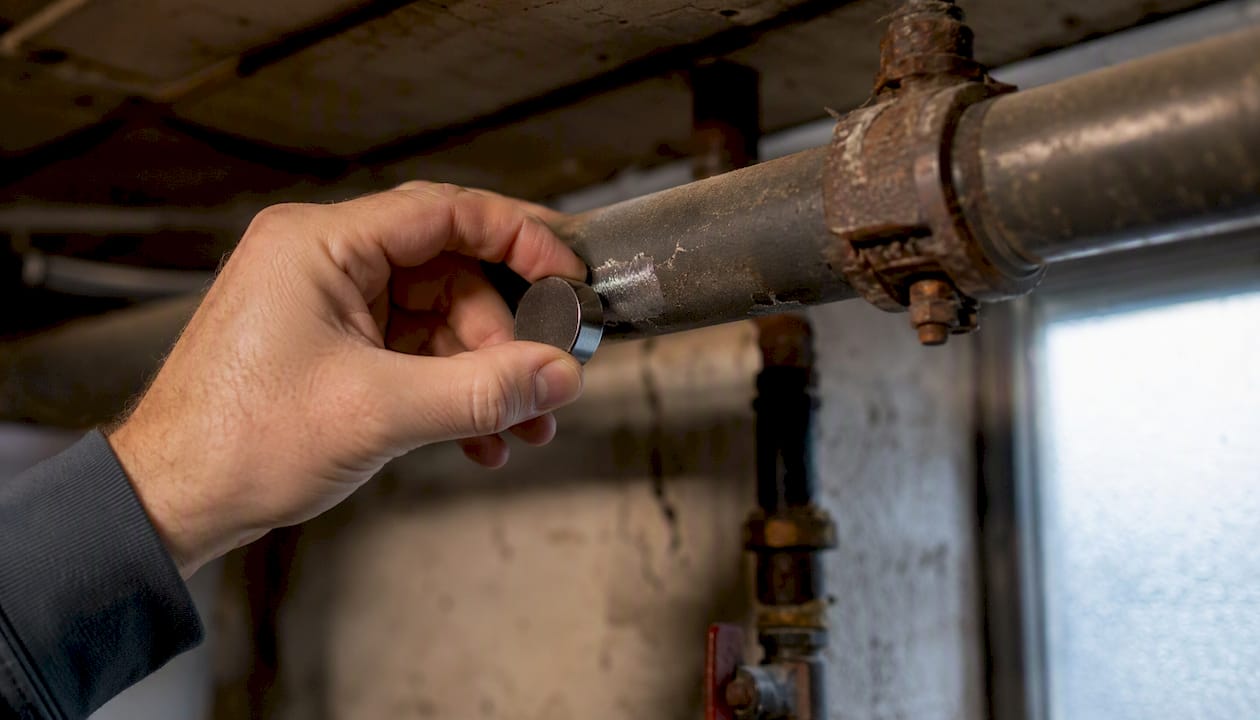
You can usually tell if your service line is lead with a refrigerator magnet and a scratch test. Grab a coin or key and a magnet, head to where your water line enters the house, and run these two checks right now:
- Magnet test: Hold a refrigerator magnet against the pipe. If it sticks, the pipe is galvanized steel, not lead. If it doesn’t stick, you could have lead or copper.
- Scratch test: Use a coin or key to scratch a small spot on the pipe. Lead shows a bright, shiny silver color underneath. Copper looks copper-colored. Galvanized steel stays dull gray and feels hard.
- Still uncertain? Contact your water utility or send a water sample to a certified lab.
These quick checks are solid triage, but they’re not definitive. There is no safe level of lead in drinking water, so if you have any doubt after the visual checks, treat the situation as a confirmed risk until testing says otherwise.
Pro Tip: Take a photo of the pipe and your scratch result before you cover it back up. That image is useful when you call your utility or a plumber.
Key Takeaways
Lead pipe identification starts with two tools you already own: a refrigerator magnet and a coin or key, used at the service line entry point in your basement or utility room.
| Point | Details |
|---|---|
| Two-step triage | A magnet test plus a scratch test identifies most lead service lines quickly and at no cost. |
| No safe level | The EPA and CDC confirm there is no safe level of lead; treat any suspicion as a confirmed risk until testing clears it. |
| Escalate to water testing | First-draw or sequential sampling from a certified lab confirms what visual checks cannot, especially for lead solder and galvanized deposits. |
| Check utility records | Ask your utility for the service line material on record; “unknown” means treat it as suspected lead and proceed with testing. |
| Ag-plumbing for Pittsburgh homes | Ag-plumbing handles inspection, sampling coordination, private-side replacement, and subsidy guidance for homeowners in Pittsburgh and surrounding areas. |
Table of Contents
- How to do lead pipe identification at home: the full method
- Where on your property should you actually look?
- How to tell lead from copper, galvanized steel, brass, and plastic
- When visual checks aren’t enough: water testing and sampling
- What to do if you find or suspect a lead service line
- How to use official records and utility maps to confirm what you find
- When should you hire a plumber or licensed inspector?
- What 30 years of Pittsburgh plumbing work actually teaches you about lead pipes
- Ag-plumbing can handle your lead pipe inspection and replacement in Pittsburgh
- Sources
- FAQ
How to do lead pipe identification at home: the full method
Before you touch anything, make sure the area is dry and you can see the pipe clearly. You don’t need to shut off the water for a visual check, but avoid scraping painted pipes unless you’re confident the paint itself isn’t a lead-based coating, which is common in homes built before 1978.
The magnet test
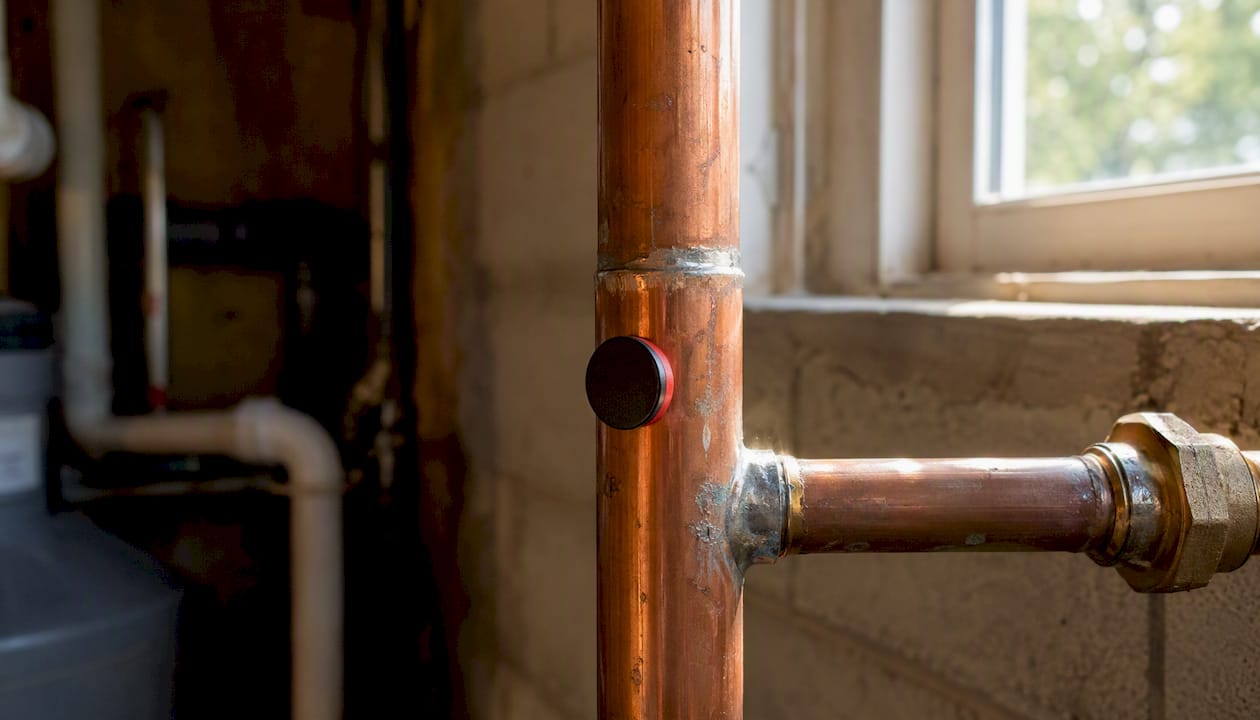
Hold a standard refrigerator magnet flat against the pipe at the point where it enters your basement or utility room. Press it firmly. Lead is non-magnetic, so a magnet will not stick to a lead pipe. Galvanized steel is magnetic and will hold the magnet in place. Copper is also non-magnetic, so a magnet that falls off doesn’t automatically mean lead. That’s where the scratch test comes in.
The scratch test
Pick a spot on the pipe that’s out of sight, ideally on the back or underside. Use a coin, key, or small knife to scratch a patch about the size of a dime. Lead is a soft metal, so it scratches easily with minimal pressure. The exposed metal underneath will be bright, shiny silver. Galvanized steel is harder and takes more effort to scratch; the exposed surface stays dull gray. Copper scratches to a warm copper-orange color.
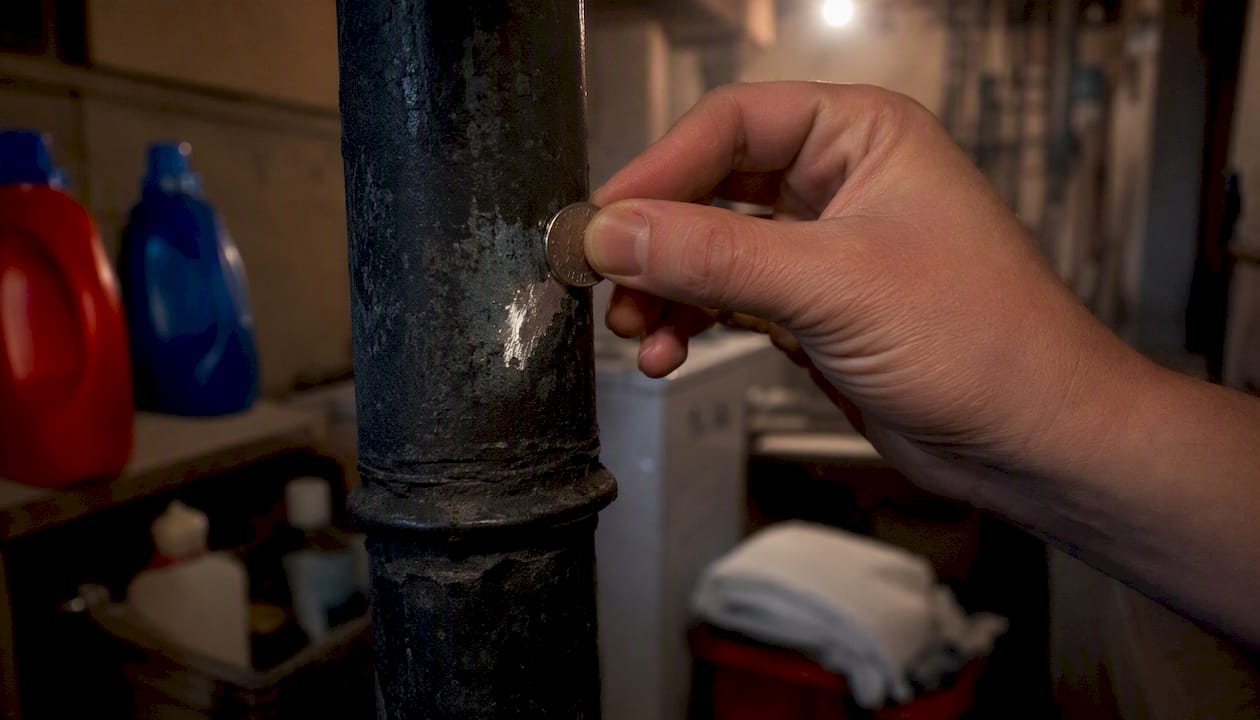
EPA’s “Protect Your Tap” guide uses exactly this two-step approach and recommends contacting your water utility or arranging testing if the results are unclear.
Visual clues beyond the scratch
Lead pipes have a few physical tells beyond the scratch result:
- Wiped joints: Look for lumpy, hand-formed joints where two sections connect. These are called wiped joints and were the standard method for joining lead pipe before modern fittings existed. They look almost like a blob of metal that was smoothed by hand.
- Soft, bowed sections: Lead is heavy and flexible. Older lead service lines sometimes sag or bow slightly between support points.
- No threads: Lead pipes are not threaded. If you see threaded fittings at every connection, that’s a strong indicator of galvanized steel.
- Dull gray exterior: Untouched lead has a flat, matte gray surface, darker than galvanized steel and without the slight sheen of copper.
Pro Tip: Scratch the pipe on the underside or back face so you don’t leave a visible mark on a finished surface. Document the result with your phone camera and note the location (e.g., “3 feet from the foundation wall on the main supply line”).
Statistic to know: The EPA estimates roughly 4 million lead service lines still serve properties across the United States. If your home was built before 1986, the odds that at least part of your service line or interior plumbing contains lead are meaningfully higher than average.
Where on your property should you actually look?
Most homeowners waste time checking the wrong pipes. The service line, the pipe that runs from the water main under the street into your home, is the highest-priority location. Interior branch pipes matter too, but the service line is where lead exposure tends to be highest.
Service line entry point
Start at the point where the water supply enters your home. In most Pittsburgh-area homes and similar older housing stock, this is through the foundation wall or up through the basement floor in a utility area. The pipe will be a few feet long before it reaches the main shutoff valve or water meter. That first exposed section is what you want to test.
- In a basement or utility room: look for the pipe coming through the wall or floor, usually near a corner or along the front wall facing the street.
- In a crawlspace: the entry point may be harder to access. Use a flashlight and look for the main supply line running toward the center of the house.
- In a slab-on-grade home: the pipe may enter through the floor inside a utility closet or near the water heater. You may only see a short stub before it disappears into the slab.
Curb box and meter area
The curb stop (a valve box set into the ground near the street or sidewalk) sometimes exposes a short section of the service line. Lifting the curb box cover with a long screwdriver can reveal the pipe material at the street end. This is worth checking because some properties have a partial lead service line, meaning the utility-side portion is lead even if the homeowner-side portion was replaced.
Pro Tip: If your water meter is outside the building, check the pipe on both sides of the meter. The material can change at the meter connection, and a non-lead meter connection doesn’t mean the rest of the line is safe.
Interior plumbing locations
After the service line entry, check:
- The pipe immediately upstream and downstream of the main shutoff valve.
- Branch lines running to the kitchen and bathrooms, especially in older homes where interior plumbing may not have been updated when the service line was replaced.
- Solder joints on copper pipes. Even if the pipes themselves are copper, lead solder was standard before 1986 and can leach lead at fittings and joints.
How to tell lead from copper, galvanized steel, brass, and plastic
A single test result doesn’t always give a clean answer. Here’s how the common pipe materials compare across the checks that matter most for homeowners.
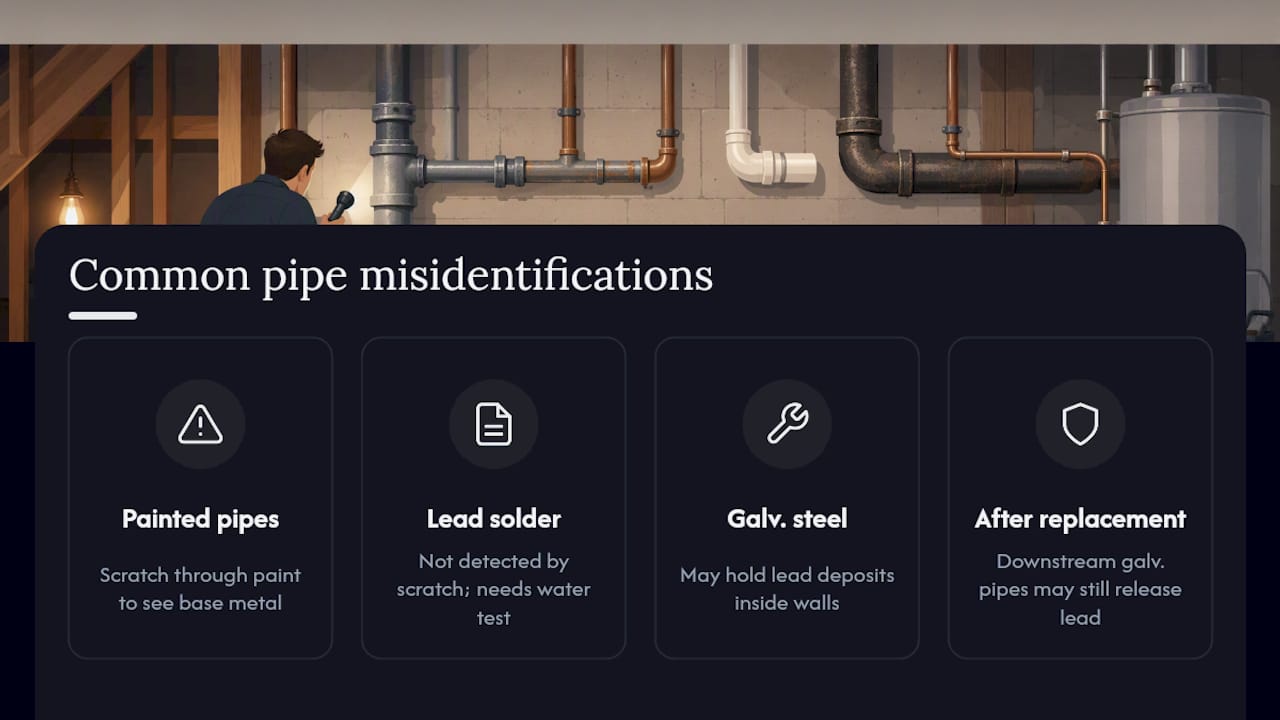
A few common misidentifications trip up homeowners:
Painted pipes: A coat of gray or silver paint can make copper or galvanized steel look like lead at a glance. Always scratch through to the base metal before drawing a conclusion.
Lead solder on copper pipes: The pipe itself may be copper, but the joints were soldered with lead-based solder before 1986. Lead solder doesn’t show up in a pipe scratch test. It requires water testing to detect.
Galvanized steel downstream of a replaced lead line: Galvanized pipes that were once connected to a lead service line can hold lead deposits inside their walls. Replacing the lead line doesn’t automatically clear those deposits.
“Even after a lead service line is replaced, downstream galvanized pipes may continue to release trapped lead; replacement planning should consider the whole private plumbing run.” — EPA, Lead Service Lines
When visual checks aren’t enough: water testing and sampling
Visual checks are a starting point. A pipe that passes the magnet and scratch test could still be releasing lead through solder, fittings, or galvanized sections. If you have any doubt, water testing is the next step.
Your testing options
- Utility-provided testing: Many water utilities offer free or low-cost lead testing kits. Call your utility’s customer service line and ask specifically about lead testing programs. This is the lowest-friction option and should be your first call.
- Certified lab testing: You collect a water sample at home and mail it to a state-certified lab. Costs vary but are typically modest. The EPA and your state drinking water program maintain lists of certified labs.
- First-draw sampling: You collect water from the tap after it has sat in the pipes for at least six hours (overnight is ideal). This sample captures lead that has leached from the pipe or fittings closest to the tap. It’s a good general screen but doesn’t isolate the service line specifically.
- Sequential (profile) sampling: You collect multiple consecutive samples from the same tap, each representing a different section of your plumbing. EPA researchers have shown that sequential sampling helps isolate whether lead is entering from the service line rather than from interior fixtures or solder.
- Targeted service-line sampling: A more precise version of profile sampling where specific sample volumes (often liters 5–8 from the tap) are timed to represent water that was sitting inside the service line itself.
Pro Tip: Before collecting any sample, call your utility and ask if they have a specific sampling protocol. Some utilities will send a technician or provide pre-labeled bottles. Following their protocol means your results are directly comparable to their records.
What to expect from lab results
Turnaround from a certified lab is typically a few business days to two weeks. Results come back as a lead concentration in parts per billion (ppb). The EPA’s action level is 15 ppb, but that threshold is a regulatory trigger, not a safety guarantee. The CDC confirms there is no safe level of lead exposure, and even results below 15 ppb warrant attention if children or pregnant people are in the household.
A single first-draw test that comes back low doesn’t rule out a lead service line. Sequential or targeted sampling gives you much stronger evidence about where the lead is actually coming from.
What to do if you find or suspect a lead service line
Finding lead doesn’t mean you need to panic, but it does mean you need a plan. Here’s the sequence that makes sense for most homeowners.
Immediate exposure reduction
- Stop using first-draw water for drinking or cooking until you know more. Run the cold tap for 1–2 minutes before using water for drinking or cooking, especially first thing in the morning.
- Use a certified filter. Look for filters certified to NSF/ANSI Standard 53 for lead reduction. Pitcher filters like those using activated carbon and reverse osmosis under-sink units both qualify if they carry that certification.
- Use cold water only for drinking and cooking. Hot water dissolves lead faster and should never be used for infant formula or food preparation in a home with suspected lead pipes.
Who to contact
- Your water utility: Ask about their service line inventory, whether your address is listed as lead or unknown, and what replacement assistance programs they offer.
- Your state drinking water program: Most states have a lead service line replacement program or can direct you to local resources.
- A licensed plumber: For private-side replacement, inspection, and help navigating permit requirements.
Replacement pathways
The service line typically has two sections: the utility-owned portion (from the main to the property line or meter) and the homeowner-owned portion (from the meter into the house). Utilities are responsible for their side; you’re responsible for yours.
Full replacement of both sides is the only permanent solution. Partial replacement, where only one side is replaced, can temporarily increase lead levels in the water due to disturbance of the remaining lead pipe. A main water line replacement typically takes one to three days for the physical work, with additional time for permits and utility coordination.
Funding and assistance
The Infrastructure Investment and Jobs Act (IIJA) directed significant federal funding toward lead service line replacement through EPA programs. Many utilities are now offering partial or full subsidies for homeowner-side replacement. Ask your utility directly about:
- Free or subsidized replacement programs
- Income-qualified assistance
- State revolving fund loans
Pro Tip: Document everything: photos of your pipe, your test results, and every conversation with your utility. This paper trail speeds up replacement program applications and protects you if there’s a dispute about pipe material.
Caution: Lead exposure carries no safe threshold. Children under six and pregnant people face the highest risk from even low-level exposure. If either group is in your household, treat a suspected lead service line as confirmed and act immediately.
How to use official records and utility maps to confirm what you find
Your on-site check tells you what’s at your end of the pipe. Official records tell you what the utility knows about the whole line.
Where to search
- Your water utility’s website: Many utilities now publish service line inventories or interactive maps. Search for your address and look for a material designation: “lead,” “non-lead,” or “unknown.”
- EPA resources: The EPA’s lead service line guidance links to state and utility inventory tools and explains what utilities are required to track.
- NRDC compilations: The Natural Resources Defense Council maintains maps and data compilations that aggregate utility-reported lead service line data by state and city. These are useful for understanding the scale of the problem in your area.
- State drinking water programs: Your state’s environmental or health agency typically maintains a database of public water system compliance records.
How to request records
Call your utility’s customer service line and ask for:
- The service line material on record for your address
- Any historical permit records for plumbing work at your property
- The date of the most recent inventory update
A simple request that works: “I’d like to know the recorded material for the service line at [your address], and whether it’s listed as lead, non-lead, or unknown in your current inventory.”
Reading map legends
Most utility maps use three categories: known lead, known non-lead, and unknown. “Unknown” is not reassuring. It typically means the utility has no record of what material was installed, which is common for homes built before records were consistently kept. For practical purposes, treat “unknown” the same as “suspected lead” and proceed with physical checks and water testing.
Pro Tip: If your utility’s map shows your address as unknown, submit your on-site findings in writing. Many utilities will update their inventory based on homeowner-documented checks, which can help you qualify for replacement programs.
When should you hire a plumber or licensed inspector?
DIY checks get you a long way, but there are situations where you need a professional.
Signs you should call a pro
- Your visual checks are inconclusive (painted pipes, inaccessible entry point, meter outside the building).
- You see active corrosion, discoloration, or damage near the service line entry.
- Your water test results show elevated lead but you can’t identify the source.
- You’re ready to move forward with private-side replacement and need permits and utility coordination.
- Your home has a complex meter setup or multiple service connections.
Questions to ask before you hire
- Are you licensed in Pennsylvania (or your state) for water service line work?
- Have you done lead service line inspections and replacements in homes of this age?
- Do you use certified labs for water sampling, and can you provide documentation?
- Will you pull the required permits and coordinate with the utility?
- Can you provide a written estimate before starting work?
- Do you carry liability insurance and workers’ compensation?
Red flags
- A contractor who pushes for immediate full replacement without any documentation or testing.
- No written estimate or refusal to provide one.
- Claims they can “test” the water themselves without a certified lab.
- No license or permit discussion.
- Pressure to decide on the spot.
What a professional visit typically looks like
A qualified plumber will access the service line entry, perform a visual inspection, and may collect water samples using a documented protocol. They’ll give you a written report of findings and a clear recommendation. For plumbing repair and inspection services, expect the initial inspection to take one to two hours. Replacement timelines depend on pipe length, access, and permit processing, but most private-side replacements are completed in one to two days once permits are in hand. Specialist tools like XRF analyzers and acoustic pipe identification methods are sometimes used by contractors for high-accuracy confirmation, particularly on complex or partially-replaced lines.
For landlords managing multiple properties, a pipe inspection guide for landlords covers what to expect from camera and no-dig inspection methods in more detail.
What 30 years of Pittsburgh plumbing work actually teaches you about lead pipes
Pittsburgh’s housing stock is old. A significant share of homes in the city and surrounding areas were built in the early to mid-20th century, when lead service lines were standard. After three decades of inspecting and replacing plumbing in these homes, the pattern is consistent: the homeowners who catch lead problems early are the ones who did a five-minute check at the service line entry and then followed through with a utility call.
What surprises most people is how often the utility’s records say “unknown.” That’s not a bureaucratic failure. It reflects the reality that many of these lines were installed before anyone kept systematic records. Your on-site check, documented and submitted to the utility, can actually move your address from “unknown” to “confirmed” in their inventory, which matters when replacement funding is allocated.
The other thing worth saying plainly: partial replacement is not a solution. Disturbing a lead pipe without replacing the whole line can temporarily spike lead levels in your water. Any contractor who proposes replacing only the homeowner side without coordinating with the utility on the utility side is not giving you complete advice.
Ag-plumbing can handle your lead pipe inspection and replacement in Pittsburgh
If your checks point to a lead service line, or if you can’t get a clear answer from a visual inspection, Ag-plumbing’s team handles the full process for Pittsburgh homeowners: on-site inspection, water sampling coordination with certified labs, private-side replacement, permit handling, and help identifying utility subsidy programs you may qualify for.
With 30 years serving Pittsburgh and the surrounding areas, Ag-plumbing has inspected and replaced lead service lines in homes across the region’s older housing stock. The team knows the local utility coordination process and the permit requirements specific to Allegheny County and surrounding municipalities.
What Ag-plumbing provides:
- On-site service line inspection and material identification
- Coordination with certified labs for water sampling
- Private-side lead service line replacement
- Permit application and utility notification
- Guidance on available replacement funding and subsidy programs
Request a plumbing inspection estimate or visit Ag-plumbing to reach the team directly. Getting a clear answer on your service line material is a one-call process.
Sources
These are the primary authoritative sources referenced in this article:
- How to identify lead or copper pipes — City of Raleigh
- Getting started with lead service line identification and replacement — US EPA
- Preventing lead exposure from drinking water — CDC
This article is general information, not a substitute for advice from a qualified doctor. Consult a qualified healthcare professional about your own circumstances before acting on anything here.
FAQ
How do I identify lead pipes?
Hold a refrigerator magnet against the pipe at your service line entry: if it doesn’t stick, scratch a small spot with a coin or key. Lead shows a bright shiny silver color when scratched and is soft to the touch, while copper turns copper-orange and galvanized steel stays dull gray. If results are unclear, contact your water utility or send a sample to a certified lab.
How much of the US still has lead pipes?
The EPA estimates roughly 4 million lead service lines still serve properties across the United States. Homes built before 1986 carry a higher likelihood of having lead in the service line or interior plumbing.
Will a magnet stick to lead pipes?
No. Lead is non-magnetic, so a refrigerator magnet will not stick to a lead pipe. If the magnet sticks firmly, the pipe is galvanized steel. If it falls off, the pipe is lead, copper, brass, or plastic, and you’ll need the scratch test to narrow it down further.
What do old lead pipes look like?
Untouched lead pipe has a flat, matte gray surface, darker than galvanized steel and without copper’s warm tone. Look also for wiped joints (lumpy, hand-formed connections), slight bowing or sagging between supports, and an absence of threaded fittings. Scratching the surface reveals bright silver metal underneath.
Recommended
- Why Test for Lead Pipes: A Pittsburgh Homeowner’s Guide – AG-Plumbing
- How to Identify When Plumbing Repair Is Necessary – AG-Plumbing
- Choosing the best plumbing pipes for your Pittsburgh home – AG-Plumbing
- Step-by-step pipe replacement guide for Pittsburgh homeowners – AG-Plumbing
